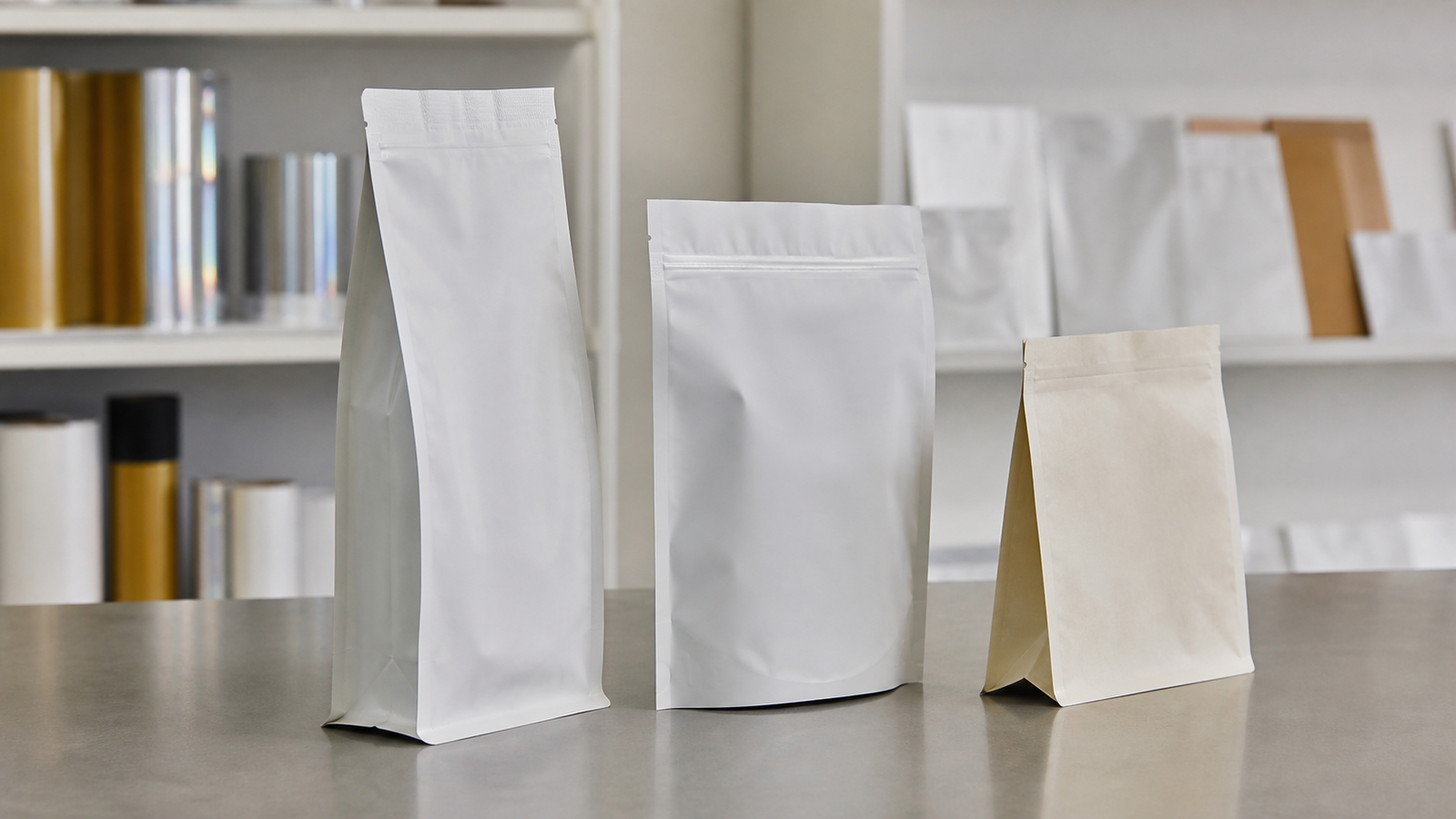
A gusseted pouch is not just a flexible pouch with extra space. The gusset changes how the pack opens, fills, stands, seals, and fits into a shipper, so the first decision is geometry, not decoration.
In practical flexible packaging work, I separate gusseted pouch projects into four questions: where the expansion happens, how the filled pack should sit, what stress the folds add to the material and seals, and whether the filling process can run the shape consistently.
The sections below move through those specification decisions in order, from pouch family and bottom style to gusset depth, laminate structure, filling checks, and RFQ details.
What Makes a Pouch Gusseted?
A pouch is gusseted when folded expansion areas are built into the side, bottom, or both. These folds open during filling, giving the pack more usable internal volume and shape control without simply making the front and back panels wider.
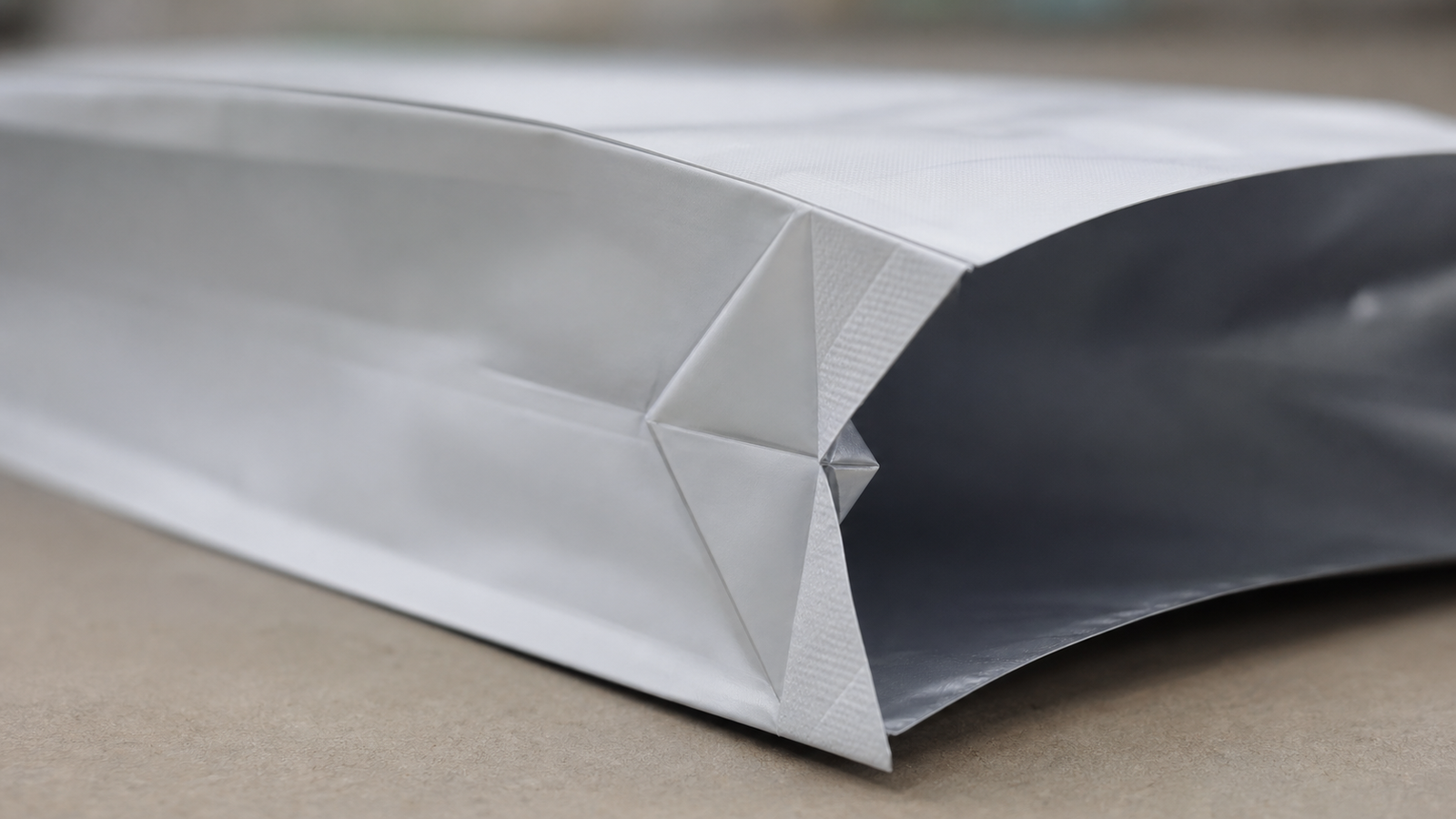
A gusset is part of the pouch structure. It is not a material grade, a print style, or a size label. A flat pouch mainly uses the space between two panels. A gusseted pouch adds folded film areas that unfold as product enters the pack.
That fold changes the filled footprint, standing base, usable volume at a given face width, and the way stress moves through the seals. It also affects artwork layout because some information may wrap into curved or folded areas after filling.
The useful starting question is simple: what job should the gusset perform? If the product needs more depth while keeping a narrow front face, side expansion may be the right direction. If the pack needs to stand upright, a bottom gusset or flat-bottom construction deserves early review. If the target is a rectangular block shape, the pouch geometry choice1 should be made before artwork and tooling assumptions are locked.
Do not treat gusseting as an automatic upgrade. It adds converting complexity and more geometry to control. The format should solve a real packaging problem: volume, shelf stance, case efficiency, handling, or display area.
How Do Side Gusset, Bottom Gusset, and Flat-Bottom Pouches Differ?
Side gusset, bottom gusset, and flat-bottom pouches are all gusseted formats, but they solve different shape problems. The right choice depends on where expansion is needed, whether the pack must stand, and how much display or information area is required.
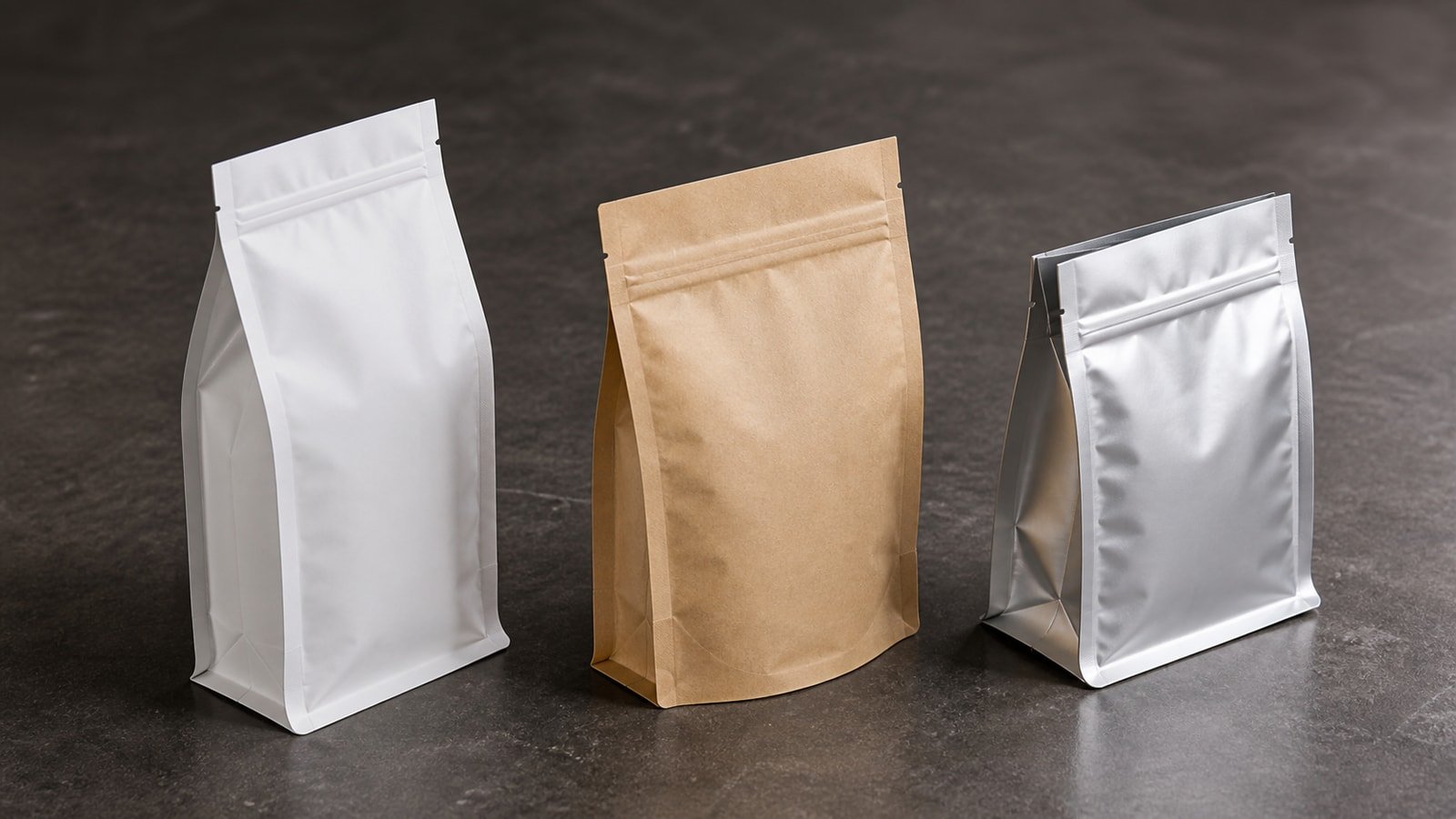
These formats should not be specified as if they behave the same way after filling. The location and construction of the gusset affect pouch depth, shelf stance, panel shape, seal stress, and carton fit.
| Pouch format | Expansion location | Filled-pack behavior | Specification watchpoint |
|---|---|---|---|
| Side gusset pouch | Left and right folded sides | Adds depth while keeping the front face compact | Confirm side-fold opening, top seal control, and shipper fit |
| Bottom gusset pouch | Folded base area | Helps the pouch stand with a clear front panel | Match bottom style to fill weight, density, and base stress |
| Flat-bottom pouch | Base and side panels form a rectangular structure | Creates a block-like shape with extra side panels | Confirm converting tolerances, seal layout, and filled footprint |
A bottom-gusset pouch is often used when upright display is important. A side-gusset pouch is more about depth and capacity while keeping face width controlled. A flat-bottom pouch, also called a box pouch, block-bottom pouch, or 8-side-seal pouch2, creates a more rectangular pack with side panels that can carry branding or product information.
The common specification mistake is asking for a gusseted pouch without naming the family. That leaves too much open. A supplier may quote a structure that holds the target volume but misses the intended shelf posture, side-panel use, or packing method.
Which Bottom Gusset Style Fits the Product Weight and Shelf Posture?
A bottom gusset should be chosen by filled weight, product density, shelf posture, and bottom seal stress. Doyen, K-seal, and plow bottom styles can all support stand-up formats, but they do not distribute load in the same way.
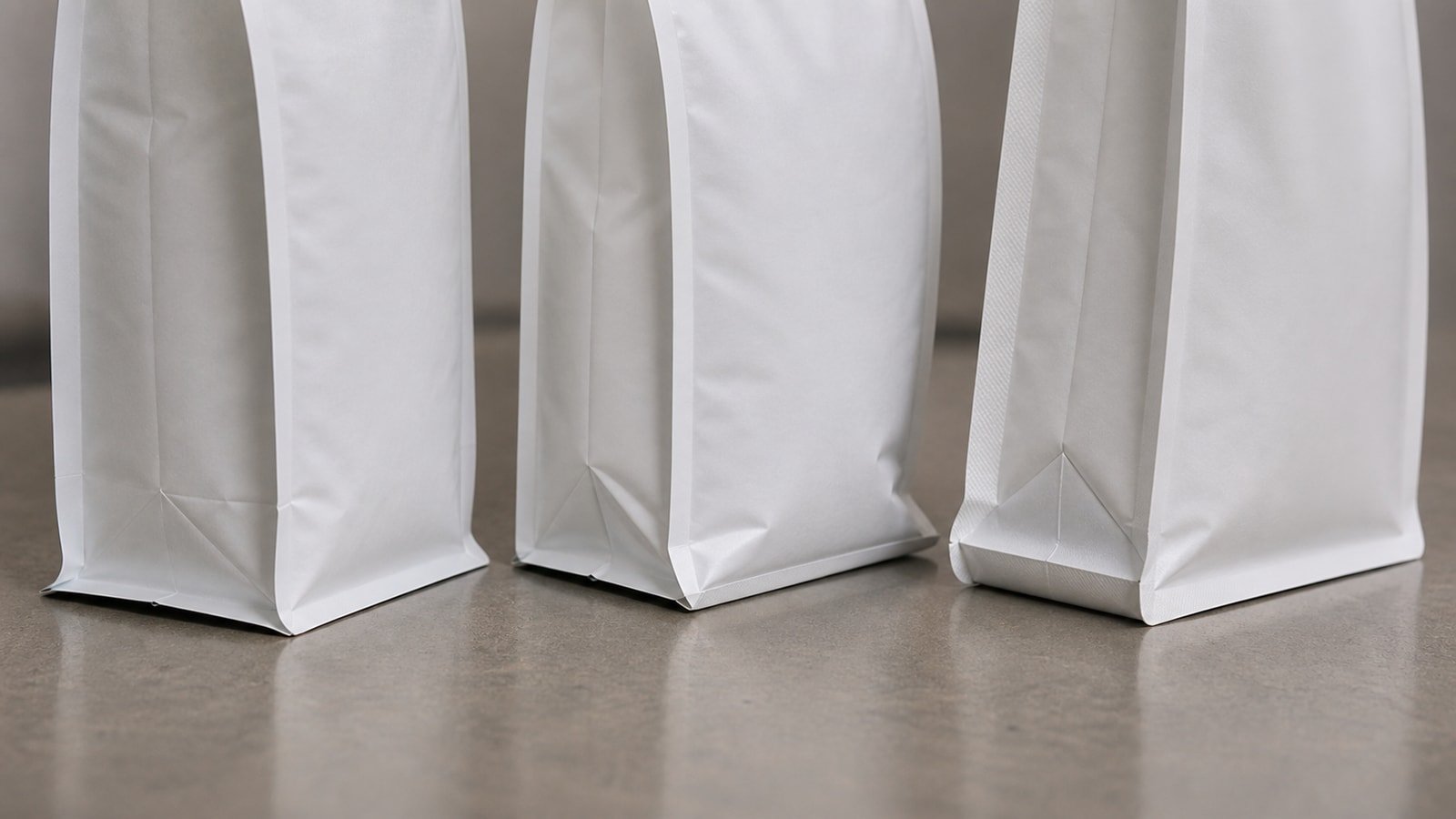
Bottom-gusset pouches are often discussed as one format, but the base construction matters. The bottom has to open, carry product load, sit on shelf, and survive handling. A light snack pack and a dense powder refill may need different base behavior even when the front dimensions look similar.
| Bottom style | Better fit | Main specification risk |
|---|---|---|
| Doyen or round bottom | Lighter stand-up formats and smaller fills | Base shape and seal area may not suit heavier product load |
| K-seal | Medium fills where side and bottom stress need more control | Corner stress and posture need filled-pack review |
| Plow bottom | Larger or denser fills in selected stand-up formats | Material stiffness, bottom seal load3, and carton behavior become more critical |
Scenario: A product team wants a clean stand-up pouch for a dense dry powder. The empty Doyen sample looks acceptable on a desk, but after filling, the base bulges and the pouch leans inside the shipper. That does not prove Doyen is always wrong. It shows the bottom style was selected before filled weight, density, and packing method were reviewed together.
Check bottom style with filled samples, not only empty hand samples or flat artwork proofs. Look at how the pouch stands after settling, whether base corners carry uneven stress, whether the lower seals wrinkle under load, and whether the filled pouch still fits the carton pattern.
When Does a Side Gusset Pouch Make More Sense?
A side gusset pouch makes sense when the pack needs more internal volume without becoming too wide at the front. The side folds expand as product is added, creating a deeper filled shape while keeping the main display face more compact.
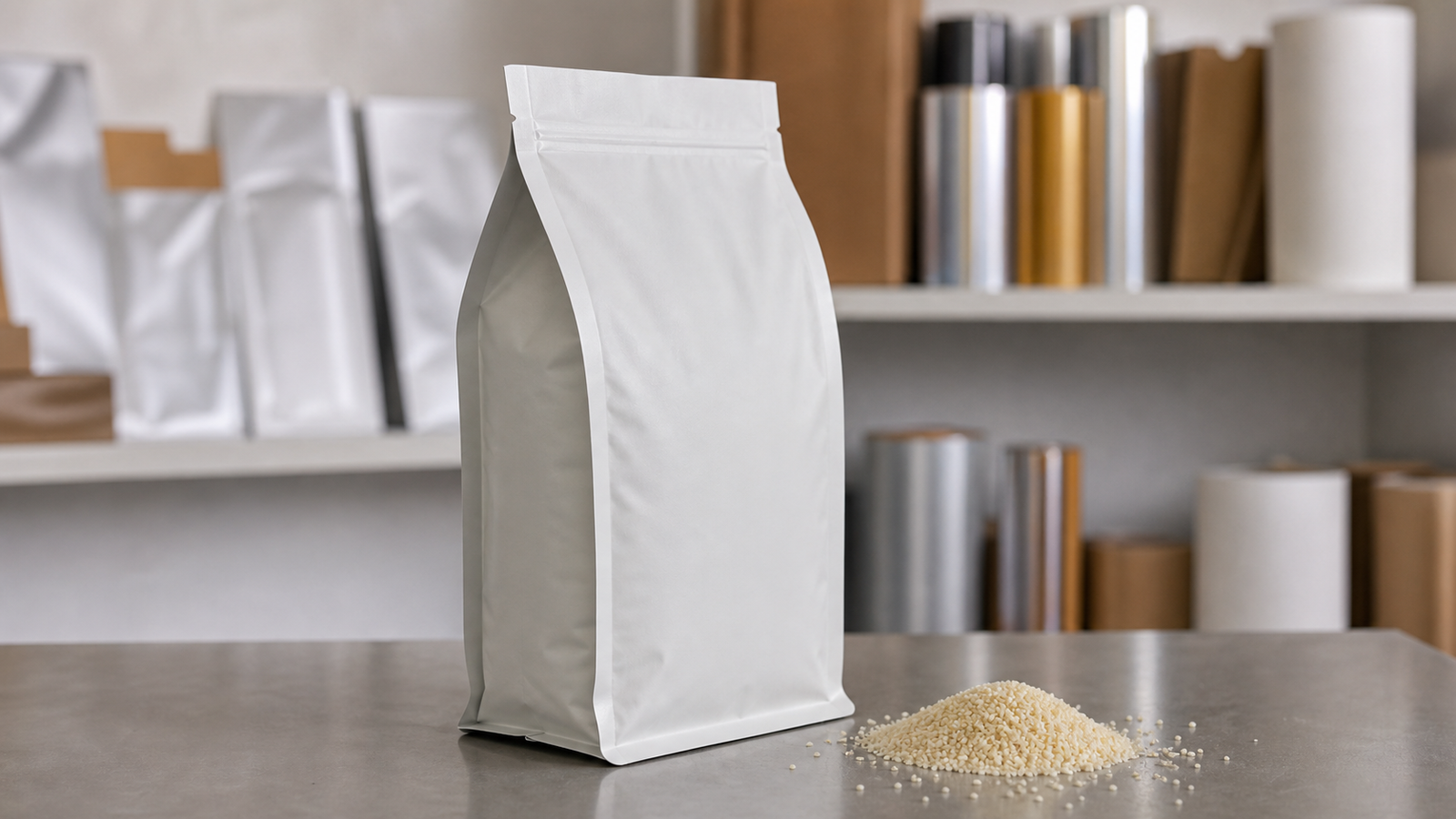
Side gussets are useful when depth matters more than a wide front panel. They suit many dry product categories because granules, beans, powders, and similar products can settle into the expanded side folds. The result is a compact front view with enough internal space for a meaningful fill.
Typical side-gusset applications include:
- Coffee and tea packs that need depth and aroma protection
- Grains, seeds, and dry foods that settle during filling and handling
- Powders where bulk density drives required pouch volume
- Pet food and treats where depth and handling strength matter
- Specialty foods where a narrow front panel helps shelf layout
The top seal deserves special attention. Side gussets create folded layers near the seal area, so the usable sealing range4 matters. This is the range of temperature, pressure, and dwell time where the sealant bonds properly without damaging the laminate or leaving weak areas. Thick or uneven folds can make the top seal harder to control.
Side gussets also affect graphics. The front panel may stay compact, but side folds can hide or distort copy after filling. Keep critical product information away from fold areas that may curve, crease, or face inward.
Use side gussets when depth and case efficiency matter, then confirm seal layout and filled shape before approving dimensions.
How Should Gusset Depth Be Specified?
Gusset depth should be specified around the way the product fills, settles, stands, and packs. A shallow gusset may not create enough volume, while an oversized gusset can distort panels, weaken posture, complicate filling, or reduce carton efficiency.
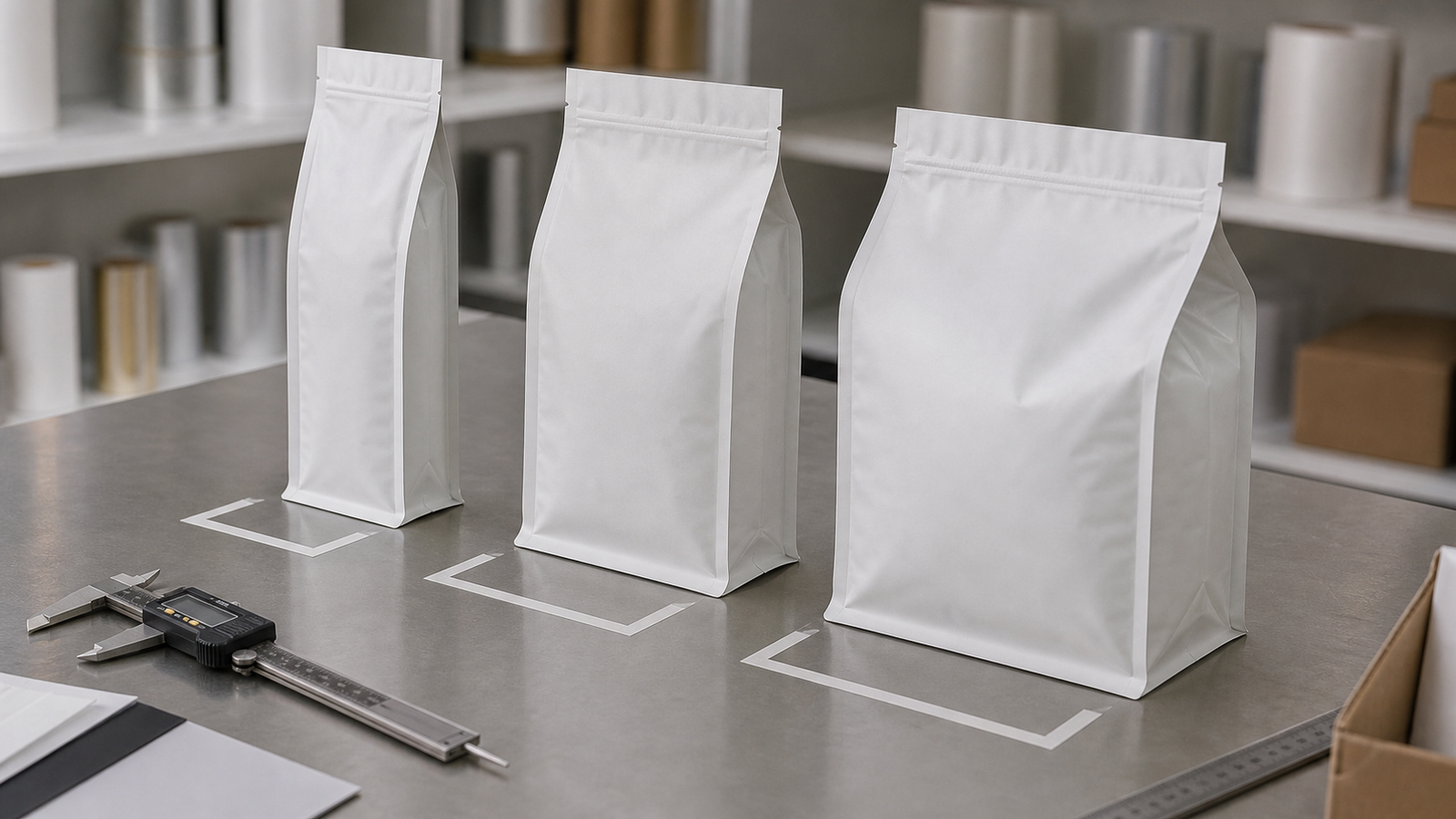
Gusset depth is not only a capacity number. It changes the pouch opening, filled shape, fold behavior, hand feel, and shipper fit. It can also change how much stress reaches the zipper area, top seal, base corners, or side seams after the product settles.
Review these inputs together:
- Product form: powder, granule, whole food, treat, wipe, mask, or refill
- Fill weight or volume, with bulk density where known
- Target flat dimensions and target filled dimensions
- Headspace above the product after settling
- Closure location, including zipper, valve, tear notch, or top seal area
- Desired shelf posture after vibration or settling
- Carton fit, stacking pattern, and transport route
Example: A pouch is sized only by target net weight, and the gusset is increased late to add space. After filling, the pouch technically holds the product, but the front panel bows, the zipper clearance tightens, and the pack no longer sits cleanly in the carton. The issue is not volume alone. It is volume without filled-shape control5.
On a filled sample, check whether the gusset opens evenly, whether product collects in fold corners, whether the top seal area stays clean enough to close, and whether the pouch keeps its intended stance after settling. For powders and lightweight dry goods, grams alone are not enough because bulk density can change required pouch volume sharply.
What Material Factors Matter for Gusset Stress and Product Protection?
Material selection for a gusseted pouch should cover product protection and mechanical stress at folds, seals, and corners. Barrier, sealant choice, stiffness, puncture resistance, thickness distribution, and print surface all affect whether the filled pouch performs as intended.
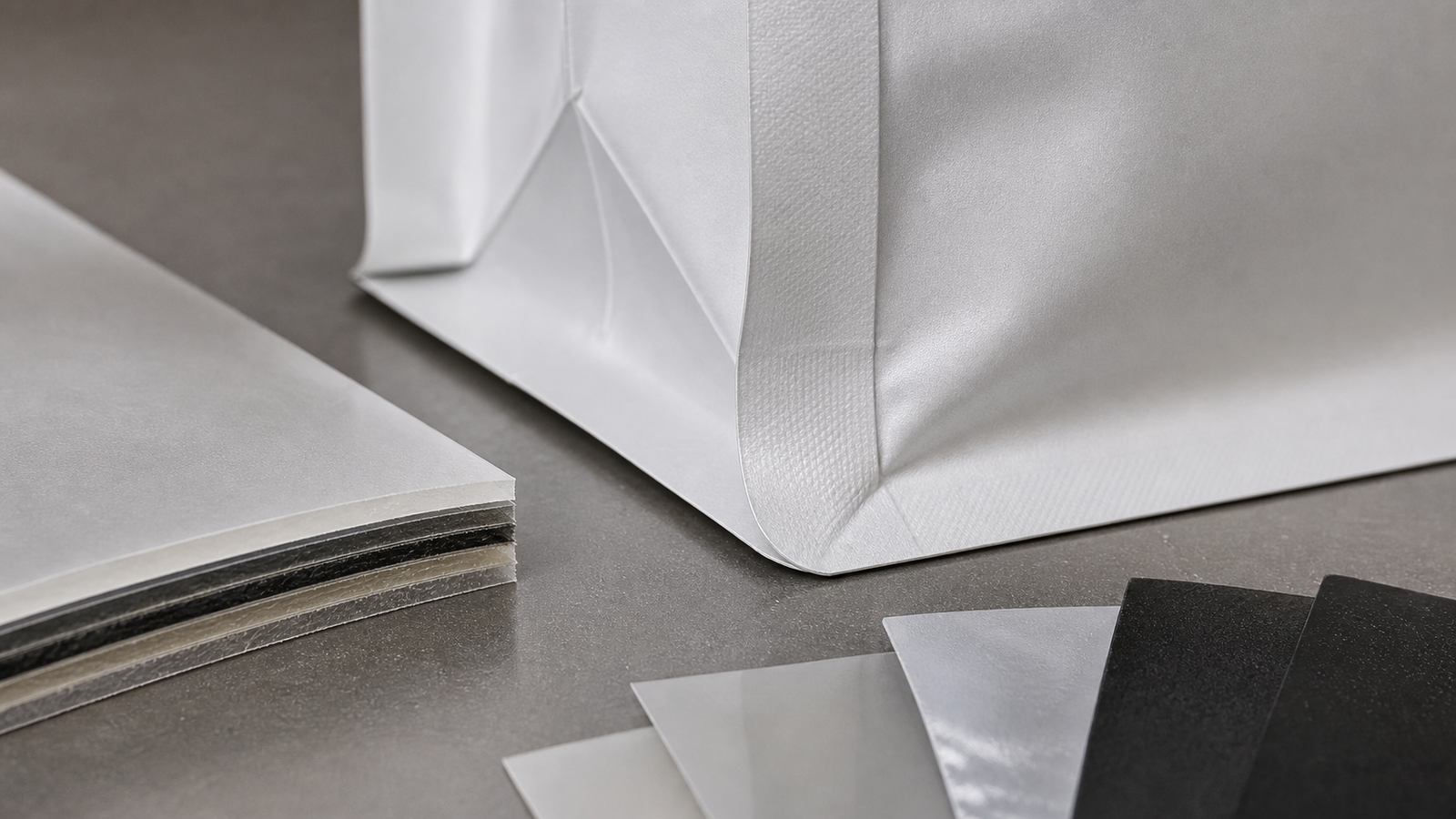
The laminate has to protect the product and survive the geometry. In a gusseted format, folds and corners can see repeated flexing during converting, filling, packing, shipment, and handling. That makes the material discussion more specific than asking for a familiar structure such as PET/PE.
| Material factor | Specification meaning | Practical consequence in a gusseted pouch |
|---|---|---|
| OTR | Oxygen transmission rate, reported with units and test conditions | Relevant for coffee, tea, oily snacks, nuts, and aroma-sensitive products |
| WVTR | Water vapor transmission rate, dependent on test temperature and relative humidity6 | Relevant for powders, dry foods, and moisture-sensitive goods |
| Sealant layer | Inner PE, PP, or other seal layer that forms heat seals | Must seal through fold thickness and tolerate the filling process |
| Stiffness | Resistance to bending, panel collapse, and poor posture | Helps shelf stance, panel appearance, and handling feel |
| Puncture resistance | Resistance to sharp product edges or rough handling | Useful for hard granules, pet treats, and dense dry goods |
Common laminate directions may include PET/PE for general printability and sealing, PET/metallized film/PE for improved light and barrier needs, PET/AL/PE for stronger barrier demands, or mono-material PE or PP structures where the target market and application support that path. Each option involves trade-offs in barrier, stiffness, heat resistance, recyclability pathway, and sealing window.
Ask whether barrier values apply to flat film or finished pouch. Finished pouches can behave differently because seals, folds, valves, zippers, and corners introduce variables that film data alone does not capture.
Which Products Are a Good Fit for Gusseted Pouches?
Gusseted pouches fit products that need more usable volume or shelf presence than a flat pouch can provide, while avoiding the weight, shape, or space demands of rigid packaging. They are especially relevant for dry foods, powders, coffee, tea, pet treats, and refill formats.
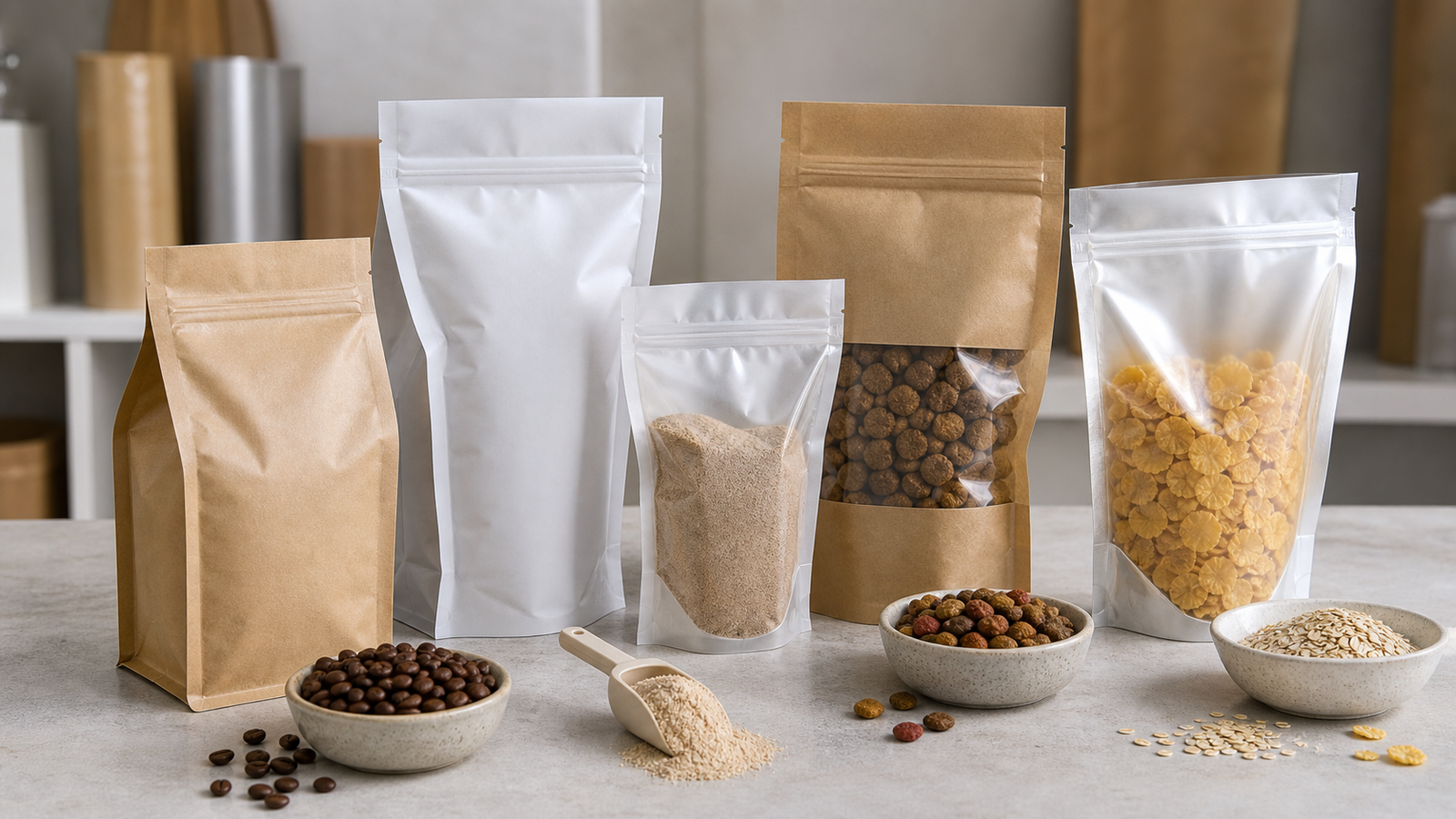
A gusseted pouch is worth considering when the product benefits from both volume and display. The format can create a larger filled shape than a flat pouch while still shipping and storing more efficiently than many rigid options.
Good-fit product groups often include:
- Snacks and dry foods that need shelf presence and moderate protection
- Coffee and tea that need aroma control and a pack shape suited to display
- Powders, supplements, and nutraceuticals where bulk density drives volume
- Pet treats and dry pet food where depth and handling strength matter
- Toiletries, masks, stationery, and refill items where flexible volume is useful
- Selected storage formats where rigid containers are not preferred
The format becomes less attractive when the product is too liquid for the intended seal design, too sharp for the selected material, or too heavy for the chosen base. Pouch family, material structure, closure, and filling method should be confirmed in parallel.
Dense products can overstress a bottom gusset if the base style and sealant structure are too light. Sharp-edged products may need puncture-resistant layers7 or a tougher sealant. Aroma-rich products may need better oxygen and aroma barrier than a simple plastic laminate. Powder products often need more headspace and better sealing control if product dust can contaminate the top seal area.
The application should define the shortlist. Start with physical product behavior, then select the pouch format.
Why Is Capacity Not Enough to Specify a Gusseted Pouch?
Capacity alone does not specify a gusseted pouch because the filled pack must also stand, seal, fit cartons, protect the product, and survive handling. Gusset style, depth, headspace, closure position, footprint, and transport stress all shape the final result.
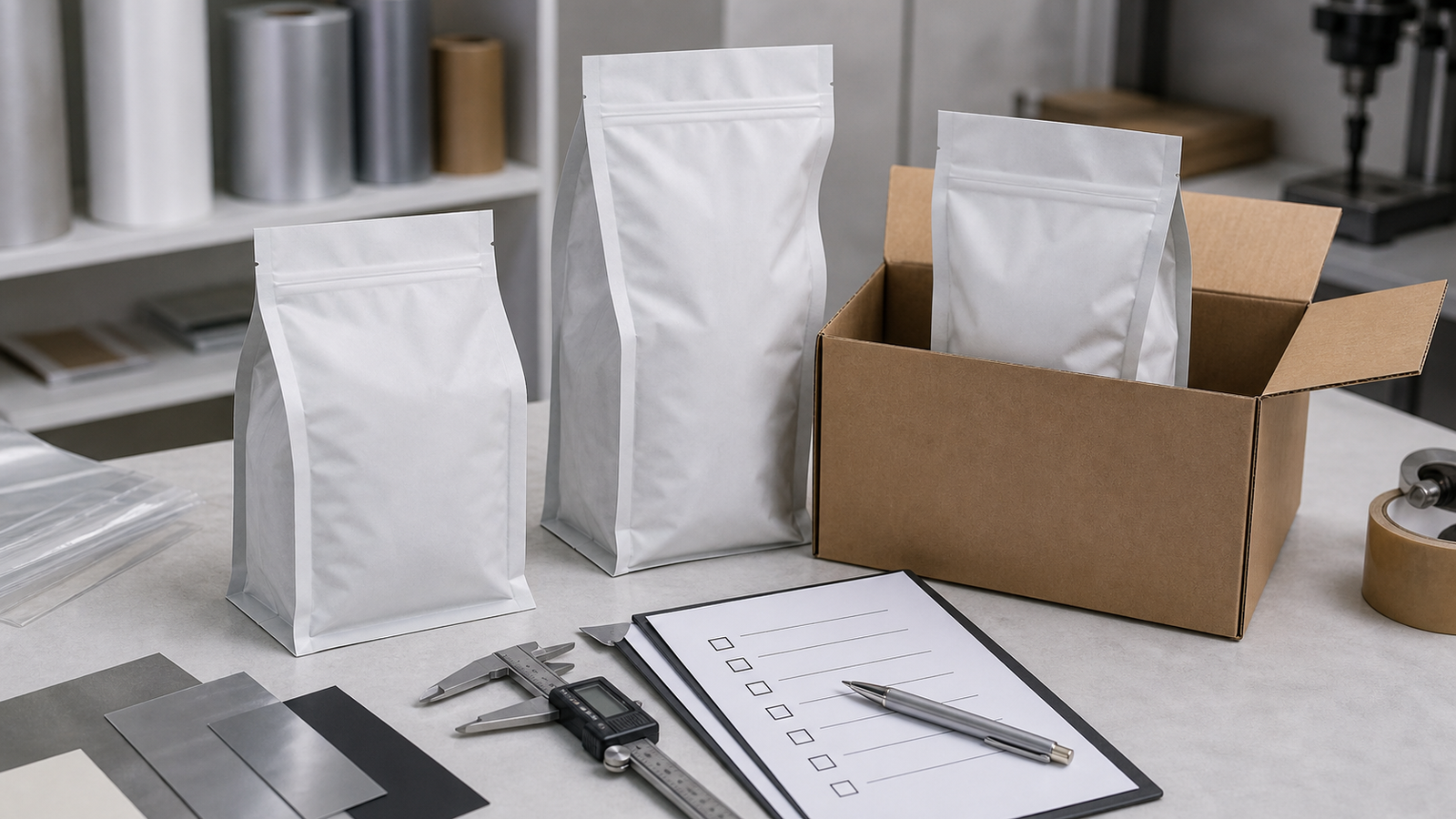
A pouch can hold the target amount and still be a weak specification. Capacity tells only part of the story. Gusseted construction adds variables that determine whether the pack works after filling, storage, and distribution.
Scenario: A sourcing team asks for a larger pouch because the current pack feels tight after filling. The revised sample holds the product, but the extra gusset depth pushes the filled footprint outside the carton plan. One issue is solved, but case packing becomes worse. That is not a simple sizing problem; it is a filled-pack behavior problem.
A practical approval checklist should include:
- Confirm pouch family: side gusset, bottom gusset, or flat-bottom
- Confirm flat dimensions and target filled dimensions
- Confirm gusset depth and how it opens after filling
- Confirm headspace, especially for powders or products that settle
- Confirm seal layout, seal width, and expected seal strength checks
- Confirm closure placement, including zipper, valve, notch, or top seal
- Confirm filled footprint against shelf tray, carton, and case pattern
- Confirm transport needs, including drop, vibration, compression, and temperature exposure where relevant
- Confirm whether filled-pack testing is required before production approval
Seal performance should not be judged by appearance alone. Depending on risk, packaging teams may use seal strength methods8, leak checks, and transport simulation approaches9 suited to the product and route. The goal is not to over-test every project. The goal is to match checks to the failure modes that matter.
How Should Filling and Packing Compatibility Be Confirmed?
Filling and packing compatibility should be confirmed with filled samples on the intended or representative process. The pouch must open, fill, seal, form its base or side folds, stack, and case-pack consistently before the design is treated as production-ready.
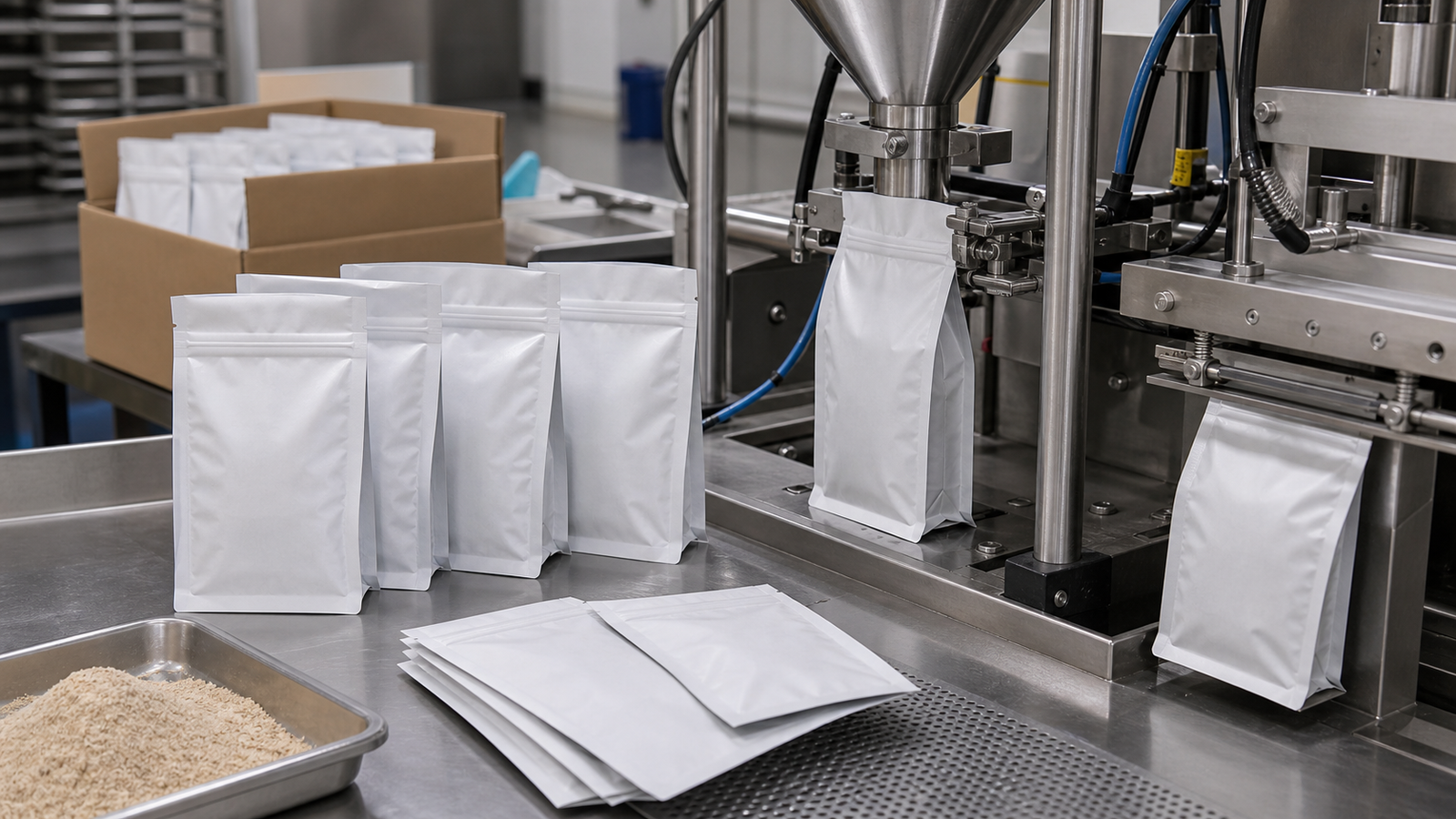
An empty sample can show print area, flat dimensions, zipper position, and general construction. It cannot prove filled performance. Gusseted pouches need to be checked under the conditions that shape them: product flow, filling speed, seal temperature, pressure, dwell time, handling, and packing.
For premade pouch filling, check whether the pouch opens reliably and whether the gusset deploys without manual correction. For powders, confirm whether dust reaches the seal area. For zipper pouches, check whether the zipper area stays flat enough after filling and whether the top seal closes consistently. For valve or degassing applications, confirm placement and carton behavior with filled packs.
A focused filling and packing checklist should cover:
- Pouch feeding and opening behavior
- Gusset deployment during fill
- Product settling and headspace after fill
- Seal jaw access, seal temperature range10, pressure, and dwell time
- Product contamination in the seal area
- Closure alignment and function after filling
- Finished pouch standing posture
- Stacking, case packing, and carton bulge
- Drop, compression, vibration, or route-specific transport checks where relevant
A flat-bottom pouch may look stable when hand-filled slowly, yet automated filling can change product distribution and corner formation. That is why the intended filling method belongs in the early specification, not at the end of sampling.
What Should an RFQ for a Gusseted Pouch Include?
An RFQ for a gusseted pouch should describe the product, fill data, pouch family, dimensions, gusset depth, barrier needs, seal expectations, closures, filling method, order quantity, and distribution conditions. That detail supports a workable structure rather than a generic bag quote.
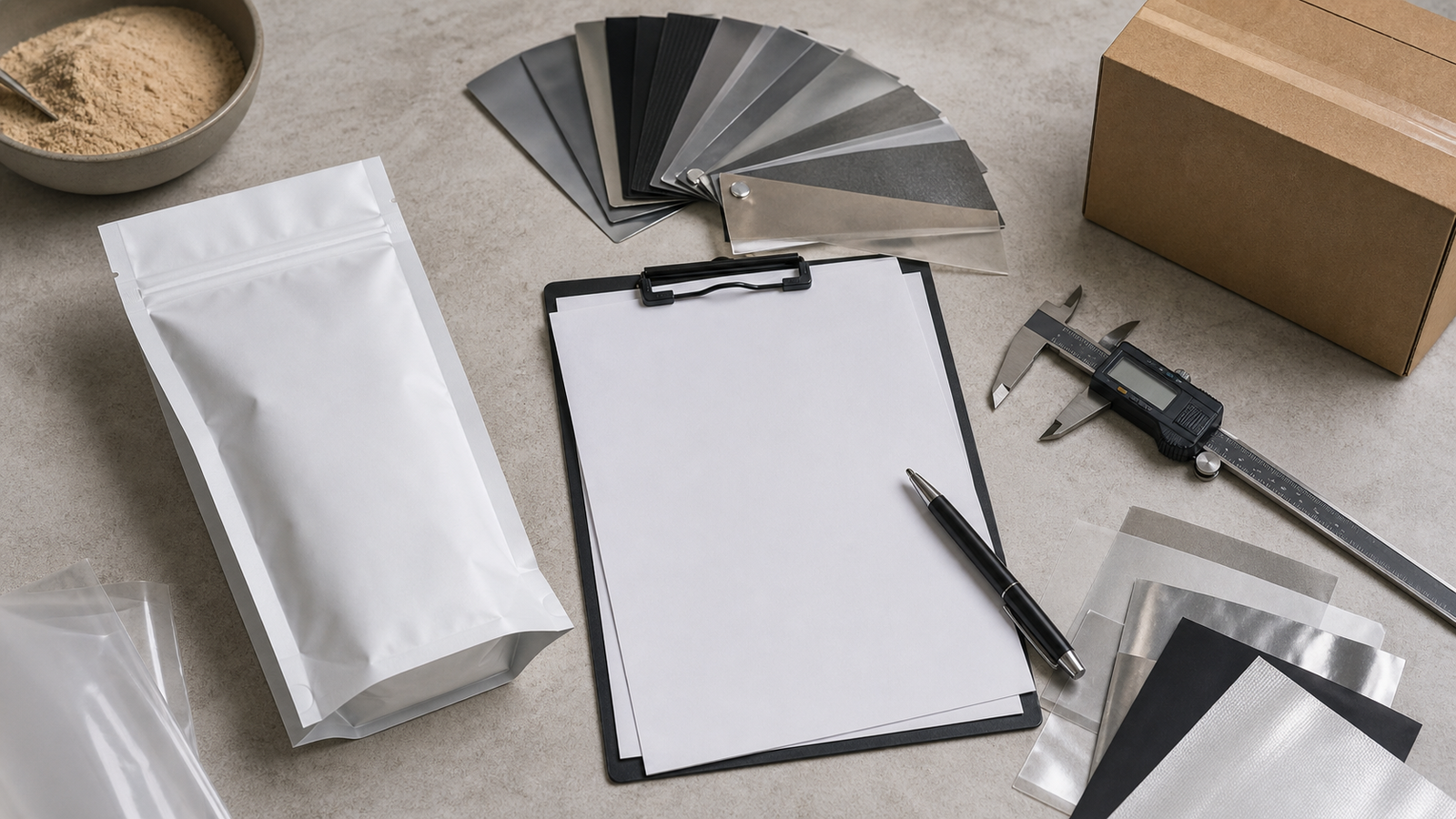
A useful RFQ gives enough context for the supplier to recommend a pouch structure that matches the product and process. If the RFQ only lists size and quantity, the response may miss filled behavior, barrier risk, seal design, and packing constraints.
Include these details before requesting pricing or samples:
- Product type and product form: powder, granule, snack, treat, wipe, refill, or other format
- Fill weight or volume, with bulk density if known
- Target flat dimensions and target filled dimensions
- Preferred pouch family: side gusset, bottom gusset, or flat-bottom
- Gusset depth and standing requirement
- Headspace expectation and product settling behavior
- Barrier needs, including oxygen, moisture, aroma, and light protection
- Requested laminate direction, if already known, such as PET/PE, PET/AL/PE, metallized film, EVOH barrier, PE, or PP structure
- Seal strength expectations and any leak or drop checks required
- Closure needs: zipper, valve, tear notch, hang hole, or other feature
- Print method, finish, window, and artwork coverage
- Filling method, seal equipment, fill temperature, and expected line speed
- Order quantity, shipment route, storage conditions, and carton plan
- Required documents for product-contact use11 or market-specific use, where applicable
If sustainability is part of the brief, define the target market and expected claim type. Recyclability, recycled content, and compostability depend on material structure, local collection systems, and certification path. Treat those as design constraints, not final wording added after approval.
A clear RFQ makes supplier responses easier to compare because each option can be judged against the same product, process, and distribution requirements.
For a gusseted pouch recommendation, send the product type, fill weight or volume, target pouch size, material or barrier need, features such as zipper or valve, order quantity, filling method, and distribution route. Those inputs make sampling and quotation far more precise.
References
-
Bottom Gusset vs Side Gusset - PackagingBest - Compare types of gusset in bags——side gusset and bottom gusset pouches to choose the ideal design. Explore benefits, packaging efficiency, ... ↩
-
Flat Bottom Pouch Sizes Guide Standard Dimensions and Capacities - Anatomy of a Flat Bottom Pouch · Front Panel: The main display surface. · Back Panel: Connects to the front and supports the pouch. · Side Gussets: ... ↩
-
Comparing Stand-up Pouch Styles - Eagle Flexible Packaging - Selecting the Best Stand-Up Pouch Style for your Product: Doyen, K-seal, Plow-Bottom, and Flat-Bottom pouch compared. How Pouch Structure and ... ↩
-
Heat sealing evaluation and runnability issues of flexible paper ... - The seal temperature used ranged from 100 to 130 °C with a dwell time of 1 to 100000 s, to characterize the development of interfacial strength. ↩
-
Custom Pouch Size & Capacity Guide - Read dimensions correctly. For stand-up pouches, Flexible Pouches lists sizing as: Width × Height × Bottom Gusset. That sounds simple, but ... ↩
-
Oxygen (OTR) and Water Vapour (WVTR) permeability of flexible ... - During testing, it is essential to define the desired temperature (ranging from 18°C to 40°C) and relative humidity (from 20% to 100%) to ... ↩
-
Flexible Pouches 101: Popular Materials and Their Applications - Nylon provides excellent puncture resistance and barrier properties against oxygen and aroma transmission, making it suitable for coffee packaging. ↩
-
Standard Test Method for Seal Strength of Flexible Barrier Materials - This test method measures the force required to separate a test strip of material containing the seal. It also identifies the mode of specimen failure. ↩
-
Test Procedures - International Safe Transit Association - Characteristics will include simple shaped random vibration, different drop heights applied to the sample package, and/or atmospheric conditioning such as ... ↩
-
Observing the effect of pressure and temperature on the seal ... - This paper analyses the impact of the sealing pressure on the seal integrity during the heat sealing of flexible multilayer packaging. To discover changes ... ↩
-
Using food safe materials for packaging | Henkel Adhesives - Food contact materials play a crucial role within the production of food safe packages. Therefore, they must comply with all respective legal requirements. ↩