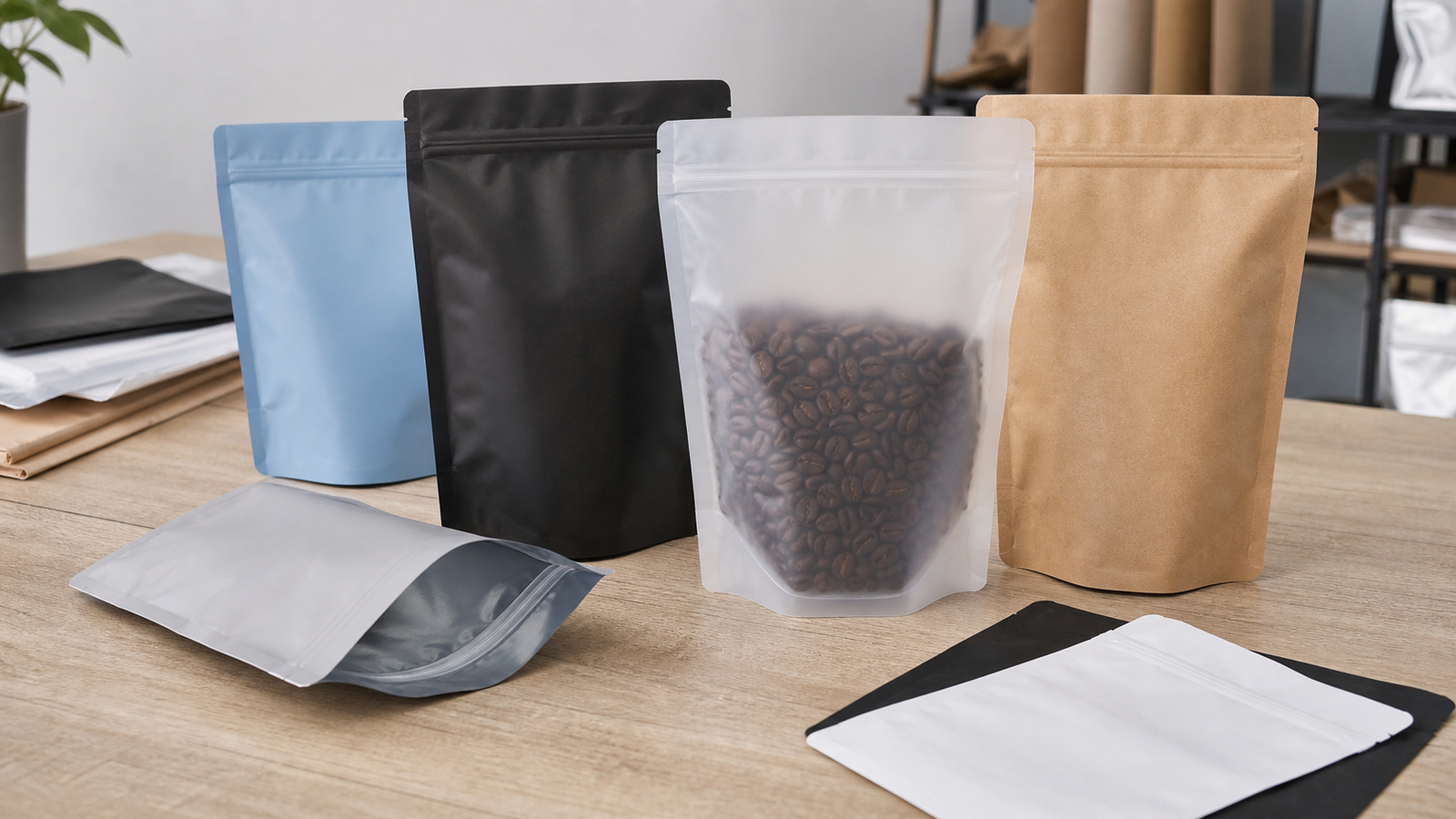
A zipper pouch looks simple from the outside, but in flexible packaging it is not just a bag with a reclose strip. The zipper, film structure, factory seal, pouch geometry, and filling method have to work as one specification.
For snacks, powders, pet treats, coffee, supplements, hardware, cosmetics, and refill formats, the practical question is not only whether the pouch opens and closes. The better question is whether it protects the product before opening, recloses cleanly after opening, and runs through the intended production process.
The sections below focus on the decisions that matter when a packaging team is defining a zipper pouch for a real product.
What Is a Zipper Pouch in Flexible Packaging?
A zipper pouch is a flexible package with an integrated reclosure profile that allows repeated opening and reclosing after first opening. In product packaging, it should be specified as a film, coextruded film, or laminate pouch built for protection, sealing, filling, handling, and distribution.
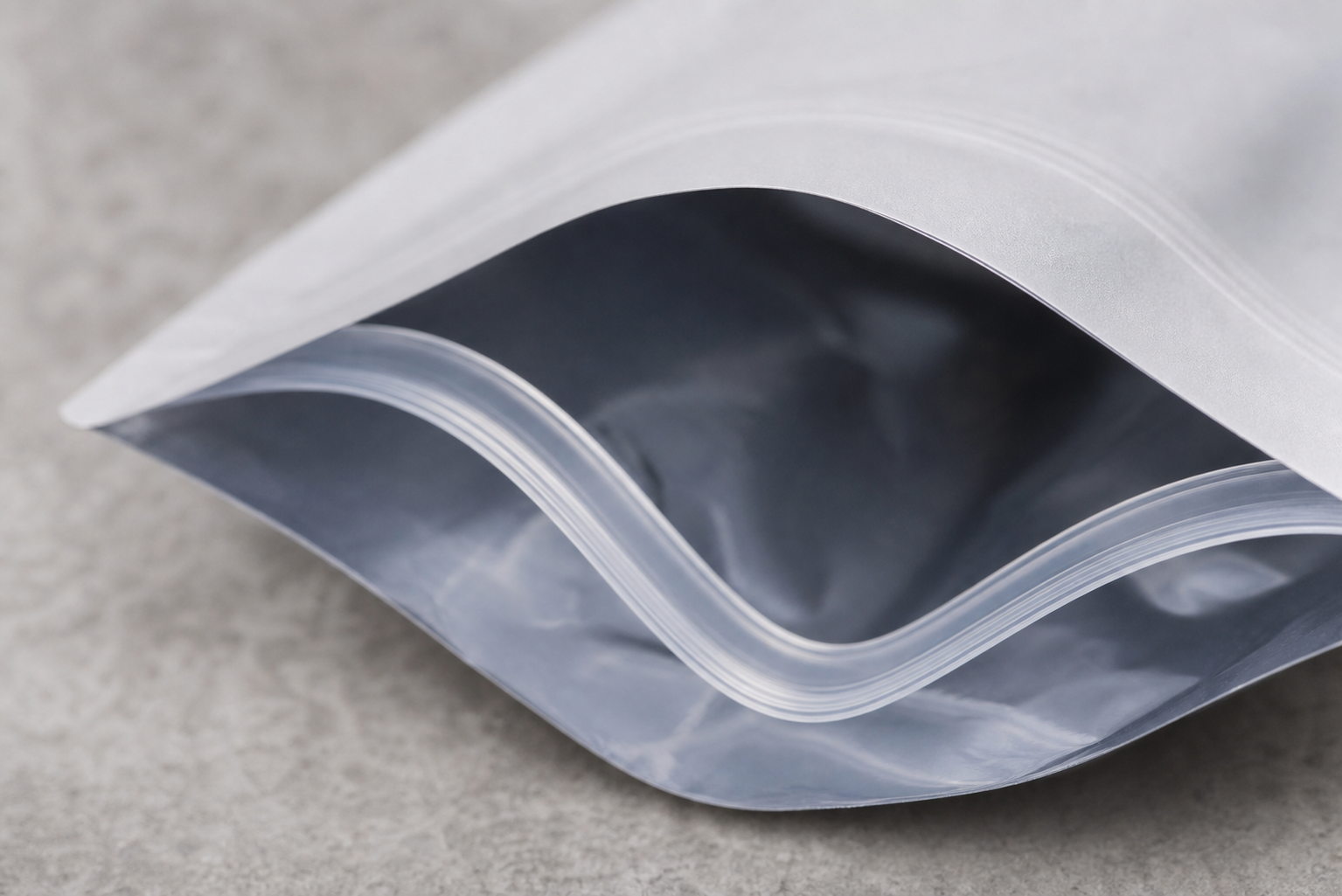
The phrase zipper pouch is used loosely, so the first step is to separate product packaging from ordinary storage items. A sewn organizer pouch, a household storage bag, and a product-grade zipper pouch1 are not the same structure.
In flexible packaging, the pouch starts with the product and the process. The structure may be a simple PE web, a mono-material PE or PP structure, a PET/PE laminate, a PET/metallized film/PE laminate, a PET/AL/PE laminate, or another construction selected for barrier, stiffness, puncture resistance, and converting behavior. The zipper is integrated into that structure so the pack can be opened and reclosed after first use.
The reclosure must sit inside a package that can still be made, opened for filling, sealed, packed, shipped, and used without creating weak points. A dry snack may need moisture control and crumb tolerance in the zipper track. A powder may put more pressure on dust control in the top seal area. Small hardware may shift the focus toward puncture resistance, seal strength, and film toughness.
A useful starting definition covers five linked choices: pouch family, material structure, zipper type, factory seal design, and filling method. If those choices are made in isolation, the sample may look acceptable while still failing after filling, sealing, or repeated handling.
Does the Zipper Replace the Factory Seal?
No. The zipper is a reclosure feature, not the main factory seal before first opening. Most retail zipper pouches still need a heat seal, tear notch, tamper-evident header, or inner seal arrangement to protect the product until the pack is opened.
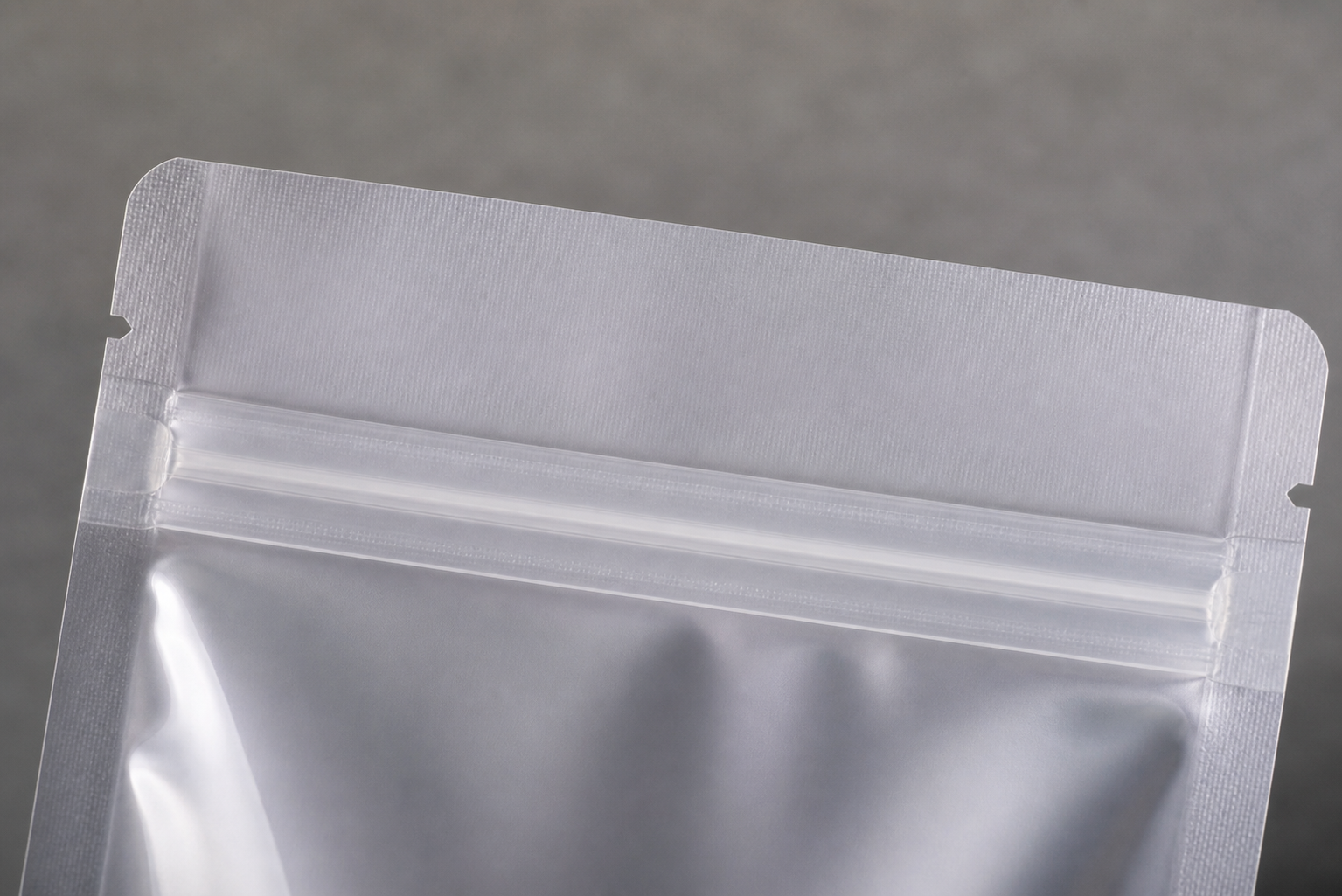
The zipper helps after the pack is opened. It does not automatically prove that the unopened pouch is protected during storage, transport, or shelf display. That job normally belongs to a factory seal system2.
A common layout places a heat seal above the zipper. The user tears across a notch or tear line, removes the top strip, and then uses the zipper for reclosure. Other layouts may use a tamper-evident header, an inner seal area, or a seal below a separate access feature. The right choice depends on product risk, opening experience, available headspace, and the sealing equipment.
Example: a nut pouch with only a press-to-close zipper may feel convenient, but without a reliable factory seal the pack may be vulnerable to odor loss, moisture ingress, or visible tamper concerns before first use. A zipper profile can close by hand, but it is not the same as a controlled heat seal made under defined temperature, pressure, and dwell-time conditions.
Useful specification checks include:
- Confirm whether the factory seal sits above or below the zipper.
- Define tear notch location and tear direction.
- Leave enough top-seal width for the actual seal jaw.
- Check whether product dust, oil, or fragments may contaminate the seal area.
- Define how the top seal will be checked, such as peel strength, leak checks, or visual inspection.
The factory seal and zipper should be designed together. A pouch can reclose nicely and still be under-specified before first opening.
Which Zipper Style Fits the Product and Opening Experience?
The zipper style should match product form, opening width, handling needs, and contamination risk. Press-to-close zippers suit many dry and semi-dry products, sliders can help on wider or larger packs, and specialty profiles may be needed for powders, frozen items, heavy fills, or restricted-access applications.
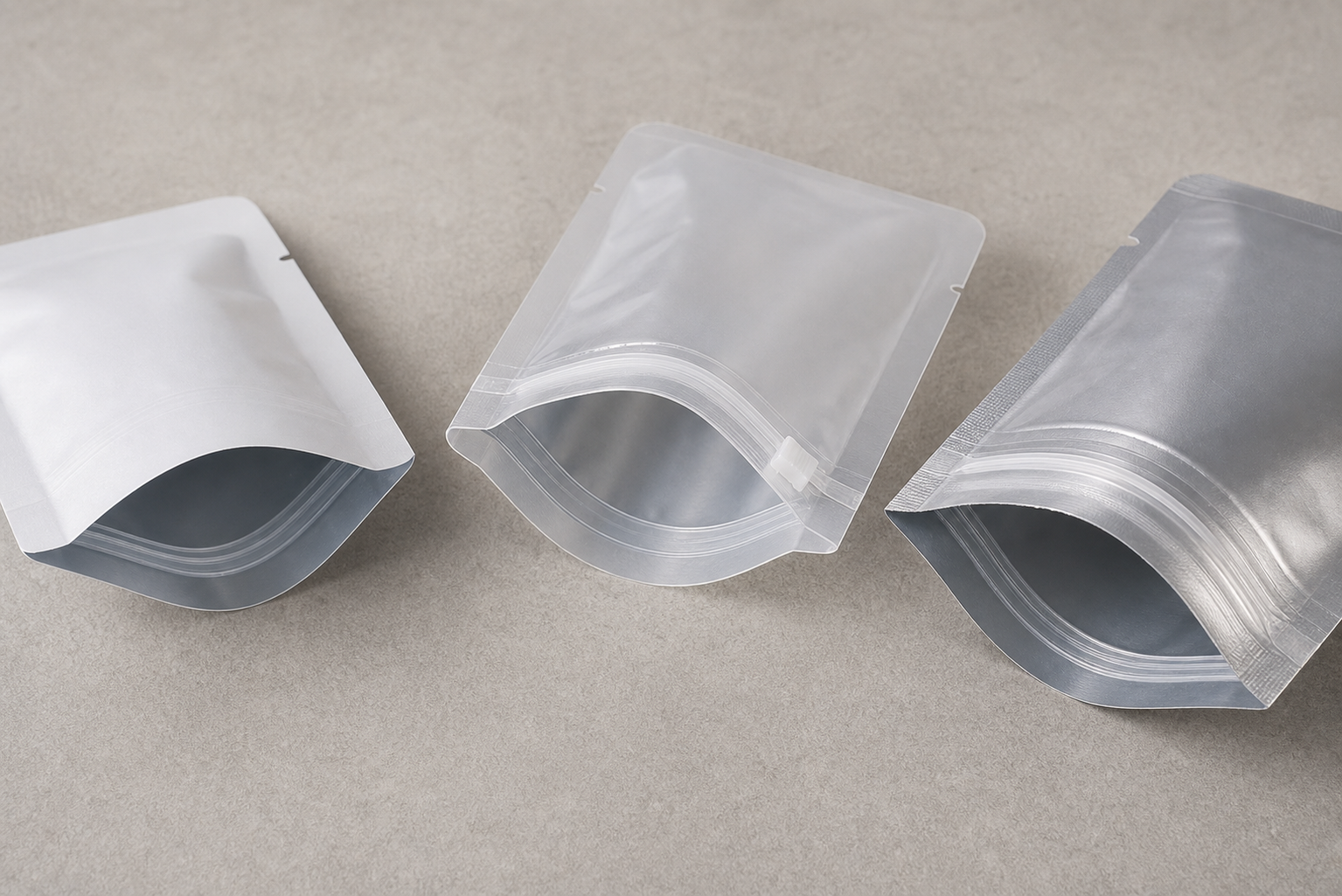
Zipper selection is not only an ease-of-use choice. It affects opening force, closing feedback, filled-pack handling, line setup, profile bulk, and how easily residue interferes with reclosure.
A press-to-close zipper is common because it is familiar, compact, and workable for many dry foods, pet treats, coffee, tea, small hardware, and refill formats. It fits many packs where the user can align the tracks by hand without much effort. A slider zipper adds a moving part, but it can make reclosure easier on wider pouches, larger openings, or products where an uneven hand press would leave gaps.
Specialty profiles deserve discussion when the product creates a specific problem. Powders can settle into the track. Frozen products can stiffen the film and zipper profile. Heavy contents can pull against the mouth of the pouch. Restricted-access formats may require a design that is harder for children to open and must be reviewed against the relevant market rules.
| Zipper style | Best-fit use | Specification risk to check |
|---|---|---|
| Press-to-close | Snacks, coffee, tea, pet treats, light refills | Track alignment, closing feel, residue tolerance |
| Slider | Wider openings, larger formats, frequent access | Slider insertion, end stops, added top bulk |
| Powder-tolerant profile | Powders, mixes, supplements | Track contamination3 and reclose reliability |
| Heavy-duty profile | Larger fills or tougher handling | Seal anchoring, profile stiffness, mouth stress |
| Restricted-access profile | Sensitive products needing controlled access | Opening protocol, market rules, user testing |
The decision should be made with pouch width, product residue risk, and filling process in view. A more complex zipper is not automatically better if it slows converting or steals needed top-seal clearance.
What Film Structure Should a Zipper Pouch Use?
A zipper pouch should use a film or laminate structure matched to product protection, stiffness, puncture resistance, print quality, barrier needs, and zipper sealing. A thin PE mono-web behaves differently from a structured laminate such as PET/PE, PET/PA/PE, metallized film, foil, or mono-material PE or PP.

Film structure controls more than appearance. It affects how the pouch stands, how it seals, how the zipper anchors, how the print looks, and how the product is protected over time.
PE can provide sealability, flexibility, and moisture resistance. PP may add stiffness, clarity, heat resistance, or seal behavior depending on grade and orientation. PET is often used for printability, dimensional stability, and surface strength. PA or nylon may be considered where puncture resistance or flex-crack resistance matters. Metallized film, aluminum foil, EVOH, AlOx, or SiOx coated films may be used when oxygen, moisture, light, or aroma protection is more demanding.
Barrier data should be read with care. OTR means oxygen transmission rate, and WVTR means water vapor transmission rate. Values should include units, test method, temperature, relative humidity, and whether the result applies to the film web only or the finished pouch. A barrier number without test conditions4 is not enough for shelf-life decisions.
| Structure example | Typical function | Specification issue to confirm |
|---|---|---|
| PE mono-web | Light flexible bag, simple sealing | Limited stiffness and barrier for many packed products |
| Mono-material PE or PP | Recyclability-oriented design in selected streams | Barrier, sealing window, stiffness, and line behavior may change |
| PET/PE | Print surface plus sealant layer | May need added barrier for sensitive products |
| PET/metallized film/PE | Better light and oxygen protection than simple plastic laminate | Flex cracking and actual barrier data need review |
| PET/AL/PE | High barrier and light protection | Recovery route may be limited in many markets |
| PET/PA/PE | Added toughness and puncture resistance | Cost, stiffness, and forming behavior need checking |
The zipper and sealant layer also need compatibility. If the zipper profile and inner layer do not seal reliably across the intended temperature, pressure, and dwell-time range, the laminate name alone will not fix the design.
Should the Pouch Be Flat, Stand-Up, or Gusseted?
The pouch geometry should follow how the product is filled, displayed, stored, and accessed. Flat side-seal bags, three-side-seal pouches, stand-up zipper pouches, and flat-bottom zipper pouches all solve different volume, shelf posture, front-panel, and handling problems.
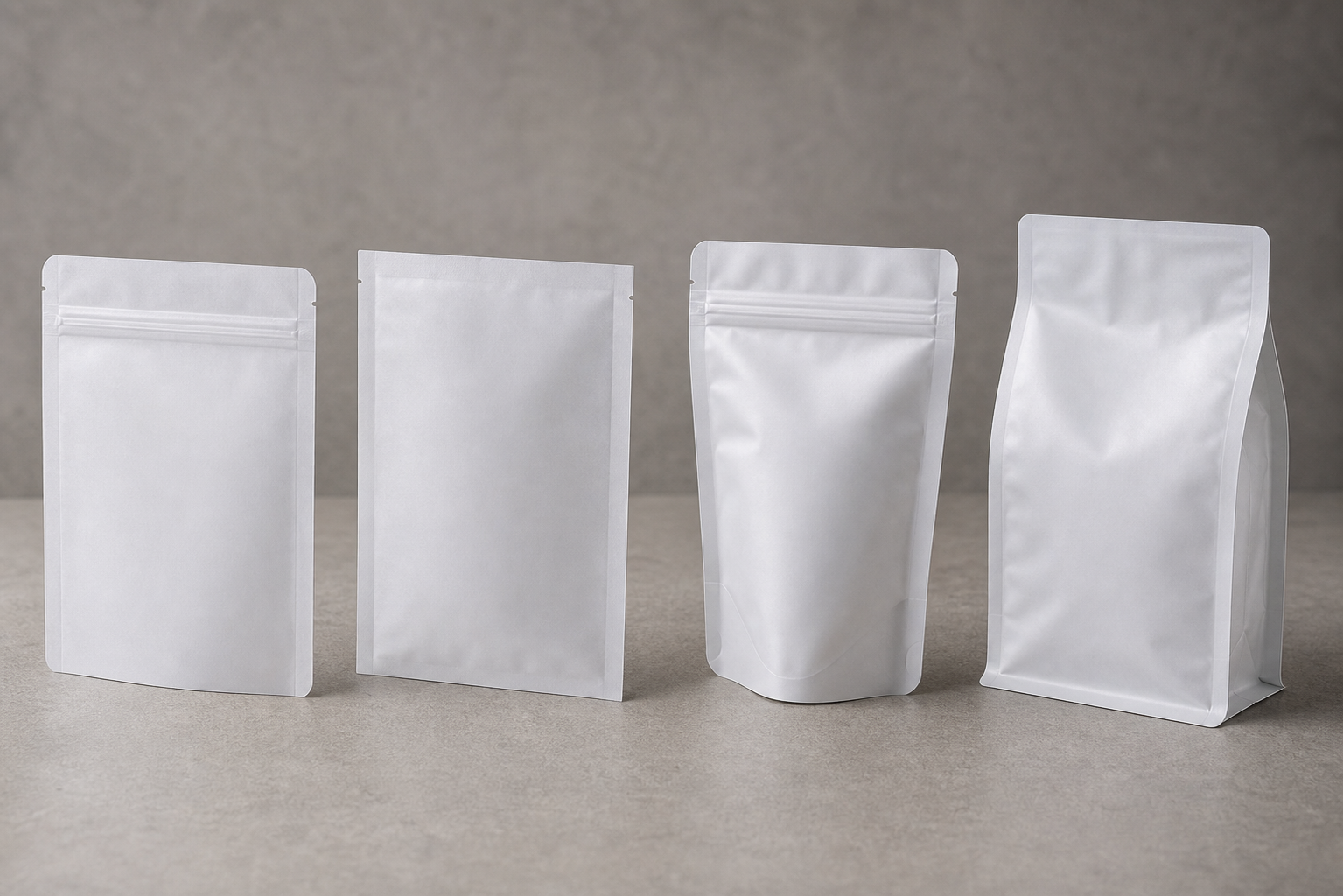
Most zipper pouches are rectangular with the zipper across the top, but the structures do not behave alike. Format determines usable volume, filled footprint5, shelf posture, access to the opening, carton fit, and printable area.
Flat side-seal zipper bags made from folded film can work for light storage, simple refills, accessories, craft supplies, and low-profile items. Three-side-seal zipper pouches give more controlled edges and often suit small portions, samples, powders, or compact product formats. Stand-up zipper pouches use a bottom gusset so the pack can sit upright, add front-panel area, and hold more product without only increasing width. Flat-bottom zipper pouches create a more box-like shape with a structured base and extra side panels.
| Format | Useful application | Filled-pack check |
|---|---|---|
| Flat side-seal zipper bag | Light items, accessories, simple refills | Film stiffness, seal strength, opening feel |
| Three-side-seal zipper pouch | Samples, powders, compact portions | Top seal, zipper height, filling clearance |
| Stand-up zipper pouch | Snacks, pet treats, coffee, supplements | Bottom gusset, shelf posture, headspace, zipper strain |
| Flat-bottom zipper pouch | Larger dry goods and shelf blocks | Panel registration, base stability, carton fit |
Flat dimensions can mislead. A dense candy and a fluffy powder can need very different internal volume at the same fill weight. Product settling can also change zipper strain and top-seal clearance.
For shaped zipper pouches, the custom outline must not reduce seal margin, weaken gusset folds, interfere with tear notches, or add stress near zipper ends, spouts, valves, or high-flex corners. Shape should support the pack, not fight the sealing layout.
How Much Seal Land Is Needed Around Zipper Ends?
Seal land around zipper ends is the controlled side-seal area that helps prevent weak points, wrinkles, and leak paths. The zipper cut length should leave enough side-seal land and zipper-end crush area before pouch width, mouth opening, or artwork layout is finalized.
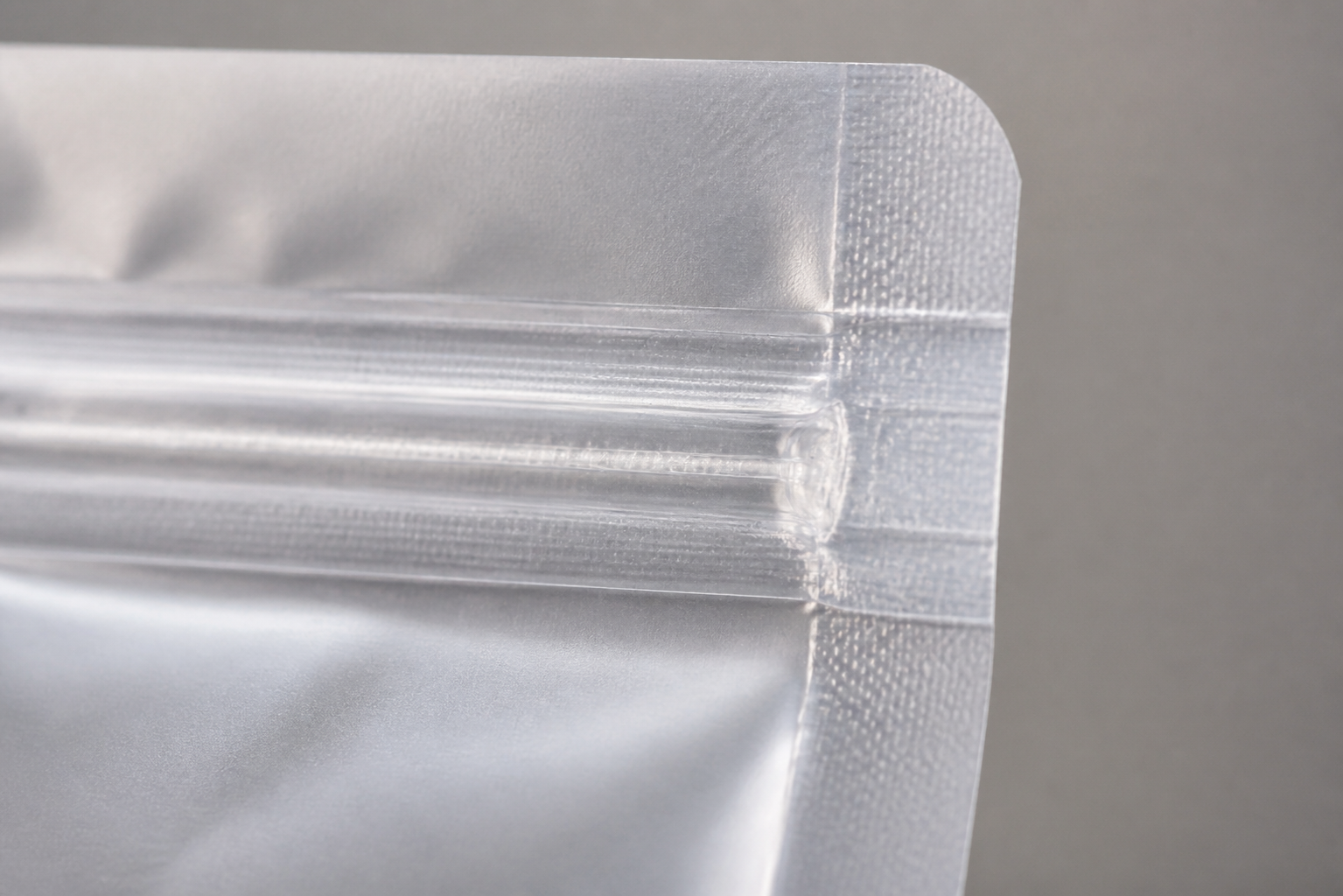
The zipper cannot simply run from edge to edge without consequences. At each side of the pouch, the zipper profile must terminate cleanly and be captured by the side seal. That zone is often called the zipper-end crush area because the zipper profile is compressed into the seal region during converting.
If the zipper is too long, the side seal may have to fight through profile bulk, film wrinkles, and uneven thickness. If the zipper is too short, the opening may feel narrow or awkward. The correct design balances access width with seal integrity.
Important checks include:
- Confirm finished pouch width and usable mouth opening separately.
- Define zipper cut length rather than assuming full-width placement.
- Leave enough side-seal land outside the zipper ends.
- Review whether the zipper profile creates a thick transition at the side seal.
- Check crush appearance and seal continuity in the finished pouch.
- Consider leak checks when the product is powdery, oily, aromatic, or moisture-sensitive.
Example: a packaging team may ask for the widest possible zipper opening on a small snack pouch. That sounds reasonable from an access standpoint, but if the zipper ends sit too close to the side seals, the pouch may develop wrinkles or thin spots where the side seal crosses the profile.
Seal strength checks can follow recognized methods such as ASTM F886 where suitable for the structure, but the method and sample preparation need to match the seal being evaluated. Visual inspection alone is weak evidence when the zipper-end area is a known stress point.
Where Should the Zipper, Tear Notch, and Top Seal Sit?
Zipper height, tear-notch position, headspace, and top-seal clearance should be designed around the filled pouch, not only the empty sample. Product dust, splash, zipper bulk, and tear placement can all reduce the clean seal area needed for reliable first-opening protection.
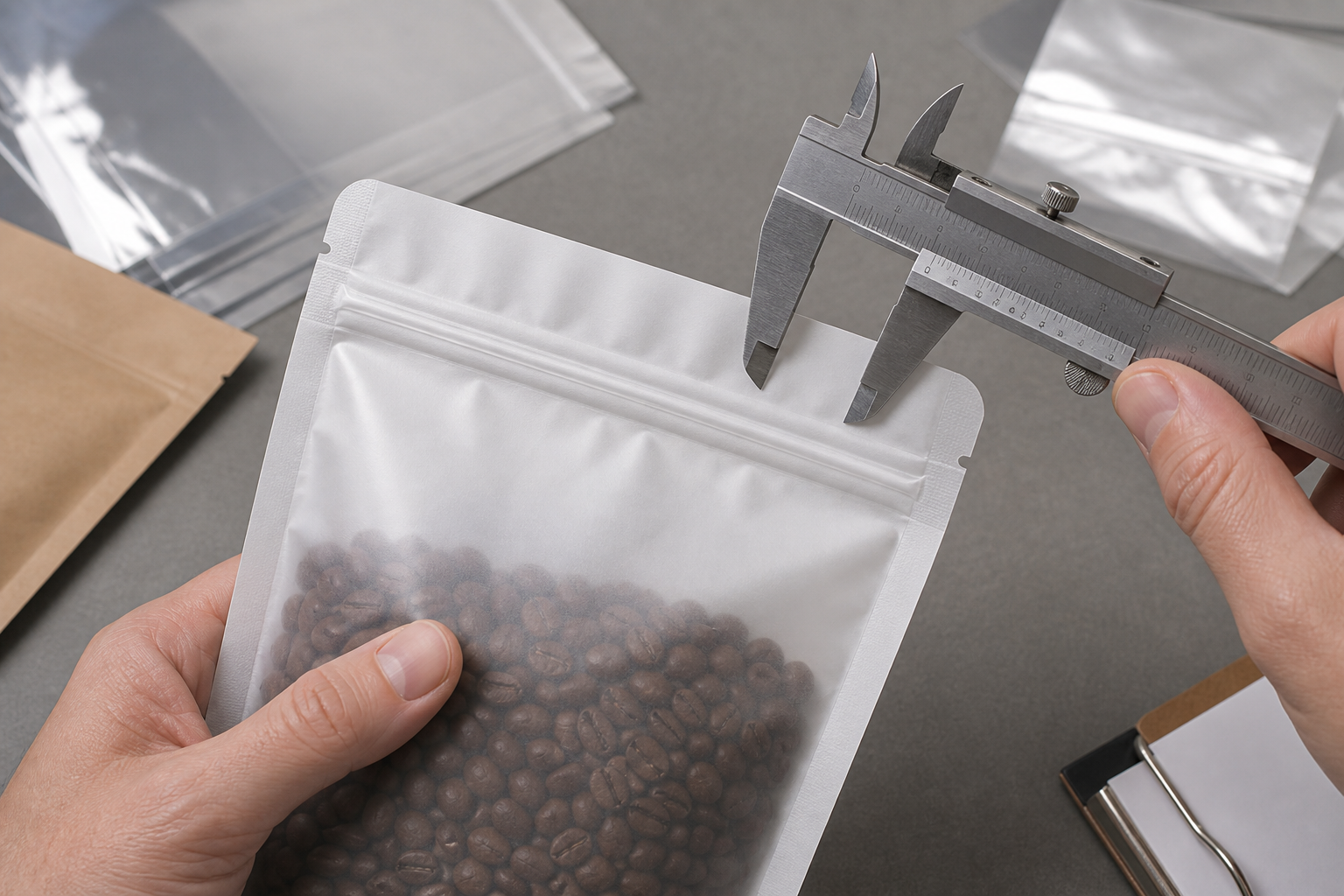
This is one of the layout decisions I would check early. The top area must do several jobs at once: allow filling, provide headspace, carry the zipper, leave room for a clean factory seal, support tear opening, and still give the user practical access after opening.
Scenario: a pouch appears large enough as an empty flat sample. The width, height, and zipper all look acceptable on the desk. After filling, the product settles upward more than expected, powder dust reaches the upper area, and the zipper bulk leaves too little clean top-seal space7. The seal jaw can still close, but the seal area is contaminated and narrow. This is a teaching scenario, not a real project record.
The layout should be reviewed with a filled-pack drawing or trial, not only an empty sample. Headspace is not wasted space when it protects sealing and handling. For powders, assume some dust movement unless the filling process has already shown clean top control. For liquids or semi-moist products, splash risk may affect where the top seal can be placed.
What should be checked before tooling?
- Distance from pouch top to tear notch.
- Distance from tear notch to zipper.
- Distance from zipper to fill line after product settling.
- Clean top-seal width available to the actual sealing jaws.
- Zipper bulk and profile thickness near the seal area.
- Whether opening leaves enough access for scooping, pouring, or hand removal.
A small height adjustment at this stage can prevent a repeated sealing problem later.
When Does a Product Actually Need a Zipper Pouch?
A product needs a zipper pouch when repeated access improves portion control, storage, spill reduction, odor management, organization, or product protection after opening. If the product is normally used once, a zipper may add complexity without enough functional value.
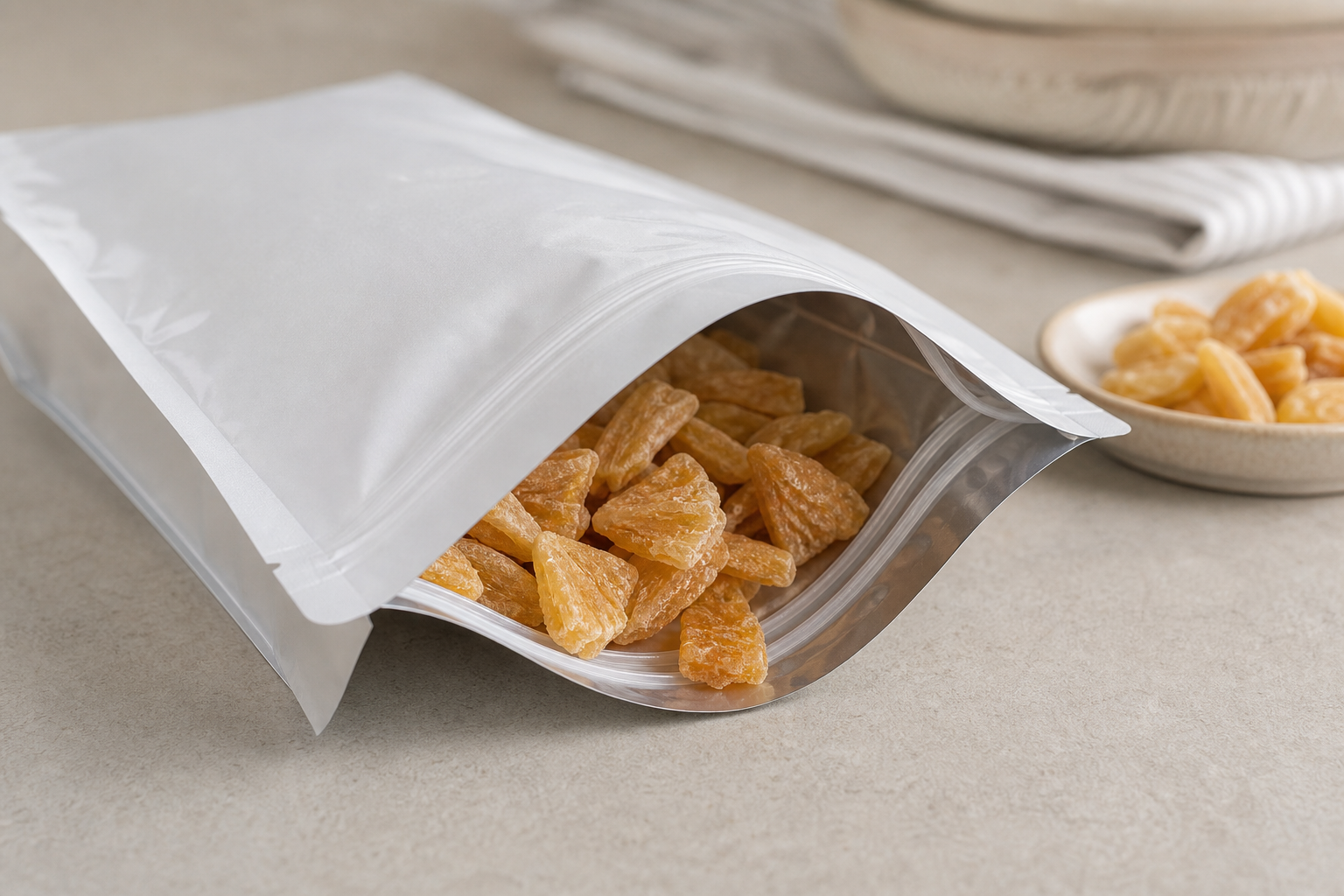
A zipper earns its place when the pack will be opened and closed repeatedly. That sounds obvious, but it is often missed when reclosure is treated as a default premium feature.
Snacks, pet treats, coffee, tea, powders, supplements, craft supplies, cosmetics, travel items, and small hardware can benefit from reclosure because the user may take out a small amount and store the rest. In those cases, reclosure supports portion control, tidiness, aroma retention, moisture management, and organization.
For single-use samples, one-time refills, or products that transfer immediately into another container, the zipper may not add much. It can increase material use, converting complexity, pouch height, and seal layout constraints. The decision should be functional, not decorative.
| Product access pattern8 | Zipper value | Specification note |
|---|---|---|
| Repeated small portions | High | Match zipper to residue, opening width, and hand access |
| Scoopable powders | High if the track stays clean | Check dust control and mouth width |
| Aromatic dry goods | Often useful | Pair reclosure with suitable barrier structure |
| Single-use sample | Often low | Tear notch or simple seal may be enough |
| Heavy or sharp items | Conditional | Film toughness and zipper anchoring become important |
| Travel or organization item | Useful | Consider puncture, transparency, and repeated flexing |
The zipper does not replace barrier. Coffee still needs a structure that manages aroma and oxygen exposure. Oily pet treats still need grease resistance and sealant compatibility. Moisture-sensitive supplements still need WVTR data and closure performance reviewed together.
How Should the Zipper Be Validated on the Filling Line?
A zipper pouch should be validated with the intended filling and sealing process, not only as an empty sample. Premade pouch lines and form-fill-seal systems can create different requirements for zipper application, opening, filling clearance, seal jaw access, residue control, cooling, and top-seal strength.
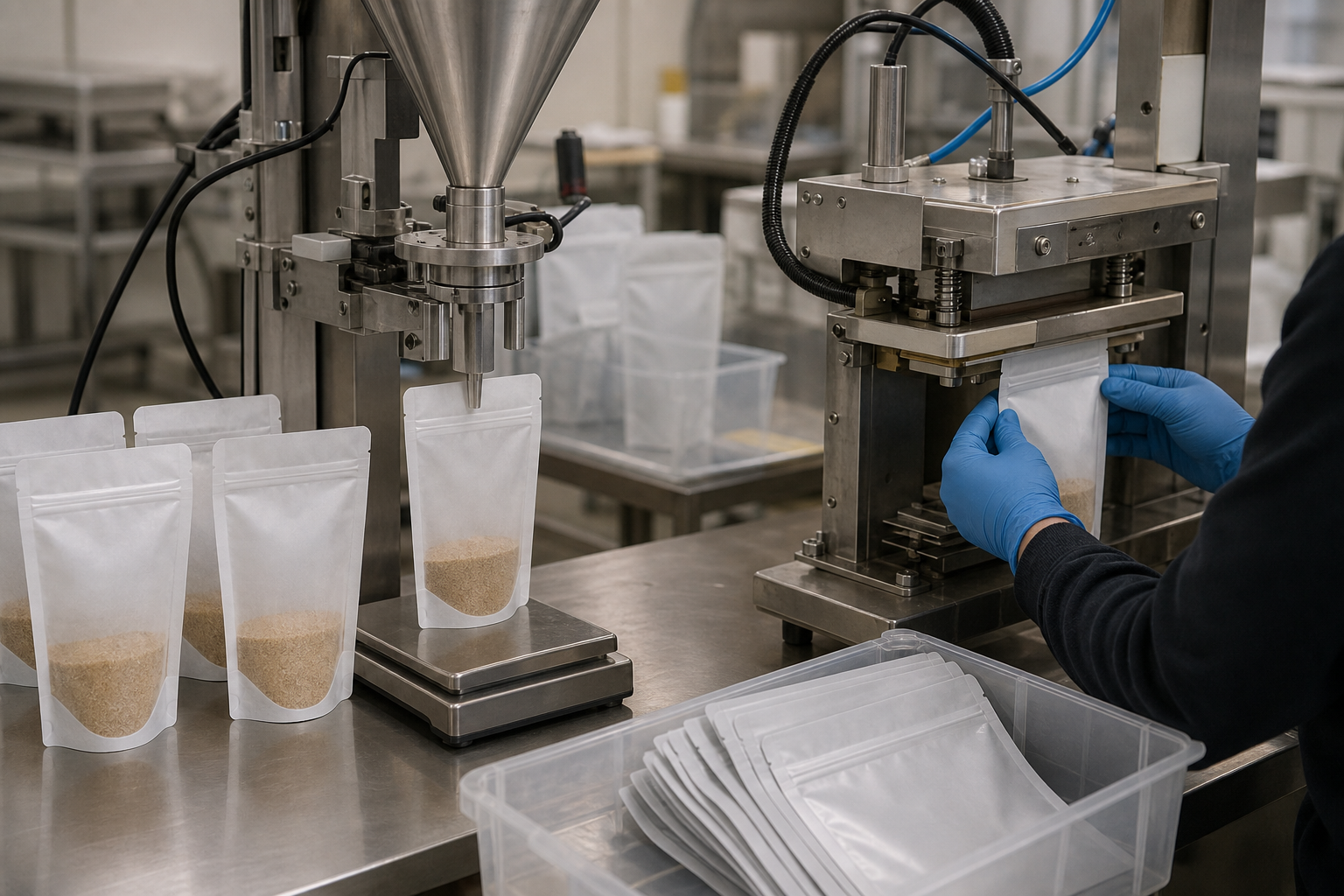
A hand sample can confirm shape and basic feel, but it cannot prove production behavior. The pouch must work with the line that will open, fill, seal, cool, and discharge the pack.
Premade pouch filling lines9 usually receive converted pouches, open them, fill through the mouth, and create the top seal. The zipper position affects how easily the pouch opens and how much clearance remains for filling nozzles, funnels, or product flow. Form-fill-seal systems may introduce the zipper differently, including pre-applied zipper webs or zipper application during forming. Those systems create different alignment, tension, and sealing requirements.
Validation should include the product when product behavior affects sealing. Powder dust, oil, fragments, static, product temperature, and splash can all change top-seal performance.
A practical line-trial checklist should include:
- Pouch feeding and opening consistency.
- Zipper alignment after pouch opening.
- Filling nozzle clearance above the zipper.
- Product residue in the zipper track and top-seal area.
- Seal jaw access and pressure across the top seal.
- Seal temperature, pressure, dwell time, and line speed range.
- Cooling time before compression or case packing.
- Top-seal peel checks, leak checks, and filled-pack drop or compression checks where relevant.
What if line details are not final?
State the assumed fill method and open risks. A pouch designed for a careful semi-automatic premade line may not transfer cleanly to a faster automated setup without adjustment.
Which Added Features Are Worth the Extra Complexity?
Added features are worth using only when they solve a defined handling, access, display, safety, or product-protection problem. Gussets, tear notches, scoring, handles, windows, hang holes, sliders, special shapes, and compartments can improve usability, but each one adds converting and validation work.

A zipper pouch can carry many added features, but every feature changes the design. The practical test is whether the feature solves a real packaging problem and can be controlled in production.
Stand-up gussets add shelf posture and volume, but they affect bottom seal stress, filled footprint, and carton fit. Tear notches improve opening, but they must align with the intended tear path and avoid cutting into the zipper or top seal. Laser scoring can improve opening control, but it adds registration and film-depth control10 requirements. Windows support product visibility, but they may reduce barrier if the clear area is not designed carefully.
Example: adding a hang hole to a small zipper pouch may help peg display, but it also consumes top-web area. If the same area must carry a tear notch, header seal, zipper, and top seal, the design can become crowded quickly.
Feature review should stay disciplined:
- Does the feature solve a defined use or display problem?
- Does it reduce available seal area or zipper clearance?
- Does it require new tooling, tighter registration, or slower line speed?
- Does it change barrier, puncture resistance, or stiffness?
- Does it create new inspection points?
- Does it affect carton fit or transport stress?
Special shapes need extra caution. Custom outlines must not reduce seal margin, weaken gusset folds, interfere with tear notches, or add stress near zipper ends, spouts, valves, or high-flex corners. A good feature earns its place by improving function without making the core pack less reliable.
What Should a Zipper Pouch RFQ Include?
A zipper pouch RFQ should define the product, fill amount, pouch format, zipper style, zipper position, seal land, tear notch, top-seal clearance, barrier expectations, material preference, print needs, compliance documents, filling method, sealing process, quantity, and distribution route.
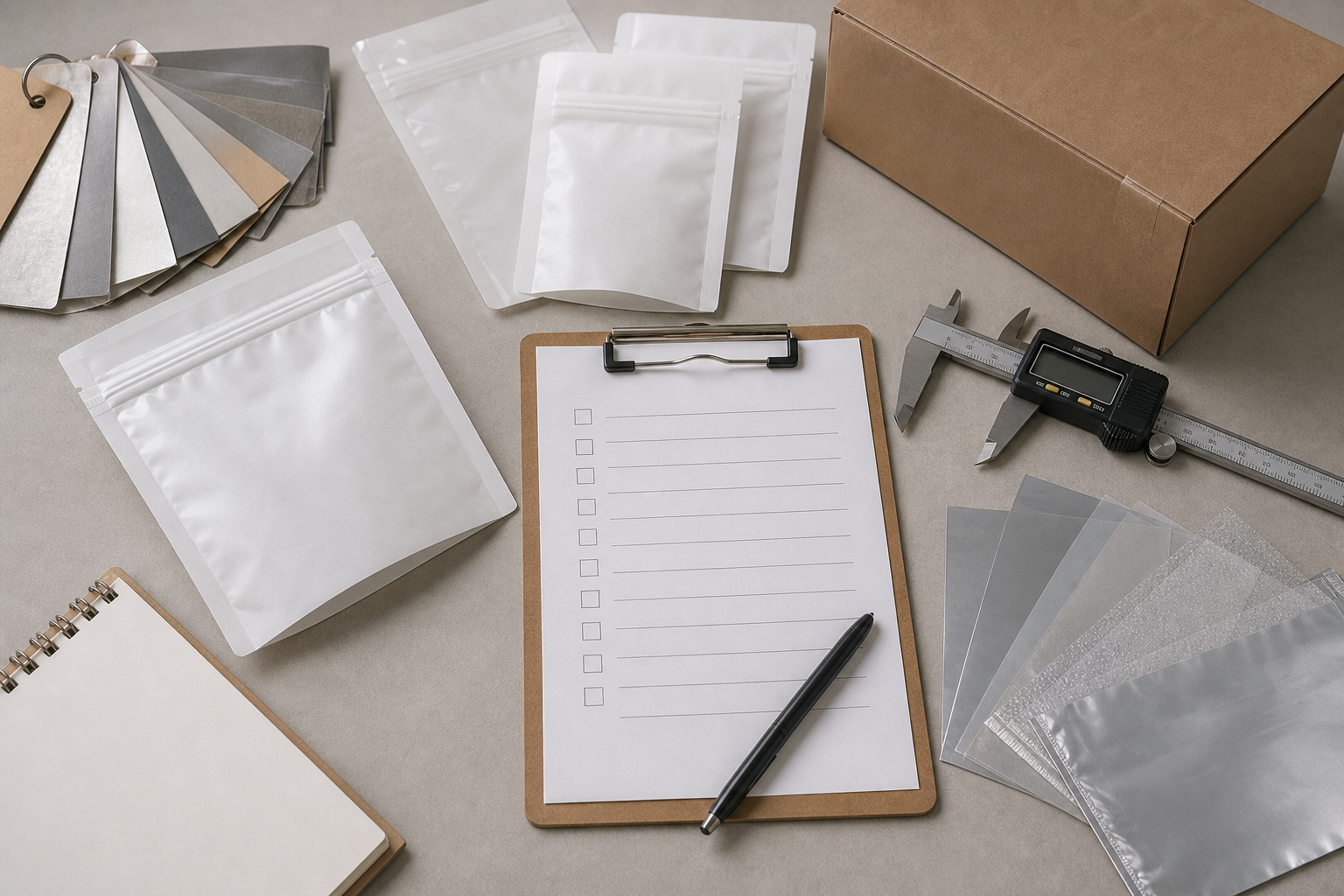
A size-only RFQ usually leads to a generic pouch answer. A functional RFQ gives the supplier enough information to recommend a structure that can protect the product, run on the line, seal properly, and meet the intended presentation.
Use this approval checklist before asking for a quote:
- Product type and product form, such as snack, powder, pet treat, coffee, supplement, hardware, cosmetic, or refill.
- Fill weight or volume, plus product bulk density if known.
- Target pouch size, including flat dimensions and desired filled appearance.
- Pouch format, such as flat side-seal, three-side-seal, stand-up, or flat-bottom.
- Zipper style, zipper position, and required opening width.
- Required side-seal land and zipper-end crush area.
- Tear notch needs and top-seal clearance.
- Barrier expectations, including OTR and WVTR requirements when shelf life depends on oxygen or moisture control.
- Material preference, such as PET/PE, PET/PA/PE, metallized film, foil laminate, mono-material PE or PP, or paper-film laminate.
- Print method, finish, window, and artwork constraints.
- Compliance documents needed for the target market and product-contact use.
- Filling method, sealing process, seal jaw limits, line speed target, and fill temperature if relevant.
- Distribution route, storage conditions, carton packing, and handling risks.
- Quantity, sample needs, and approval tests.
Testing requests should match the risk. Seal-strength checks, leak checks, drop checks, compression checks, ISTA-style distribution testing11, and shelf-life validation may all be relevant depending on the product. The RFQ does not need to make every project complicated, but it should reveal the risks early enough to design around them.
For a zipper pouch recommendation, send the product type, fill weight or volume, pouch size, preferred material or barrier need, zipper style, added features, quantity, filling method, sealing process, print requirements, and distribution route. Those inputs are enough to start a practical sample or quotation review.
References
-
Flexible Packaging Solutions | Packaging Bags and Pouches - Mondi - Our high-quality flexible packaging range includes pre-made packaging, reels, and high-performance barrier materials and protects the goods inside. ↩
-
Zipper Pouch vs Heat Seal Pouch: Which Packaging Solution Fits ... - Both options fall under the broad category of flexible pouch packaging — lightweight, customizable, and highly effective at protecting contents ... ↩
-
North America Reclosable Zipper For Flexible Packaging Market - By Product Type: Single Track Zippers, Dual Track Zippers, Powder Zippers, Liquid Zippers, Child Resistant Zippers, and others; By Material: Polyethylene ... ↩
-
[PDF] Effects of Temperature and Humidity on the Barrier Properties of ... - The OTR and WVTR values of the BOPVA films increase both exponentially with RH. Their WVTR values increase exponentially with temperature, but the OTR values ... ↩
-
Find the Best Fit: Stand Up Pouch Size Chart - Baishen Pack - Three important dimensions are Width, Height, and Bottom Gusset. Pouch size. ○ Width (W): This is the distance from the left side edge to the ... ↩
-
Standard Test Method for Seal Strength of Flexible Barrier Materials - This test method measures the force required to separate a test strip of material containing the seal. It also identifies the mode of specimen failure. ↩
-
Premade Pouch Filling Machines | Swifty Bagger - Paxiom Group - Premade pouch filling machine for zipper closures. DOY pack, SUP and SURP pouches with the Swifty Bagger for all your automated bagging needs. ↩
-
Reclosable Packaging - PPC Flex - Reclosable packaging is the perfect solution for businesses that need to promote product freshness and consumer convenience. Learn how we can help. ↩
-
Premade Pouch Filling Machine — Automatic Pouch Packager - ZONESUN premade pouch filling machines for liquids, pastes & powders. Reliable, hygienic, and easy to operate. Shop semi-auto to fully automatic models. ↩
-
Laser Scoring for Flexible Packaging - Areatai - Our equipment offers the following core technical advantages: Micron-Level Depth Control: The laser energy is precisely calibrated to vaporize ... ↩
-
ISTA Testing: A Guide to Packaging Transit Testing | CDF Corporation - Used in the development of transport packages, these tests are designed to compare the performance of two or more packaging container designs, ... ↩