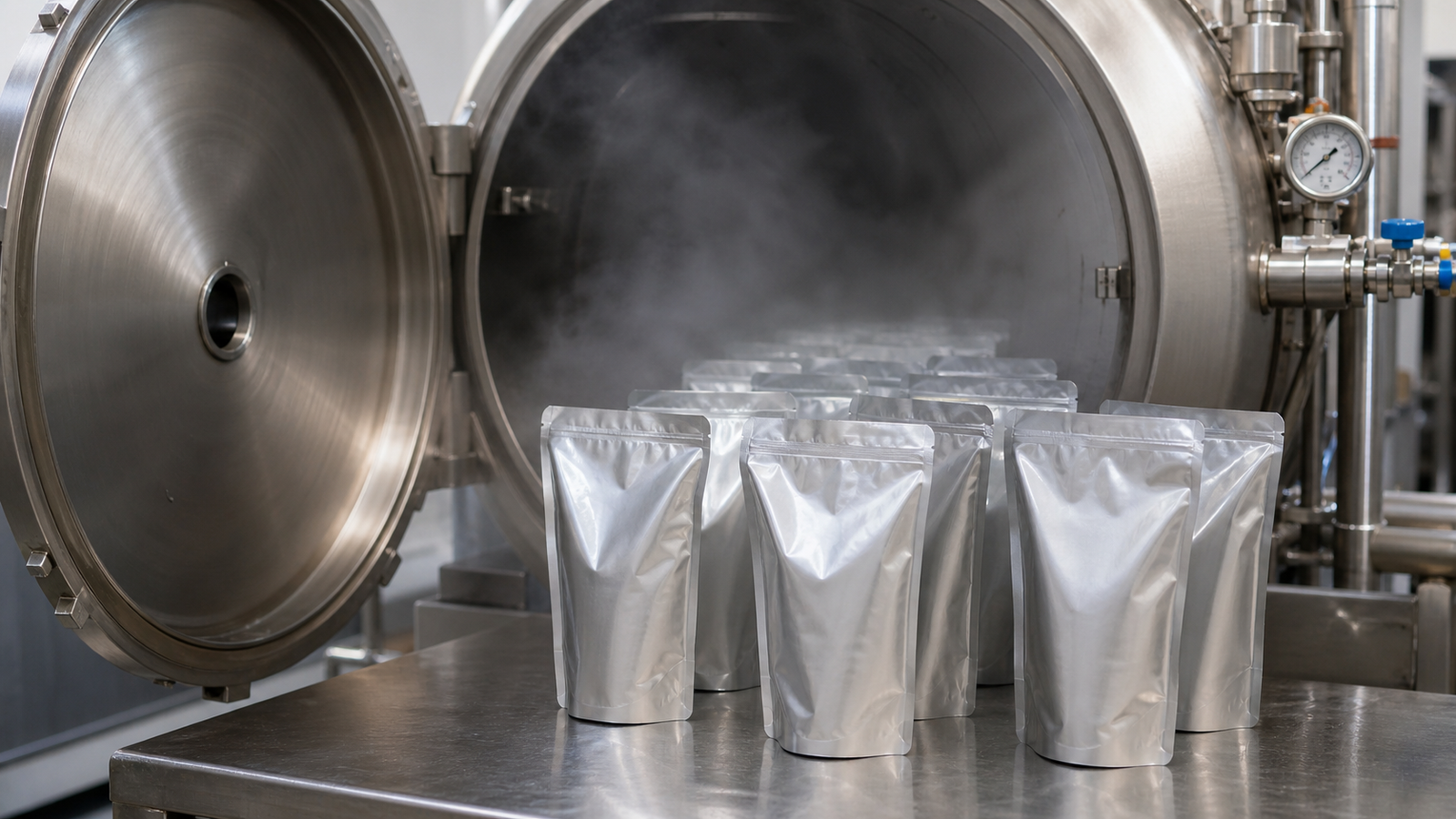
A retort pouch is a flexible package designed to go through heat and pressure after it has already been filled and sealed. That makes it more demanding than a normal stand-up pouch, flat pouch, or refill pack.
The pouch is part of the preservation system. Laminate choice, seal design, filled thickness, residual air, loading pattern, and process schedule all affect whether the finished pack can remain shelf-stable at ambient temperature.
This article explains retort pouches from a practical specification view: what they are, how they differ from other heat-treated pouch formats, and what packaging teams should confirm before requesting samples, process trials, or quotations.
What Makes a Pouch a Retort Pouch?
A retort pouch is a flexible, hermetically sealed laminate package designed to be filled, sealed, and thermally processed under controlled heat and pressure. When the scheduled process is validated, the finished pouch can hold shelf-stable products at ambient temperature without relying on refrigeration.
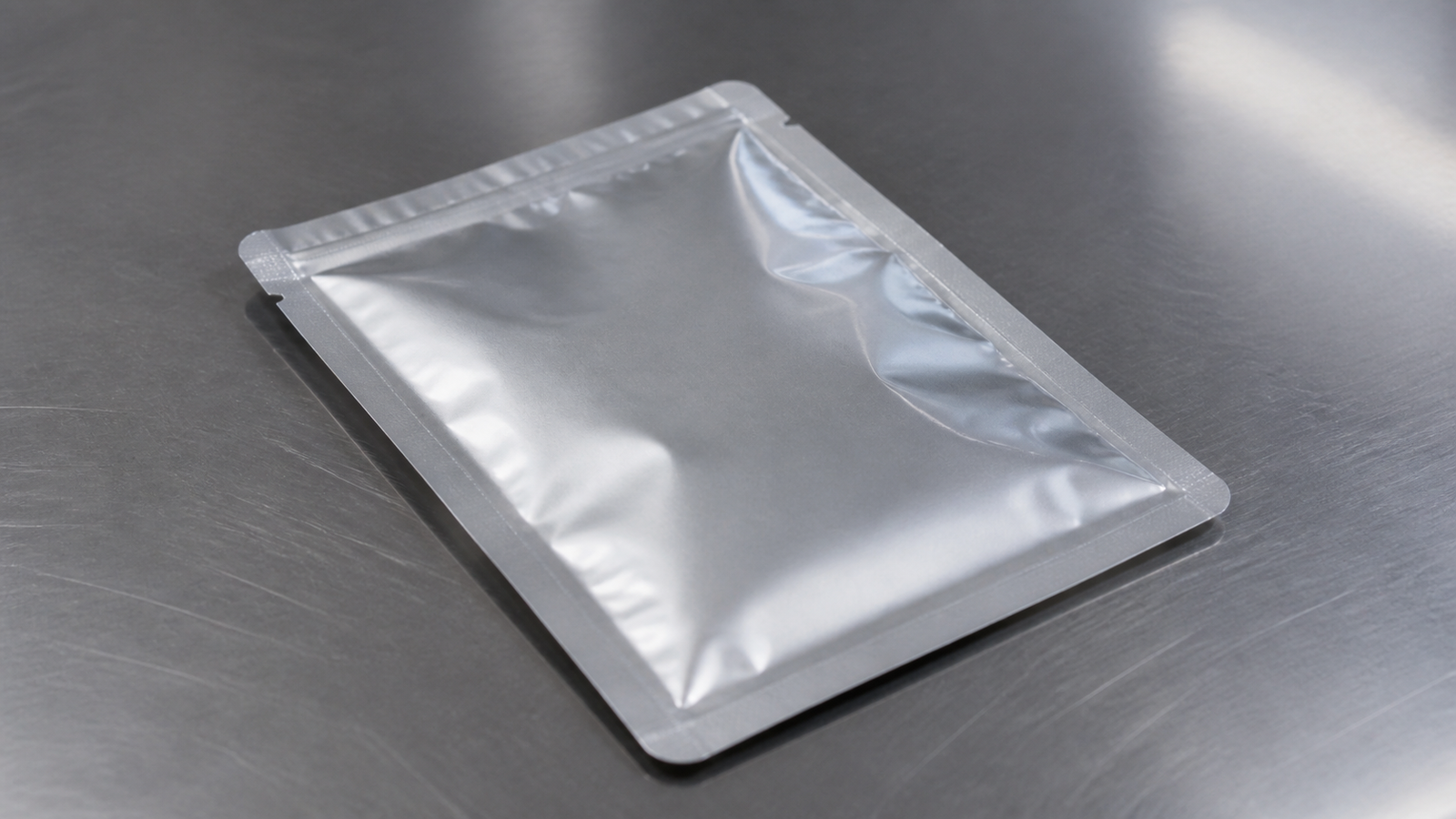
Retort is not just a pouch shape. It is a packaging and processing system. The pouch must be sealed before the main thermal process, then survive that process without losing hermetic integrity, delaminating, distorting beyond acceptable limits, or slowing heat transfer in a way the process did not allow for.
In specification work, the pouch has to be judged with the product and process together. A soup, curry, sauce, ready meal, pet food, or wet ingredient pack may need different filled thickness limits, laminate structures, sealant layers, and rack handling even when the flat pouch dimensions look similar.
A retort pouch normally uses a multilayer laminate because no single layer usually does the full job. The outer layer may support printability and dimensional stability. The barrier layer may reduce oxygen, moisture, light, or aroma transfer. The inner sealant layer must form a reliable heat seal and tolerate retort exposure.
What does hermetic mean here?
Hermetic means the sealed package prevents microorganisms and external contamination from entering after processing. For a commercially sterile pack1, the seal has to remain intact after heating, overpressure, cooling, drying, packing, and distribution. Visual neatness is useful, but it is not proof. The pack should be judged as a filled, processed package, not only as an empty pouch sample.
How Is Retort Different from Hot-Fill, Pasteurization, and Aseptic Packaging?
Retort is different because the product is filled into the pouch, sealed, and then heated under pressure as a closed package. Hot-fill, pasteurization, and aseptic systems can use different microbial control logic, shelf-life targets, filling conditions, and package material requirements.
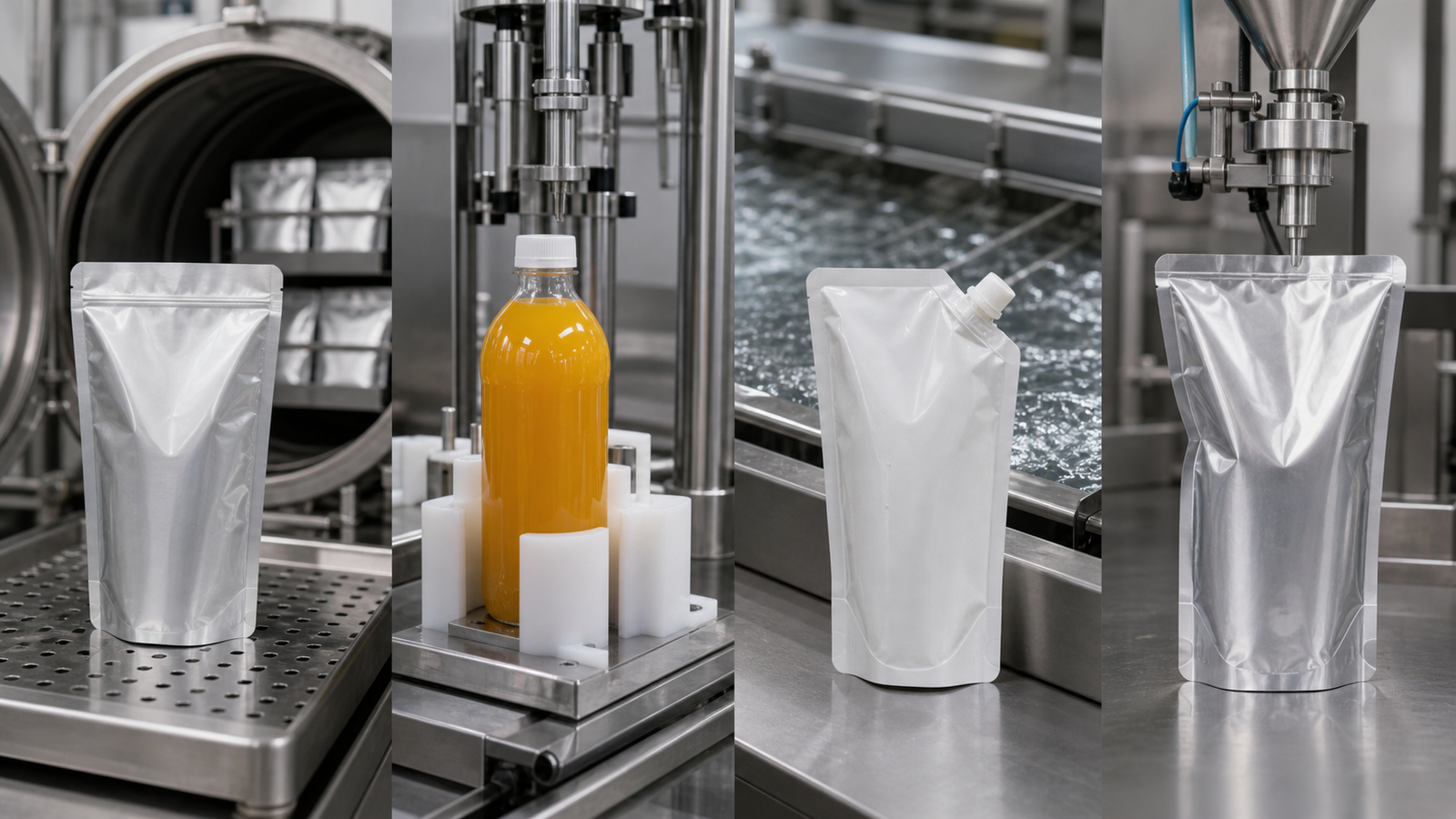
Packaging teams should not use retort as a broad label for any heat-treated pouch. The process route changes the laminate, sealant layer, filling method, process validation, storage condition, and shelf-life expectation.
| Process route | Process sequence | Specification consequence |
|---|---|---|
| Retort | Fill, seal, then process the closed pouch under heat and pressure | The pouch must survive in-package thermal processing and remain hermetic afterward |
| Hot-fill | Fill hot product into the package, then close | Material and closure must suit fill temperature, but sealed-pack pressure stress may be lower |
| Pasteurization | Apply a milder heat process than commercial sterilization | Often depends on formulation, storage condition, and shorter shelf-life targets |
| Aseptic | Sterilize product and package separately, then fill under sterile conditions | Package must suit sterile filling, not necessarily sealed-pack retort stress |
The same film structure may not work across all routes. Retort-grade CPP or RCPP sealants are selected because the seal layer must tolerate high heat, product contact, pressure, and cooling. A hot-fill pouch may need heat resistance, but it may not face the same overpressure or post-retort seal stress.
The phrase sealed pouch is heated under pressure2 is the simple divider. If that is not the process, the pack may still be heat-treated, but it should not automatically be specified as retort.
Which Product Properties Decide Whether Retort Is Appropriate?
Product acidity, water activity, viscosity, particulates, fat, salt, sugar, and density all affect whether retort processing is appropriate. Retort is often considered for shelf-stable wet foods, especially low-acid or higher-risk products that require validated commercial sterility.
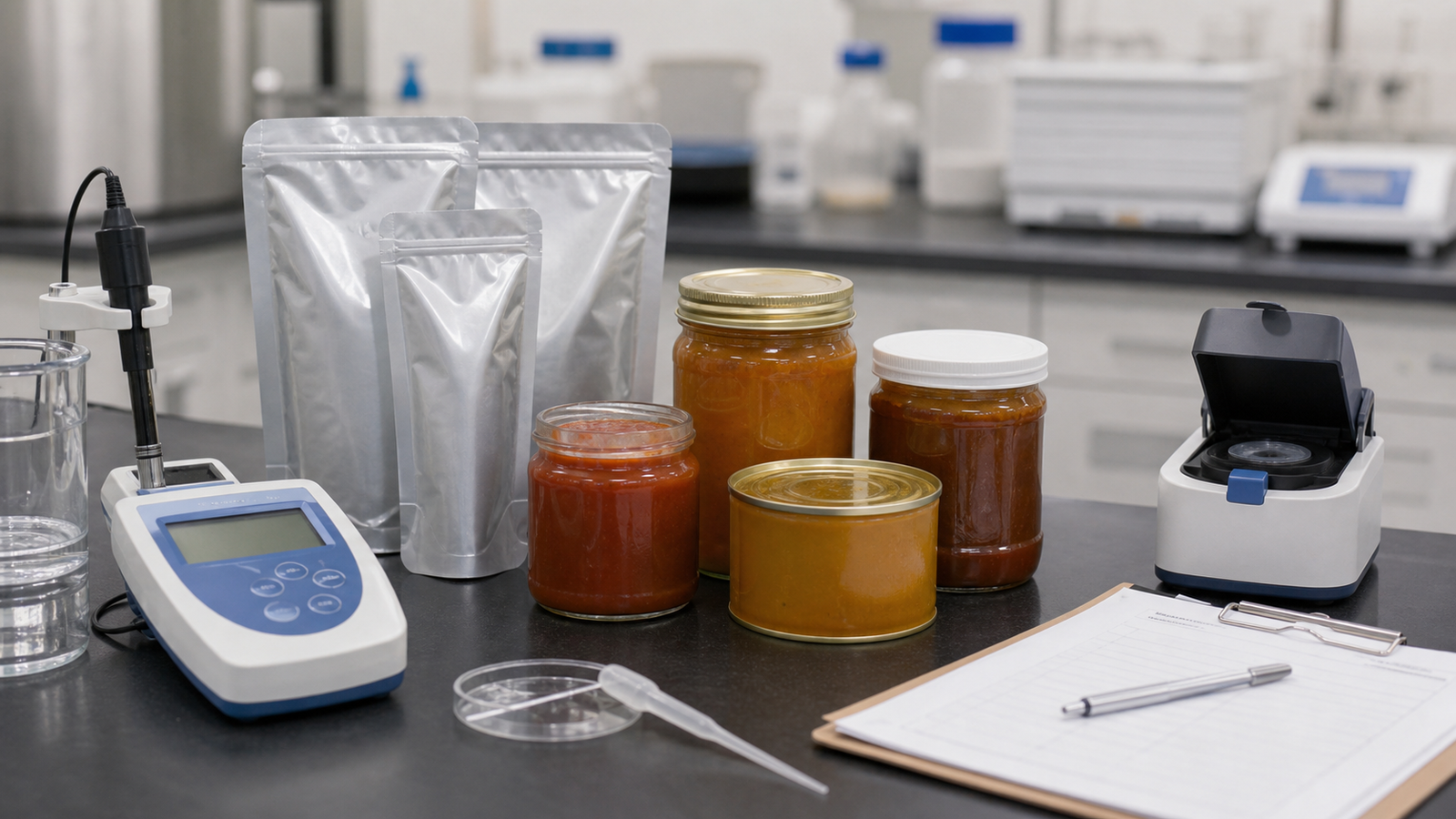
The pouch format should not be selected before the product risk is understood. A thin acidic sauce, a low-acid meat gravy, a dense bean product, and a chunky ready meal can all behave differently during heating. Their microbial risk, heat penetration, flow behavior, and seal contamination risk are not the same.
A practical early review should cover:
- pH and water activity3, because acidity and available moisture influence microbial risk
- Viscosity, because thick products may heat more slowly than thin liquids
- Particulates, because pieces can change heat penetration and fill consistency
- Fat or oil content, because it can affect product movement, seal contamination, and contact suitability
- Salt and sugar content, because formulation can affect water activity and process behavior
- Product density and fill weight, because they influence filled thickness and heating profile
Scenario: A product team wants a shelf-stable pouch for a thick vegetable stew with beans and oil. Treating it like a thin sauce would be risky. The particulates, viscosity, fill weight, and maximum pouch thickness need review with the thermal process authority before the pouch size and laminate are locked.
Packaging teams do not need to design the thermal process alone. They do need to provide the right product and package details so the process can be designed around real behavior rather than assumptions.
Which Laminate Structures Work for Retort Pouches?
Retort pouches usually use multilayer laminates built for heat resistance, barrier performance, sealability, and post-retort integrity. Common structures may include PET, aluminum foil, PA or nylon, and retort-grade CPP or RCPP, while transparent options require careful validation.

A retort laminate has to do more than protect the product on shelf. It must also survive the retort cycle. Heat, pressure, moisture, product expansion, and cooling can expose weak adhesive bonds, poor sealant selection, flex-crack risk, or dimensional instability.
| Structure direction | Example materials | Main specification value | Main validation concern |
|---|---|---|---|
| Opaque foil laminate | PET/AL/PA/RCPP or PET/PA/AL/RCPP | Strong oxygen, moisture, light, and aroma barrier | End-of-life limitations in many collection systems |
| Transparent retort laminate | PET/PA/RCPP | Product visibility where barrier demand is moderate | Barrier retention and clarity after retort |
| Coated high-barrier transparent laminate | PET with SiOx or AlOx, PA, RCPP | Higher barrier while keeping a clear or semi-clear pack | Coating damage, flexing, and retort durability |
| Development-oriented high-barrier structure | EVOH-based or mono-material retortable designs | May support selected sustainability or visibility goals | Not a universal foil laminate replacement |
OTR and WVTR values4 can help compare barrier options only when test conditions are clear. OTR should state units, test method, temperature, and relative humidity where relevant. WVTR should state units, temperature, and humidity gradient. A film value before retort may not represent the finished pouch after processing, flexing, and distribution.
The sealant layer deserves the same attention as the barrier layer. Retort-grade CPP or RCPP is commonly used because the inner layer must seal reliably and tolerate process heat. The sealing window, meaning the range of jaw temperature, pressure, and dwell time that creates a reliable seal, should be checked with the intended filling setup.
How Should the Retort Cycle Shape the Pouch Specification?
The retort cycle should be treated as part of the pouch specification because time, temperature, pressure, filled thickness, rack loading, and product formulation all affect performance. A common reference is 121.1°C or 250°F, but there is no universal retort time.
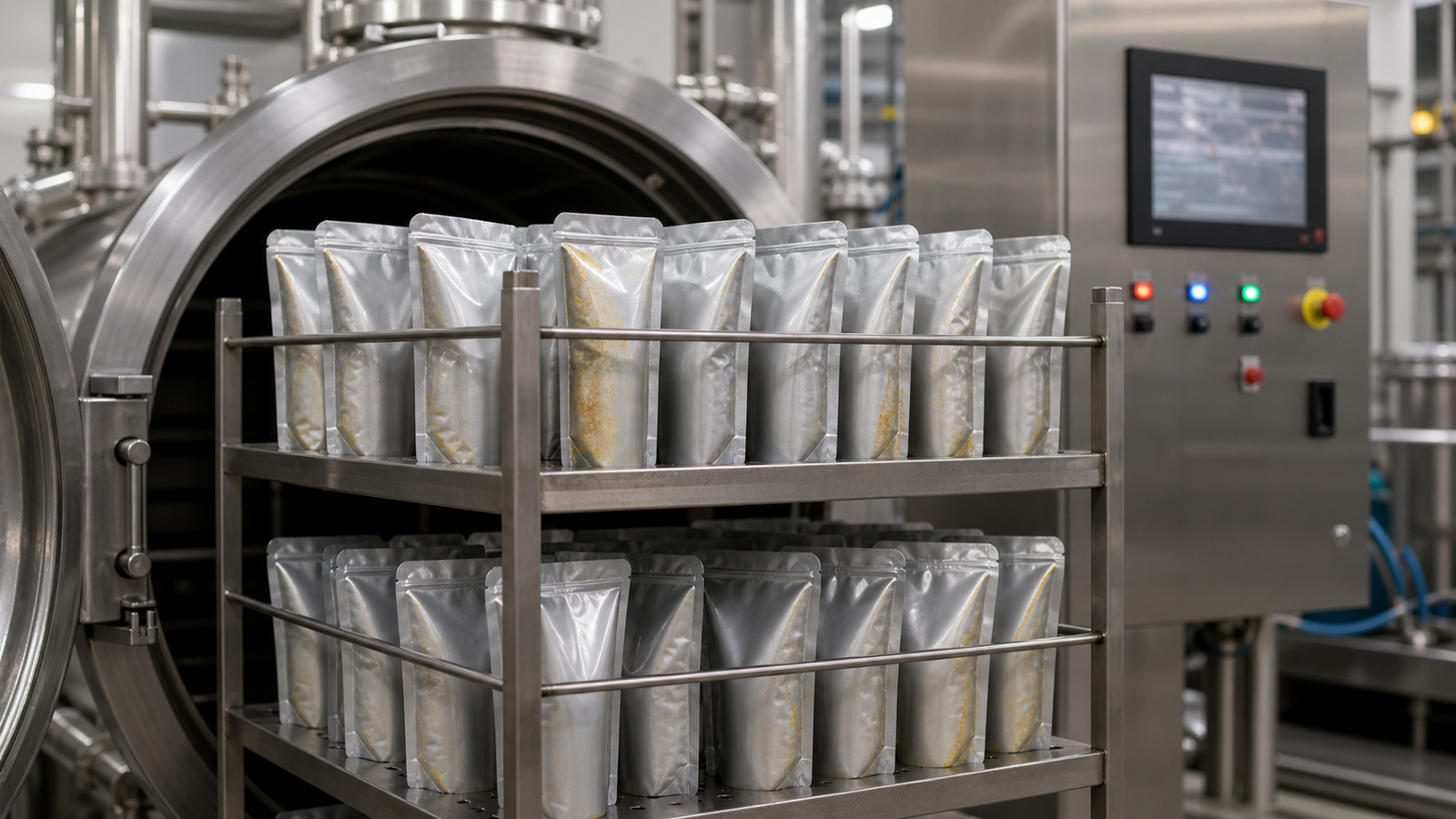
A pouch should not be specified only as able to handle a certain temperature. Temperature is one part of the scheduled thermal process5. The actual exposure depends on come-up time, hold time, cooling profile, overpressure control, retort type, and how pouches are arranged inside the vessel.
The process is also product-specific. A thin broth may heat differently from a dense sauce. Small particulates may behave differently from large pieces. Even two products with the same fill weight can need different process settings if viscosity, pH, water activity, particle size, and product density differ.
The package variables that should be discussed with the process authority include:
- Flat pouch dimensions and usable internal volume
- Maximum filled thickness after filling and settling
- Laminate structure and sealant grade
- Fill temperature and initial product temperature before retort
- Seal width, seal cleanliness, and seal strength target
- Retort rack, tray, or divider design
- Pouch orientation and spacing during heat treatment
- Target lethality defined by the process authority
Example: A team changes from a flat pouch to a stand-up retort pouch for stronger shelf presence. If the bottom gusset increases filled thickness, the old scheduled thermal process may no longer apply. The pack may look stronger commercially, but the thermal path has changed. Package format and process schedule have to move together.
How Much Do Filled Thickness, Headspace, and Residual Air Matter?
Filled thickness, headspace, and residual air matter because they affect heat transfer, pouch expansion, seal stress, and finished appearance. A retort pouch is not specified only by fill volume; the filled profile must match the validated process and handling conditions.
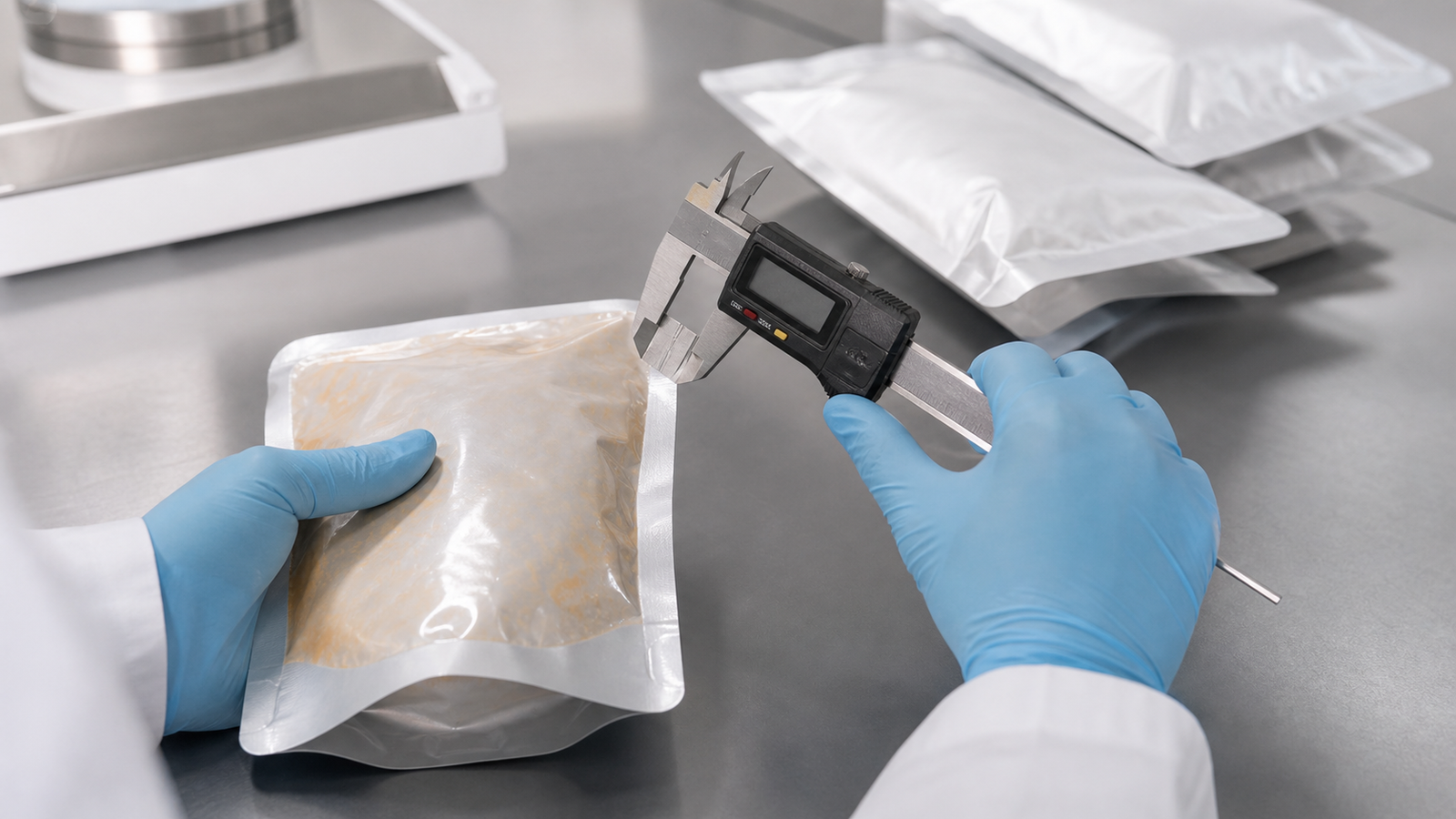
Fill volume is a weak specification by itself. Two pouches can hold the same net weight but have different maximum thickness, headspace, seal stress, and heating behavior. In retort work, the most important geometry is often the filled package, not the flat empty pouch.
Too much residual air can expand during heating and increase stress on seals and laminate bonds. It may also interfere with heat transfer if air pockets collect in a way that changes the product heating path. Too little headspace can create a different problem: product may contaminate the seal area, overfill the pouch, or push thickness beyond the process design.
Scenario: A sauce pouch is approved as an empty sample, then filled close to the top to improve net content presentation. During trial processing, product residue reaches the seal area and the pouch becomes thicker than expected. That is not only a sealing issue. It can become a process issue if the thermal treatment was built around a thinner pack.
A practical specification should define maximum filled thickness, not just nominal pouch size. It should also describe fill weight or volume, acceptable headspace range, air removal setting6 if used, and expected appearance after cooling. For particulate products, settling and product distribution inside the pouch should be reviewed because pieces can create localized thickness changes.
The cleanest approval basis is the actual filled pack: same formula, fill weight, pouch size, sealing setup, and retort loading method.
What Seal Integrity Checks Are Needed for Retort Pouches?
Retort pouch seal integrity must be checked before and after processing because the seal faces heat, pressure, product expansion, cooling, handling, and distribution. A clean-looking seal is not enough; the finished pouch must remain hermetic through the full use condition.

Seal integrity is a safety-critical feature in retort packaging. If the seal fails after processing, the package can no longer be treated as a protected shelf-stable pack. That is why seal evaluation should not stop at appearance, straightness, or a quick hand pull.
A useful review looks at both process settings and finished-pack results. The sealing window should be understood: jaw temperature, pressure, dwell time, sealant grade, seal width, product residue, and line speed all influence the seal. A narrow sealing window may create unstable results when the line runs faster or when sauce, oil, powder, or fibers reach the seal area.
Practical checks may include:
- Seal strength checks using an agreed method and sample direction
- Visual inspection for wrinkles, channels, contamination, or incomplete fusion
- Leak or gross-leak checks after retort and cooling
- Burst or compression checks where the format and distribution route justify them
- Peel behavior review if the pouch is designed to open by tearing or peeling
- Post-retort seal review after drying, packing, and handling
Should seal strength be tested before or after retort?
Both can be useful, but post-retort results carry more weight. The pouch may seal well before processing and still weaken, distort, or leak after heat and pressure. The more relevant question is whether the finished, processed pack passes a post-retort hermetic check7 and remains stable through distribution and shelf life.
How Should Filling and In-Pouch Cooking Be Validated?
Filling and in-pouch cooking should be validated with the actual product state, fill temperature, pouch size, sealing setup, and retort process. Raw, partially cooked, and hot-filled products can expand, move, release air, or stress seals differently during thermal processing.
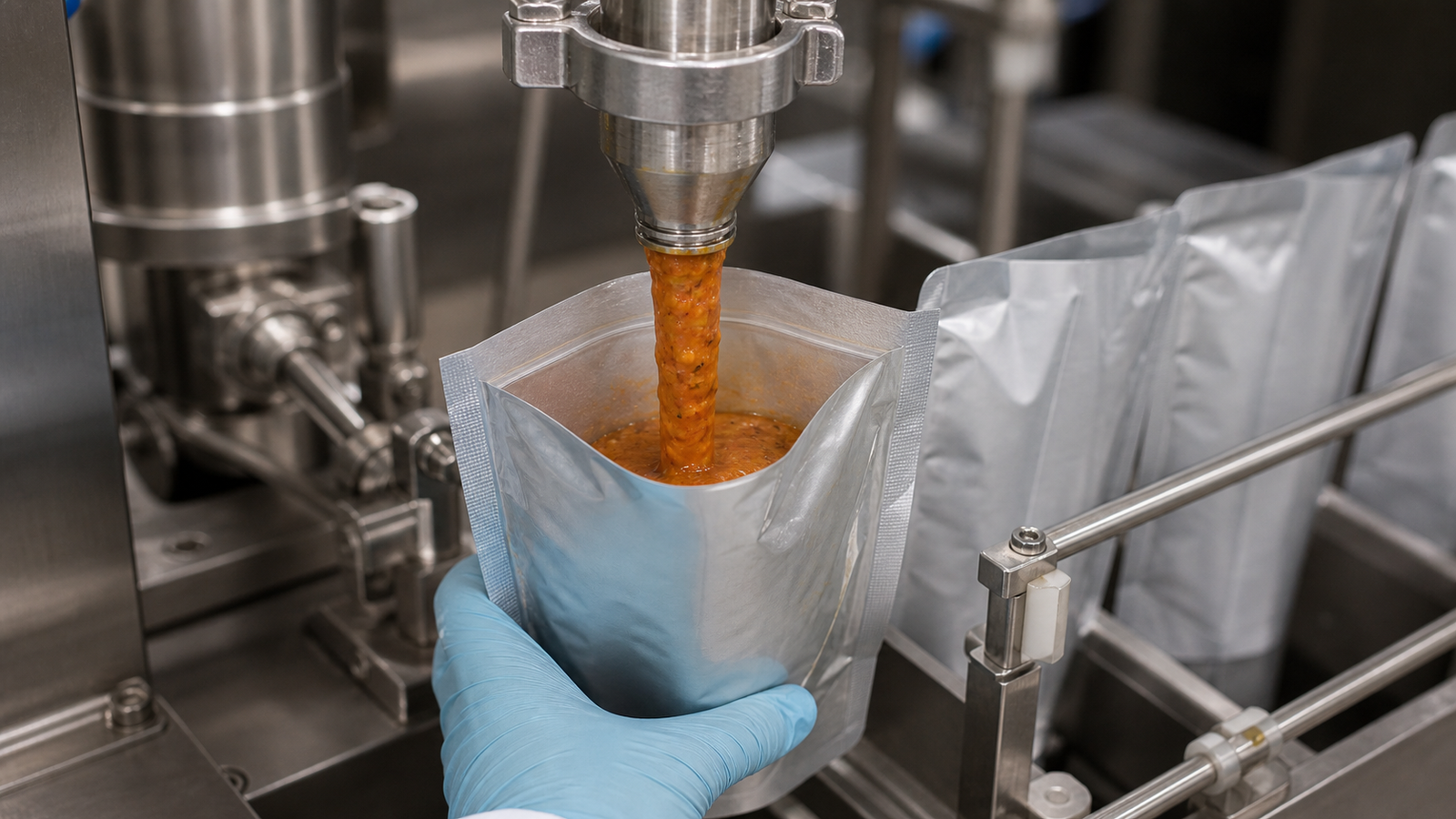
Retort packaging often has to support more than storage. It may also support final cooking or thermal transformation inside the pouch. That makes the filling stage part of the package specification, not a separate production detail.
A raw or partially cooked product may change texture, release liquid, expand, or move inside the pouch during processing. A hot-filled product may flow well during filling, then thicken after cooling. A particulate product can settle into corners or create local pressure points. These details affect seal contamination, pouch thickness, heat transfer, and final appearance.
Example: A protein sauce is filled warm so it flows easily, then thickens during cooling. If a trial checks only filling speed and ignores post-retort thickness, the team may miss a later issue with pouch posture, heat penetration, or seal strain.
Filling validation should check:
- Fill path and whether product contacts the seal area
- Product state at sealing8, including temperature and viscosity
- Product expansion during heating
- Internal pressure behavior during retort
- Product movement inside the pouch
- Seal performance after product contact and thermal exposure
- Pouch feeding, opening, holding, and discharge on the intended line
A hand-filled pouch can help with early discussion, but it should not stand in for line validation. Machine filling can introduce splash, seal contamination, speed variation, pouch grip marks, and discharge behavior that do not appear in bench samples.
How Should Retort Loading, Overpressure, and Handling Be Controlled?
Retort loading, overpressure, cooling, drying, and handling should be controlled because they influence heat transfer and pouch deformation. Pouches need consistent orientation and spacing so filled thickness does not change unpredictably or block the scheduled thermal process.
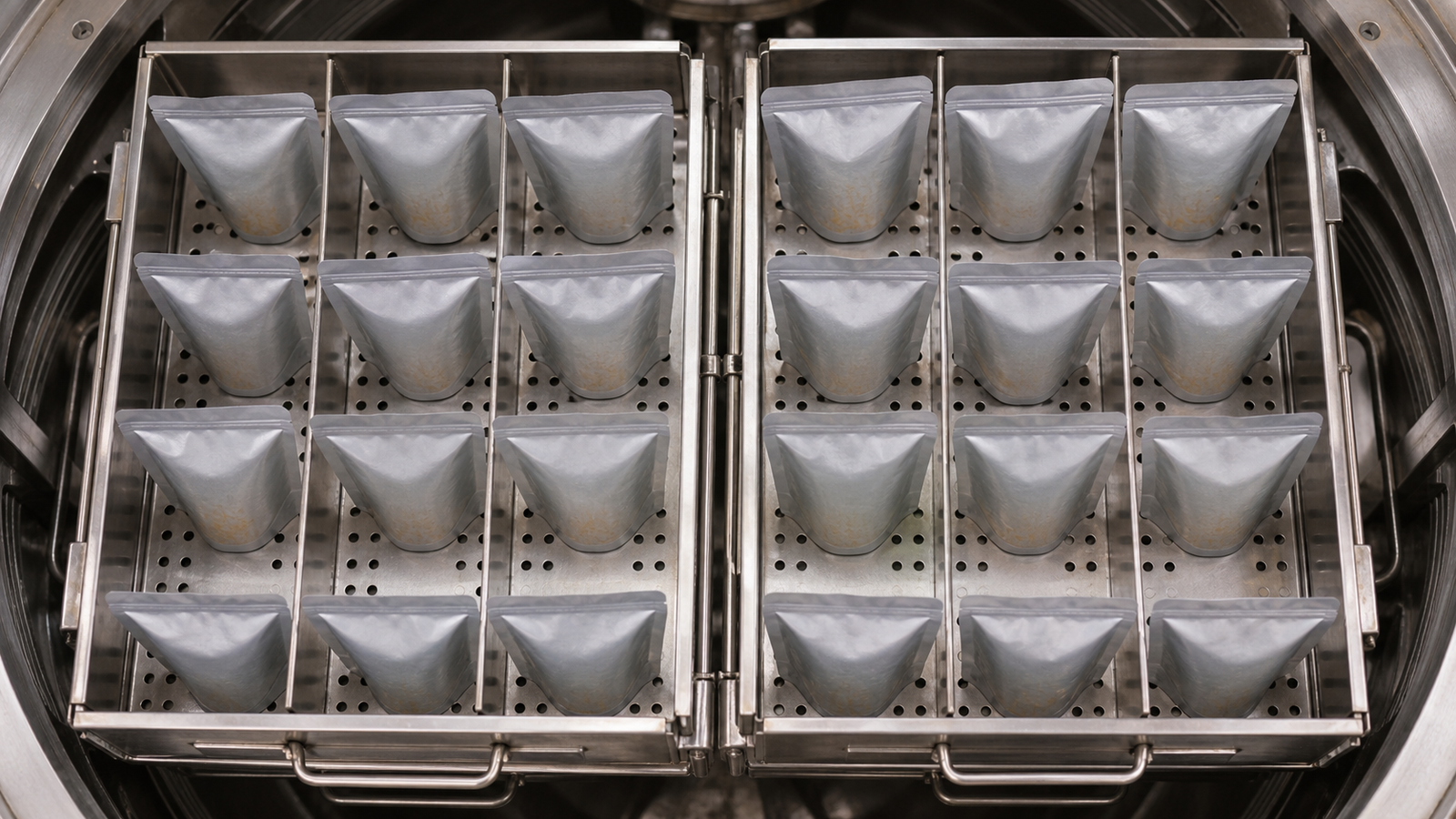
A retort pouch is flexible, so it responds to pressure, temperature, and handling more visibly than a rigid container. If pouches overlap, fold, compress, or stack unevenly during processing, maximum filled thickness can change and heat transfer may become less consistent.
Retort racks, trays, dividers, or compartments may be needed to hold pouch orientation. This is not only housekeeping. It is process control. If the scheduled process assumes a certain pouch thickness and spacing, the loading method has to support that assumption every time.
Overpressure also needs attention. During retort, internal pressure in the pouch can rise as product and residual air expand. External overpressure helps control package expansion and reduce stress, but it has to match the pouch, product, and process. Poor pressure control can contribute to deformation, seal stress, or poor post-process appearance.
After heating, cooling and drying still matter. Rapid or uneven cooling can affect pouch shape. Wet packs may show more scuffing or handling marks. Manual transfer, conveyors, and case packing can stress corners, seals, spouts, or gussets.
A practical process review should define retort rack spacing9, pouch orientation, loading density, divider use, cooling method, drying expectation, and post-retort inspection points. These details sit between packaging and operations, which is exactly why they need to be written into the project notes.
Which Retort Pouch Format Fits the Process Risk?
The right retort pouch format depends on process risk, not appearance alone. Flat, stand-up, spouted, and shaped pouches can all be possible, but each format changes heat transfer, seal stress, filled thickness, fitment validation, and retort loading requirements.
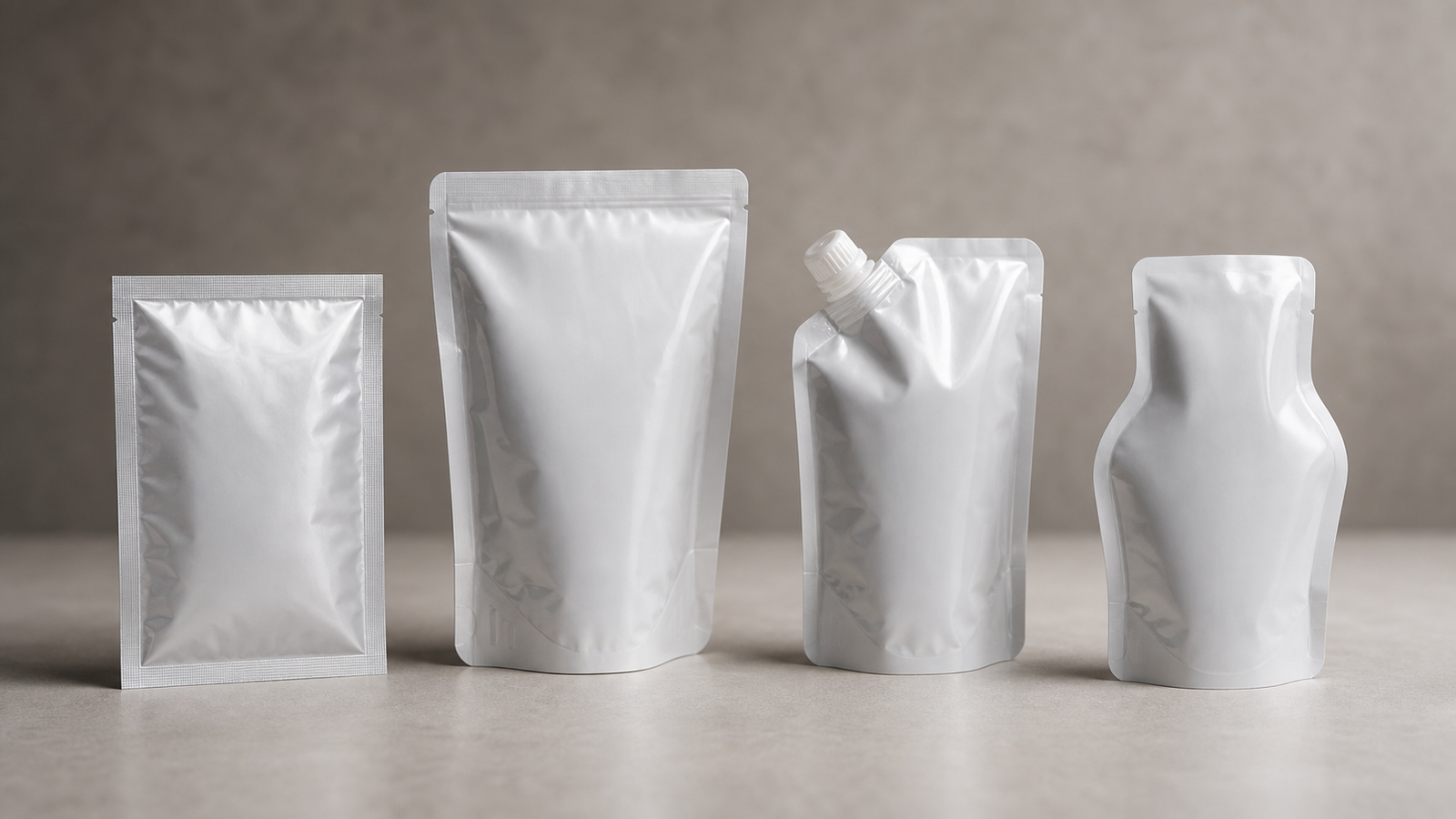
Format selection should be made with pouch family, material structure, seal design, converting details, and filling method in view at the same time. A format that works well for shelf display may create extra process risk if it increases thickness, adds a gusset, or introduces a spout weld.
| Retort pouch format | Useful when | Specification risk to check |
|---|---|---|
| Flat pouch | Thin profile and efficient heat transfer matter most | Limited standing posture and display surface |
| Stand-up pouch | Display, handling, and shelf posture matter | Bottom gusset thickness, seal stress, and rack fit |
| Spouted pouch | Controlled dispensing is needed for sauce, puree, or liquid | Fitment, cap torque, weld strength, and post-retort leakage |
| Shaped pouch | Handling or visual differentiation matters | Irregular geometry can affect filling, sealing, loading, and heating |
A flat pouch is often the cleaner technical starting point when heat transfer is the priority. A stand-up retort pouch can be suitable, but the bottom gusset must be validated as part of the processed pack. Spouted retort pouches need special attention because the fitment system becomes part of the pressure and leak-risk profile.
Example: A pouch format changes from flat to spouted for easier serving. That change adds retort-grade fitment selection10, spout weld validation, cap torque control, post-retort leak checks, and filling-line compatibility. It is not a simple decoration change.
The practical question is which format can survive the process while still meeting shelf, handling, and dispensing expectations.
Can Foil Retort Pouches Be Replaced by Transparent or Recyclable Structures?
Foil retort pouches can sometimes be challenged by transparent or recycle-oriented structures, but they are not automatic replacements. Any alternative must prove heat resistance, barrier performance, sealability, shelf-life suitability, post-retort integrity, and claim validity in the target market.

Traditional foil-based retort laminates are widely used because they offer strong barrier performance for many shelf-stable foods. Aluminum foil can protect against oxygen, moisture, light, and aroma loss in a way that is difficult for many transparent or mono-material structures to match.
The trade-off is end-of-life complexity. Foil laminates are difficult to recycle in many collection systems because they combine different material families. That creates interest in transparent, high-barrier coated, EVOH-based, or recycle-oriented retort structures. The interest is valid, but the replacement question needs discipline.
A transparent retort pouch may help product visibility, but clarity after retort, flex durability, oxygen barrier, and shelf-life performance all need review. A recycle-oriented or mono-material direction may support selected market goals, but it may involve trade-offs in stiffness, barrier, heat resistance, sealing window, and converting behavior.
What should be checked before switching away from foil?
Packaging teams should compare OTR and WVTR data under stated test conditions, post-retort barrier retention11 if available, seal strength after processing, delamination resistance, flex-crack behavior, product compatibility, shelf-life target, and market-specific claim rules.
The sound working assumption is that foil alternatives are application-specific. Some may be promising for selected products and routes. Others may not support the same shelf life or process conditions. A material change should trigger finished-pack validation, not only a film data sheet comparison.
What Approval Tests Should Be Run on the Finished Retorted Pouch?
Approval testing should be built around the finished pouch after filling, sealing, retort processing, cooling, drying, handling, and distribution simulation. Empty samples and pre-retort seals are useful, but they do not prove finished-pack performance. This.
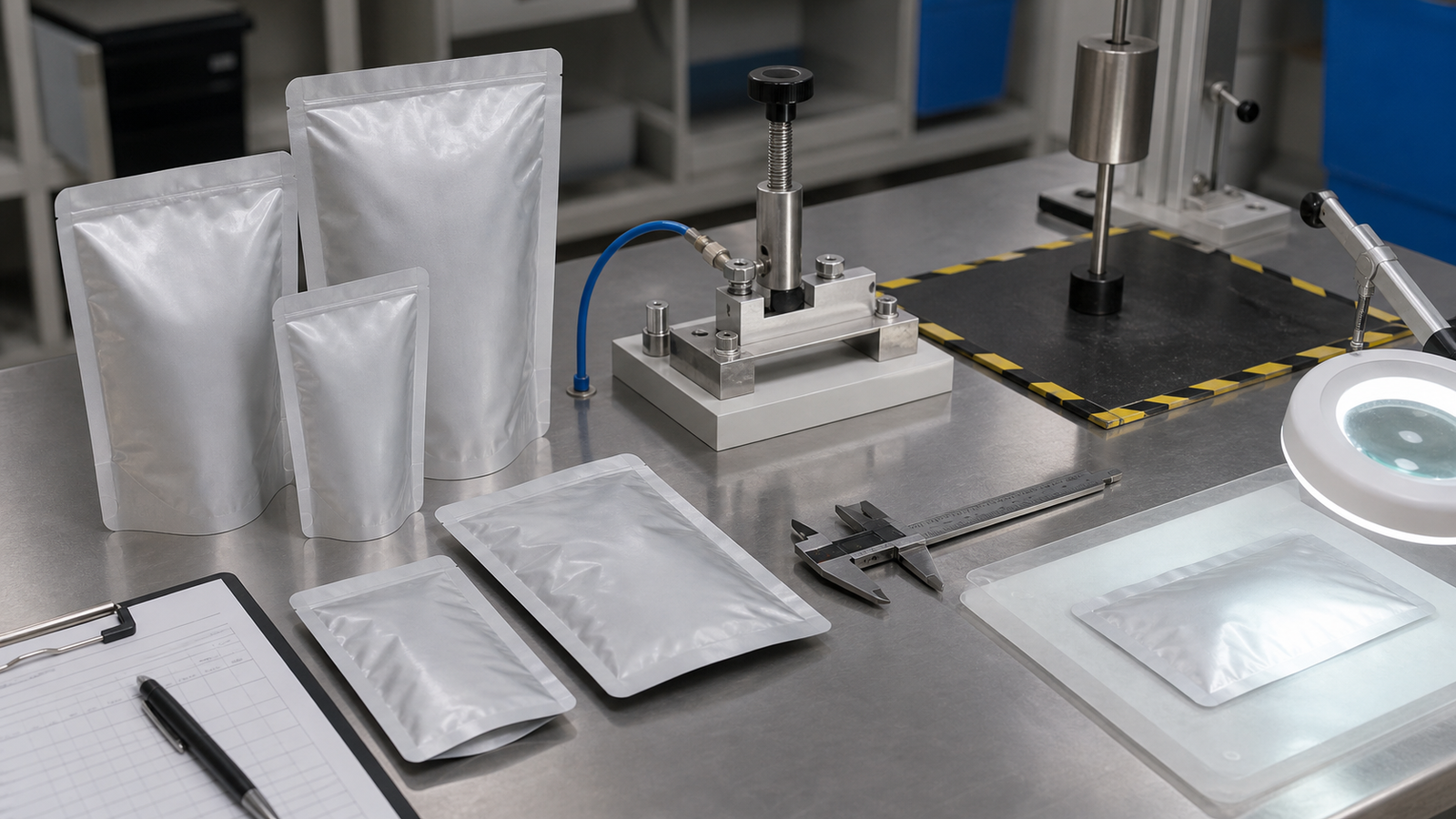
Retort pouch approval should follow the actual stress path of the package. The pouch is converted, filled, sealed, retorted, cooled, dried, handled, packed, shipped, stored, opened, and used. Testing only one early stage can miss failures that appear later.
A practical finished-pack approval plan12 may include:
- Filling trial using the intended product or a technically representative product
- Seal parameter review, including jaw temperature, pressure, dwell time, and line speed
- Seal strength checks before and after retort using an agreed method
- Leak or gross-leak checks after processing and cooling
- Burst or compression checks where format and distribution risk justify them
- Drop checks using the filled processed pouch and intended shipper where relevant
- Post-retort appearance review for wrinkles, distortion, staining, or panel deformation
- Delamination inspection after retort and after storage exposure
- Flex-crack inspection, especially for foil or coated high-barrier structures
- Spout weld and cap torque checks for spouted retort pouches
- Incubation or shelf-stability checks where required by the product and process plan
- Shelf-life testing under the intended storage and distribution conditions
The checklist should be adapted to product risk. A low-viscosity sauce, a chunky meal, a foil flat pouch, and a spouted stand-up retort pouch should not all receive the exact same approval plan.
The approval sample should represent production intent: correct laminate, dimensions, seal design, fill weight, process schedule, rack loading, and handling method. If any of those variables change later, the approval basis should be reviewed.
What Should a Retort Pouch RFQ Include?
A retort pouch RFQ should describe the product, process, storage target, package format, and distribution route clearly enough to quote a workable structure. Asking only for a retort pouch price usually leads to assumptions that slow the project down.

A strong RFQ helps the packaging supplier recommend a structure that fits the product and process instead of guessing from dimensions alone. Retort pouch projects need more detail than many dry pouch projects because the package is part of the thermal process.
A complete RFQ should include:
- Product type and ingredient profile
- pH if known
- Water activity if known
- Viscosity and whether the product flows, gels, settles, or separates
- Particulate size, shape, and percentage if relevant
- Fat, oil, salt, sugar, or acid content where relevant to compatibility or processing
- Fill weight or volume
- Fill temperature and product temperature before retort
- Intended shelf life and storage temperature
- Target market and distribution route
- Preferred pouch format: flat, stand-up, spouted, shaped, or open to recommendation
- Target pouch size and maximum filled thickness if known
- Material or barrier need, such as foil, transparent, recycle-oriented, OTR, or WVTR direction
- Seal design, opening feature, tear notch, zipper, spout, cap, or fitment needs
- Filling method and machine type if known
- Retort type, process route summary13, and rack or tray loading method if known
- Print requirements, surface finish, and artwork status
- Trial quantity, scale-up timing, and estimated ongoing quantity
- Required documents for product contact, material declaration, or market claim review
A useful RFQ does not need every answer on day one. It does need enough known constraints to prevent a generic recommendation. When key data is unknown, mark it clearly as unknown rather than leaving it implied.
For a retort pouch recommendation, sample plan, or quotation, send the product type, fill weight, target pouch size, material or barrier need, required features, intended quantity, filling method, fill temperature, shelf-life target, and any known retort process details.
References
-
Commercial sterilization of low-acid food in hermetically sealed ... - The following provides recommended preventive controls for the thermal processing of commercially sterile low-acid food in hermetically sealed packages ( ... ↩
-
Understanding retort processing: A review - PMC - The cascading water technique is a type of indirect steam heating where water is sprayed under pressure onto the top trays of retort carts. This ... ↩
-
Acidified & Low-Acid Canned Foods Guidance Documents ... - FDA - ... pH of 4.6 or below and a water activity (aw) greater than 0.85. Guidance for Industry. Guidance documents contain nonbinding recommendations. ↩
-
ASTM F1249 WVTR Testing Guide for Packaging Film Moisture Barrier - ASTM F1249 is a standardized test method used to measure the Water Vapor Transmission Rate (WVTR) of flexible barrier materials such as plastic films, laminates ... ↩
-
[PDF] effect of oscillating and static retort thermal processing technology ... - Once filled, the pouches were 3.8 centimeters thick. Each pouch was labeled 1 through. 9. Pouches 1 through 3 were for the low viscosity (1% concentration) ... ↩
-
Flexible Retort Pouch Defects Manual - Identification and ... - Owing to heat transfer between the pouch contents and the pouch seals, a warm product or warm water can have a weakening effect on the seal. ↩
-
Burst Testing for Flexible Packaging: ASTM F1140, Seal Strength ... - Burst testing under ASTM F1140 is most commonly used for flexible pouches, flow-wrap, form-fill-seal packaging, retort pouches, and medical nutrition packaging. ↩
-
The Most Comprehensive And Detailed Guide To Retort Pouch, So ... - For retort applications, testing typically employs elevated temperatures (121°C) and extended contact times to account for the thermal ... ↩
-
Planning & Designing a Retort Pouch Line | Pouch Packaging - ... heat transfer. When large amounts of air are mixed with steam to provide overriding pressure, the surface heat transfer coefficients are reduced ... ↩
-
How to Seal Spout Pouch? - CP - Colorful Packaging - Learn how to seal a spout pouch correctly with practical tips on filling methods, heat sealing, cap torque, leak testing, and common sealing ... ↩
-
SiOx/AlOx Coated Retort Pouches Market Outlook 2026–2036 - These transparent inorganic barrier layers deliver oxygen transmission rates below 0.5 cc/m²/day while maintaining structural integrity during ... ↩
-
Why Pouches Fail: Causes of Leaks, Bursts & Delamination - Aropack - When they fail, product escapes, oxygen or moisture enters, and shelf life is compromised. Why Seals Fail. Incorrect temperature, pressure, or ... ↩
-
Retort - Autoclavable Pouches - SorbentSystems.com - A retort pouch is a sterilizable flexible pouch constructed of a thin, bonded film that can withstand processing a product inside at 250°F (120°C) for a minimum ... ↩