
A spout pouch looks simple from the outside: a flexible pouch with a capped pouring fitment. For a buyer, it is better to treat it as a small dispensing package, not as a bag with an added nozzle. The pouch body, laminate, spout weld, cap, fill method, and distribution route all affect whether the pack works.
This article explains the main buying decisions behind spout pouch packaging before you request pricing, approve a drawing, or compare suppliers. I will keep the focus on practical specification choices: what to define, what to ask, and where small assumptions can become expensive changes.
What Is a Spout Pouch and What Makes It Different From a Regular Pouch?
A spout pouch is a laminated flexible pouch fitted with an integrated pouring fitment, usually a spout body and cap. Unlike a regular pouch, it must hold liquid or paste, seal around the fitment, dispense cleanly, and survive filling, handling, and distribution.
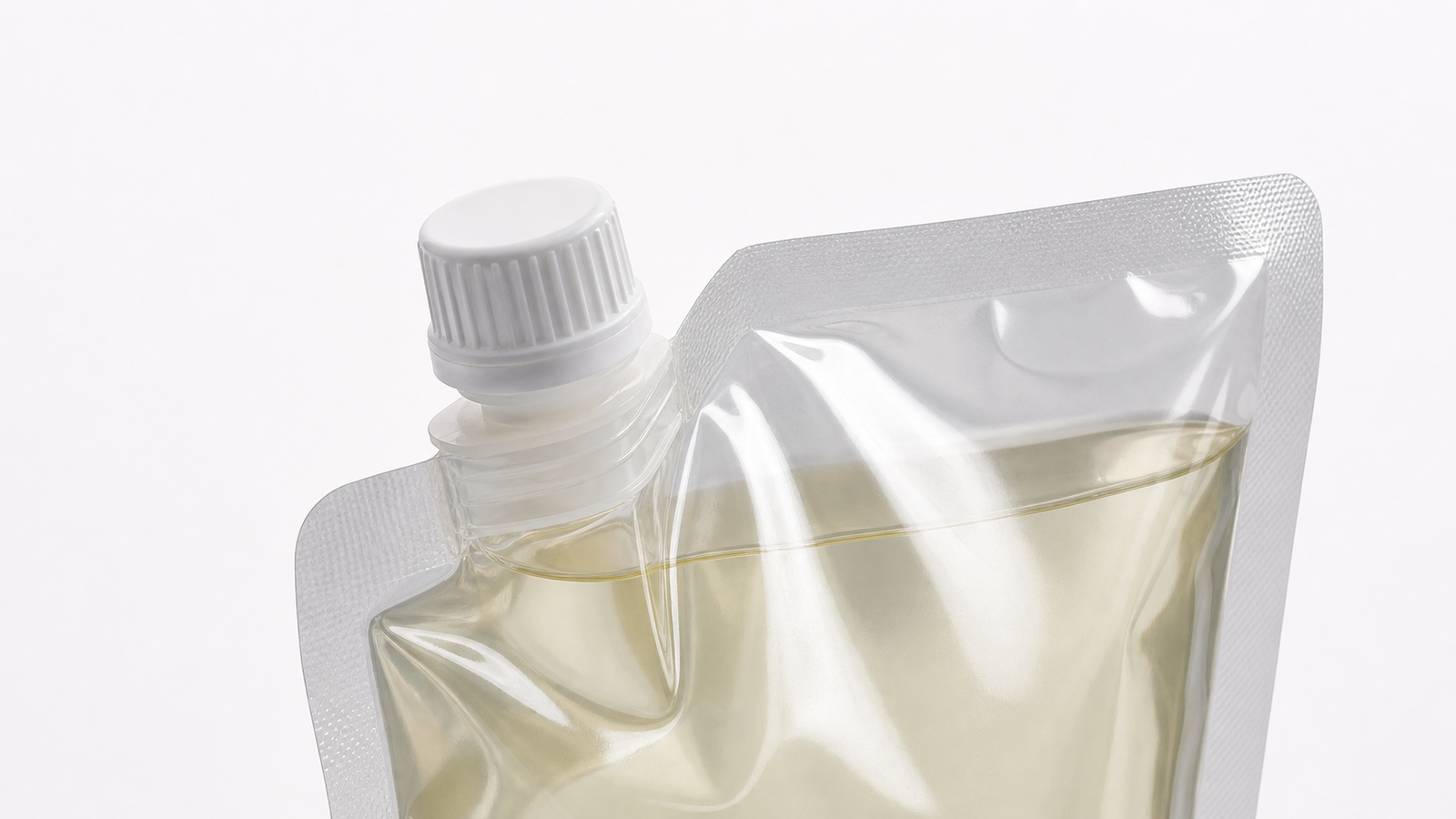
A regular pouch may only need to contain a dry product or provide a tear-open format. A spout pouch has a more demanding job. It works as a flexible container and a controlled pouring pack at the same time.
The basic system includes:
- A pouch body, usually made from laminated films
- A spout or fitment, welded or otherwise integrated into the pouch
- A cap or closure, used for protection, reclosing, and sometimes safety functions
The pouch may be a stand-up pouch, flat pouch, shaped pouch, or another preformed flexible format. The format should follow the product, fill volume, display need, filling line, and expected handling. The spout pouch dispensing system1 is only reliable when those parts are designed together.
The spout area deserves early attention because it is a stress point. It must seal to the laminate, allow filling or pouring, accept the cap, and tolerate pressure from the filled product. If the product is filled hot, viscous, chemically aggressive, or shipped through a demanding route, the spout and seal area become even more important.
Example: A dry snack pouch with a printed front panel and a liquid detergent pouch with a corner spout are both flexible packages. They are not specified the same way. The detergent pouch needs liquid containment, fitment weld integrity, cap sealing, headspace control, and filling compatibility.
Which Spout Pouch Material Structure Fits the Product?
The right spout pouch material depends on the product, not only on thickness or price. Buyers should match the laminate to barrier needs, ingredient compatibility, heat exposure, puncture resistance, sealability, and product-contact requirements before treating different supplier offers as equivalent.

Spout pouches are commonly made from laminated films with two, three, or more functional layers. One layer may support printing and stiffness. Another may provide oxygen, moisture, aroma, or light protection. The inner sealant layer must seal reliably and remain suitable for product contact in the intended use.
Research-backed examples include PET/PE, PET/ALU/PE, high-barrier films, and polyethylene or polypropylene product-contact sealant layers. These are not interchangeable labels. A transparent PET/PE pouch and an aluminum-containing PET/ALU/PE pouch may both be called spout pouches, but they solve different barrier and visibility problems.
| Buyer concern | Material detail to discuss | Practical consequence |
|---|---|---|
| Oxygen sensitivity | OTR and WVTR values2 when relevant | Shelf life discussions become more concrete than simply asking for high barrier |
| Light sensitivity | ALU, metallized, or opaque barrier options | Product protection may conflict with a clear window or viewing strip |
| Heat exposure | Sealant type and sealing window | The pouch must seal without distortion or weak fitment welds |
| Ingredient compatibility | Product-contact PE or PP layer | Oils, acids, alcohol, or chemicals may narrow suitable structures |
| Puncture or handling risk | Film thickness and toughness | A lower-gauge pouch may not suit sharp handling or heavier fills |
OTR means oxygen transmission rate. WVTR means water vapor transmission rate. I would ask suppliers to state the test method and conditions behind those values, because temperature and humidity change the result. I would also ask for the sealing window, meaning the process range where the sealant layer closes properly without damaging the laminate.
Should the Product Use a Stand-Up, Flat, or Custom Spout Pouch?
The pouch format should follow the use case. Stand-up pouches usually fit retail display and multi-serve packs, flat pouches can fit single-serve or compact refills, and custom shapes may help when product behavior, ergonomics, or shelf presentation requires it.
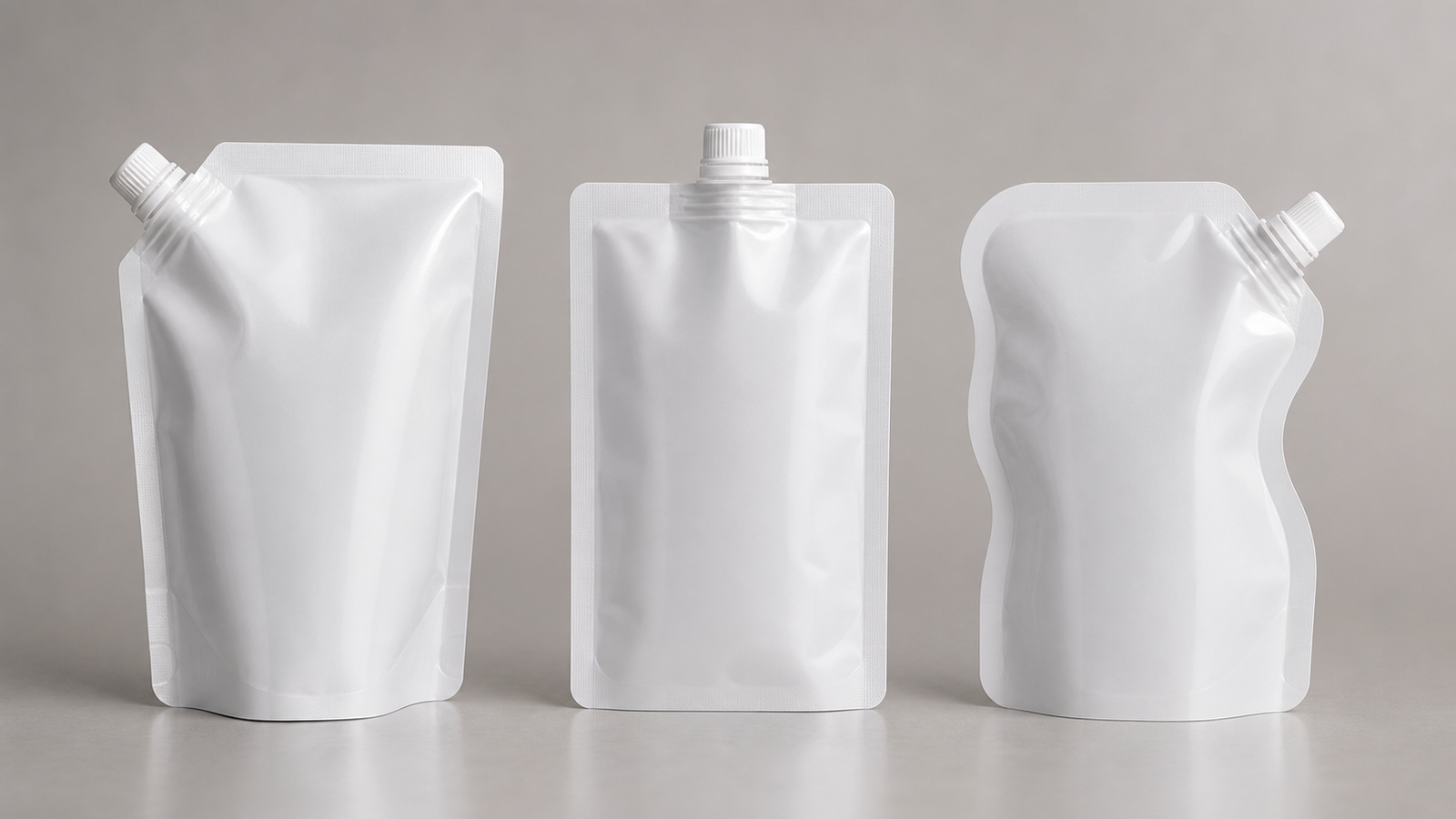
The main commercial formats in the research are gusseted stand-up pouches and 3-side-seal flat pouches3. Shaped and customized formats are also available, but they should be justified by handling, filling, display, or product behavior, not by appearance alone.
| Format | Better fit | What to check before approval |
|---|---|---|
| Gusseted stand-up pouch | Retail display, larger refills, multi-serve drinks, sauces, detergents | Bottom gusset stability, filled-pack balance, carton fit, and spout position |
| 3-side-seal flat pouches | Single-serve drinks, samples, compact refills, low-profile packs | Pouring angle, headspace, seal width, and filling presentation |
| Shaped pouch | Child-focused foods, ergonomic packs, differentiated shelf shape | Tooling, trim waste, filling clearance, and handling strength |
| Larger handled pouch | Bigger liquid refills or multi-liter formats | Handle strength, spout access, filled weight, and carton support |
Thin beverages, sauces, purees, detergents, soaps, fertilizers, and automotive fluids do not behave alike. Thin liquid moves quickly during drops and filling. Viscous sauce may need a larger spout and a geometry that helps product flow. A chemical refill may put more pressure on compatibility and closure selection.
Scenario: A buyer wants one pouch size for both a thin drink and a thick puree because the fill volume is similar. On paper, that looks efficient. In practice, the pour behavior, spout size, headspace, filling speed, and seal contamination risk can be different enough to require separate trials.
How Should Buyers Specify the Spout Size and Position?
Buyers should specify the spout as a functional component, not only as a visible cap. Size, diameter definition, neck finish, fitment code, and position all affect filling speed, pouring behavior, capping, leakage risk, and compatibility with equipment.
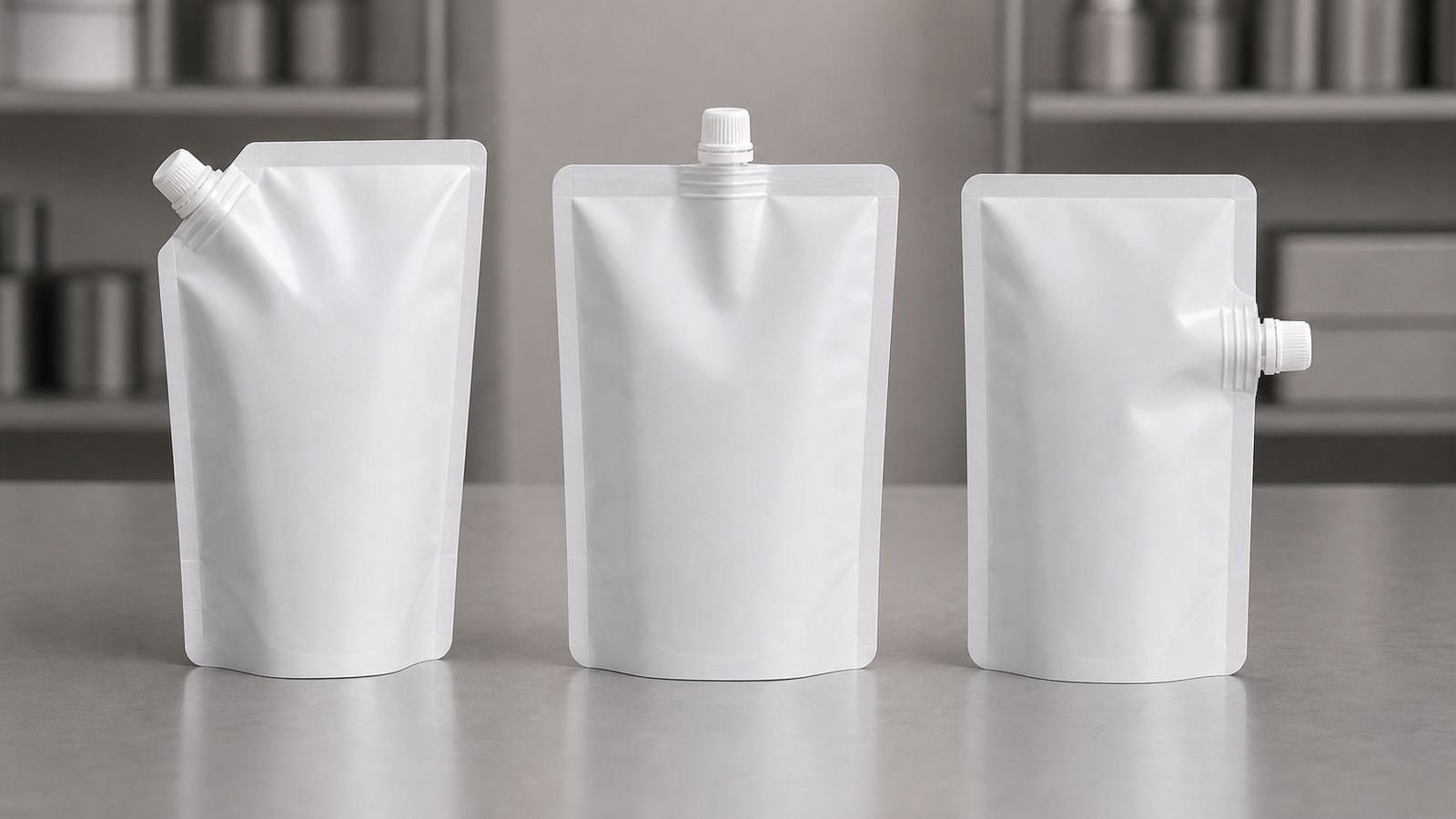
The research notes common spout diameters around 10-25 mm. Smaller openings generally suit thin liquids and single-serve packs. Larger openings may be needed for viscous sauces, gels, concentrates, or multi-serve products. That range is useful for discussion, but it does not replace testing with the actual product.
Before approving a drawing, clarify what the supplier means by spout size:
- Outer diameter of the spout
- Inner diameter of the flow path
- Neck finish used for the cap
- Proprietary fitment code4, if the supplier uses one
- Cap type, thread match, and closure system
Spout position also affects the finished pack. A top-center spout can look balanced and may suit some filling setups. A corner-mounted spout can improve hand pouring on smaller pouches. Side placement may work for certain shaped or larger formats, but the pouch must still run on the filler and capper.
I would check the fill path, nozzle clearance, capper clearance, cap torque target, pouch stability during filling, and how the user will hold the pack while pouring. If the spout sits too close to a seal, gusset, handle, or graphic feature, the drawing may look clean while the production pack becomes harder to fill or use.
Common specification mistake: Asking for a 12 mm spout without saying whether the number refers to inner diameter, outer diameter, neck finish, or a supplier fitment name.
Why Can Headspace and Drop Behavior Cause Spout Pouch Failures?
Headspace and drop behavior matter because liquid movement creates stress inside the pouch. During drops, compression, vibration, temperature change, or pressure change, insufficient headspace can load seals and spout welds in ways an empty sample will not reveal.

A spout pouch specification often starts with fill volume, but capacity is not only a volume question. A filled pouch still needs enough room for product movement and normal expansion under handling and distribution conditions. That remaining space is commonly discussed as headspace.
Too little headspace can push liquid force into the side seals, bottom gusset, spout weld area, or cap seal during a drop. Compression and vibration can repeat that stress in the same locations. Temperature and pressure changes may add more load, especially when the product and pouch have little room to move.
Scenario: A buyer approves an empty stand-up pouch sample because the size, spout position, and artwork look correct. After filling, the product shifts into the spout corner during drop handling and stresses the fitment weld. This is a teaching scenario, not a customer case, but it shows why empty samples do not prove filled-pack behavior.
Use approval checks before mass production:
- Net fill volume and intended headspace range
- Filled pouch height, width, bottom gusset shape, and stability
- Seal layout, seal width, and spout weld area
- Cap seal performance after filling and handling
- Distribution route, carton packing, and stacking pressure
- Filled-pack transport testing5 before commercial release
A larger pouch is not automatically safer. It may add headspace, but it can also change how the product sloshes, stands, pours, and fits cartons. The better approach is fit-for-use validation with the real product or a close filling substitute.
Which Filling Method Should Be Confirmed Before Tooling?
The filling method should be confirmed before tooling because the pouch, spout, cap, and machine must work together. Buyers need to know whether filling happens through the open spout or through an open top before approving pouch geometry.
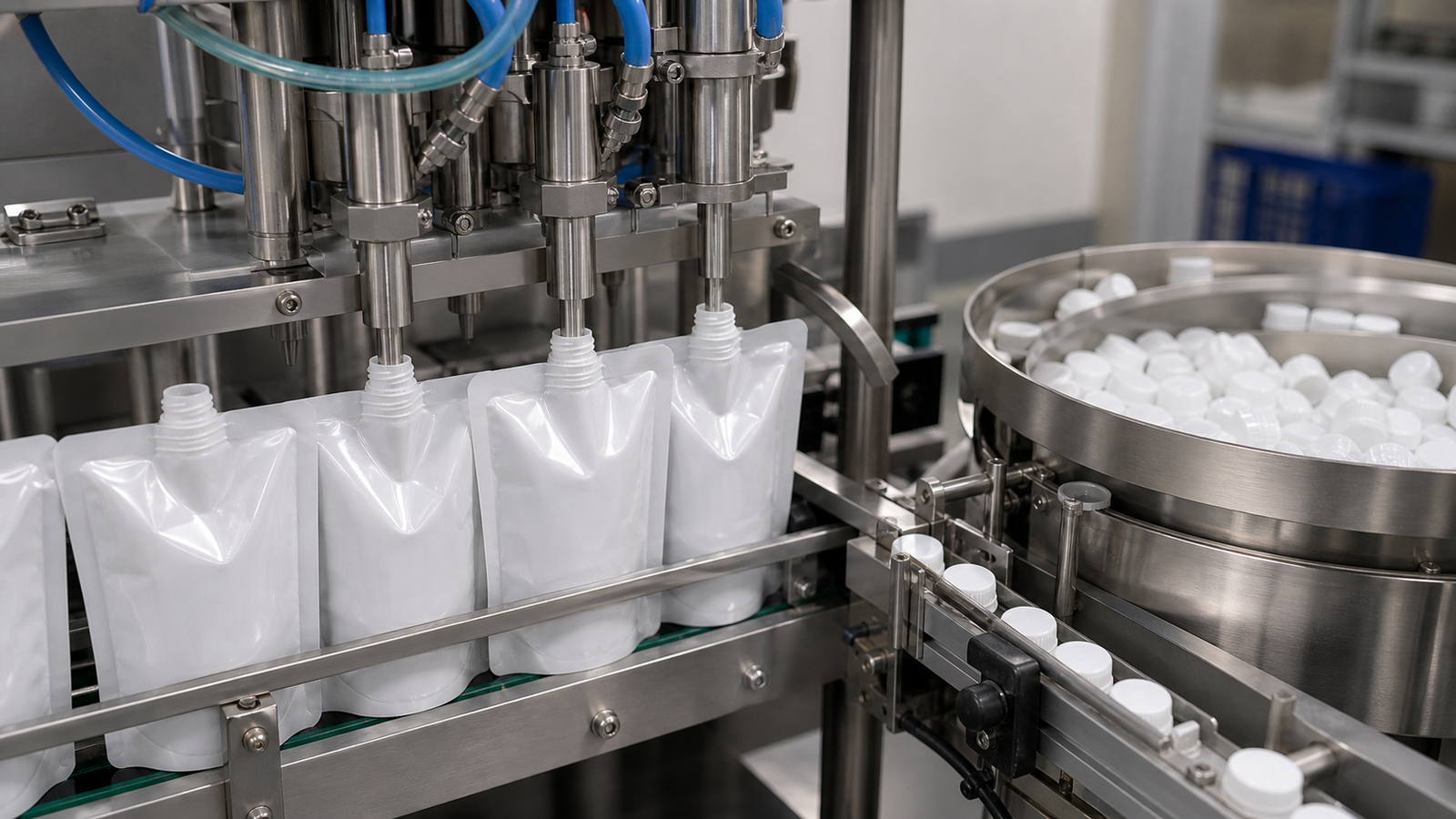
One common method is to supply a pre-spouted pouch, fill through the open spout, and then apply or torque the cap. Other systems may fill through an open top and seal afterward, depending on the pouch design and equipment.
This decision affects more than production sequence. It can change spout pitch, open area, filling clearance, cap handling, pouch presentation, and the space needed around the filling nozzle. It can also affect hygiene controls, fill temperature limits, and seal contamination risk if product reaches the sealing area before closure.
Confirm these points with the filler or equipment supplier before tooling:
- Will the pouch be premade or formed from rollstock?
- Will filling happen through the spout or through the open top?
- What spout pitch does the machine require?
- Is there enough clearance around the capper and filling nozzle?
- What cap torque target6 will be applied and checked?
- What is the fill temperature at pouch contact?
- Does the product require specific hygiene handling?
- What line speed is planned for commercial production?
Example: A buyer selects a corner spout for better consumer pouring, then later learns the filling line expects a different pouch orientation or spout spacing. The problem is not simply the spout. It is a mismatch between the design intent and the line setup.
I would confirm equipment fit before final artwork and tooling. Once the pouch shape and print layout are locked, machine-related changes become slower and more expensive.
Which Closure Features Are Needed for the Product Risk?
Closure features should match the product category, user, and risk profile. Some pouches only need convenient pouring and reclosing, while others may need tamper evidence, child resistance, controlled dispensing, or custom fitments for market acceptance.
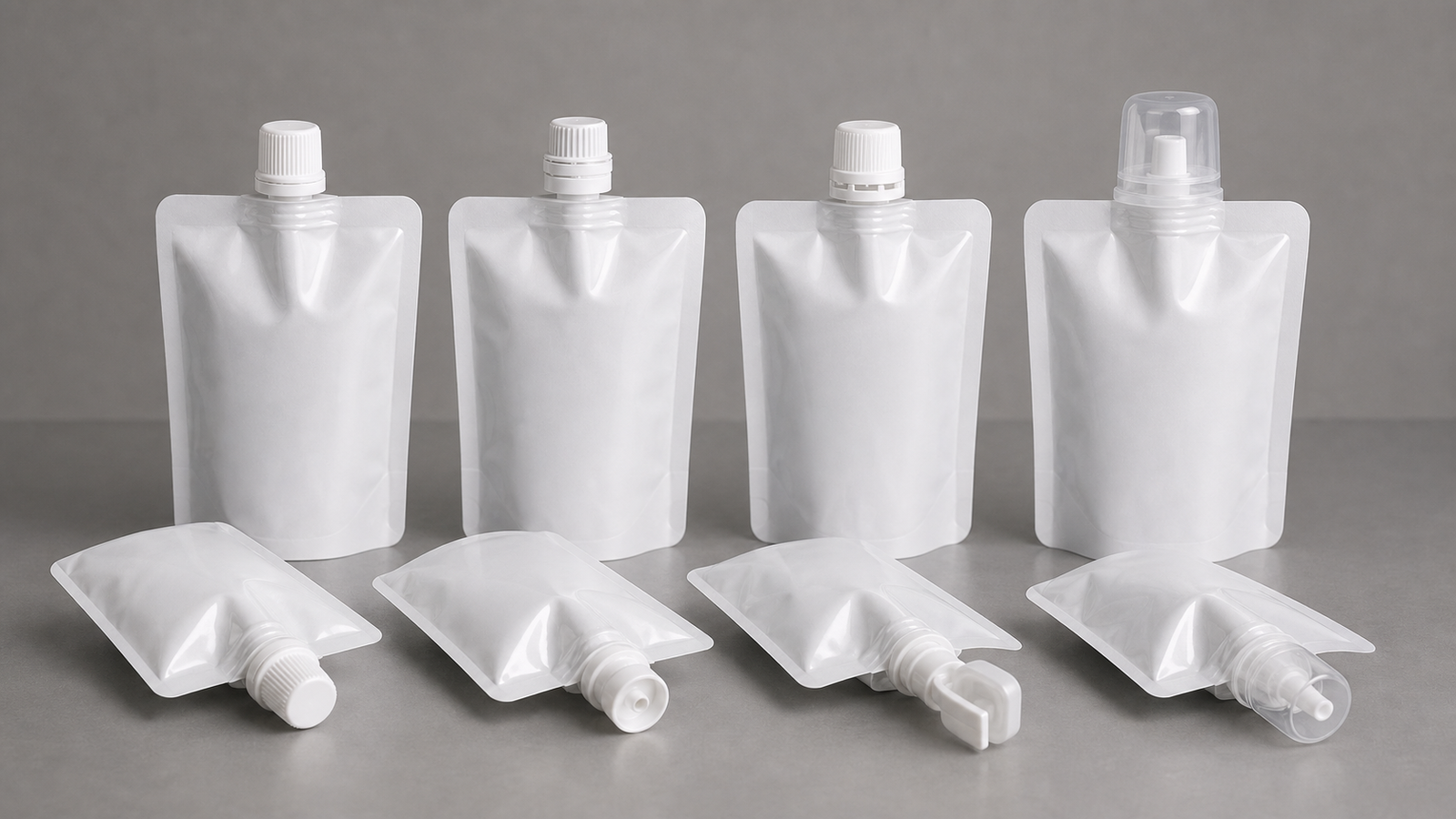
The closure is part of the package function. It is not only a cap color or a branding detail. A poor closure choice can create leakage risk, awkward handling, retail objections, or approval delays.
Research examples include reclosable spouts, tamper-evident options, child-resistant caps, and custom fitments. Buyers should be careful with compliance language. A supplier may offer a child-resistant style, but the finished package still needs to be evaluated for the target market and product category.
| Closure feature | When it may be useful | Buyer check before approval |
|---|---|---|
| Standard screw cap | Basic pouring and reclosing are enough | Cap fit, torque range, sealing contact, and user grip |
| Tamper-evident band7 | Retail or safety expectations require visible opening evidence | Band behavior after filling, shipping, and shelf handling |
| Child-resistant cap | Higher-risk homecare, chemical, or regulated-adjacent products | Target-market requirements and finished-pack suitability |
| Controlled dispensing fitment | Product needs slower flow or cleaner dosing | Flow behavior with actual viscosity and use angle |
| Custom fitment | Ergonomics or brand format requires a special function | Tooling, cap supply, filling fit, MOQ, and replacement risk |
Food, beverage, baby food, homecare, automotive, chemical, cosmetic, and pharmaceutical-adjacent products can have very different expectations. A baby food pouch and an automotive fluid pouch may both use spouts, but their closure priorities are not the same.
I would define the risk profile first, then choose the closure. Starting from cap appearance can hide the decisions that matter: torque, sealing contact, dispensing control, evidence of opening, and user safety expectations.
What Information Should Go Into a Spout Pouch RFQ?
A good spout pouch RFQ should describe the product, filling process, pouch format, spout, cap, barrier needs, print requirements, order quantity, and distribution conditions. Without these details, suppliers can only quote a generic pouch concept.

A price request that only says 500 ml spout pouch with logo is not enough for a reliable quotation. The supplier still has to guess the product behavior, barrier need, fill process, spout size, cap type, and shipping conditions.
Use the RFQ as a buyer-ready checklist:
- Product name and category
- Fill weight or fill volume, plus target pouch capacity
- Viscosity and whether the product contains particulates
- Ingredients that may affect film or sealant compatibility
- Fill temperature and cooling conditions
- Target shelf life and storage conditions
- Barrier needs, including oxygen, moisture, aroma, or light sensitivity
- Requested material structure, if already known
- Pouch format, such as stand-up, flat, shaped, or custom
- Pouch size range or target dimensions
- Spout size, spout position, and size definition
- Cap type and closure feature requirements
- Filling method and equipment constraints
- Print method, artwork coverage, clear window, or viewing strip needs
- Order quantity and expected repeat volume
- Carton packing, distribution route, and transport conditions
- Sustainability goals, if relevant, with a request for clear material data and recyclability information8
If you do not know the final material structure, say that clearly. Give the product and performance requirements, then ask the supplier to recommend options. For sustainability claims, ask for specific material information, recycled or bio-based content details if offered, and the target market where recyclability is being discussed.
A complete RFQ does not make the project complicated. It prevents a simple-looking pouch from being quoted on assumptions that may not survive filling, sealing, or shipment.
For a spout pouch recommendation or quotation, send the product type, fill weight or volume, target pouch size, material or barrier need, spout and cap features, filling method, print requirements, order quantity, and distribution conditions. With those inputs, a supplier can recommend a structure and sample direction instead of guessing.
References
-
Spout Pouch Market Size, Share & Forecast to 2036 | FMI - Spout Pouch Market Definition: The spout pouch market covers flexible dispensing pouches with integrated fitments designed for controlled ... ↩
-
C403H Oxygen/Water Vapor Transmission Rate Test System - It is suitable for testing the oxygen and water vapor transmission performance of films, sheets and related materials in the fields of food, medicine, medical ... ↩
-
CRYOVAC® Brand Three Side Seal Pouches - The 3 Side Seal Pouch, often referred to as a flat pouch, is the perfect pre-made alternative to form fill and seal packaging. Sealed on three sides with ... ↩
-
Guide to Neck Finishes - The Cary Company - E Dimension is the outside diameter of the neck (without the thread). I Dimension is the inner diameter of the bottle neck. ↩
-
"Effects of Transportation Hazards on Package Performance and ... - This research studied the effect of transportation hazards on food product shelf life and package performance. Studies were conducted to determine the ... ↩
-
Spout Pouch Filling Machines | Filler & Capper System - Unified Flex - Torque-Controlled Capping Heads: Ensure accurate torque adjustment to prevent over-tightening or loose caps. No-Pouch, No-Fill Technology: Prevents spills ... ↩
-
4.375" x 7.25 " x 2.75" SpoutPAK™ with Tamper Evident Cap - This transparent, label-ready, tamper-evident spout pouch is FDA approved food safe and great for packaging liquids that have visual appeal. The hang hole ... ↩
-
High-Recyclability Mono-Material Flexible Packaging Market - 2036 - The high-recyclability mono-material flexible packaging market is projected to grow from USD 2.2 billion in 2026 to USD 4.5 billion by 2036, ... ↩