
RETORT POUCHES · PACKAGING FOR A DEFINED PROCESS
Custom Retort Pouch
Manufacturer
IVAPAK manufactures custom printed retort pouches for processed food and wet pet food projects. Define the pouch format, fill quantity, laminate, opening and artwork with our factory. The food processor’s established treatment conditions and filled-pack validation determine the final packaging specification.
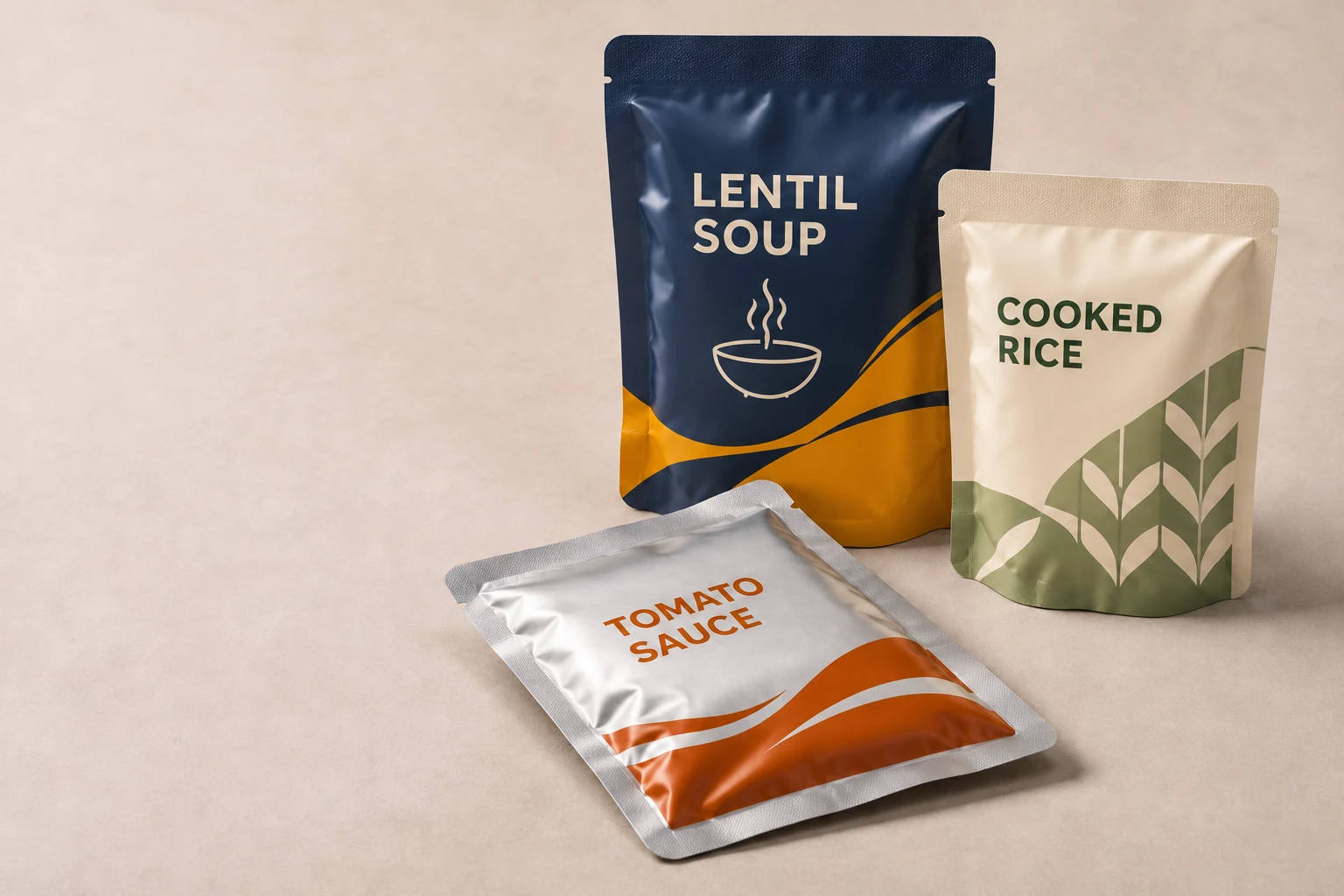
01 / Understand the format
Retort Pouches for Processed Food Packaging
A retort pouch is intended for a specified thermal process after filling and sealing. Its material and geometry must be assessed as part of that product-and-process combination. The food processor and qualified process authority establish the food process; the packaging brief defines the container that process will use.
Compare packaging formatsBring the food, fill weight, particle profile and handling conditions into the material review.
Define the converter’s seals and the final closure made on the filling line as parts of the same pack.
Assess representative filled pouches after the agreed process, cooling and handling sequence.
02 / The purchase specification
Fill, Pouch Geometry & Retort Laminate Specifications
These six inputs connect the empty pouch to your actual filling and processing system. The diagram is a specification guide, not a processing recipe.
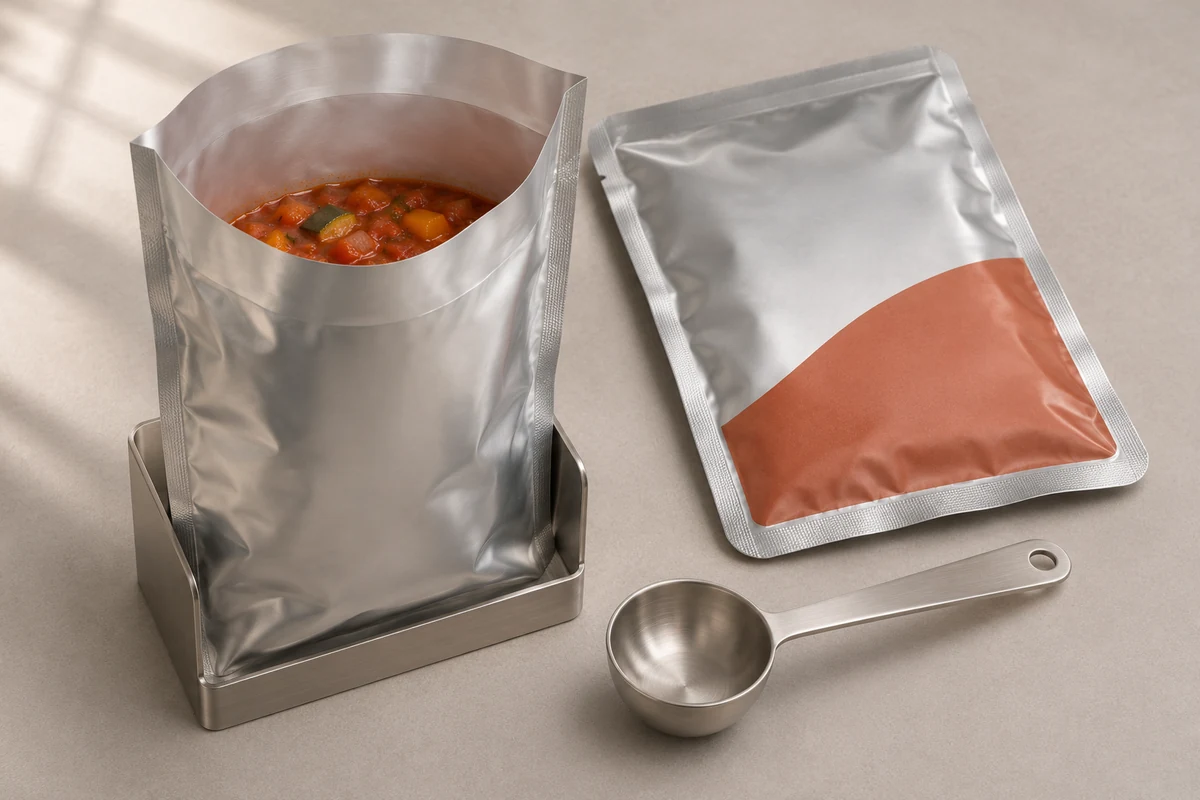 01 / CONTENTS & FILL
Food Composition, Fill Weight & Headspace
Fill weight, solids and liquid distribution, particle edges and product on the seal area can affect the packaging review. A sauce, soup and chunky wet pet food should not share an assumed specification.
Product description, fill weight, particle profile, relevant formulation information and filling method.
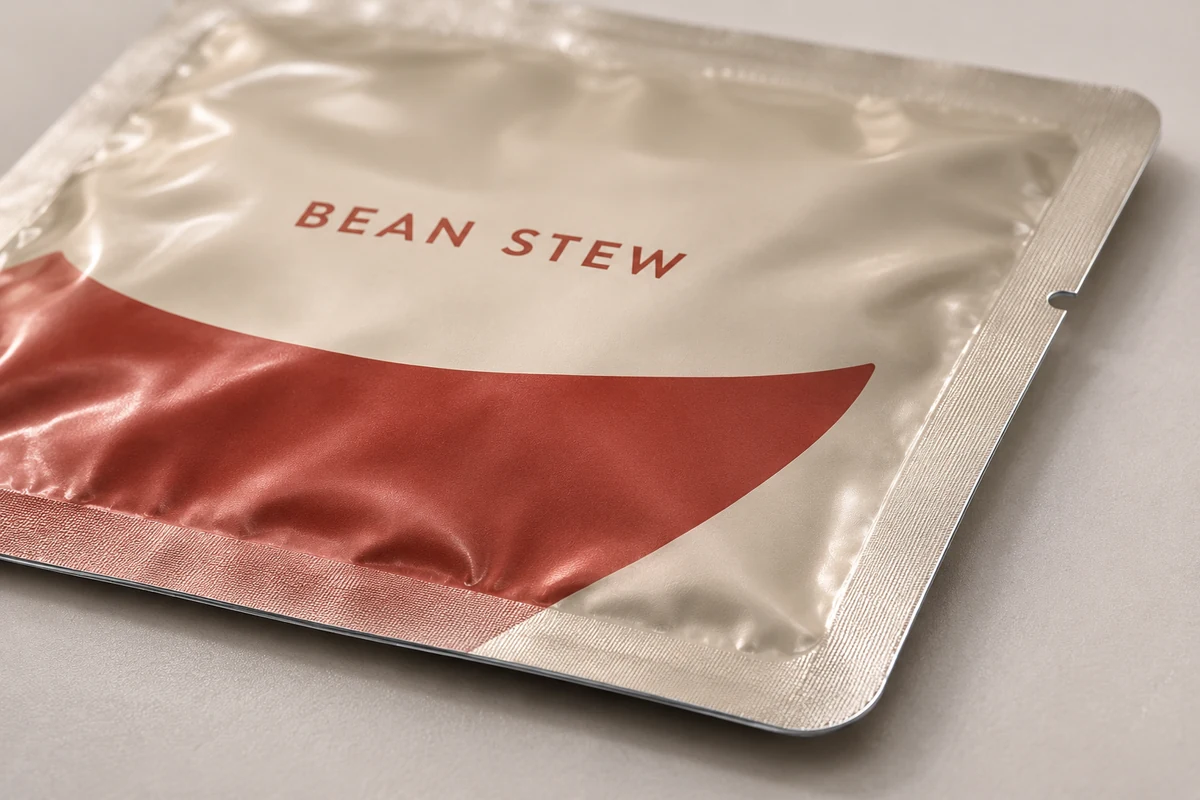 02 / POUCH GEOMETRY
Retort Pouch Dimensions & Filled Thickness
Width, height, seal layout, fill opening and any gusset define the container. The filled profile also needs to match the loading and process arrangement used by the processor.
Dimensioned drawing, nominal fill, intended orientation and process-carrier or loading requirements.
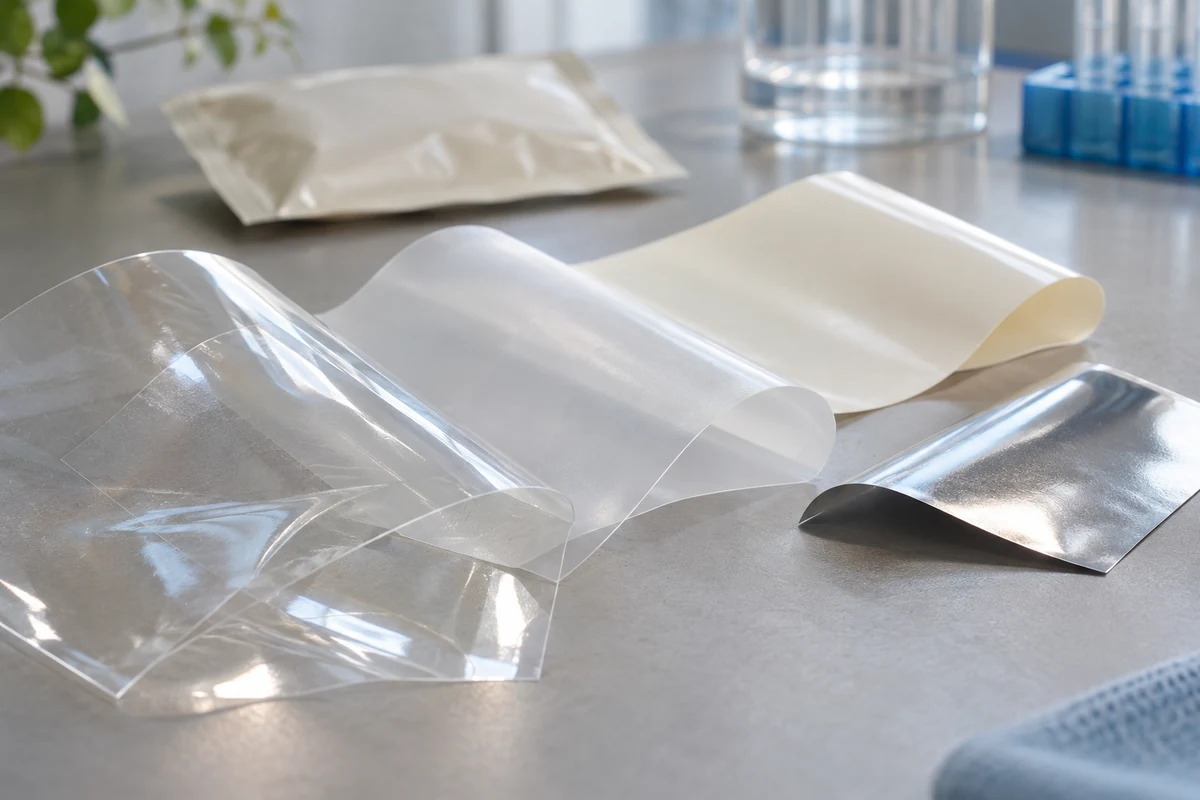 03 / LAMINATE
Retort Laminate & Layer Functions
The printed outer web, barrier, mechanical layers, adhesive and inner sealant each have a job. Select a complete retort-suitable construction rather than adding a general heat-resistant label to an ordinary pouch.
Current structure or sample, barrier target, process exposure and any transparency requirement.
 04 / FINAL CLOSURE
Final Heat Seal After Filling
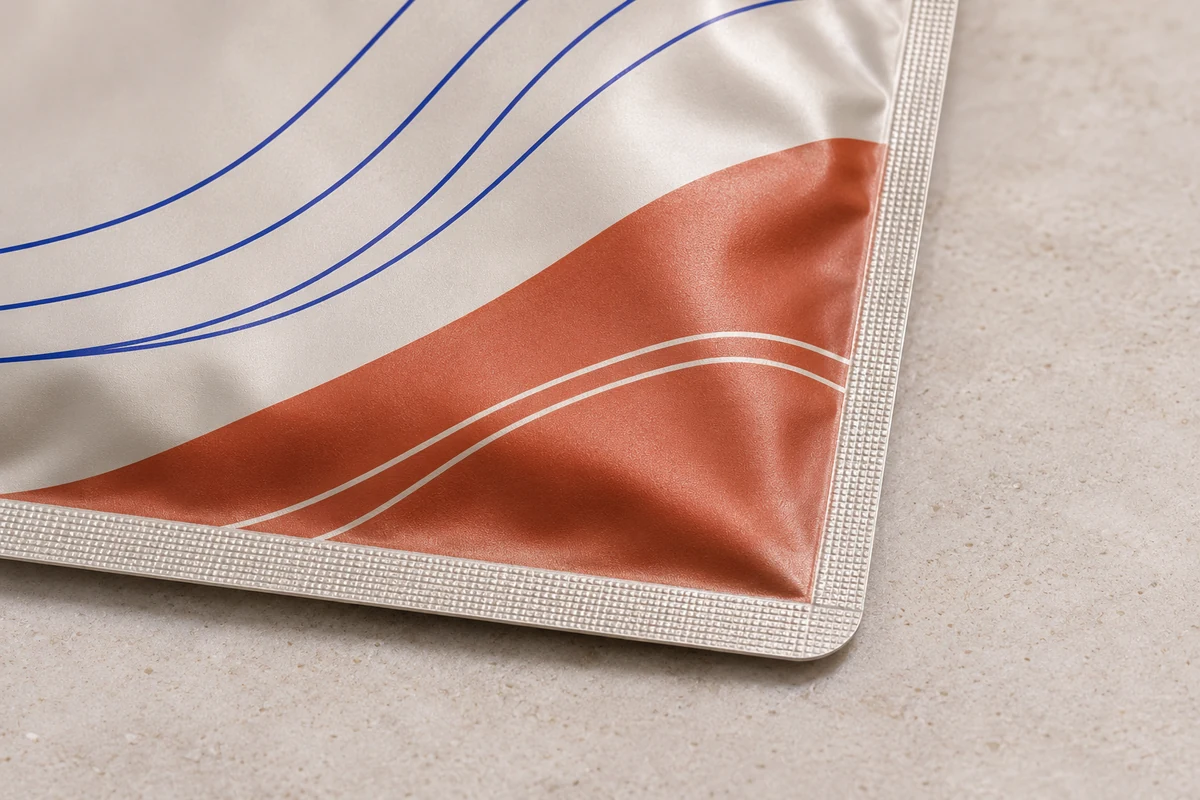
The final seal is made after filling. The seal area, jaw contact and product contamination risks must be included in the line trial alongside the seals supplied with the empty pouch.
Sealer type, seal drawing, filling method and the processor’s validation and inspection requirements.
 05 / PROCESS EXPOSURE
Specified Retort Process Conditions
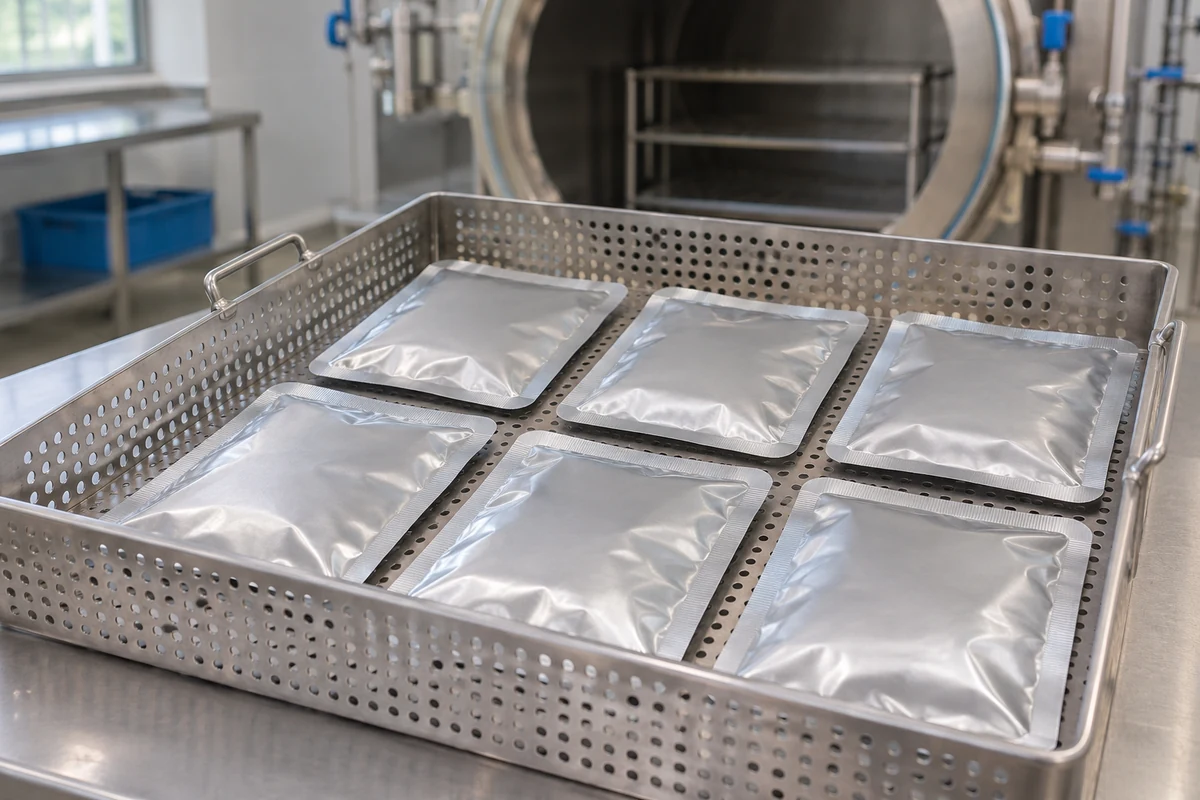
The packaging review needs the actual retort system and relevant exposure, cooling and pressure conditions. A generic time-and-temperature statement cannot qualify every food and pouch combination.
Validated process information supplied by the processor, retort type, loading arrangement and cooling conditions.
 06 / AFTER-PROCESS INTEGRITY
Post-Process Pouch & Seal Integrity
Evaluate the finished package after processing and handling. Seals, laminate bonds, pouch surfaces and product-facing performance all need agreed acceptance criteria.
Processed-pack inspection plan, handling and distribution conditions, shelf-life target and sample retention requirements.
Use an approved drawing and representative samples to connect appearance, dimensions and intended use.
Add what you know to your brief ↗03 / Match the application
Food, Meal & Portion Packaging Applications
Select the route closest to your product. The filling method, handling and consumer-use sequence influence the specification.
Bring flow, particles and the seal zone together.
A liquid or particulate fill can make closure control central to the project. The pouch specification should reflect the filling method and the condition of the seal area immediately before sealing.
- Viscosity, particles and nominal fill
- Filler nozzle and final closure arrangement
- Processor-supplied retort and cooling conditions
Design around the actual meal format.
Chunks, gravy and product texture influence filling and how the pouch is handled. Start with a representative product and the processor’s container and process requirements.
- Recipe form, solids and liquid distribution
- Filled-pouch profile and handling
- After-process seal and laminate evaluation
Set the geometry before the production artwork.
A three-side seal retort concept can provide a defined fill opening and compact format. Its width, height, seals and filled profile still form part of the container-and-process approval.
- Pack drawing and usable filling space
- Loading orientation and carrier fit
- Opening feature and post-process inspection
04 / Industry requirements
Retort Packaging for Food & Wet Pet Food
Explore the protection, filling and handling questions behind each application.
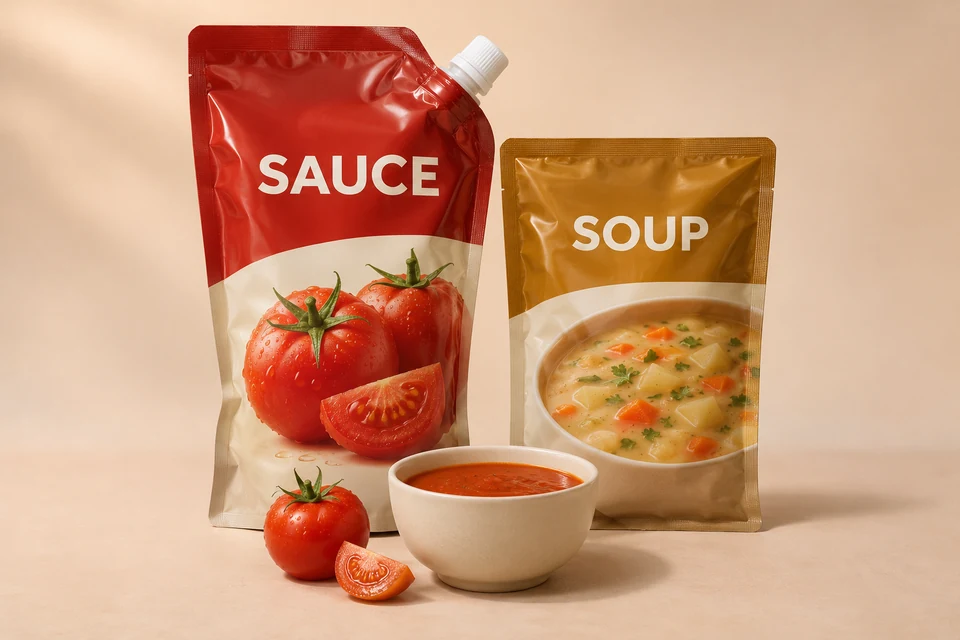
Sauces, Soups & Condiments
Review flow, particulate fill and the final seal made on your line.
Explore this industry ↗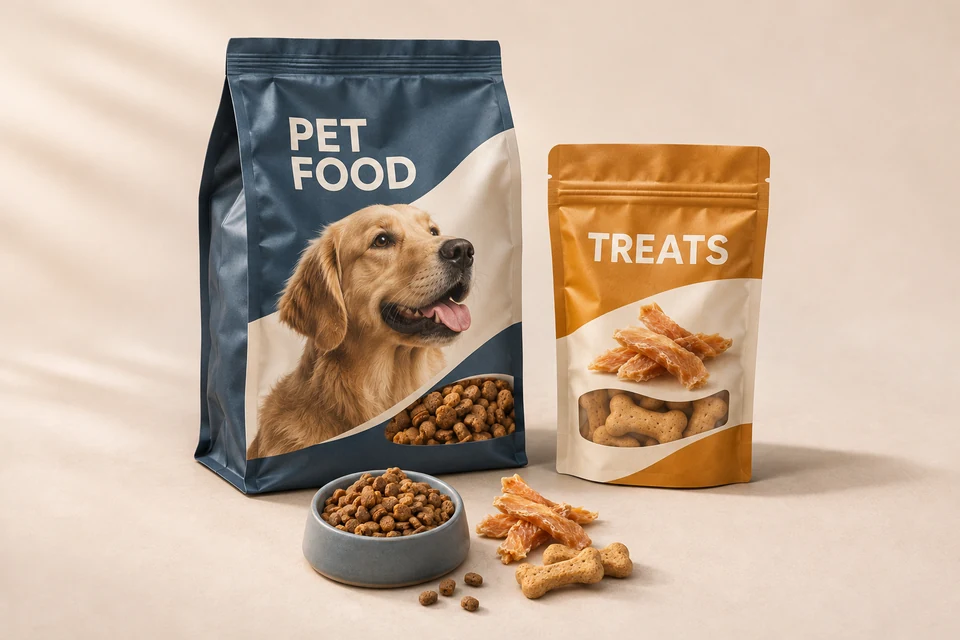
Pet Food & Treats
Define wet-food contents, fill profile and the processor’s retort conditions.
Explore this industry ↗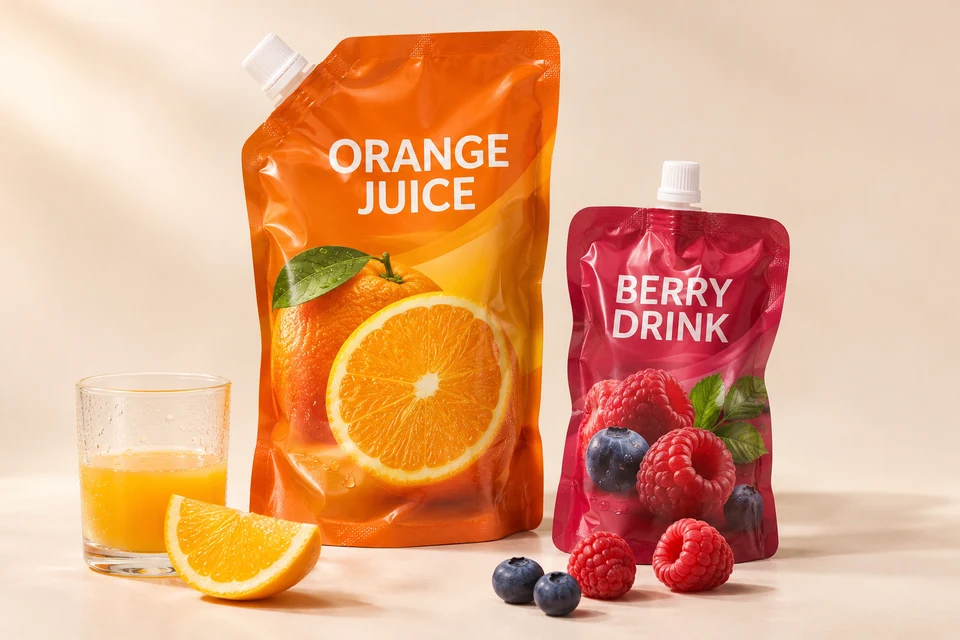
Beverages & Drink Pouches
Distinguish the intended filling and thermal process before choosing the package.
Explore this industry ↗05 / Material decisions
Retort Laminate & Barrier Requirements
Film appearance alone does not establish protection, processing compatibility or an end-of-life outcome. Define the role and the evidence together.
Presents the artwork and contributes to the pouch’s handling behavior.
Print system, surface condition and response to the specified processing exposure.
Provide the required light, gas or mechanical protection.
Foil or transparent direction, barrier target, flexing and particle-related demands.
Holds the selected layers together through processing and use.
Compatibility with the complete laminate and bond integrity after the specified process.
Contacts the contents and forms the pouch’s sealing interfaces.
Food-contact conditions, final closure method and seal performance after processing.
06 / A closer design decision
Empty-Pouch and Filled-Pack Validation
Keep packaging supply and food-process validation connected through three distinct acceptance points.
01 · Empty pouch
The agreed construction and drawing establish what the converter supplies, including its seals and material references.
02 · Filled & sealed
The processor verifies filling and final closure with the actual product, equipment and defined operating conditions.
03 · Processed & handled
Representative packs are evaluated after the validated process, cooling and handling before the combination is approved.
07 / Customization & print
Custom Retort Pouch Shapes & Printing
Shape and print must work with the retort process. Explore the factory format library, then confirm the laminate, seals, opening features and artwork for your product and validated thermal cycle.
Shape illustrations from our wider factory range. Dimensions, materials, closures and tooling are confirmed for your application. Flat sachets and zipper variants share their underlying pouch construction.
A starting point for this product
Three-Side Seal Pouch
Flat format · Three sealed edges
A compact flat pouch with one edge left open for filling. Customize the usable area, tear location and front-and-back artwork.
Explore this packaging formatA starting point for this product
Stand-Up Pouch
Bottom gusset · Shelf display
A bottom gusset opens as the pouch fills. Customize width, height and gusset depth, then place your artwork around the seal and fold zones.
Explore this packaging formatAnother format in our factory range
Flat Zipper Pouch
Resealable · Flat body
A flat pouch with a resealable zipper. Coordinate the zipper position, opening clearance and printed information with the fill volume.
Explore this packaging formatAnother format in our factory range
Stand-Up Zipper Pouch
Resealable · Bottom gusset
Combine a standing base with a zipper. Customize the body proportions, reclosure position and artwork for repeated use.
Explore this packaging formatAnother format in our factory range
Pillow Pack
Back seal · Rollstock formed
A back-sealed pack formed from rollstock. Match film width, print repeat and end-seal allowances to the filling machine and product.
Explore this packaging formatA starting point for this product
Spout Pouch
Dispensing fitment · Custom position
Choose a center or corner spout around pouring, grip and filling access. Coordinate the pouch shape, fitment and printed use instructions.
Explore this packaging formatAnother format in our factory range
Back-Seal Gusseted Bag
Back seam · Expanding sides
A back seal and folded side gussets provide additional volume. Plan the rear seam, gusset folds and artwork across the formed faces.
Explore this packaging formatAnother format in our factory range
Side-Gusset Pouch
Side folds · Added volume
Side gussets expand around the contents. Customize the panel proportions and plan graphics that remain readable across the folded surfaces.
Explore this packaging formatAnother format in our factory range
Flat Sachet
Small portions · Sample packs
A small flat pack for a single portion or sample. Reserve enough room for seals, the tear path and legible artwork at the final size.
Explore this packaging formatAnother format in our factory range
Flat-Bottom Pouch
Box-style base · Multiple panels
A flat base and defined side panels create a structured pack. Customize panel widths, base depth and artwork across the visible faces.
Explore this packaging formatAnother format in our factory range
Flat-Bottom Zipper Pouch
Structured base · Resealable top
Bring a resealable opening to a flat-bottom format. Review the zipper, opening access, panel layout and the filled-pack proportions together.
Explore this packaging formatAnother format in our factory range
Die-Cut Shaped Pouch
Custom outline · Tooling review
An individually shaped outline can support a distinctive display. Review die-cut tooling, seal margins, filling access and artwork together.
Explore this packaging formatCustom artwork for production, with colors approved on the specified material.
Review artwork and presentation before confirming the production brief.
Discuss matte or gloss appearance, clear areas and artwork across the finished pack.
Flat or standing format
Evaluate the required geometry against filling, process-carrier loading and the approved filled profile.
Foil or transparent direction
Define light and oxygen requirements together with the desired appearance and processing exposure.
Opening & corners
Place tear features and review corner geometry around seal protection, handling and consumer opening.
Print & coding space
Reserve clear areas for lot coding, required product information and any verified preparation instructions.
Send your preferred format, dimensions, material needs, artwork and order quantity. We will review the combination with you.
Customize my packaging08 / Practical project checks
Sealing, Process Exposure & Handling Checks
Select a point to review, then add it to your inquiry. Product, material, filling and handling conditions need to be considered together.
Trace the condition before closure.
- What to record
- Product in the sealing zone, filler behavior, affected closure position and empty-versus-filled seal observations.
- What to review
- Fill control, pouch presentation, closure contact and the processor’s seal-validation requirements.
Compare before and after the process.
- What to record
- Location and extent of separation, material batch, empty-pouch condition and the actual processing exposure.
- What to review
- Complete laminate, bonding system, product compatibility and agreed processed-pack acceptance criteria.
Locate when the damage is introduced.
- What to record
- Product particle shape, pouch contact points, loading, unloading and distribution observations.
- What to review
- Mechanical protection, filled profile, handling surfaces and the agreed integrity evaluation.
Revisit the container approval.
- What to record
- Changes in recipe, fill weight, pouch size, process conditions, equipment or load arrangement.
- What to review
- Whether the packaging qualification and processor’s validated process still cover the revised combination.
09 / Connected manufacturing
Our Pouch Manufacturing Process
Printing, material conversion, pouch making and inspection are coordinated in one factory. The agreed construction determines the exact production route.
Factory photographs / use the arrows or swipe
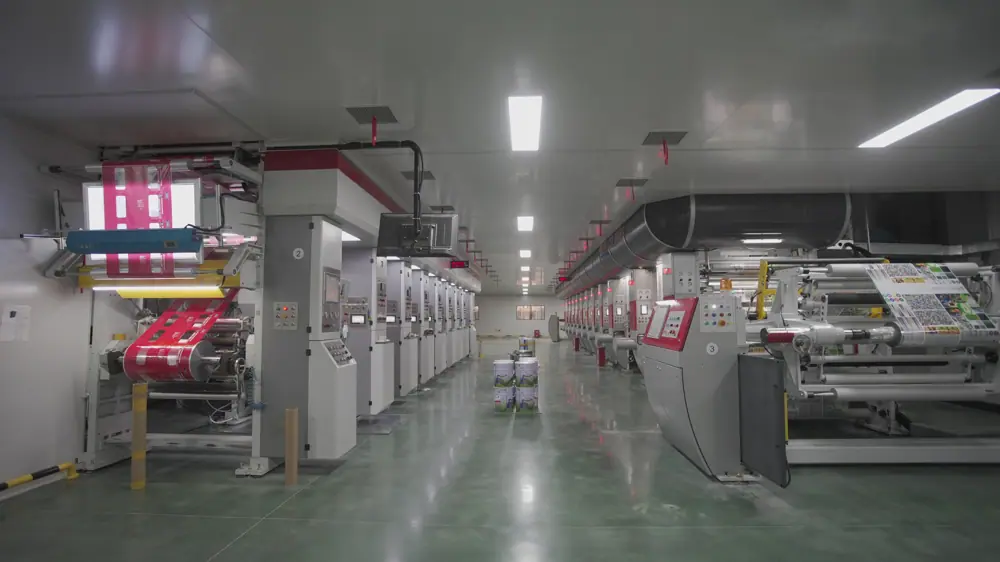
Printing
Approved artwork is carried into the production web.
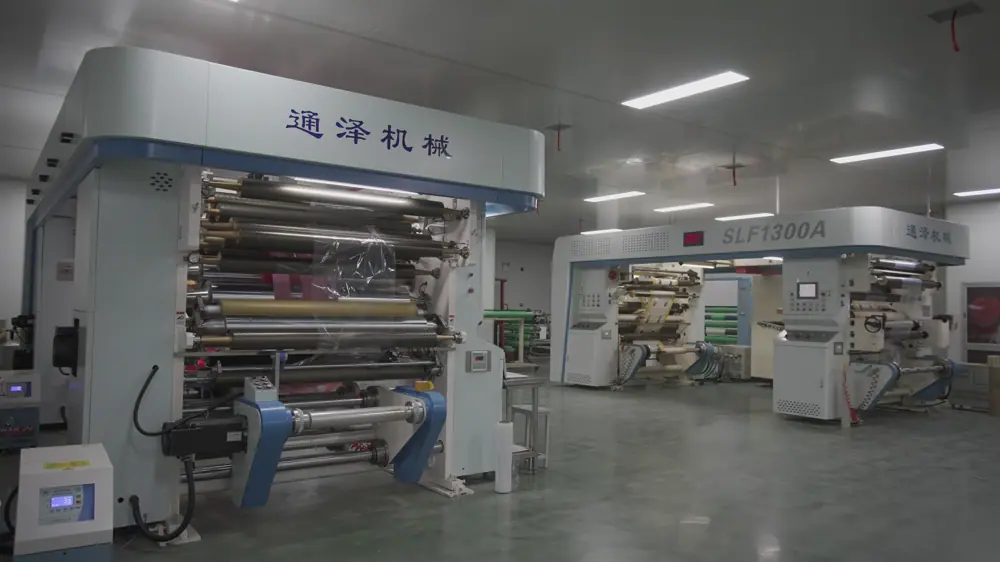
Lamination
Layer selection and converting conditions remain connected.
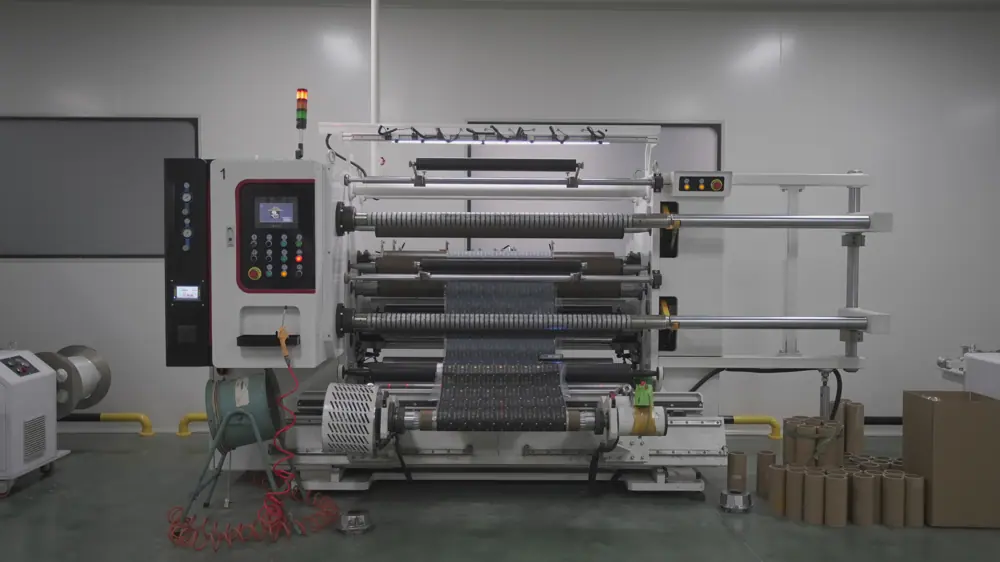
Slitting
The web is prepared for the specified pouch-making layout.
IVAPAK has supplied custom printed flexible packaging since 2003. Confirm the construction, available options and acceptance requirements before production.
Explore manufacturing10 / Quality & documentation
Quality Inspection & Material Documentation
Tie each inspection point and supporting document to the product you are ordering.
- Empty-pouch inspection
Agree drawing, seal layout, visual condition, laminate identity and traceability checks for incoming packs.
- Filling-line closure
Define how the processor will validate and inspect the final seal made after filling.
- Processed-pack evaluation
Assess seals, bonds and physical condition after the specified processing, cooling and handling sequence.
- Application documentation
Match food-contact and test information to the full construction, product and intended processing conditions.

11 / Before the production order
Samples, MOQ & Pre-Production Approval
MOQ is reviewed by size, structure and quantity per design. Digital printing supports artwork sampling; material samples and filled-pack or process trials answer separate questions. Ask our factory to confirm the sample format, approval steps and production quotation for your project.
Empty container
Approve the drawing, material, seal layout, opening and sample reference.
Filled & processed pack
Run representative pouches through the processor’s established validation and inspection plan.
Production specification
Release the agreed container, artwork, acceptance criteria and order references as one controlled specification.
12 / Your project brief
Request Pricing for Your Custom Pouches
Fill in what you know. This tool organizes the details into the inquiry form below, ready for your review.
A current drawing, material specification, filled-pack photo or sample can explain the starting point. Send supporting files to Allen after your initial inquiry.
Allen@ivapak.comYour message will appear below for review. Adding a brief does not send the form.
13 / Practical answers
Custom Pouch Ordering FAQs
Clear answers for purchasing, packaging development and artwork teams.
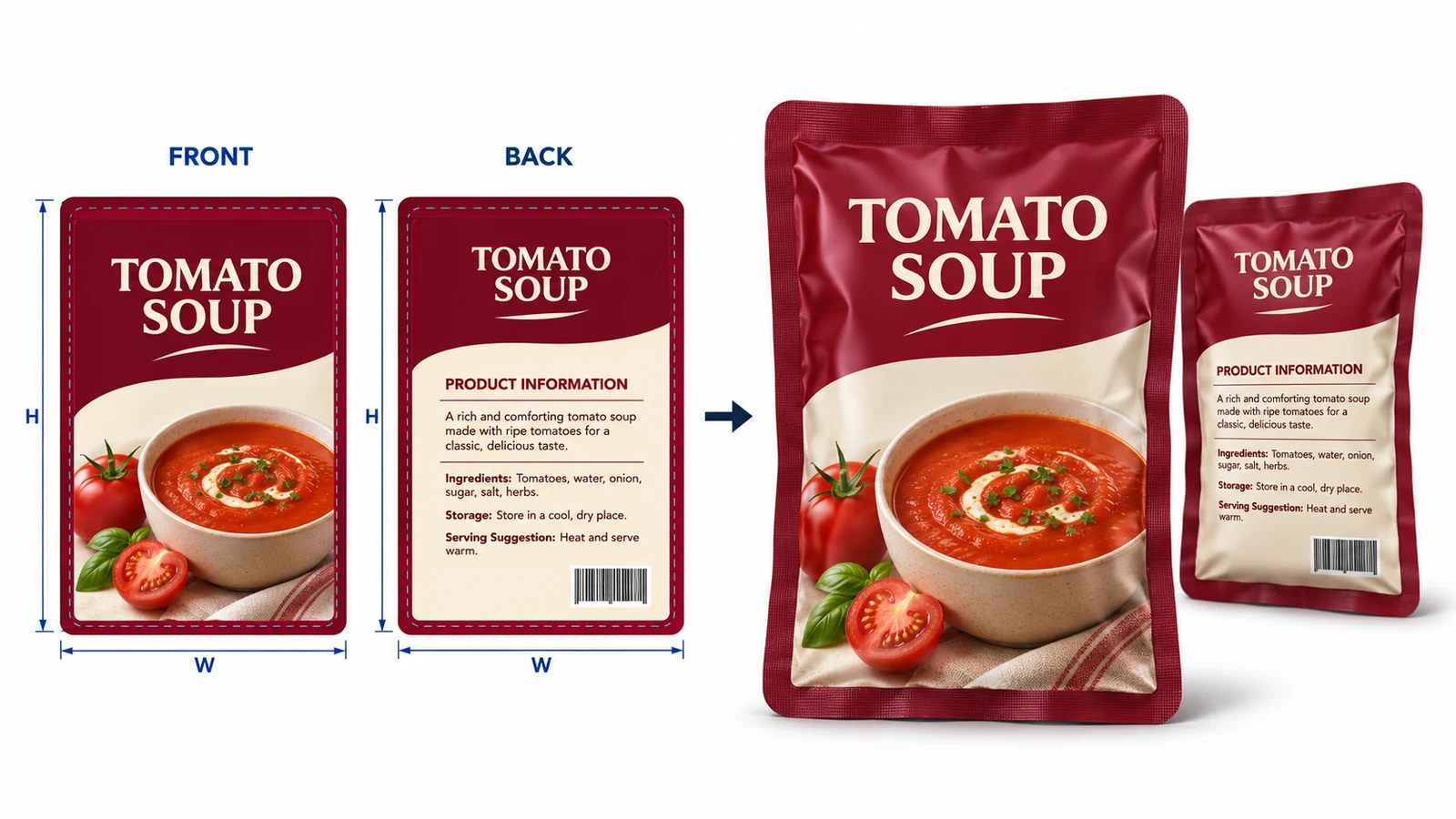
Illustrative artwork-to-pack concept. Final dimensions, seal areas and construction are confirmed on your project drawing.
Is every foil pouch suitable for retort processing?
No. Foil is one possible element of a construction. The complete laminate, adhesive system, sealant, pouch design and actual processing conditions need to be reviewed together.
Can you give us one standard retort temperature and time?
A food process cannot be selected from the pouch alone. The food processor and qualified process authority establish the appropriate validated process for the product and container. Supply those conditions so the packaging can be assessed for the intended use.
What is the difference between retort and hot-fill packaging?
They involve different filling and thermal exposures. A pack suitable for a specified hot-fill application is not automatically suitable for retort. State the full intended process, including cooling and handling, before material selection.
Why do you need the filling-line details?
The processor makes the final closure after filling. Pouch presentation, product in the seal zone and the sealing equipment all affect that interface. Empty-pouch approval alone does not validate the finished closure on your line.
Do samples need to be evaluated after retorting?
Yes. The relevant approval includes representative filled packs subjected to the intended process and handling. Agree the seal, laminate and package-integrity criteria with the processor before the trial.
Can the finished pouch be microwaved?
Retort suitability does not establish microwave suitability. Any heating instruction needs a separate evaluation of the full structure, contents and consumer use. Do not infer microwave use from a retort label.
Can you produce a transparent or stand-up retort pouch?
Share the desired appearance, drawing, fill and validated processing conditions. These configurations can be reviewed as project requirements; availability and suitability depend on the complete construction and approval plan.
What changes require a new review on a repeat order?
Changes to material, pouch geometry, fill weight, recipe, sealing equipment or thermal process should be evaluated before production. Confirm whether both the packaging qualification and the processor’s validated process still cover the revised combination.
14 / Factory-direct inquiry
Request a Factory-Direct Quote
Share the application, reference pack or requirements you already have. Allen can help connect the format, material, print and production plan.
Dimensions, structure, available options, artwork, quantity per design and delivery requirements are reviewed together.
Around 15 days for standard production.After artwork approval, subject to the confirmed order schedule. Shipping and arrival timing are additional.
Tell us about your project.
15 / Repeat supply
Production Lead Times & Repeat Orders
Review changes to the contents, process, artwork or destination market before placing a repeat order.
Reference the material, drawing, seals, artwork and processed-sample approval on repeat orders.
Flag changes to fill, recipe, equipment or process before assuming the existing pouch remains suitable.
Connect pouch lots, processing records and retained samples within the agreed traceability plan.