
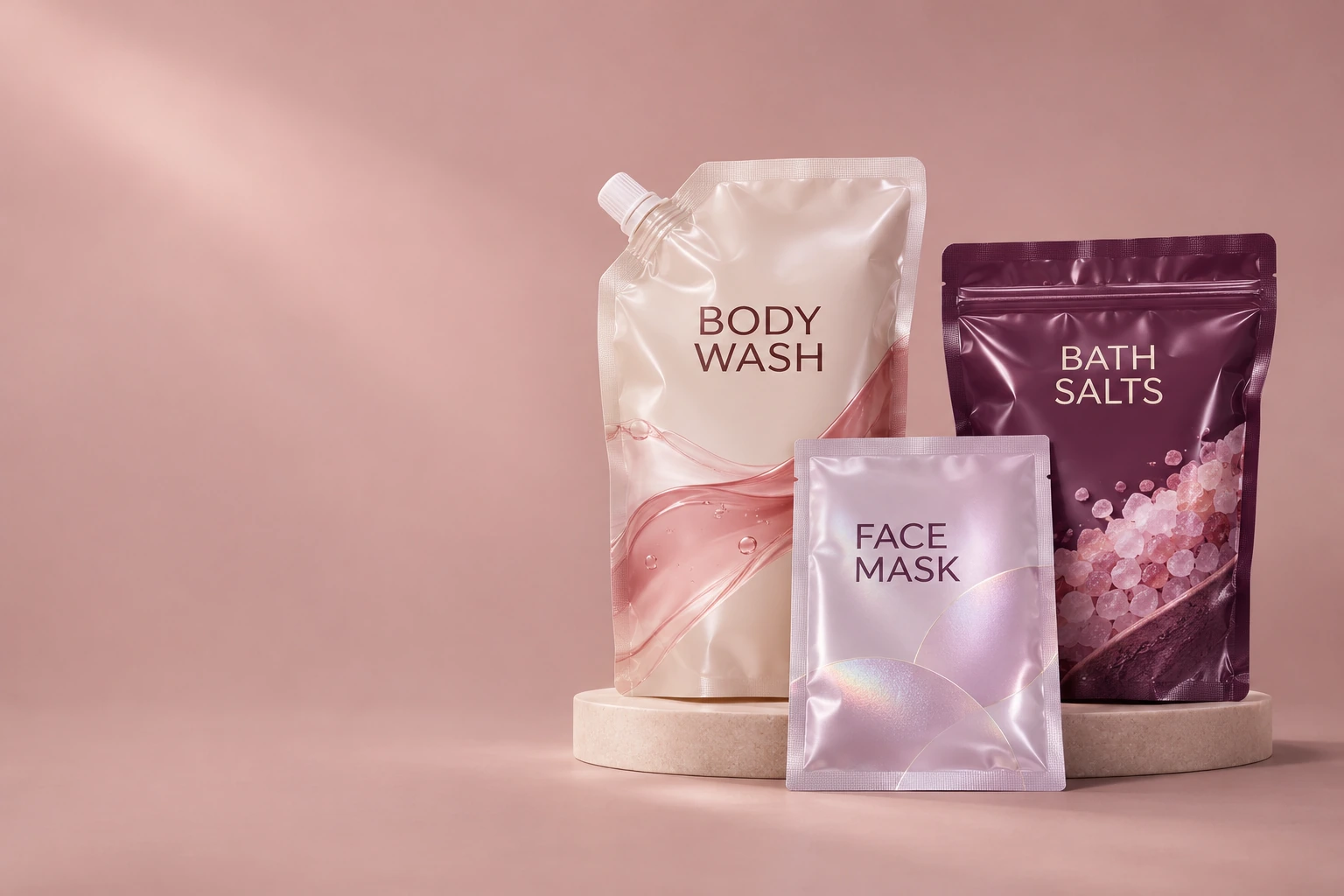
Custom Cosmetic
& Personal Care Pouches
IVAPAK manufactures custom printed pouches for cosmetics, personal care samples and beauty refills. Compare spout, stand-up and three-side seal formats for your formula, portion and dispensing needs. Our factory coordinates artwork, dimensions and material options, with surface finishes and special features confirmed by project.
Custom Cosmetic Sample & Personal Care Refill Pouches
A sample sachet has one chance to introduce a product. A refill pouch has to make a familiar routine easier. Both need a structure that suits the formula and a layout that carries the right information clearly. IVAPAK connects these practical questions with brand presentation, helping beauty teams move from a visual concept to a defined manufacturing brief.
Explore the full industry collection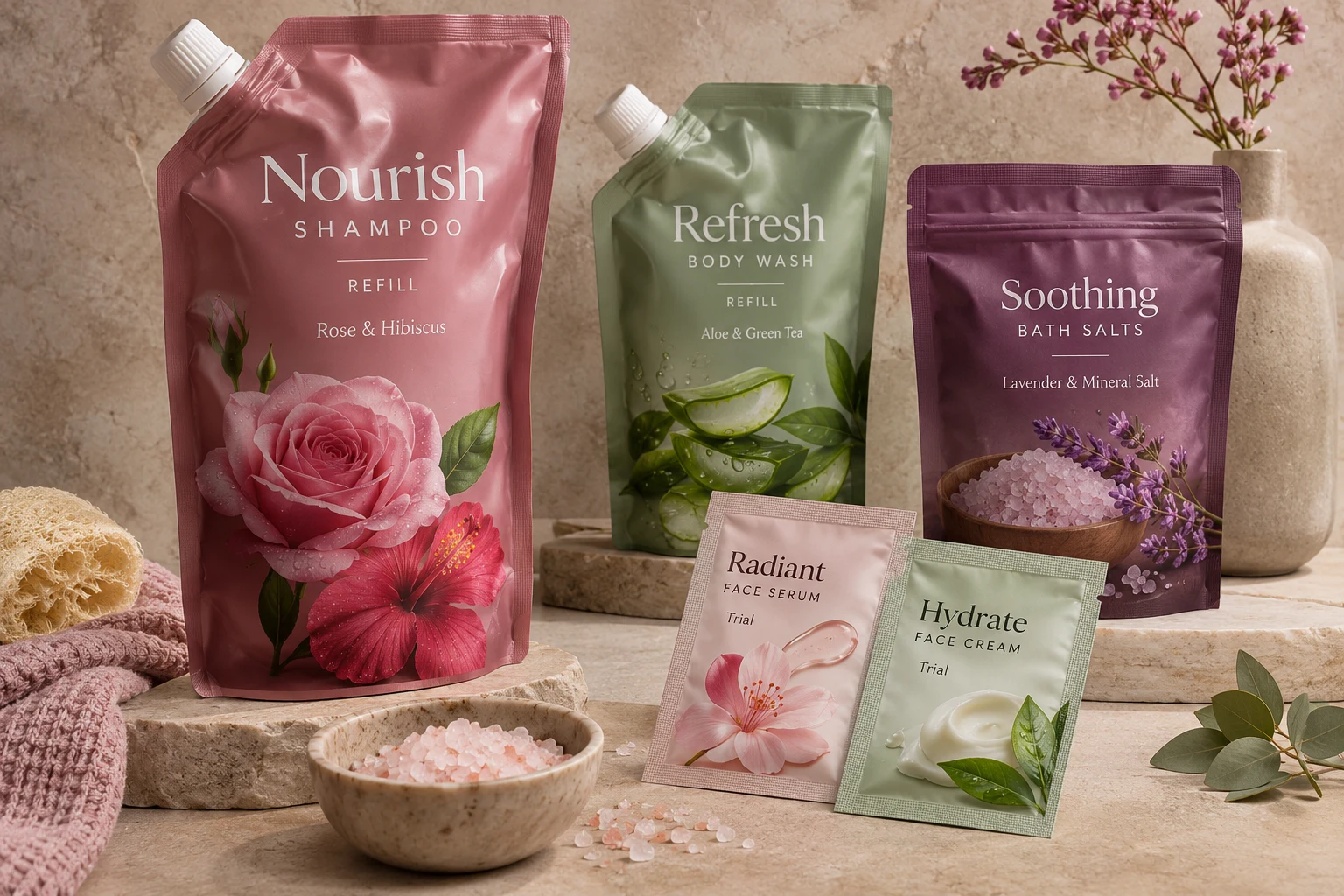
Connect the beauty ritual with practical packaging details.
Three starting points for a better packaging brief.
A format for each moment
Separate trial, travel and refill needs, then match dimensions and information space to the amount and use.
Considered visual detail
Develop a recognizable range through color, imagery and a confirmed finish, with digital sampling available for artwork review.
Formula and factory in one discussion
Bring filling and product teams into material and component choices so visual presentation follows a practical formula brief.
Pouch Formats & Printed Rollstock Options
Compare the shapes that suit your filling operation and retail presentation.
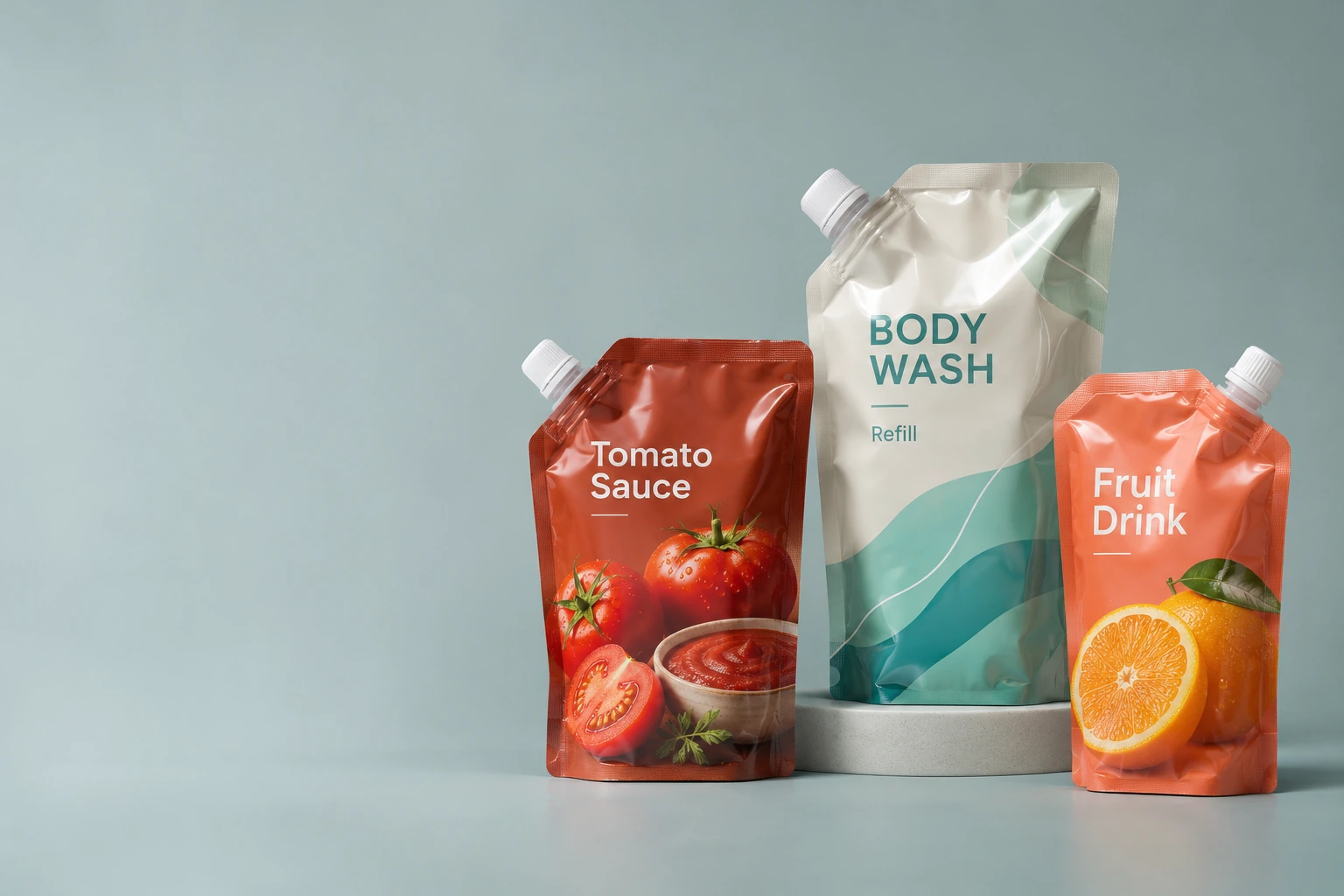
Spout pouches
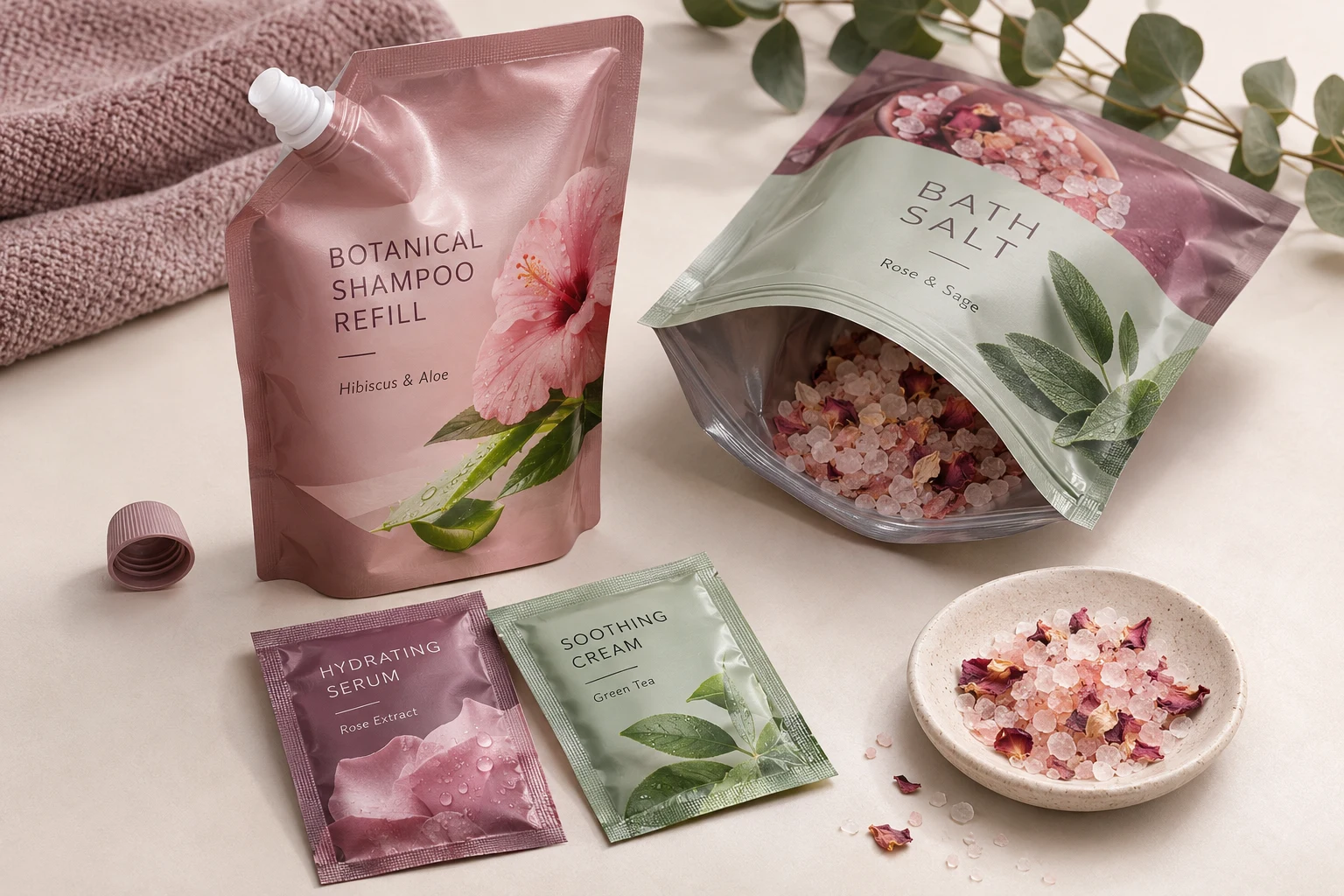
Explore this direction for suitable personal care refills. Specify the formula, filling method, component position and desired flow, then review the complete pack for compatibility and practical dispensing.
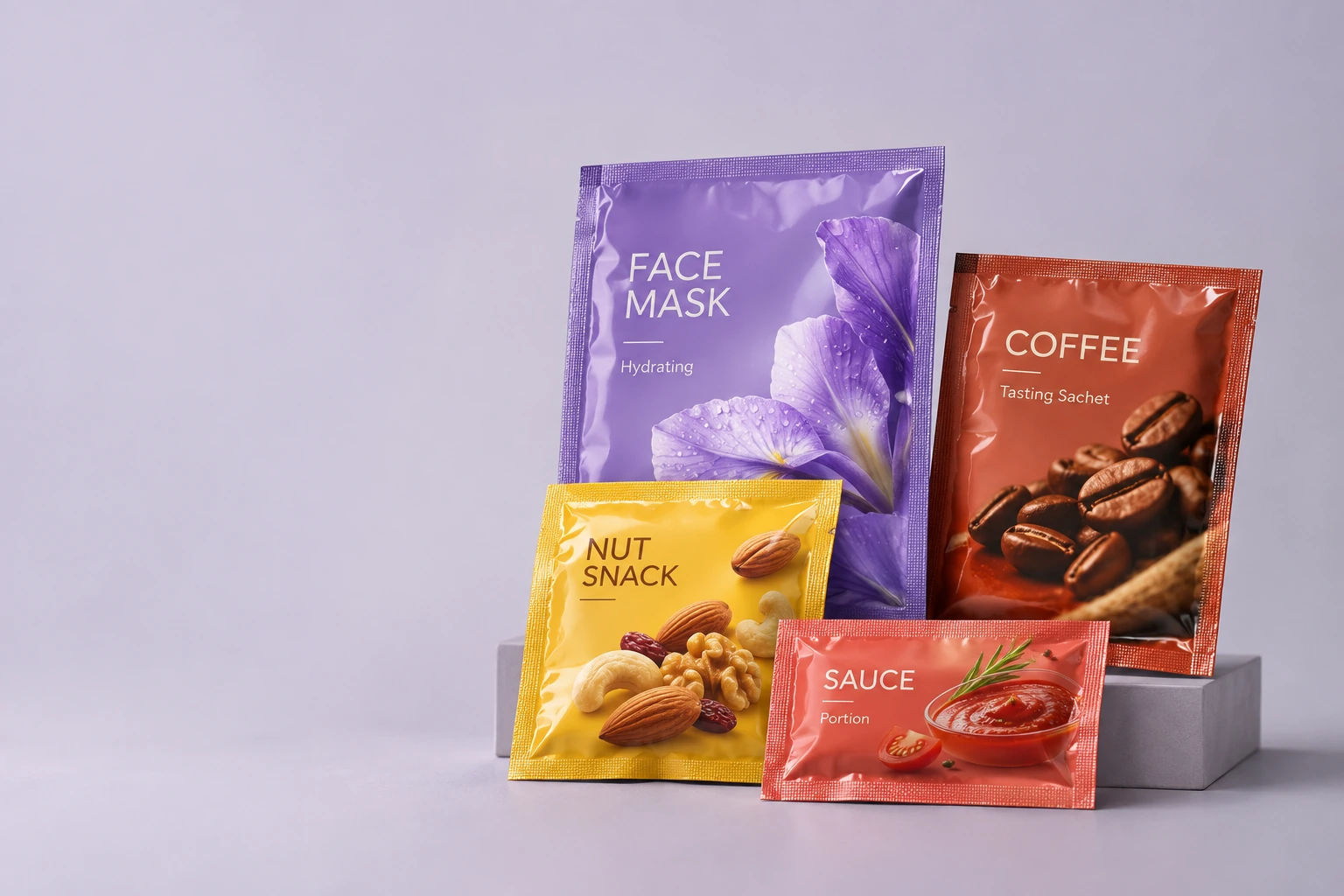
Three-side seal pouches
A compact format for selected trial and single-use products. The fill opening, seal area and tear path should be designed around the formula and the amount customers need to remove.
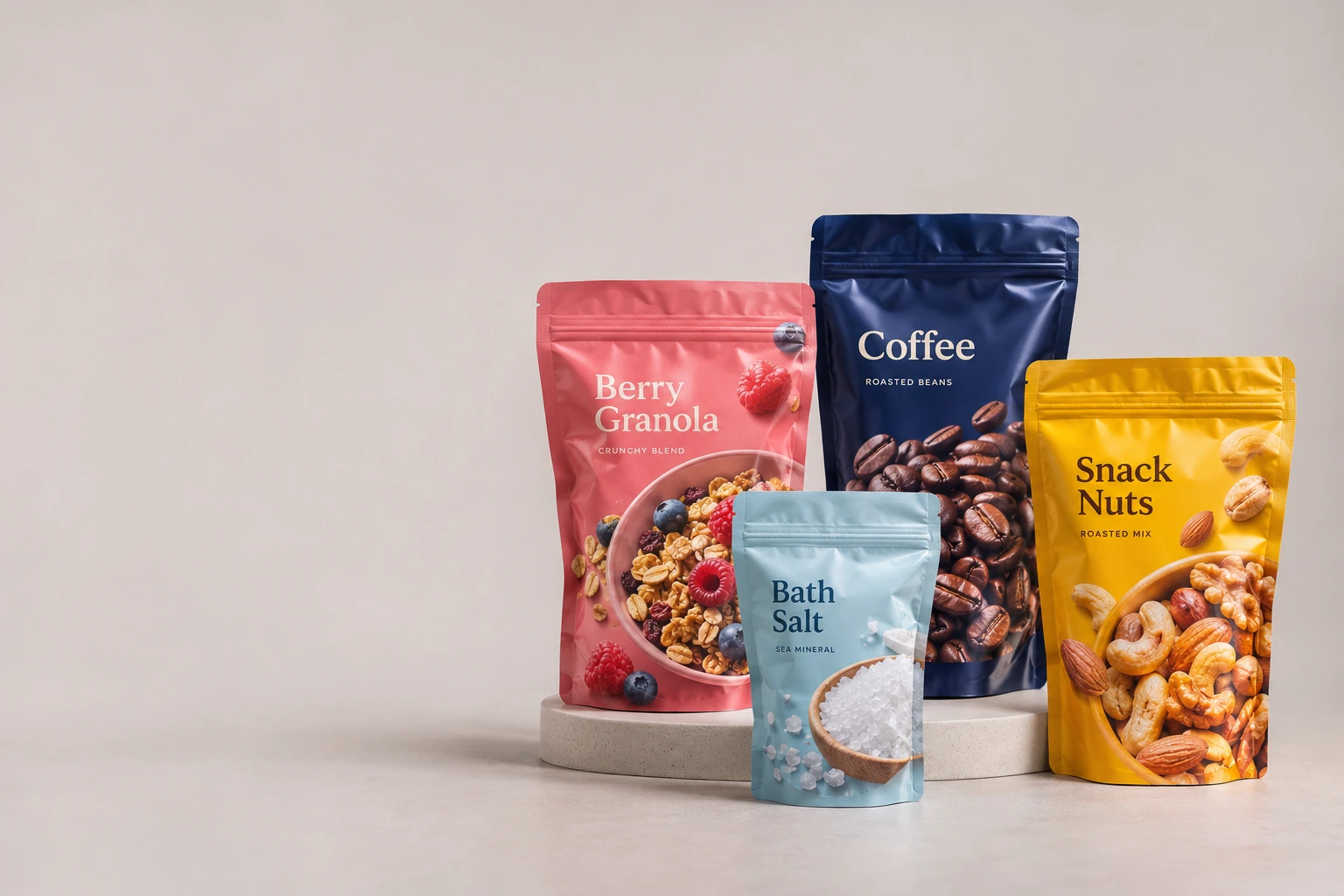
Stand-up pouches
Consider a retail presentation for appropriate dry products and selected refill projects. Assess the filled base, opening and any resealing request with the actual product before finalizing the layout.
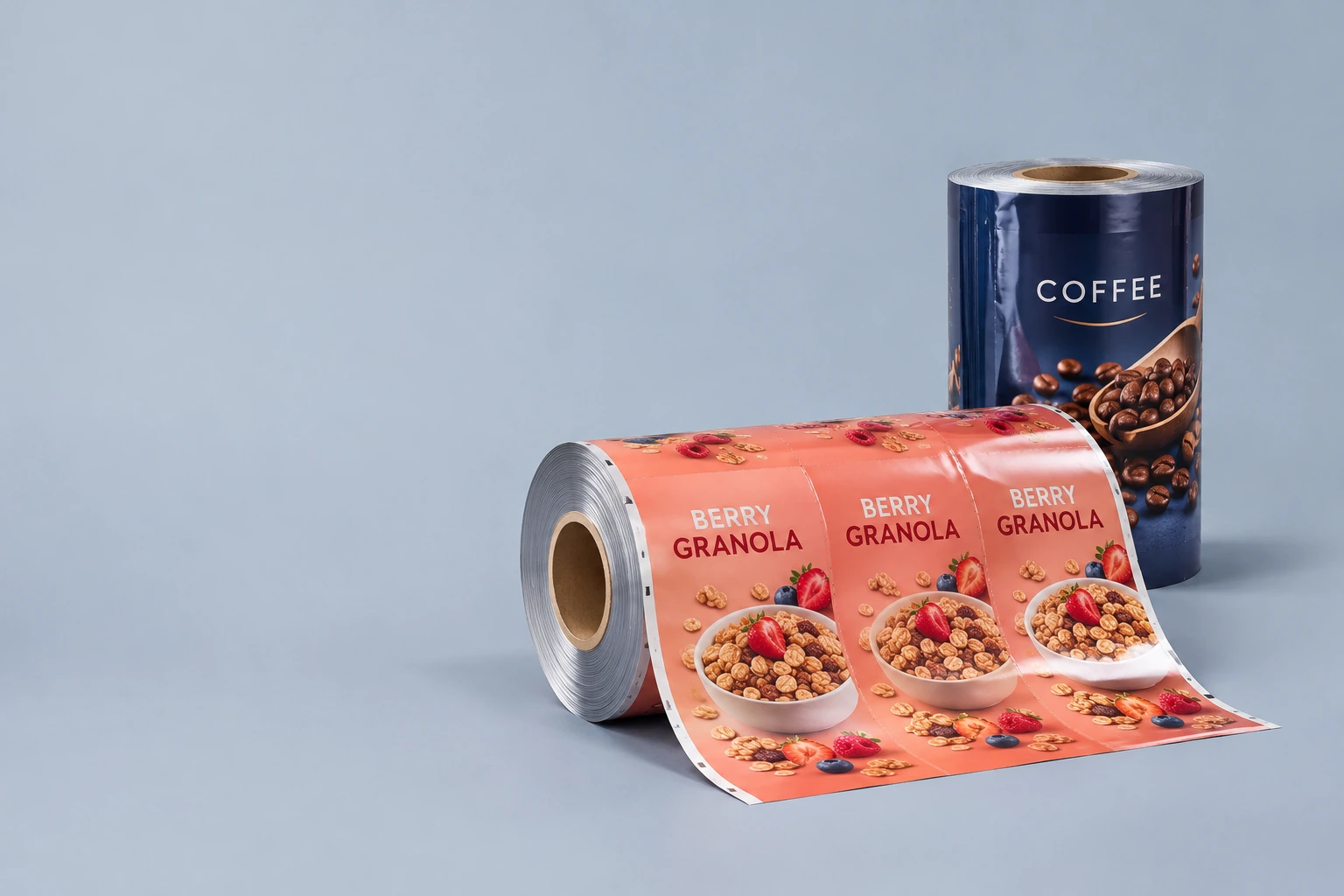
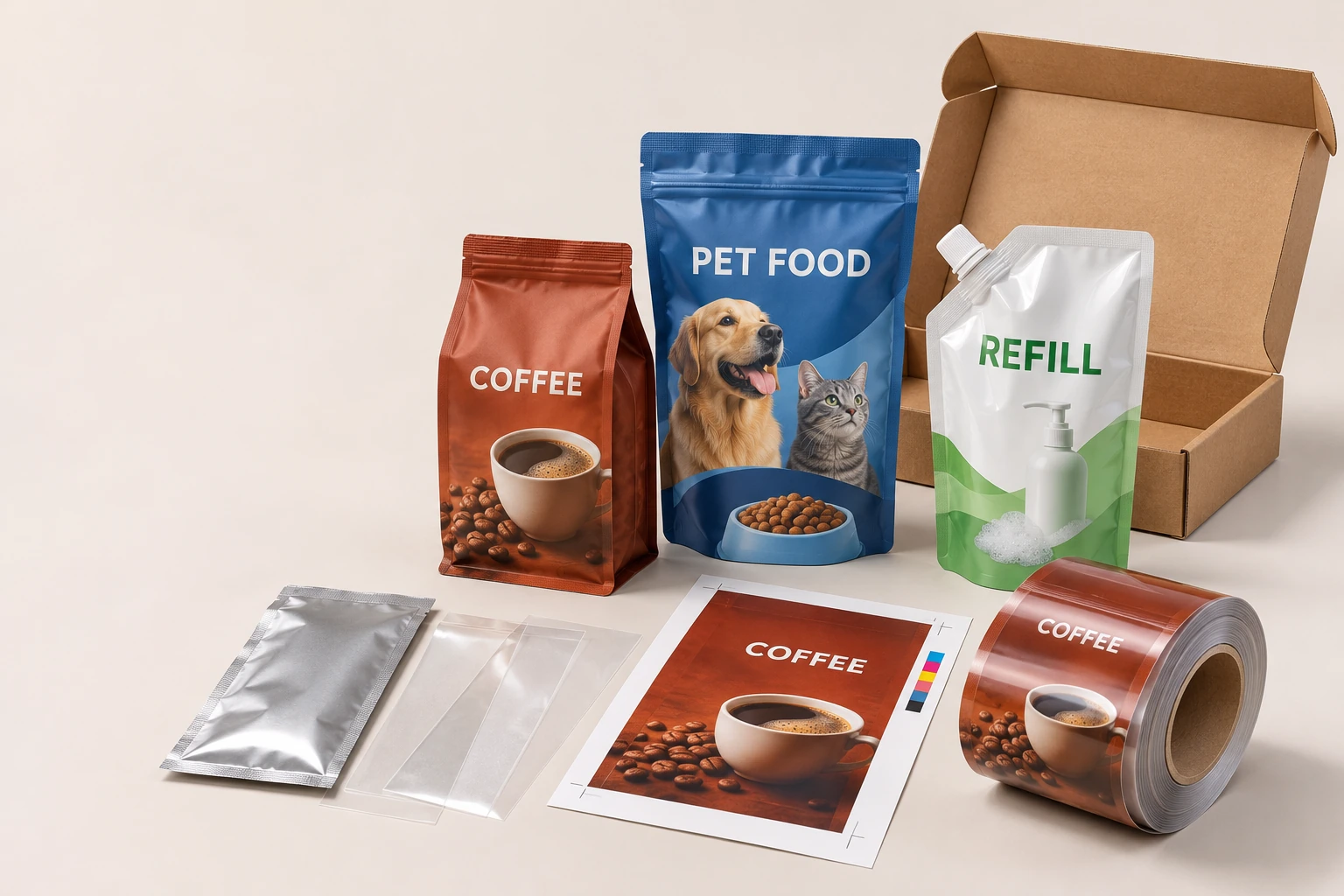
Printed rollstock
For compatible sample and pouch-filling equipment, provide film width, repeat, unwind and sealing requirements. Review the film with the formula and line conditions rather than treating a sachet mockup as a production specification.
From first-use samples to familiar daily refills.
Start with the way the product is filled, sold and used.
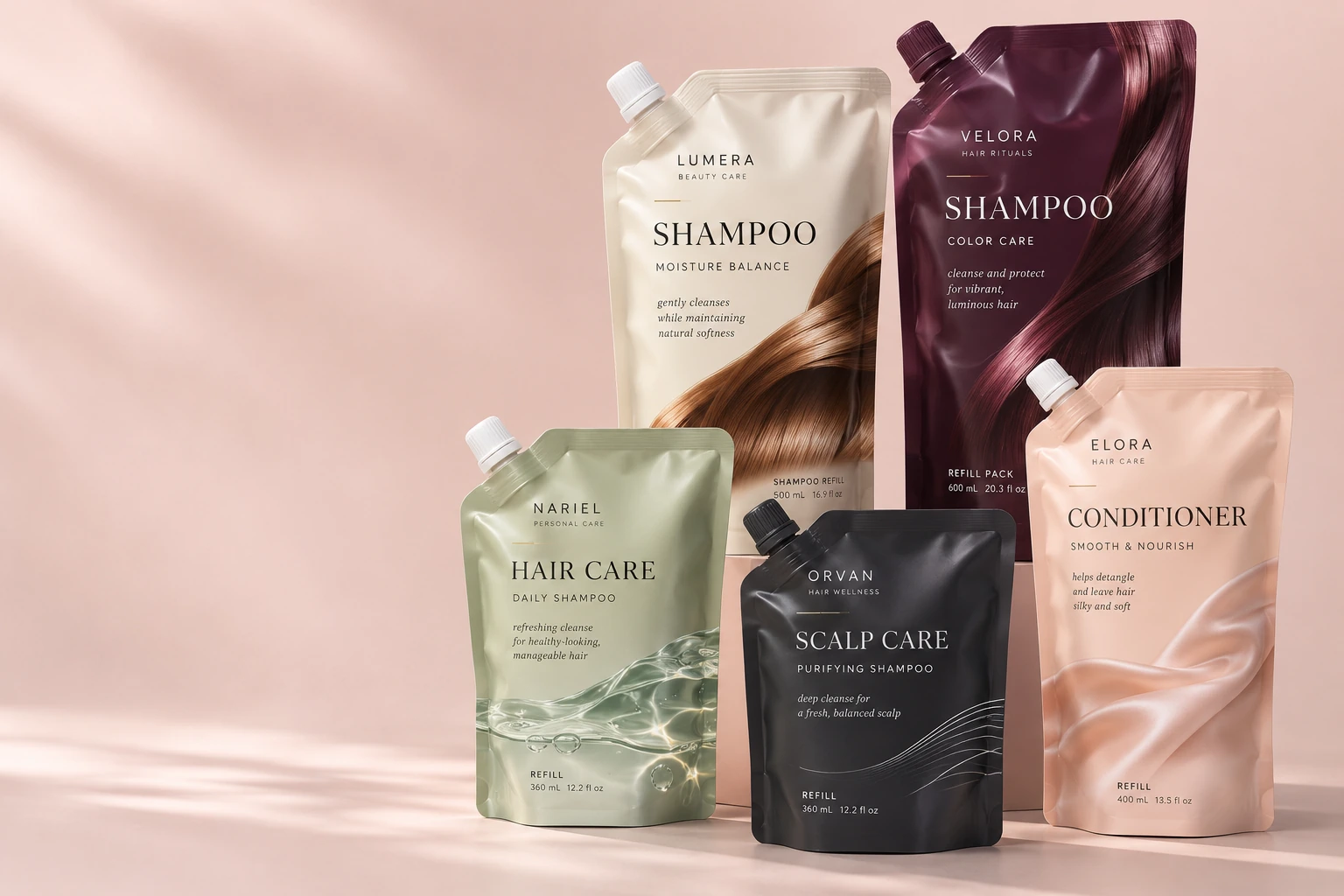
Shampoo and conditioner refills
Describe viscosity, the filling route and the bottle or container being refilled. Review pouring and emptying with the formula, including how the pouch is gripped and how much product remains after use.
Body wash and liquid soap
A refill pack should clearly identify the product and make transfer understandable. Include fragrance or other relevant formula details, storage conditions and the requested spout or closure in the brief.
Cosmetic trial sachets
Small portions can introduce a skincare or personal care product. Confirm filling accuracy, opening and evacuation needs, while preserving readable space for the brand’s approved ingredients, directions and other required information.
Powder and bath products
For suitable dry personal care products, discuss grain or particle size, moisture sensitivity and repeated access. A pouch for bath salts or powders has a different contact and handling brief from a liquid refill.
Consider formula contact, opening and the product left inside.
Shape, print and material work best when the application is understood first.
Formula compatibility
Fragrance, oils, solvents and other ingredients can influence material choices. Share relevant information and the intended contact conditions so the film, seals and components can be assessed as one product-contact system.
Small portions, usable openings
A trial pack should open clearly and let the customer remove the intended amount. Check the tear arrangement and actual formula flow rather than judging the experience with an empty sachet.
Refill residue
A thick formula may be difficult to pour or fully remove. Discuss viscosity and the destination container, then review the pack’s grip, opening and emptying behavior using representative product.
Protection during handling and use
Packaging is one part of the product’s protection system. Filling hygiene, closure, storage and consumer use also matter, so the pack should be reviewed with the brand’s quality and product teams.
Let the formula guide structure and presentation.
Compare candidate materials against the contents, process and target market.

Formula-led structure
Start with contact compatibility and the protection requirements of the product. Confirm the relevant material information for the use; a food-contact statement does not by itself answer every cosmetic formulation question.
Barrier and presentation
Where moisture, oxygen or light protection is required, make it part of the specification. A premium print or opaque-looking finish should not be used as a substitute for a defined barrier requirement and suitable evaluation.
Refill material objectives
Mono-material and PCR directions can be explored for suitable projects. Review the actual structure, components, formula and supporting documentation, and distinguish recycled content from the finished package’s recycling route.
Printed Layers, Barrier Films & Sealant Functions
Select a role to see how appearance, protection and sealing connect.
Print & presentation
The outside carries your graphics and handling requirements. Review the print surface, finish and intended appearance on the agreed production material.
Protection & structure
Define what the contents need from moisture, oxygen, light and aroma protection. The appropriate structure depends on product, storage and processing conditions.
Contact & sealing
The inside interfaces with your product and filling operation. Review food-contact suitability where relevant, formulation compatibility and sealing behavior together.
Conceptual layer roles, not a fixed construction or thickness specification. Your complete pack needs an application-specific review.
Define the formula, portion, finish and dispensing method.
Share what you know. A current sample, drawing or filling-line specification can help resolve the remaining questions.
- Formula
- Liquid, cream, gel, powder or granules; include relevant contact information.
- Portion
- Sample dose, travel quantity or refill volume and target headspace.
- Filling
- Equipment, filling temperature, final seal and component requirements.
- Dispensing
- Tear-open, pour or refill; describe viscosity and destination container.
- Storage
- Contact period, temperature and protection requirements.
- Artwork
- Product range, languages, ingredient panel and coding area.
- Finish
- Matte, gloss or special effect request, with feasibility confirmation.
Build a beauty collection people can recognize and use.
Bring the visual identity and the user experience into the same conversation.
A recognizable beauty collection
Use a consistent brand hierarchy with color or imagery that distinguishes the formulas. Keep product function clear so a visually unified range does not make shampoo, conditioner and body products difficult to tell apart.
Finish with a purpose
Discuss matte, gloss or a special tactile request alongside the selected material. Tactile films and other special effects require confirmation, and the finish should complement readable directions and practical handling.
Samples with enough information
Prioritize brand, product function and clear directions on compact sachets. Check the actual printable area before finalizing the design, including the space lost to seals and the part removed during opening.
Refill instructions that fit the routine
Use simple customer-approved steps for opening and transfer. Position the information where it remains visible while the pouch is held, and avoid implying that the formula suits every reusable container.
Custom Gravure Printing & Artwork Approval
Gravure production supports up to 10 colors. Digital printing is used for sampling.
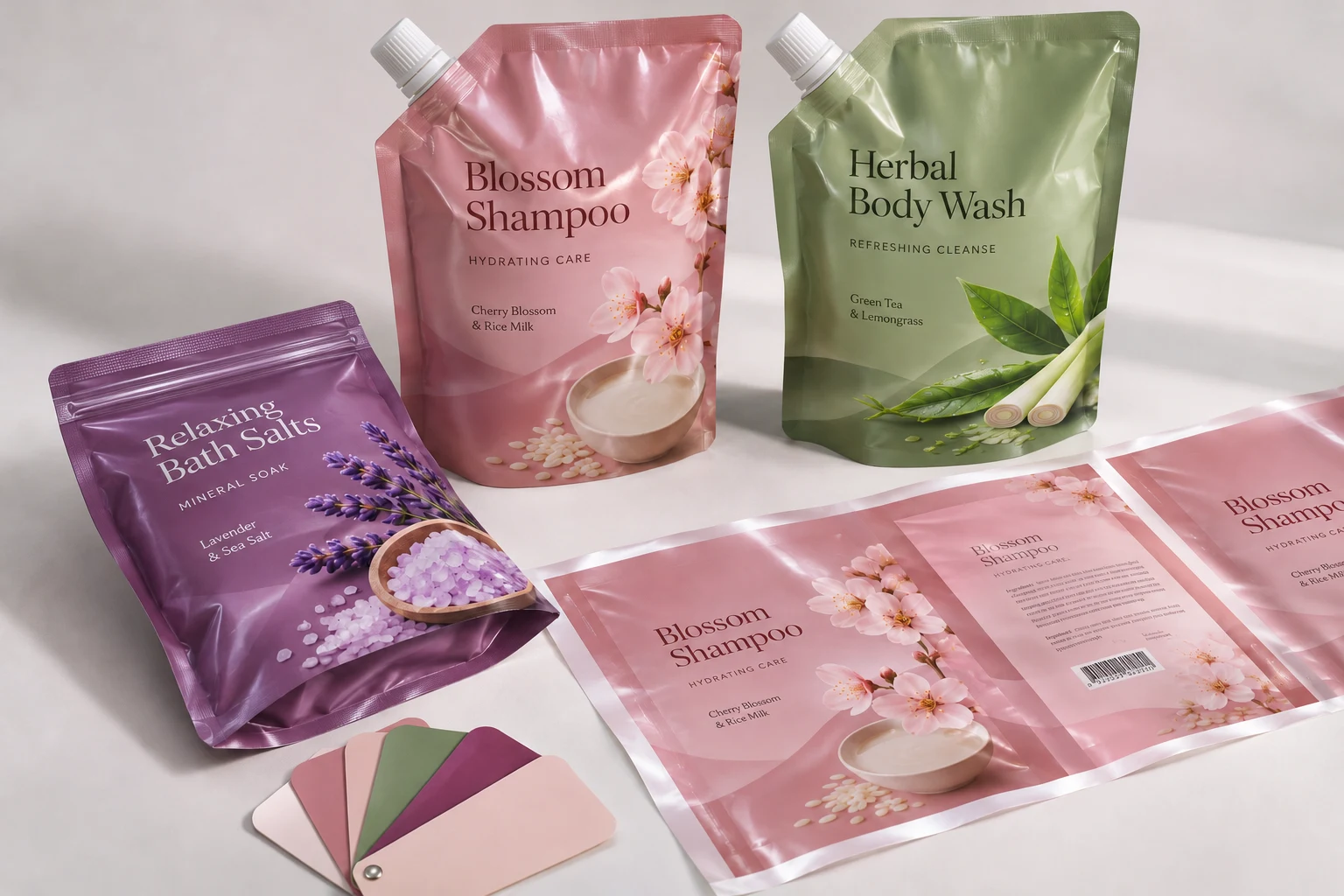
Start with the production dieline
Confirm dimensions and format before final artwork. Keep critical content clear of folds, seals, zippers and any fitments.
Approve the right reference
Use digital sampling to evaluate the design, then agree the reference and expectations for gravure production. Review key colors and all artwork variants together.
Build a coherent range
Provide the full set of product names, languages and variable information so changes between designs are visible before production.
Packaging Samples & Pre-Production Trials
Visual approval, filling suitability and product protection answer different questions.
Review the appearance
Check the artwork hierarchy, dimensions and intended presentation. Record the approved version and any changes needed before the production reference is agreed.
Review the filled pack
Use the actual contents or a representative trial to check filling access, headspace, closure and handling. Include the team operating the filling process.
Agree what needs validation
Where protection, thermal processing or formula compatibility matters, define the trial and acceptance requirements for the actual material and intended use.
Our Flexible Packaging Manufacturing Process
Printing, lamination, curing, slitting, pouch making and inspection are integrated within IVAPAK.
Printing
Approved artwork becomes a controlled print reference.
Lamination
Selected film layers are combined for the agreed structure.
Curing
The laminated structure follows its required curing stage.
Slitting
Film is converted to the specified widths and rolls.
Pouch making
Premade pouch orders are converted to the chosen format.
Quality inspection
The finished order is checked against the agreed requirements.
Factory Equipment & Production Stages
Real production photographs from our factory media. Talk to the team about the process and documents relevant to your order.
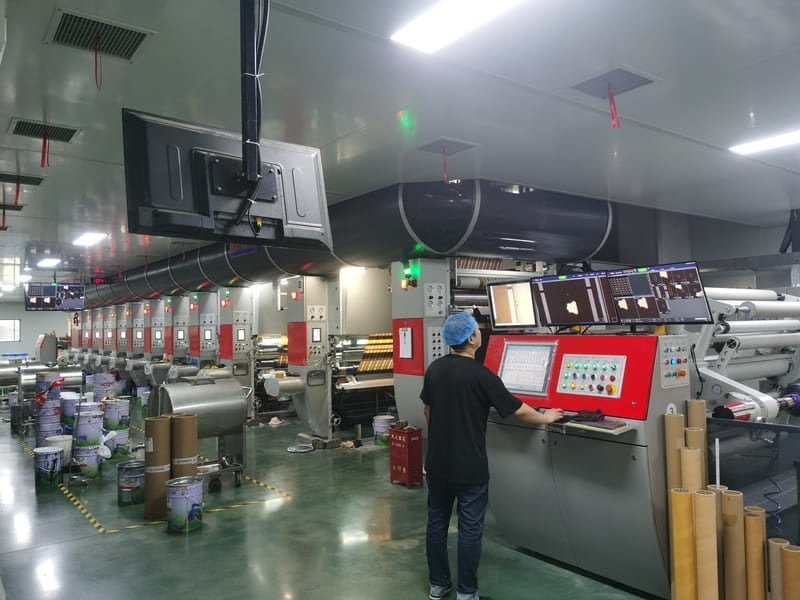
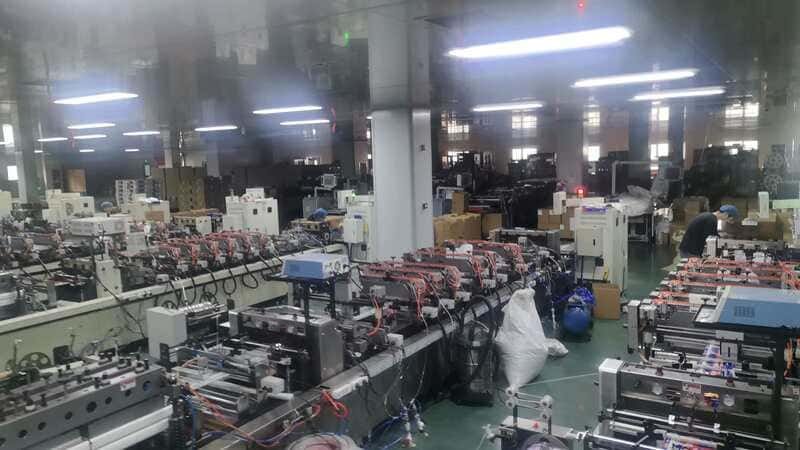
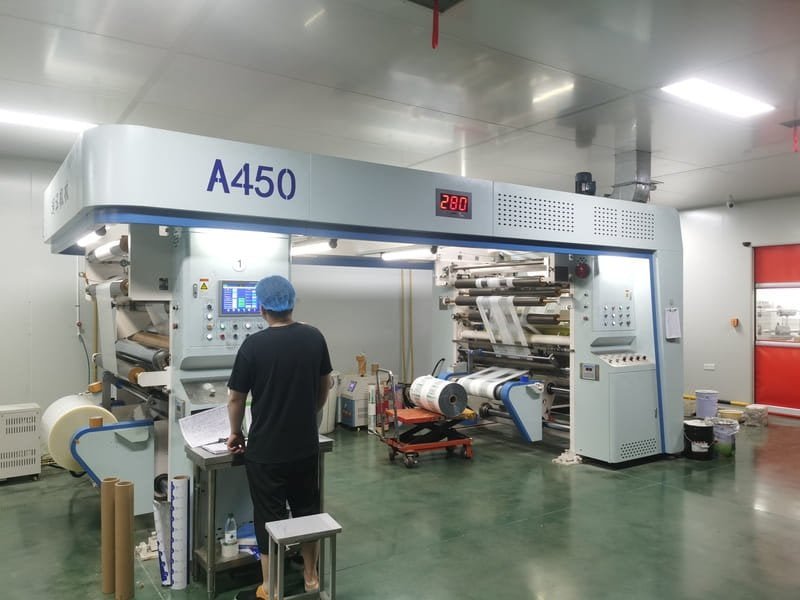
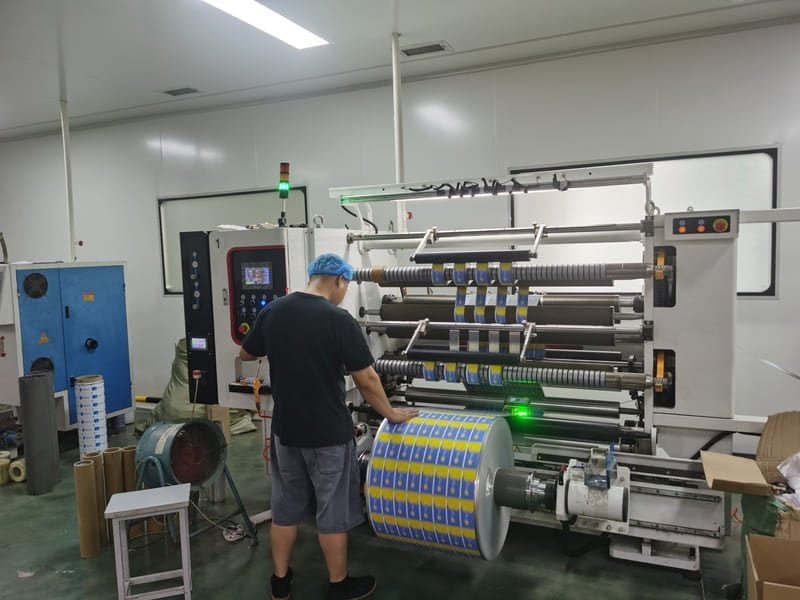
Review formula contact, product removal and surface readability.
IVAPAK combines gravure printing up to 10 colors with integrated converting and inspection, supported by digital sampling for artwork review. Since 2003, customers have worked directly with the factory on custom pouch and rollstock specifications; formula suitability is confirmed for each application.
Does the formula suit the contact surfaces?
Agree evaluation of the film, seals and components with the actual formula under intended conditions. Define what changes matter to the product team, including appearance, odor, closure behavior or other relevant observations.
Can the product be removed comfortably?
Review tearing, pouring and emptying with the real viscosity and portion. A usable sample pack should provide access without relying on an opening method the customer has not been shown.
Does the filled pack tolerate distribution?
Agree handling and leakage checks with the intended fill, closure and outer packaging. Include the relevant route and conditions so the assessment represents how the beauty product reaches the customer.
Does the finish support the information?
Check legibility, coding areas and the appearance of important text on the finished layout. Review the design at actual size and on a filled pack, including folds and high-contact areas.
Factory Certifications & Material Documentation
Share your destination market and application so the relevant factory credentials and material documents can be reviewed.
BRCGS & ISO 9001
Factory and quality-management credentials support supplier evaluation. Request the current documents for your purchasing review.
Food-contact material review
For food applications, discuss material compliance with applicable FDA requirements and EU 10/2011 for the intended use. These are material and use requirements, not an FDA factory certification.
Available SGS reports
SGS testing reports can be provided. Confirm that the report scope, material and test conditions correspond to the packaging being specified.
Illustrative briefs for shampoo, skincare trials and bath products.
These planning examples show how requirements guide decisions. They are not named customer projects or measured performance results.
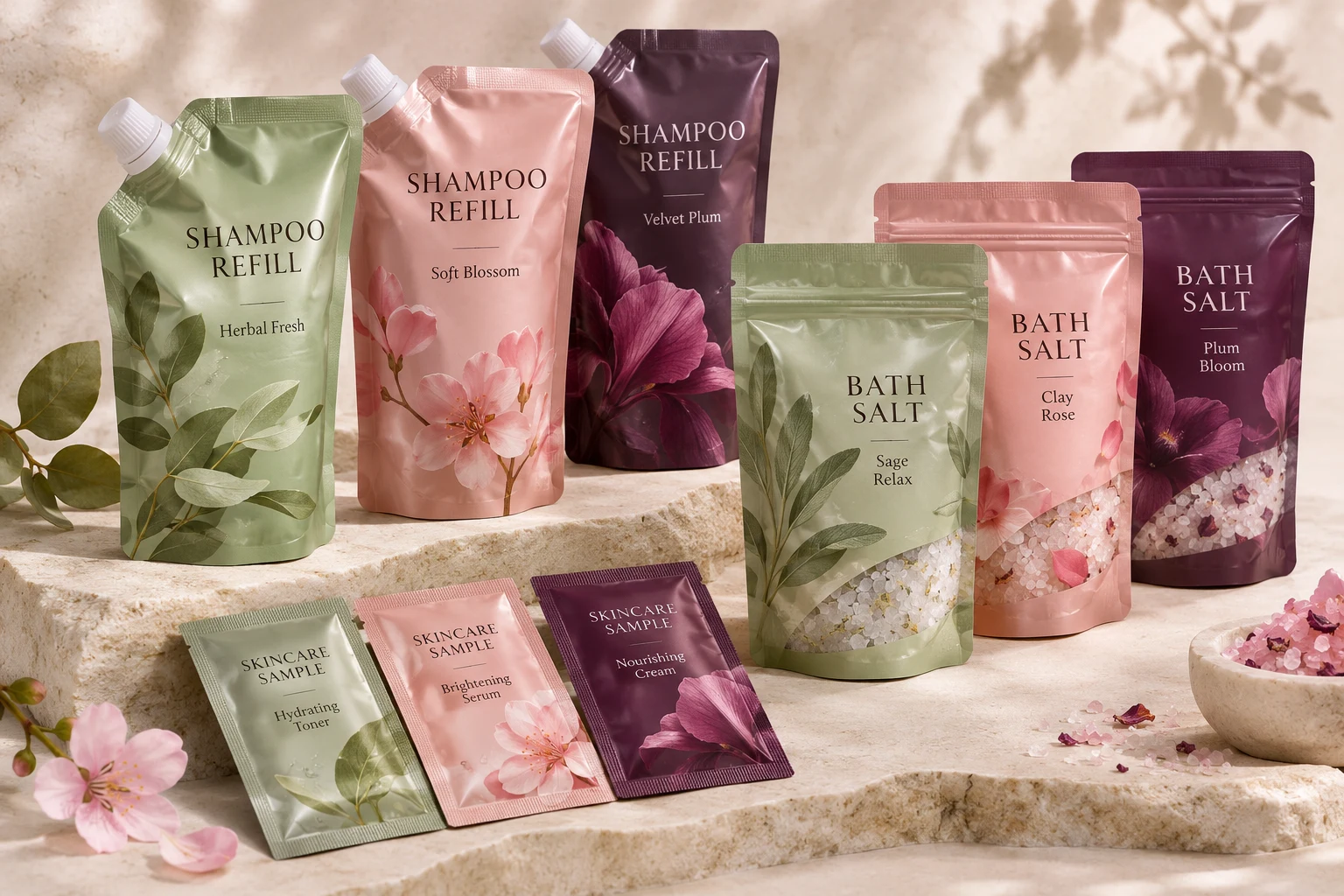
Illustrative plan: a shampoo refill range
A personal care brand wants a consistent set of refill pouches for several formulas.
Start with compatibility and viscosity, then review spout, grip and emptying into the intended bottle. Build a shared visual system with clear formula names and concise refill instructions.
Illustrative plan: skincare trial sachets
A brand wants a small portion that introduces a product without losing its premium identity.
Confirm dose, filling equipment and opening behavior first. Adapt the artwork to a readable sachet layout, then assess the actual formula and structure together before production.
Illustrative plan: bath product pouches
A supplier wants a distinctive retail pack for several dry bath products.
Review particle size, moisture requirements and the access needed for use. Explore a stand-up format and a color system that differentiates the variants while keeping directions easy to find.
Separate essential use requirements from optional visual effects.
Use these prompts to organize your requirements before requesting a quotation.
Collect the formula requirements
Ask the product team for relevant compatibility and protection information. Include the intended contact period and storage conditions so a beautiful mockup does not move ahead of unresolved material questions.
Define the intended use
Explain whether the pack is a sample, refill or retail product in its own right. Include the consumer’s opening and dispensing steps, and provide the destination bottle where refilling is part of the experience.
Separate special effects from essentials
Identify which finish or shape requests are central to the concept and which are optional. Confirm feasibility early, then protect the space and structure needed for filling, seals and mandatory product information.
Plan sampling in stages
Use digital samples for artwork review and the appropriate filled-pack evaluation for compatibility and use. Agree the production color and finish reference separately from the visual impression of a digital sample.
Cosmetics & Personal Care Packaging FAQs
Useful answers for planning, specifying and ordering your pack.
Can you make cosmetic sample sachets?
Three-side seal pouches and compatible printed rollstock can be discussed for trial formats. Send the formula, dose, filling equipment, dimensions and artwork requirements. The final material and opening arrangement should be assessed with the actual product.
Can you supply shampoo and body wash refill pouches?
Spout pouch directions can be reviewed for suitable formulations. Provide viscosity, filling conditions, volume and the intended refill container. The film, seals and components need compatibility and use assessment together.
Do you offer soft-touch or special cosmetic finishes?
Special tactile and surface effects can be requested, but availability and compatibility with the chosen structure must be confirmed. Share a reference and explain which effect matters to the brand before final artwork and quotation.
Does cosmetic packaging need different checks from food packaging?
The questions overlap, but the formula and intended use are different. Cosmetic ingredients, contact time, dispensing and product protection should be reviewed specifically. A food-contact document alone does not establish suitability for every cosmetic formulation.
Can you make shaped beauty sachets?
A shaped outline is a separate feasibility request. Send the concept, dose and filling method early. The printable area, seals, opening and usable volume need review before a visual concept becomes a confirmed production format.
Can a refill pouch contain PCR material?
A PCR direction can be explored with the formula, contact requirements and performance brief. Confirm source, proportion, layer position and documents. Recycled content should be communicated separately from any claim about the finished pouch’s recyclability.
Can you guarantee a formula will stay stable?
Product stability depends on the formula, filling, package and storage together. Packaging requirements and material information can support the assessment, but the brand’s product team should validate the filled product for its intended use and shelf-life claim.
What should a beauty packaging inquiry include?
Send the formula type, sample or refill use, fill amount, dimensions, filling method and quantity per design. Include artwork, desired finish, component requests, storage requirements and any existing compatibility information.
No matching question. Try another term or contact Allen.
Take the next step in your packaging brief.
Explore the specific application, then choose the sample that answers your next question.
Request a Custom Packaging Quote
Match the pack to the formula and the way people use it. Share your refill, sample or retail concept and we can help refine the specification.
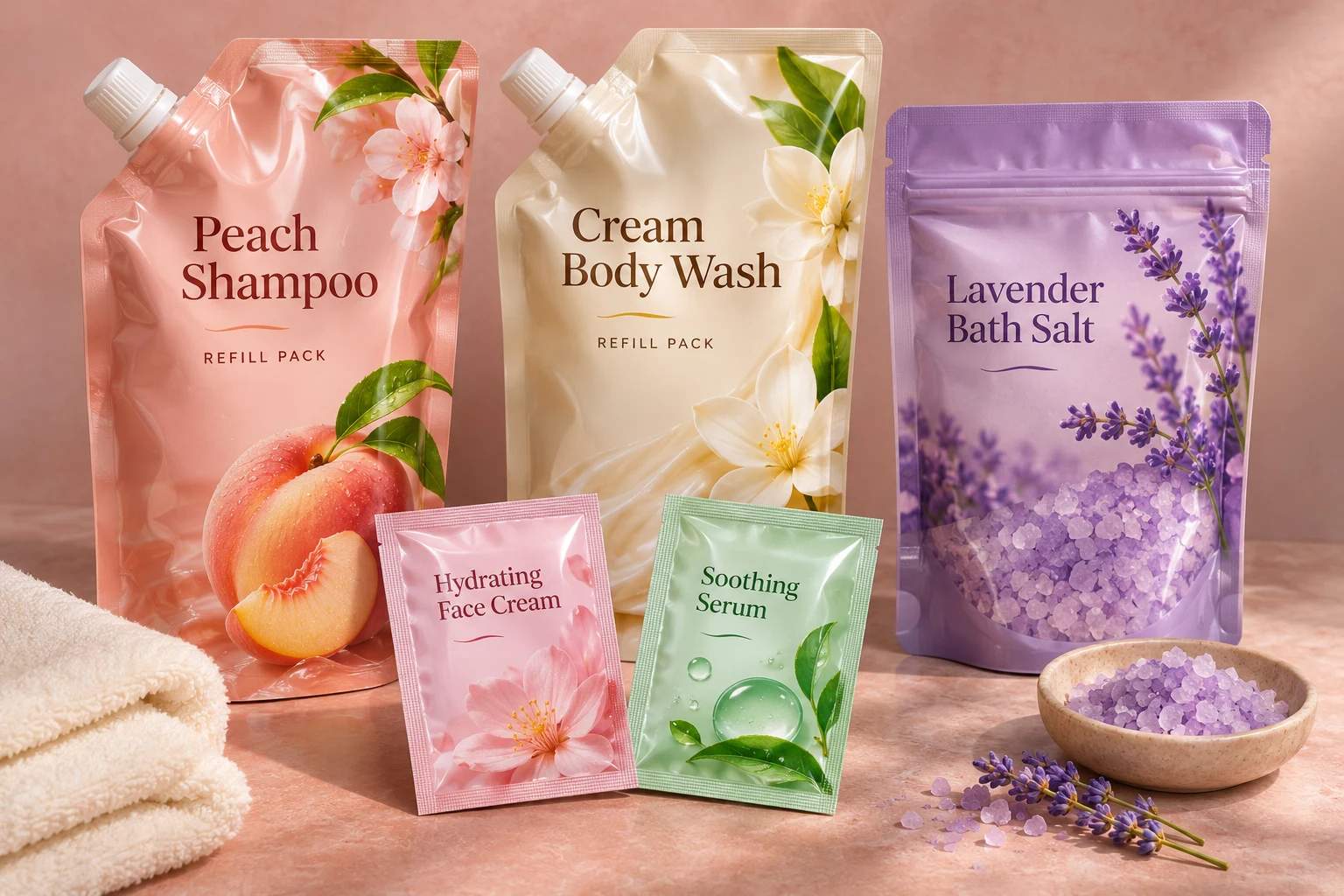
Tell us about your project.
Start with what you know. We will help with the rest.
We review your brief.
Our team checks your product, quantities and any missing specifications.
We clarify the options.
Discuss the format, materials and samples needed before a production decision.
You confirm the next step.
Review the quotation, artwork requirements and proposed production schedule.
Production Timing & Delivery Planning
*Standard orders typically complete production around 15 days after artwork approval. The confirmed schedule depends on the order; shipping time is additional.
Coordinate formula and packaging milestones
Allow for compatibility, filling and use review before manufacturing, then confirm the project schedule and freight separately.
Track formula and design versions
Track changes to ingredients, fragrance, filling conditions and artwork when reordering, so the packaging brief stays accurate.
Learn from the refill experience
Collect feedback on grip, pouring, residue and closure alongside appearance to guide the next version of the refill pack.
Repeat Orders & Packaging Specifications
Keep the agreed reference connected to every reorder.
Retain the approved reference
Use the previous order, artwork version and packaging specification as the starting point. Confirm whether dimensions, material and accessories remain the same.
Highlight what has changed
New ingredients, a different filling process, another destination market or revised storage conditions may require a new review before the next run.
Share useful feedback
If a concern arises, send the order reference, photographs and the conditions in which it occurred. Clear information helps the factory assess the issue and discuss the next step.
Related Packaging Products & Resources
Move between formats, applications and the manufacturing details that matter to your project.
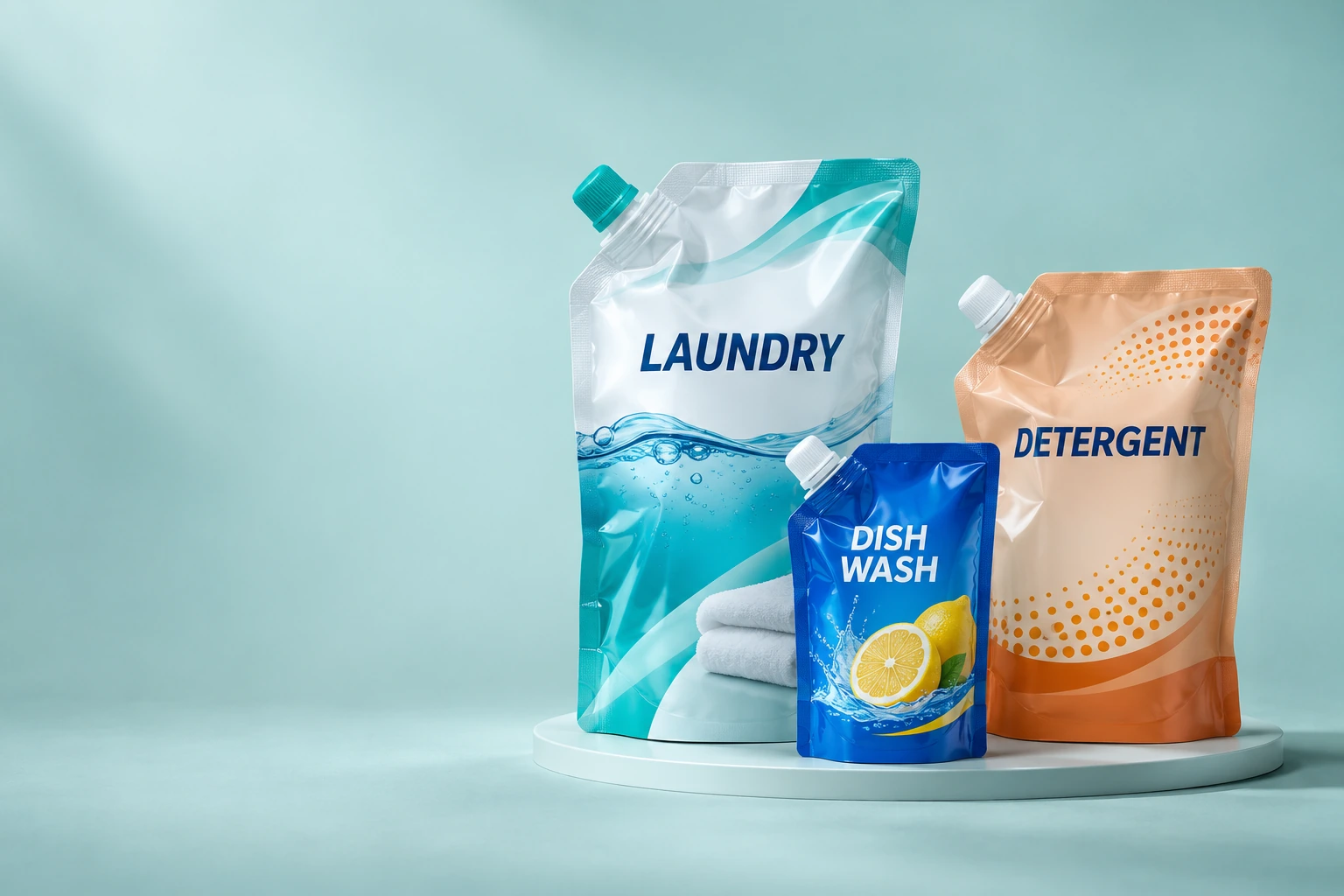
Home Care & Detergent
Custom home care packaging and detergent refill pouches. Review formula compatibility, pouring, seals, handling and material goals with IVAPAK.
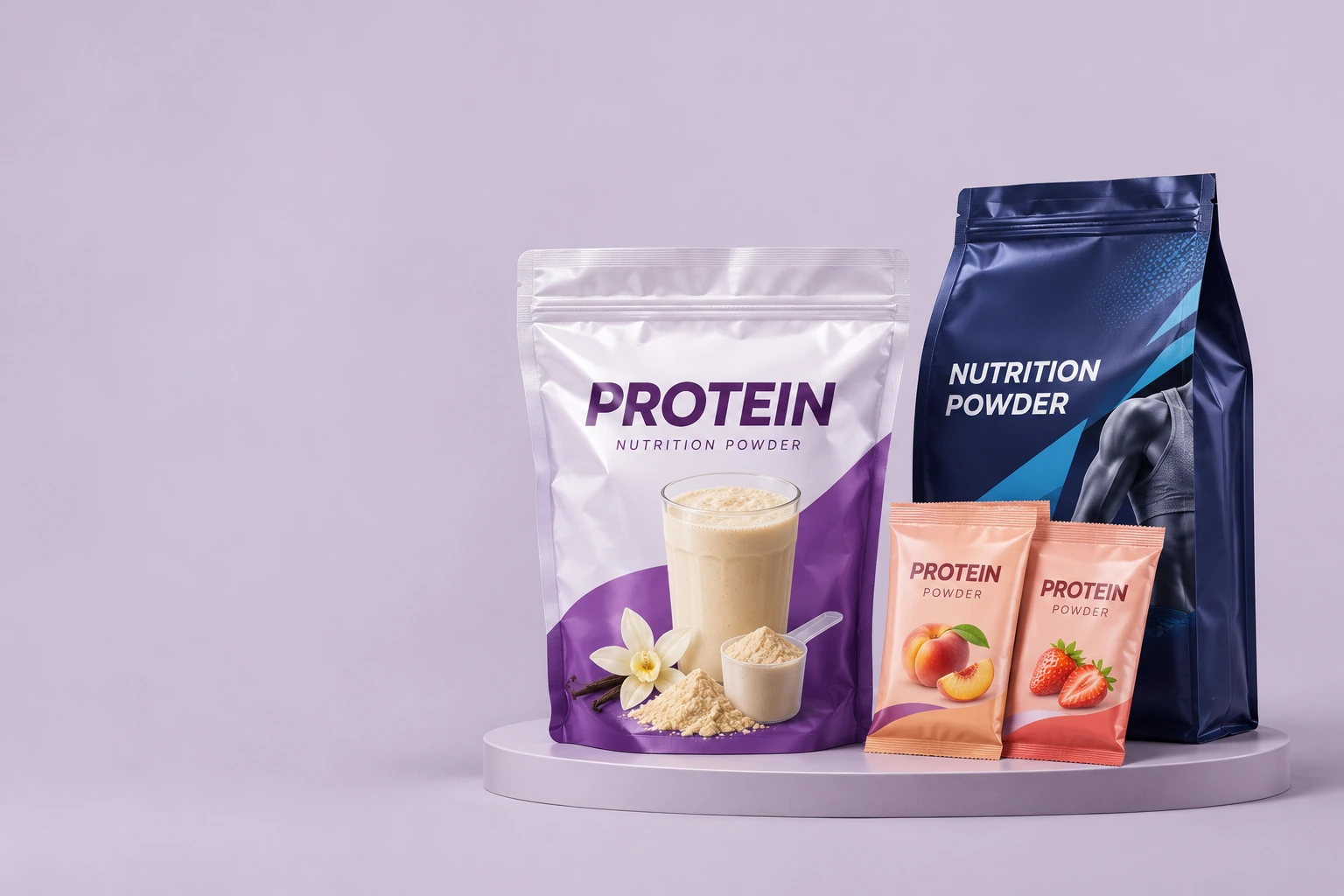
Supplements & Nutrition
Custom pouches and rollstock for protein powders, nutrition blends and supplements. Plan moisture protection, scoop access, portions and brand printing.
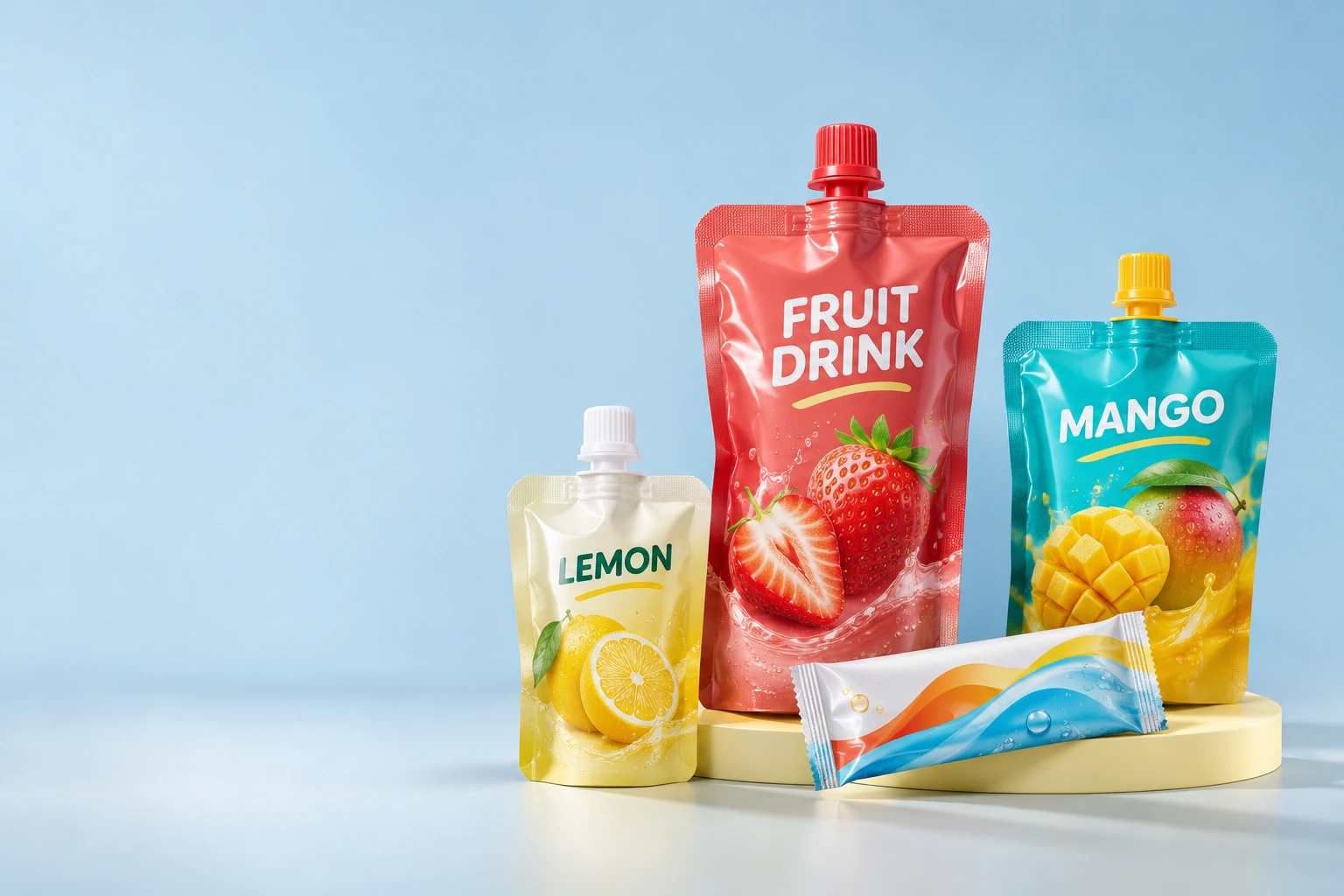
Beverages & Drink Pouches
Custom printed beverage pouches and rollstock. Discuss drink formulation, filling temperature, spouts, pressure requirements and practical dispensing.
Flexible Packaging Articles & Buying Guides
Read the latest articles from IVAPAK on flexible packaging, materials and project planning.
Browse our latest packaging articles.
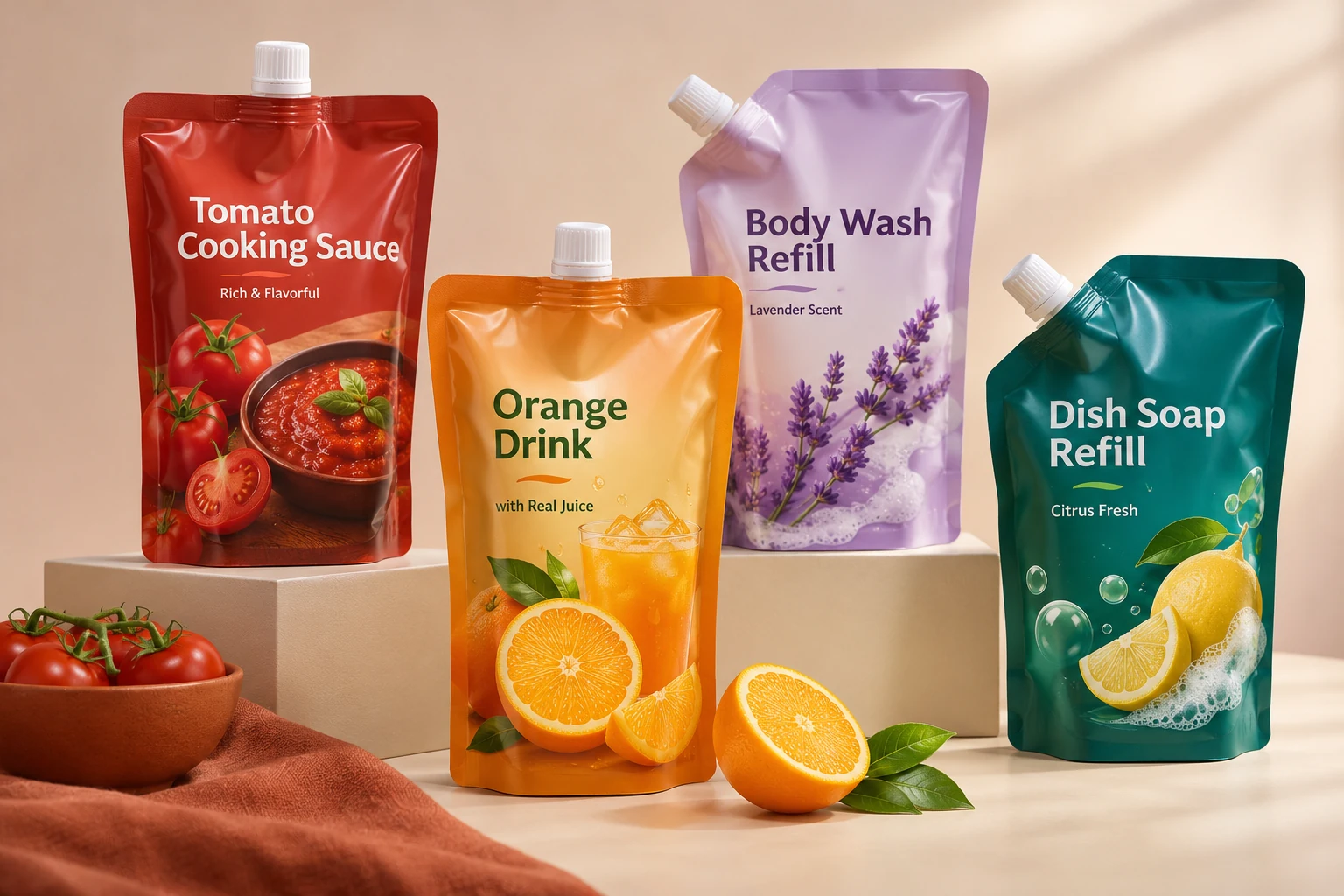
What Is a Spout Pouch?
Learn what a spout pouch is and how buyers should specify materials, format, spout size, closures, filling method, testing, and RFQ details.…
Read the article ↗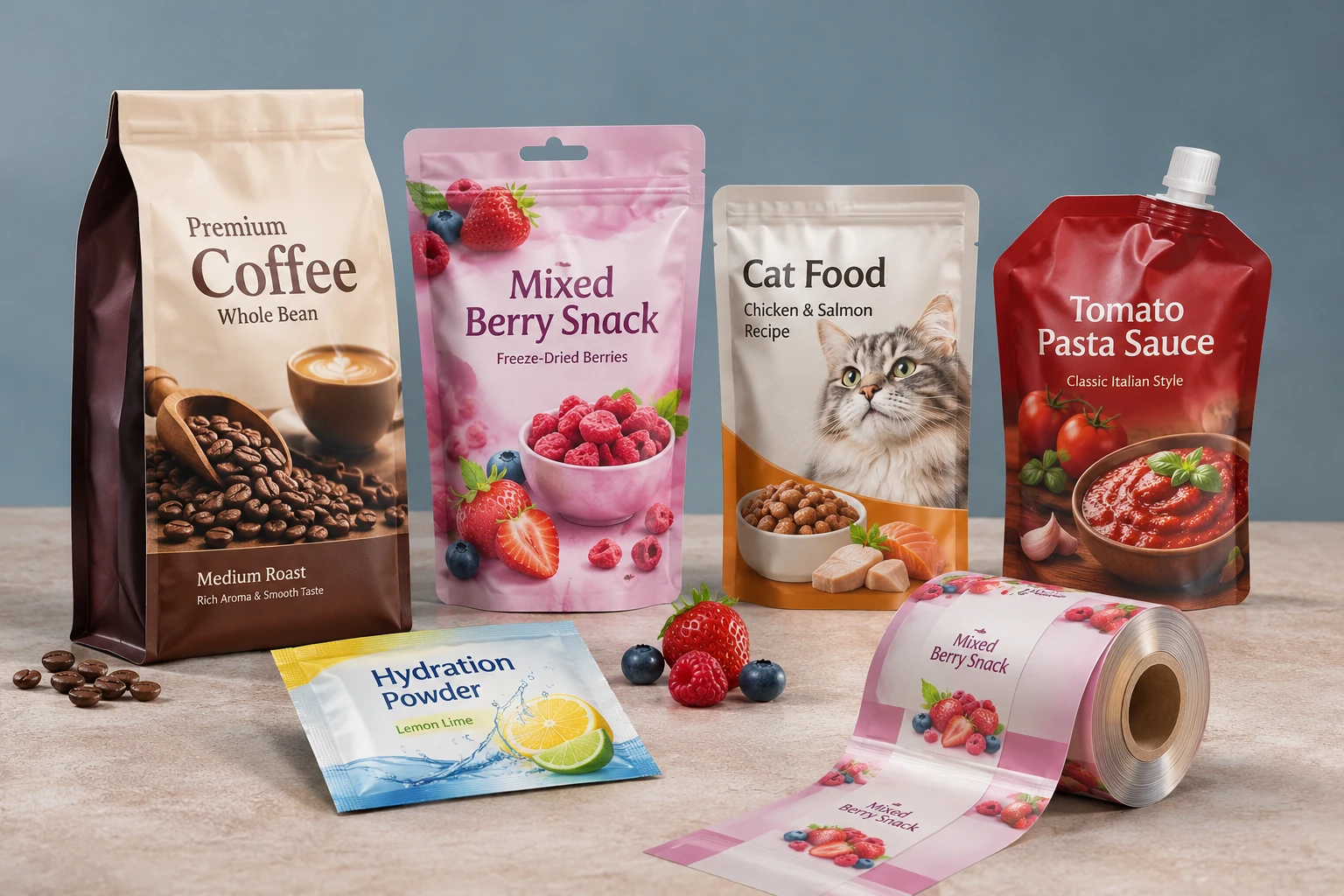
Custom Pouches for Flexible Packaging
Custom pouches explained through format, laminate, closure, print, filling, sustainability, validation, and RFQ details for flexible packaging pr…
Read the article ↗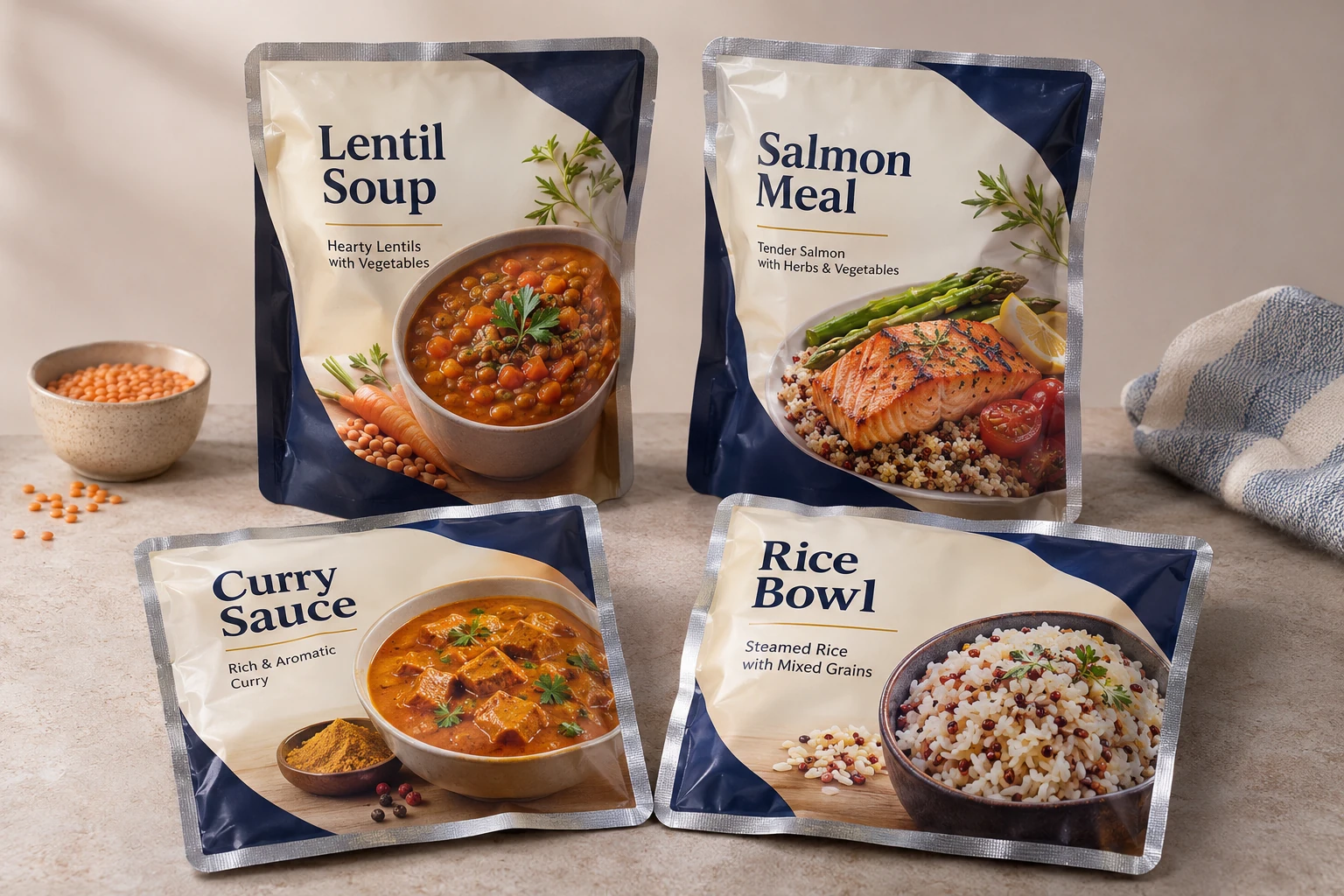
What Is a Retort Pouch?
Learn what a retort pouch is, how it differs from hot-fill and aseptic packs, and what to specify for laminate, sealing, process, and RFQ needs.…
Read the article ↗