
Custom Beverage
& Drink Pouches
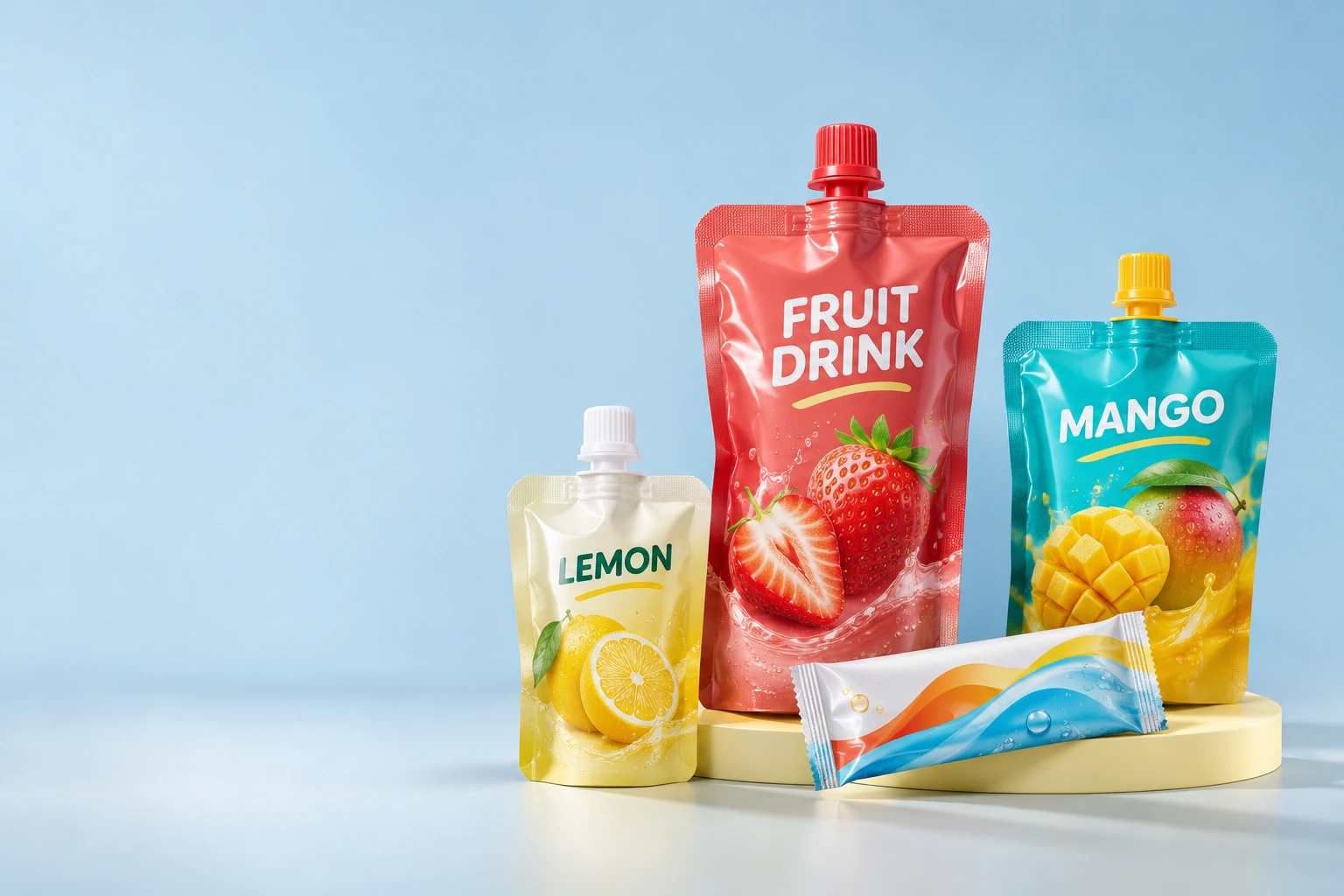
IVAPAK manufactures custom printed beverage pouches and suitable rollstock for drink packaging projects. Develop the size, printed artwork, material and available spout options around your drink and filling equipment. Filling temperature, pressure, closure hygiene and storage conditions are reviewed before selecting the pack.
Custom Drink Pouches & Beverage Packaging
A juice, a ready-to-drink tea and a thick beverage can require different filling, protection and dispensing decisions. The pouch shape alone cannot answer those questions. IVAPAK helps organize the project around the actual drink and process, then develops the format and printed presentation so the brand story sits on a practical, clearly specified pack.
Explore the full industry collection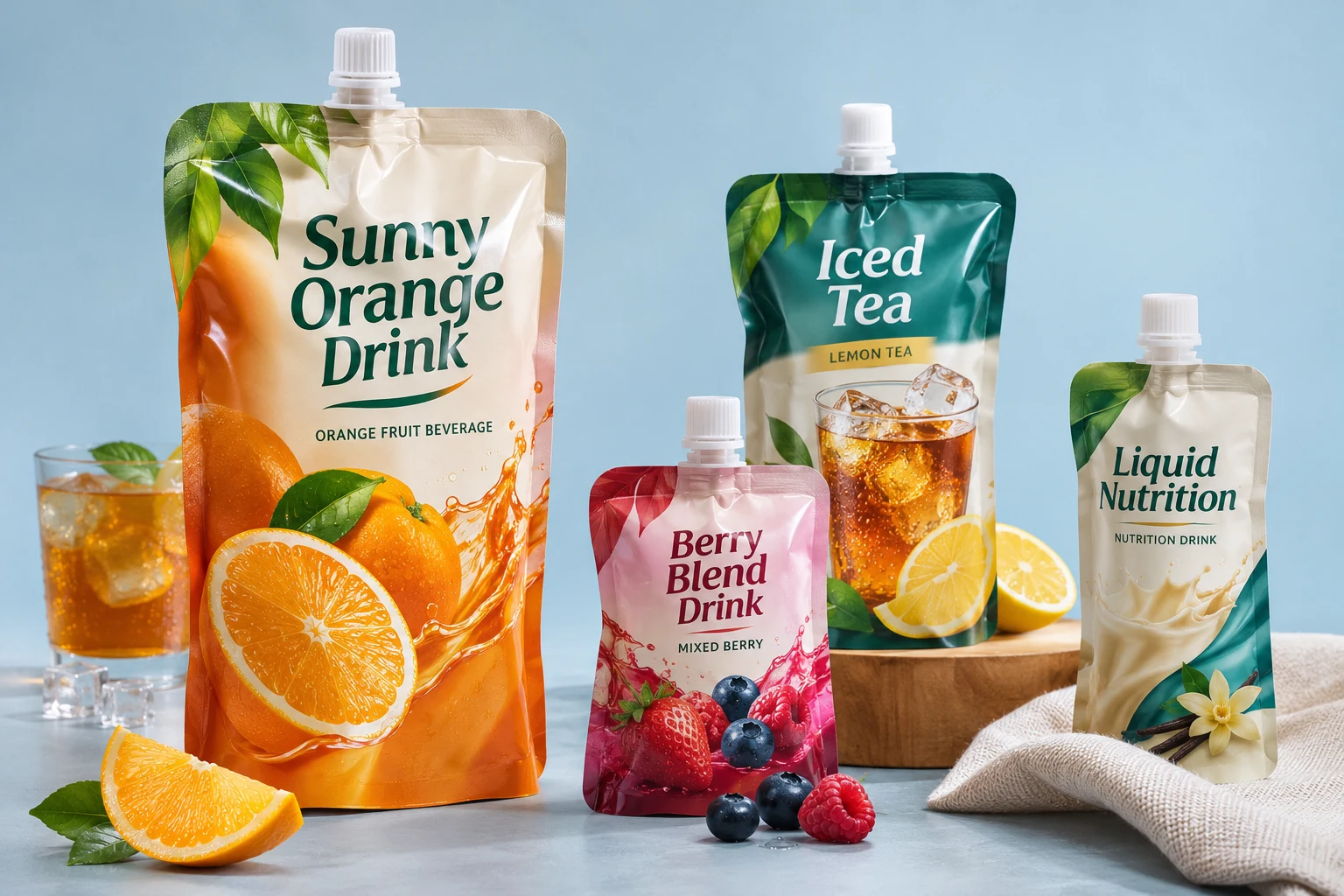
Bring filling conditions and drinking experience together.
Three starting points for a better packaging brief.
A process-aware starting point
Identify the drink, filling temperature and preservation route before choosing materials or adapting a familiar pouch silhouette.
A clear drinking or pouring brief
Define how the pouch is opened and used, including flow, portion size, component requests and practical handling.
A distinctive flavor collection
Build a distinct flavor collection with ingredient imagery and a coherent color system across the confirmed pack layouts.
Pouch Formats & Printed Rollstock Options
Compare the shapes that suit your filling operation and retail presentation.
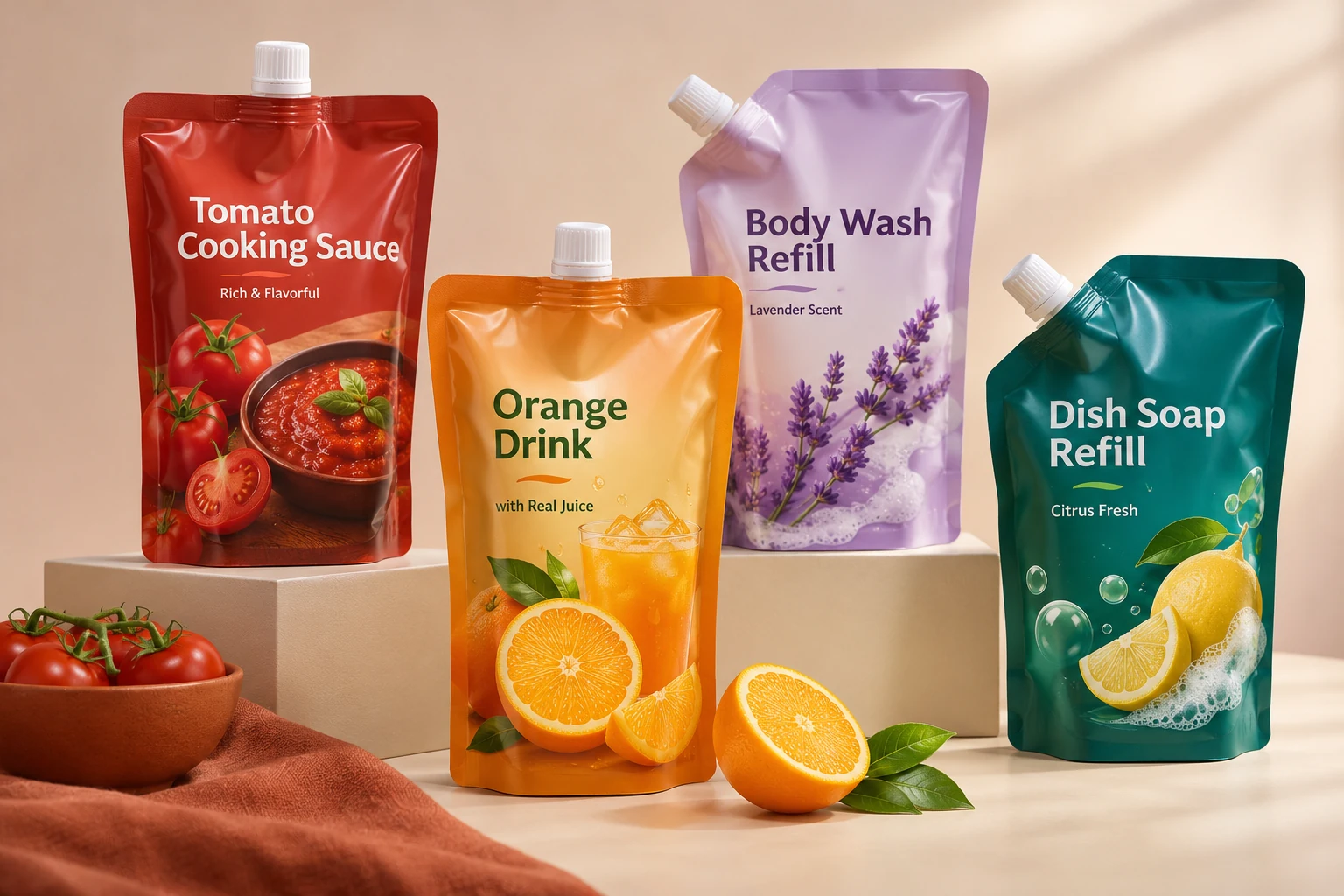
Spout pouches
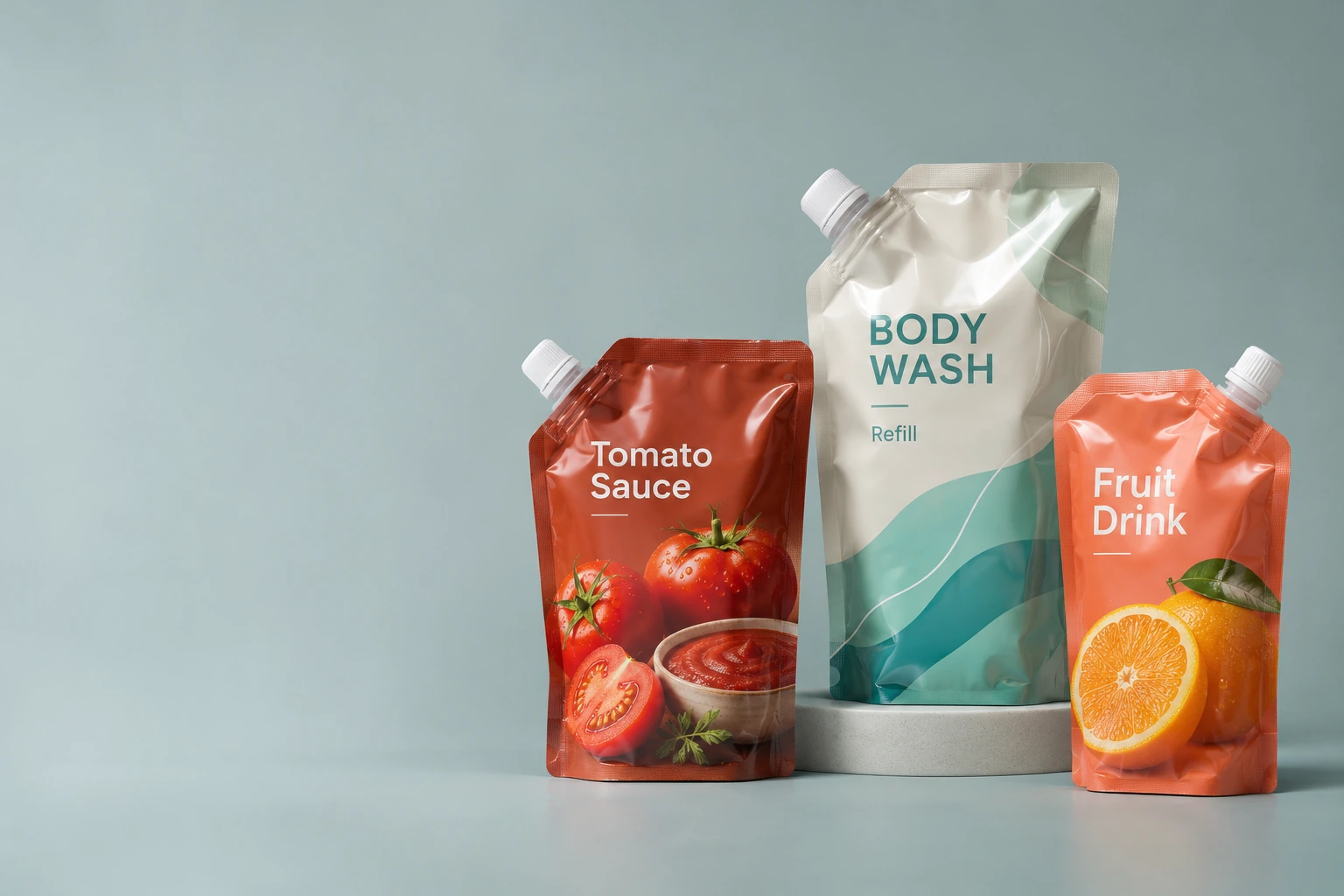
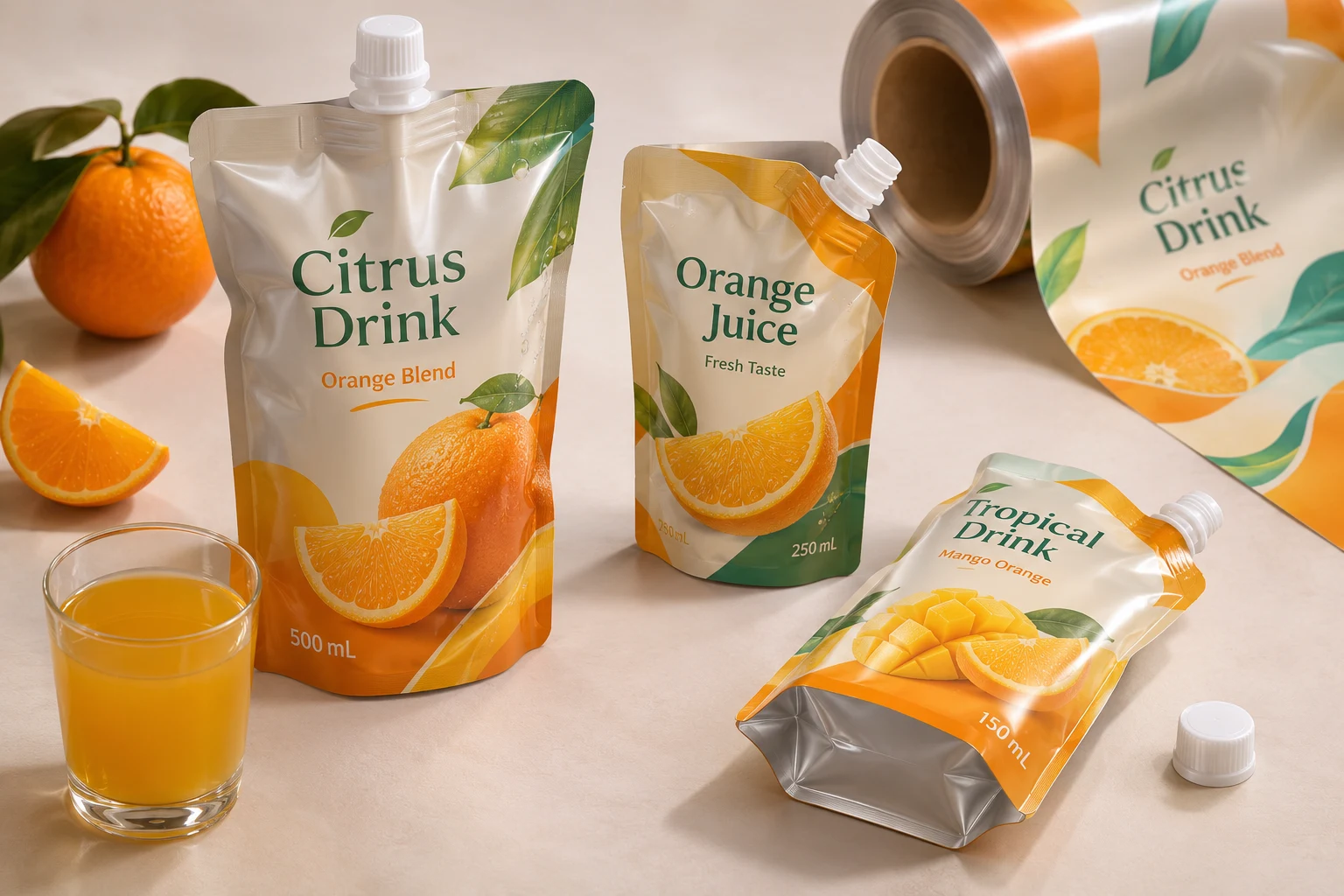
Explore this direction for suitable beverages after confirming the formula, filling route and use. Review the spout, closure and pouch together, including component availability, hygiene needs and practical dispensing.
Printed rollstock
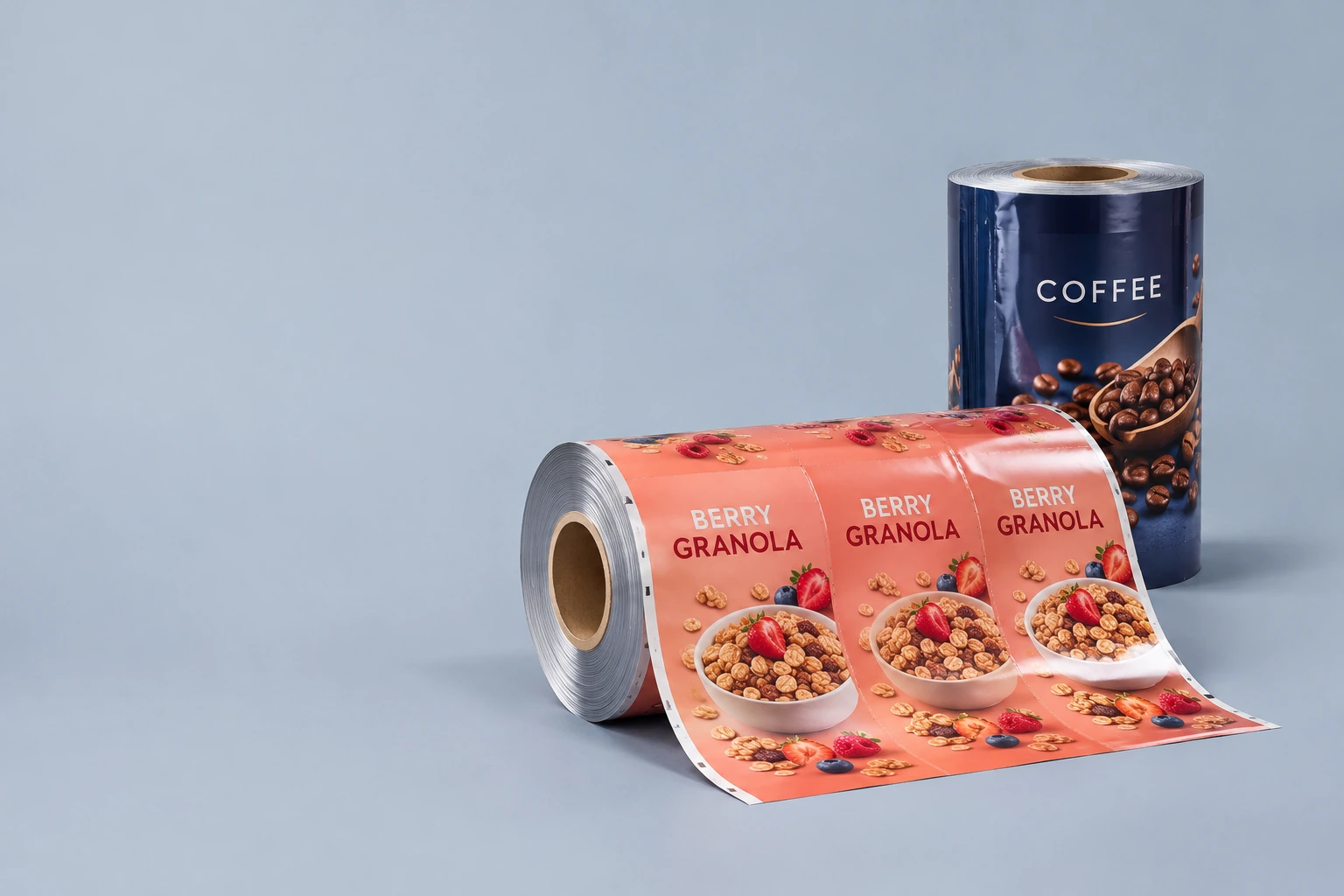
For compatible beverage pouch-forming equipment, provide width, repeat, winding, seal arrangement and filling conditions. A printed film quotation should be based on the actual machine and process, not just a finished-pouch photograph.
Three-side seal pouches
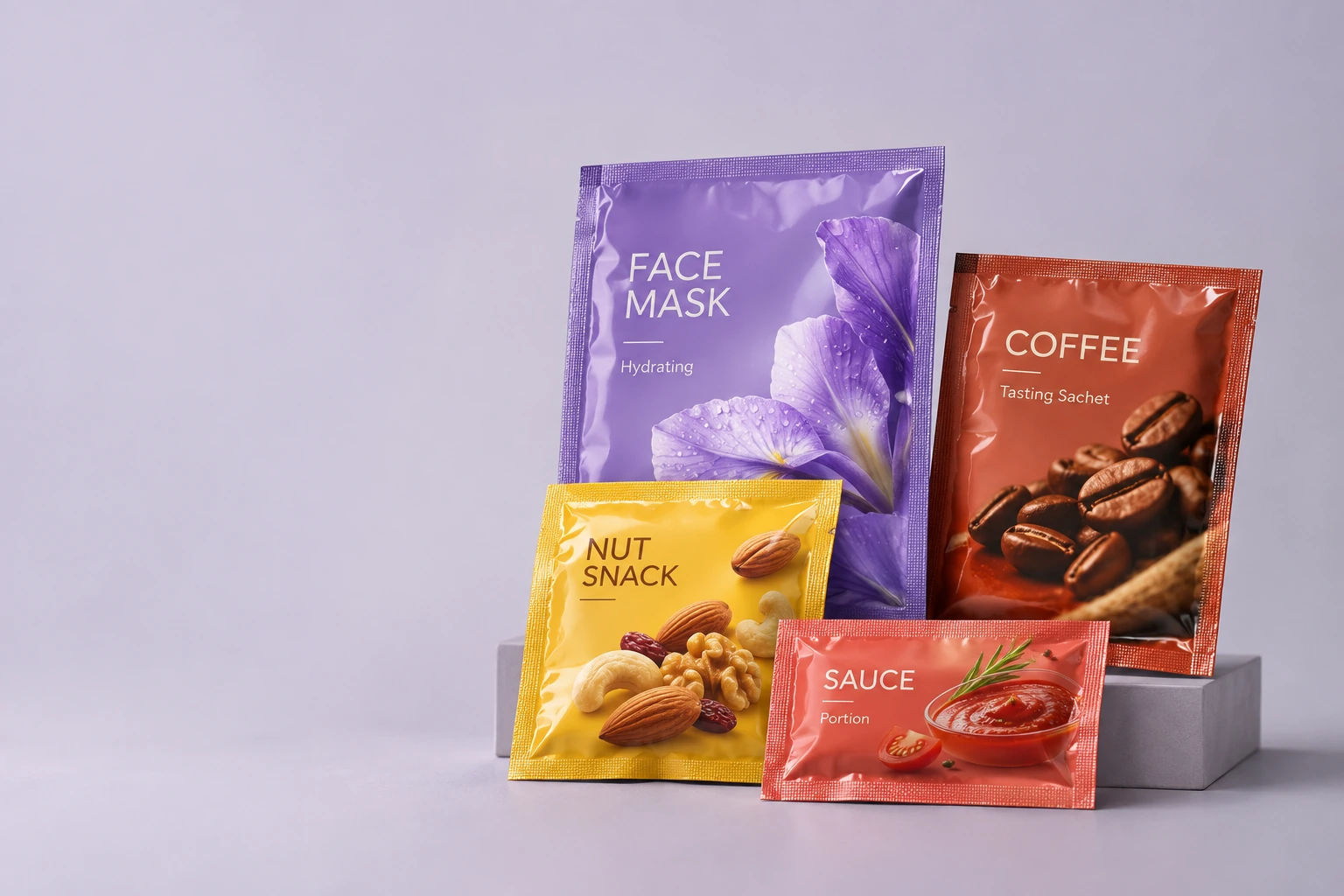
Selected portion or ingredient-drink applications may suit a flat format. Confirm the opening method, final seal and use conditions; this direction is not a substitute for reviewing the specific beverage process.
Juice, tea and thicker drinks need different briefs.
Start with the way the product is filled, sold and used.
Fruit drinks and juices
Describe the formulation, acidity, pulp or particles and the filling process. The protection and component brief should follow those details rather than assume all fruit drinks behave like a clear liquid.
Ready-to-drink tea and coffee
These finished beverages belong in the liquid packaging discussion, separate from dry tea or coffee bags. Share the recipe, process and storage conditions so material and closure requirements can be reviewed appropriately.
Smoothies and thicker drinks
Viscosity and particles influence dispensing and filling. Define the product’s flow at relevant conditions and the intended opening experience before selecting a spout or final pouch dimensions.
Liquid nutrition drinks
For ready-to-drink nutrition products, bring the formulation and processing requirements into the brief. Powdered supplements belong with the nutrition pouch page; a finished liquid needs its own contact and filling assessment.
Filling, pressure and closure hygiene shape the decision.
Shape, print and material work best when the application is understood first.
Filling and preservation
Cold fill, hot fill, aseptic processing and retort are distinct project requirements. State the actual process rather than requesting a general beverage pouch and expecting the material to cover every route.
Pressure and handling
Describe any pressure requirement and the filled pack’s handling journey. Carbonated drinks and pressurized applications are not assumed suitable; they require a separate technical and feasibility review.
Spout and closure hygiene
The component, filling route and handling procedure need to fit the beverage operation. Coordinate the hygiene requirements with the filling team, rather than treating the spout as only a decorative accessory.
Flow and opening
Pulp, particles and viscosity can change the consumer experience. Review the real product with the requested opening and portion size so the pouch can be assessed for how it is actually used.
Select the complete structure around beverage processing.
Compare candidate materials against the contents, process and target market.

A beverage-specific structure
Define relevant oxygen, light or other protection requirements with the formulation team. Review material documentation against the drink and conditions of use, rather than treating a generic food-contact statement as the complete specification.
Thermal requirements
If the process includes heat, provide the actual temperature, duration and handling conditions. Candidate structures and components must be reviewed for that process; a printed appearance cannot establish hot-fill or retort suitability.
Material goals for the complete pack
For mono-material or PCR requests, include the spout and closure in the review. Food-contact suitability, performance and the intended recovery route need their own supporting information before a material claim is approved.
Printed Layers, Barrier Films & Sealant Functions
Select a role to see how appearance, protection and sealing connect.
Print & presentation
The outside carries your graphics and handling requirements. Review the print surface, finish and intended appearance on the agreed production material.
Protection & structure
Define what the contents need from moisture, oxygen, light and aroma protection. The appropriate structure depends on product, storage and processing conditions.
Contact & sealing
The inside interfaces with your product and filling operation. Review food-contact suitability where relevant, formulation compatibility and sealing behavior together.
Conceptual layer roles, not a fixed construction or thickness specification. Your complete pack needs an application-specific review.
State the drink, filling temperature and pressure conditions.
Share what you know. A current sample, drawing or filling-line specification can help resolve the remaining questions.
- Beverage
- Drink type, formulation, acidity, viscosity and pulp or particles.
- Fill
- Target volume, headspace, filling temperature and filling route.
- Process
- Preservation method and actual processing conditions.
- Components
- Spout and closure request, position and consumer opening method.
- Pressure
- Any pressure-related requirement; state carbonation explicitly if relevant.
- Storage
- Ambient or chilled conditions, distribution route and evaluation target.
- Artwork
- Flavors, languages, product instructions and quantity per design.
Give flavor, opening and serving instructions a clear place.
Bring the visual identity and the user experience into the same conversation.
Flavor imagery with a clear hierarchy
Let fruit, ingredient or drink imagery support a simple brand and flavor name. Keep the design recognizable at the intended retail size rather than relying on tiny details visible only in a large mockup.
An opening that belongs to the layout
Confirm the component and its position before finalizing graphics. Leave room for grip, sealing and clear use instructions, and review whether the pouch is presented upright or in a display tray.
Readable serving and storage information
Reserve a clear area for customer-approved preparation, storage and after-opening instructions. Match the wording to the validated product and process instead of borrowing instructions from a visually similar beverage pack.
A range across portion sizes
Use a common visual system for different serving sizes, then adapt the layout to each pack. The same formula in a new volume still needs review of fill, headspace, handling and dispensing.
Custom Gravure Printing & Artwork Approval
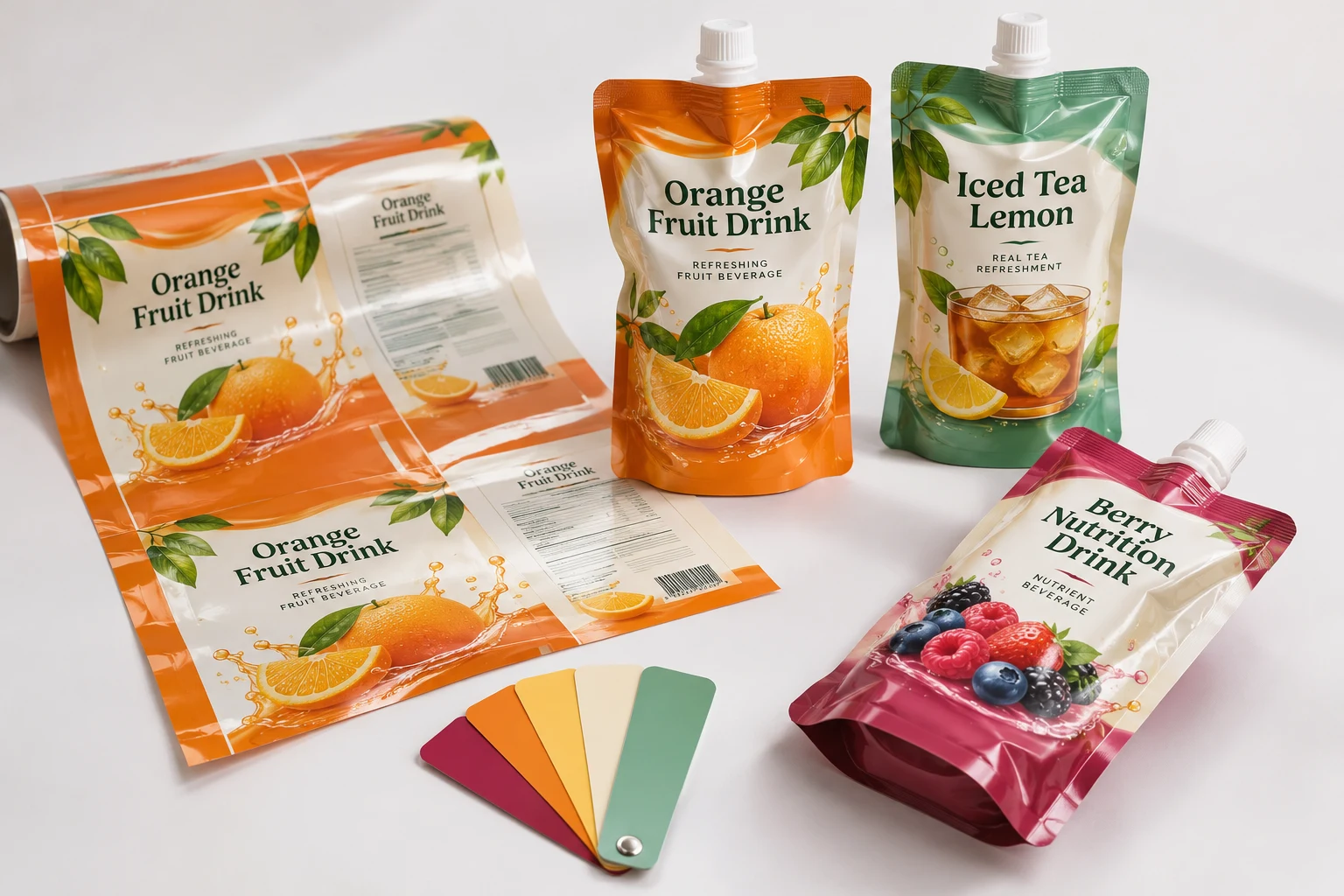
Gravure production supports up to 10 colors. Digital printing is used for sampling.
Start with the production dieline
Confirm dimensions and format before final artwork. Keep critical content clear of folds, seals, zippers and any fitments.
Approve the right reference
Use digital sampling to evaluate the design, then agree the reference and expectations for gravure production. Review key colors and all artwork variants together.
Build a coherent range
Provide the full set of product names, languages and variable information so changes between designs are visible before production.
Packaging Samples & Pre-Production Trials
Visual approval, filling suitability and product protection answer different questions.
Review the appearance
Check the artwork hierarchy, dimensions and intended presentation. Record the approved version and any changes needed before the production reference is agreed.
Review the filled pack
Use the actual contents or a representative trial to check filling access, headspace, closure and handling. Include the team operating the filling process.
Agree what needs validation
Where protection, thermal processing or formula compatibility matters, define the trial and acceptance requirements for the actual material and intended use.
Our Flexible Packaging Manufacturing Process
Printing, lamination, curing, slitting, pouch making and inspection are integrated within IVAPAK.
Printing
Approved artwork becomes a controlled print reference.
Lamination
Selected film layers are combined for the agreed structure.
Curing
The laminated structure follows its required curing stage.
Slitting
Film is converted to the specified widths and rolls.
Pouch making
Premade pouch orders are converted to the chosen format.
Quality inspection
The finished order is checked against the agreed requirements.
Factory Equipment & Production Stages
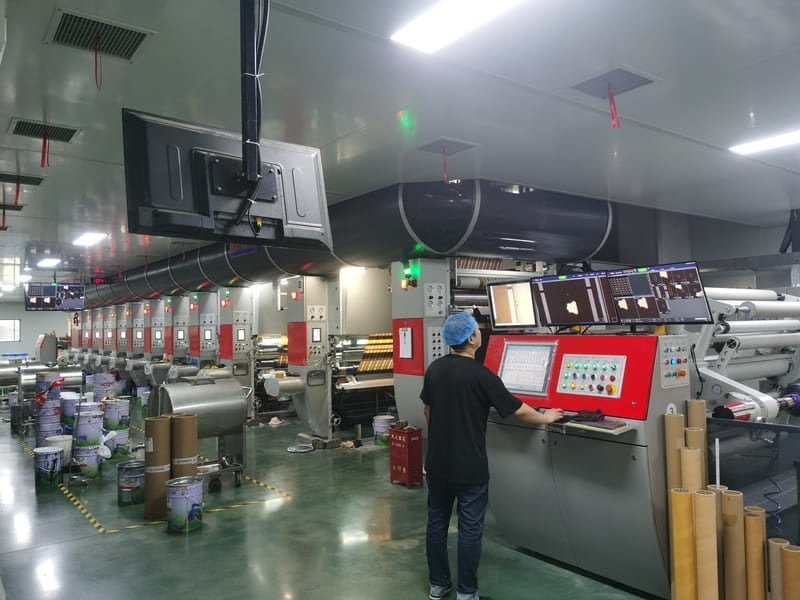
Real production photographs from our factory media. Talk to the team about the process and documents relevant to your order.
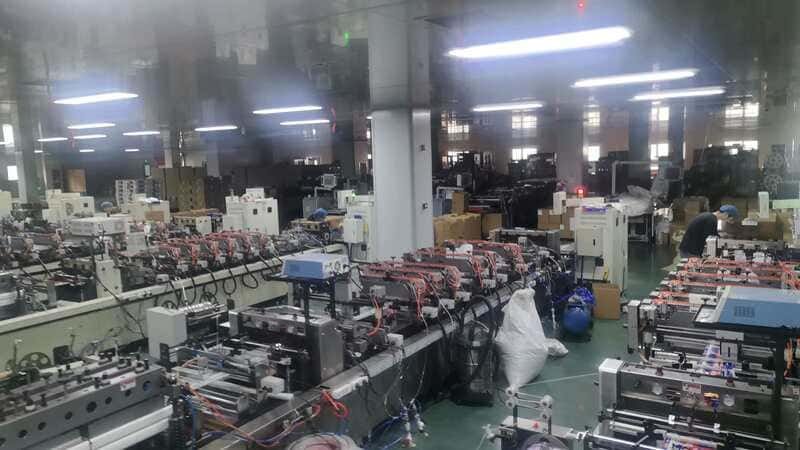
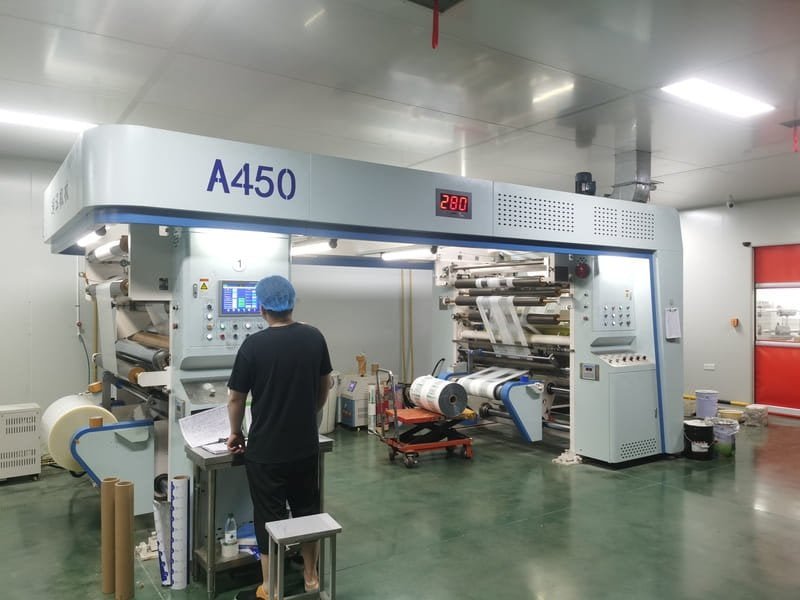
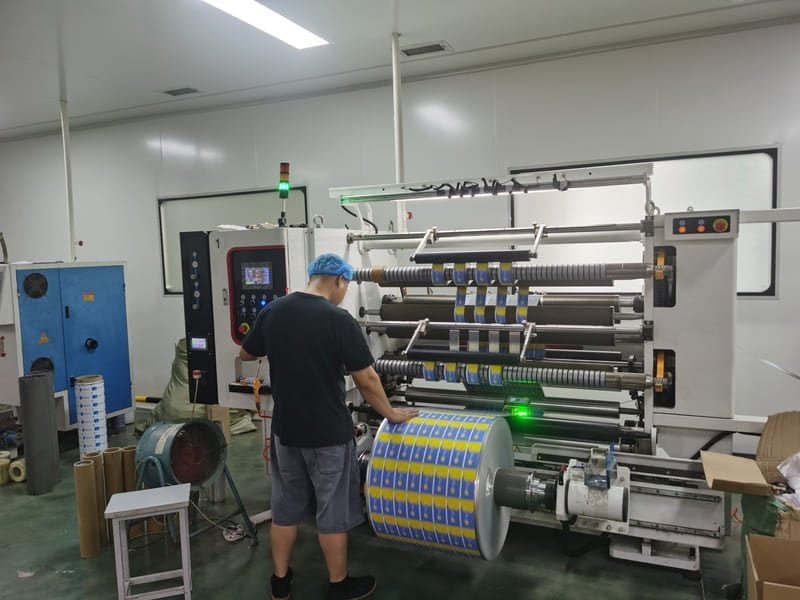
Check filling compatibility, leakage and flow under agreed conditions.
IVAPAK’s factory has produced flexible packaging since 2003, combining print, lamination, curing, slitting, pouch making and quality inspection. BRCGS and ISO 9001 certifications support the manufacturing framework; beverage contact, process and performance requirements are reviewed for the actual project.
Does the pouch fit the filling process?
Agree a representative review of filling, component handling and final sealing. Include the actual beverage and process conditions so the result can inform the specification and the packer’s operating plan.
Is the completed pack leak-tight under the brief?
Define the relevant leakage and handling checks for the filled package, closure and outer carton. Any pressure requirement needs stated conditions and acceptance criteria rather than an unsupported strength claim.
Does the drink dispense as intended?
Assess opening and flow with representative viscosity, pulp and portion size. Review the experience at the relevant use conditions and check that the component and instructions support the intended method.
Does storage support the product target?
Plan evaluation with the beverage team for the quality and protection requirements that matter to the recipe. The filled product, process, package and storage conditions must be considered together.
Factory Certifications & Material Documentation
Share your destination market and application so the relevant factory credentials and material documents can be reviewed.
BRCGS & ISO 9001
Factory and quality-management credentials support supplier evaluation. Request the current documents for your purchasing review.
Food-contact material review
For food applications, discuss material compliance with applicable FDA requirements and EU 10/2011 for the intended use. These are material and use requirements, not an FDA factory certification.
Available SGS reports
SGS testing reports can be provided. Confirm that the report scope, material and test conditions correspond to the packaging being specified.
Illustrative drink briefs for fruit, tea and liquid nutrition.
These planning examples show how requirements guide decisions. They are not named customer projects or measured performance results.
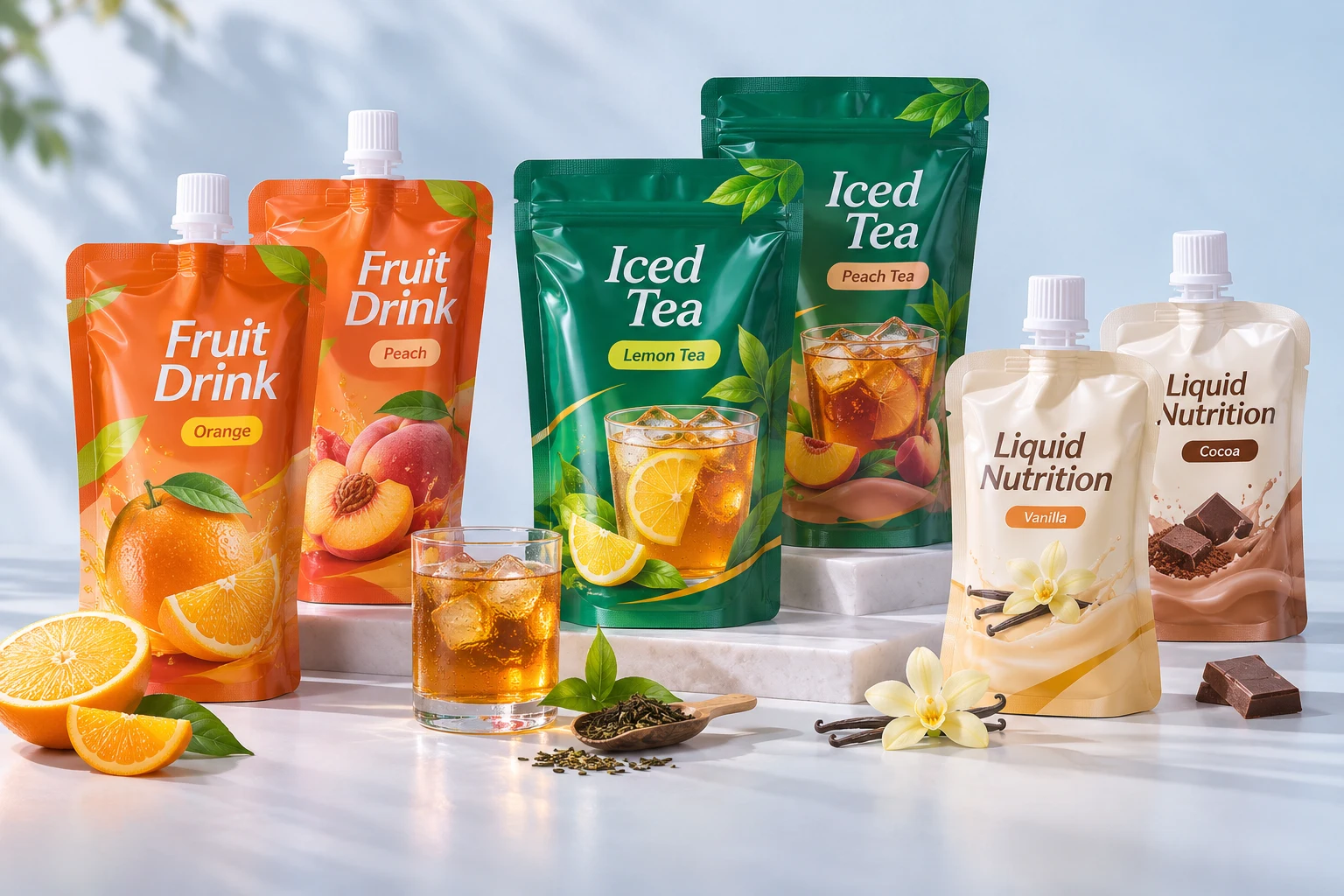
Illustrative plan: a fruit drink collection
A brand wants distinct pouch graphics for several fruit drinks.
Begin with each formulation and the filling process, then assess a suitable spout direction. Build a common brand panel with clear fruit cues and confirm the use and storage information for every variant.
Illustrative plan: ready-to-drink tea
A tea company is expanding from dry blends into a finished beverage.
Create a separate liquid packaging brief covering process, storage and components. Keep the recognizable tea branding, but do not reuse the dry-tea pouch structure or its assumptions.
Illustrative plan: a thicker nutrition drink
A producer is exploring a pouch for a beverage with a more substantial texture.
Define viscosity, particles and the intended dispensing experience. Review component and filling compatibility, then evaluate the completed pack under the agreed handling and storage conditions.
Start with the process and how people drink.
Use these prompts to organize your requirements before requesting a quotation.
Bring the beverage process brief
Ask the filling team for the actual process and component requirements before selecting a pouch. Include preservation, hygiene and storage conditions so the material discussion has a defined application.
Clarify how it will be consumed
Describe whether the product is poured into a glass, transferred into another container or used through the spout. The intended user and opening experience can affect component and safety requirements.
Identify special requirements early
State carbonation, pressure, thermal processing or any age-related component requirement at the start. These are separate assessment points and should not be inferred from a standard beverage pouch illustration.
Quote the complete range
List each drink, size and artwork quantity, with the expected packing date. Include the filling line details and requested documents so the quote covers the actual packaging project rather than an incomplete visual concept.
Beverages & Drinks Packaging FAQs
Useful answers for planning, specifying and ordering your pack.
Can you make custom drink pouches?
Spout pouches and compatible rollstock can be discussed for suitable beverages. Send the formulation, volume, filling and preservation process, storage conditions and intended use. The material and components are reviewed together before suitability is confirmed.
Are your beverage pouches suitable for carbonated drinks?
Carbonation and pressure are not assumed capabilities of a standard spout pouch. State the requirement at the start so feasibility, components and the necessary evaluation can be reviewed separately. A drink-pouch image does not establish pressure performance.
Can the pouches be hot-filled?
Hot filling requires the actual temperature, duration and subsequent handling conditions. The selected structure and components must be confirmed for the application. Do not infer hot-fill suitability from a generic food-contact statement or another beverage project.
Can you support aseptic or retort beverage projects?
These are distinct processing requirements that need specific technical review. Provide the processor’s specification and required evidence. Retort pouch availability does not automatically establish suitability for every drink, and aseptic capability should not be assumed.
How do we choose a spout for a pulpy drink?
Share viscosity, particle size, filling route and the intended use. Review the component and completed pouch with representative beverage so flow and handling can be assessed. Component selection should follow the application rather than appearance alone.
Do you provide special caps for children’s drinks?
Any age-related component or safety requirement must be identified and confirmed separately with appropriate evidence. Standard closures should not be assumed to meet a particular child-safety specification simply because the pouch is small or has playful graphics.
Can a beverage pouch be recyclable?
A mono-material direction can be explored with the complete pack, including spout and closure. Review the drink’s protection and process requirements, the actual structure and the target market’s recovery route before approving a recycling claim.
What information is needed for a beverage packaging quote?
Provide the drink type and formulation details, fill volume, preferred format, filling and processing conditions, component requests and quantity per design. Include artwork, destination market, storage requirements and the date packaging is needed at the filling site.
No matching question. Try another term or contact Allen.
Request a Custom Packaging Quote
Start with the drink and filling process. We can then focus on capacity, dispensing and the packaging conditions your product requires.
Tell us about your project.
Start with what you know. We will help with the rest.
We review your brief.
Our team checks your product, quantities and any missing specifications.
We clarify the options.
Discuss the format, materials and samples needed before a production decision.
You confirm the next step.
Review the quotation, artwork requirements and proposed production schedule.
Production Timing & Delivery Planning
*Standard orders typically complete production around 15 days after artwork approval. The confirmed schedule depends on the order; shipping time is additional.
Align with the beverage filling run
Allow time for component, process and filled-pack review, then coordinate manufacturing and freight with the beverage filling run.
Keep changes visible
Flag recipe, process and portion changes in repeat-order discussions, even when the printed brand design stays unchanged.
Follow up across the whole system
For flow, leakage or handling questions, provide the order, beverage, process and conditions so the relevant stage can be reviewed.
Repeat Orders & Packaging Specifications
Keep the agreed reference connected to every reorder.
Retain the approved reference
Use the previous order, artwork version and packaging specification as the starting point. Confirm whether dimensions, material and accessories remain the same.
Highlight what has changed
New ingredients, a different filling process, another destination market or revised storage conditions may require a new review before the next run.
Share useful feedback
If a concern arises, send the order reference, photographs and the conditions in which it occurred. Clear information helps the factory assess the issue and discuss the next step.
Related Packaging Products & Resources
Move between formats, applications and the manufacturing details that matter to your project.
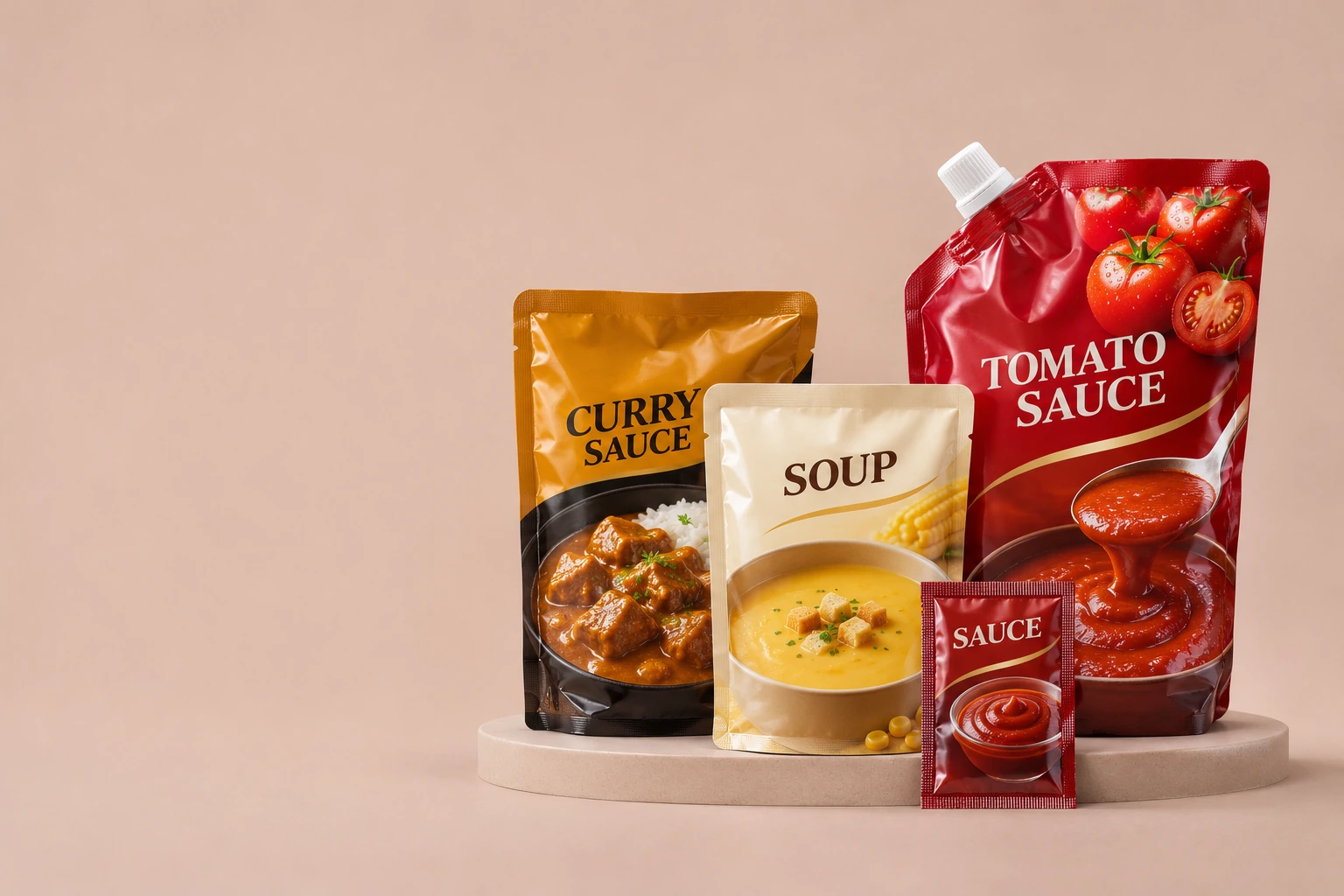
Sauces, Soups & Condiments
Custom sauce and soup pouches, spout packs and condiment portions. Define recipe compatibility, filling, dispensing and retort requirements with IVAPAK.
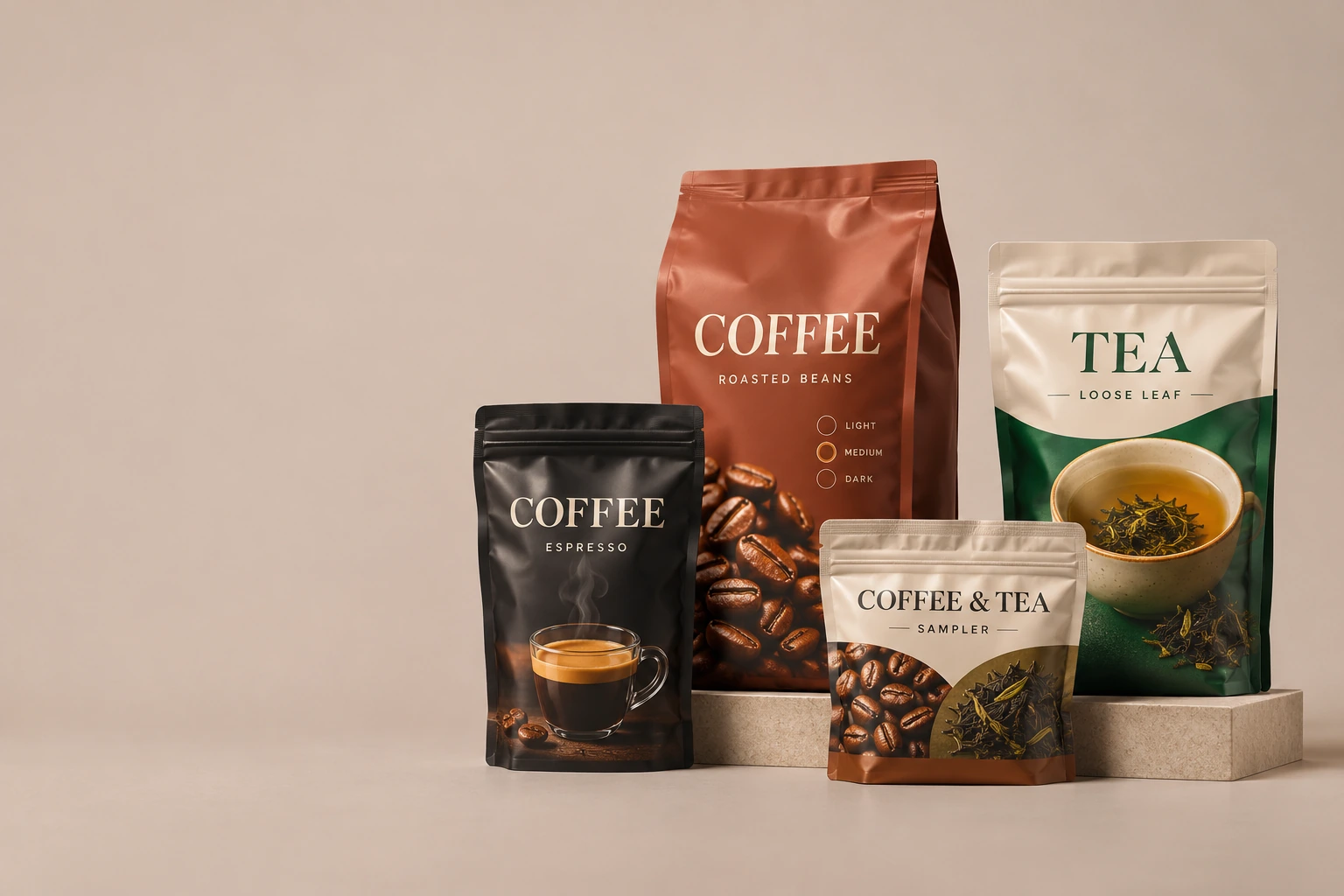
Coffee & Tea
Custom printed coffee and tea pouches. Discuss aroma protection, coffee degassing, resealing, retail presentation and materials with IVAPAK.
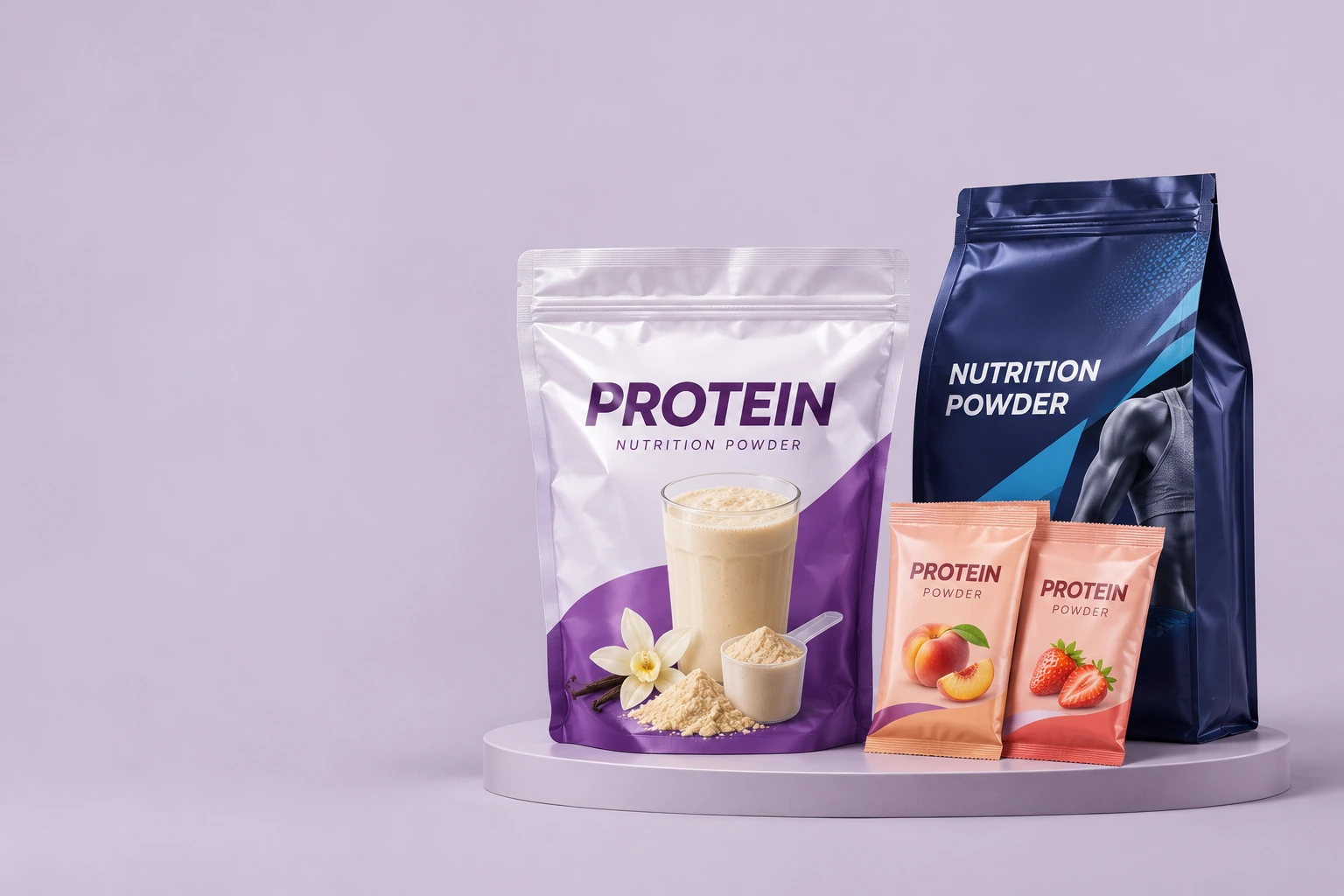
Supplements & Nutrition
Custom pouches and rollstock for protein powders, nutrition blends and supplements. Plan moisture protection, scoop access, portions and brand printing.
Flexible Packaging Articles & Buying Guides
Read the latest articles from IVAPAK on flexible packaging, materials and project planning.
Browse our latest packaging articles.
What Is a Spout Pouch?
Learn what a spout pouch is and how buyers should specify materials, format, spout size, closures, filling method, testing, and RFQ details.…
Read the article ↗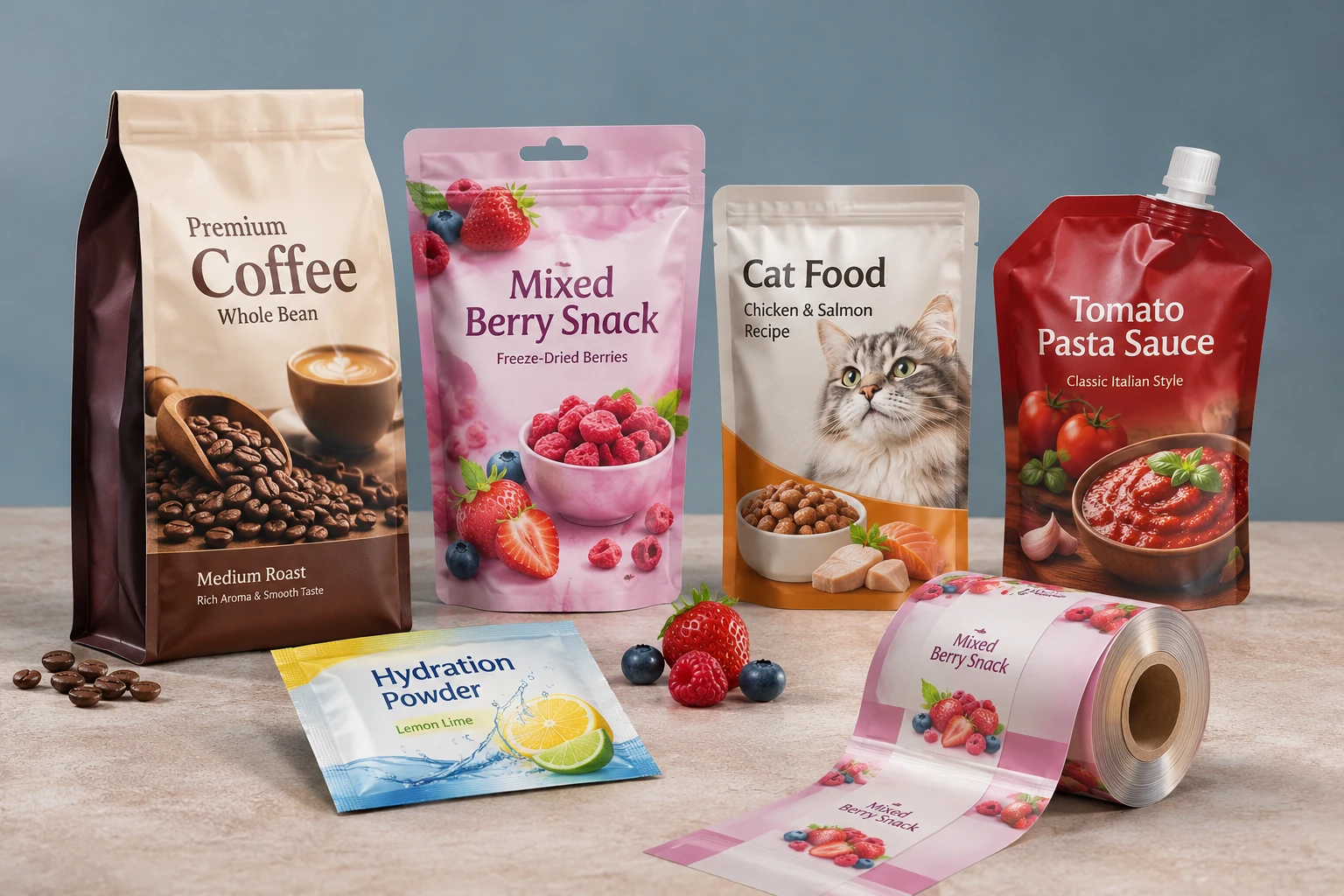
Custom Pouches for Flexible Packaging
Custom pouches explained through format, laminate, closure, print, filling, sustainability, validation, and RFQ details for flexible packaging pr…
Read the article ↗
What Is a Retort Pouch?
Learn what a retort pouch is, how it differs from hot-fill and aseptic packs, and what to specify for laminate, sealing, process, and RFQ needs.…
Read the article ↗