
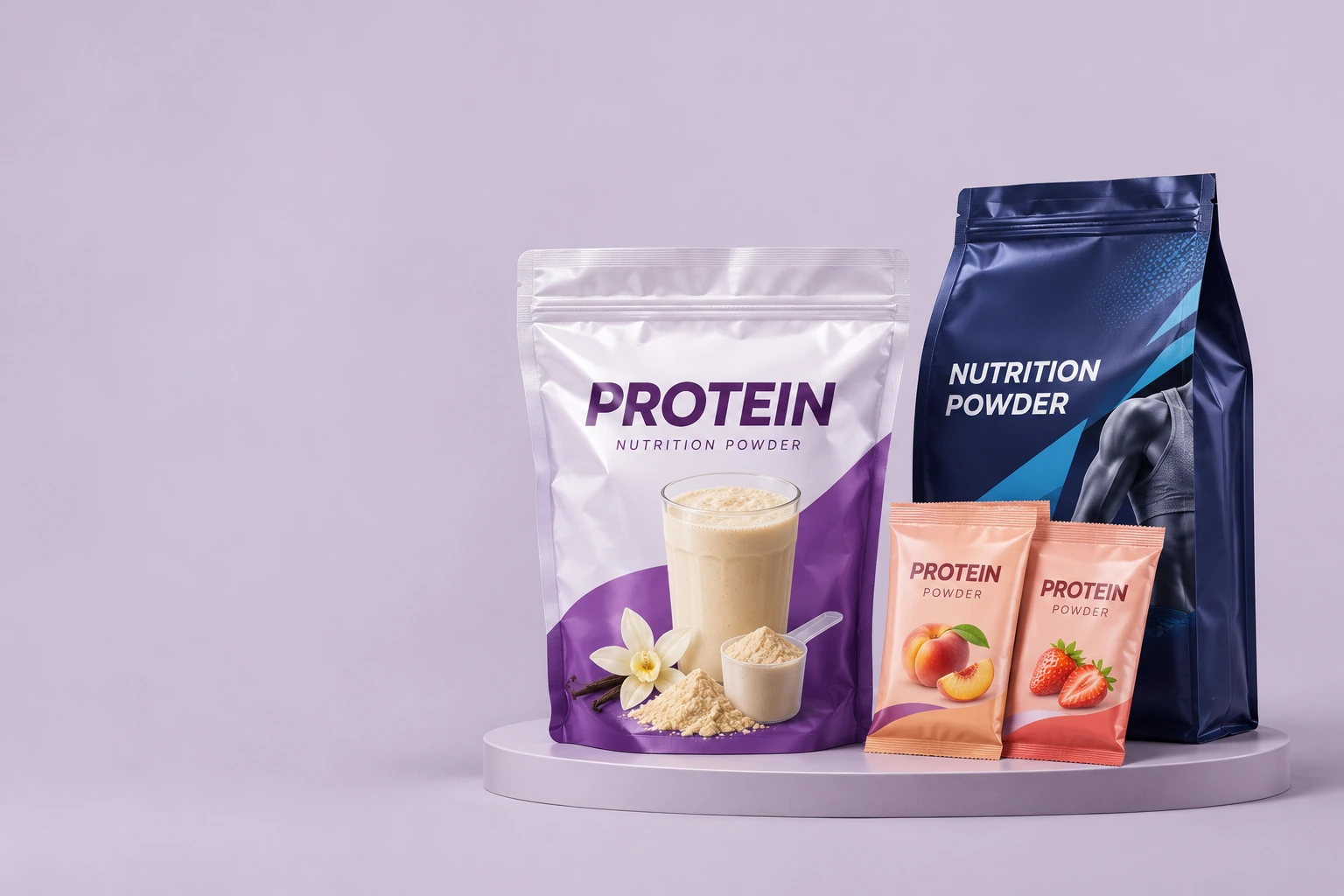
Custom Supplement
& Nutrition Packaging
IVAPAK manufactures custom printed pouches and rollstock for protein powders, nutritional supplements and portion packs. Define moisture and light protection, usable capacity, scoop access, sealing and artwork requirements with our factory. Samples and order quantities are agreed around your formulation and packing method.
Custom Supplement Pouches & Protein Powder Packaging
Powders, blends and supplement gummies each need their own brief. IVAPAK considers formulation, dosing, sealing, information space and daily use together, translating these requirements into a defined pouch or rollstock specification.
Explore the full industry collection
Build a recognizable range around real serving sizes.
Three starting points for a better packaging brief.
Designed around real portions
Allow usable space for filling, sealing and scooping, rather than choosing a pouch from declared net weight alone.
A recognizable product family
Create consistent formula, flavor and serving cues, with room for the product information needed on each size.
One connected purchasing brief
Bring formulation, labeling and filling requirements into one factory discussion so the quote reflects the intended launch.
Pouch Formats & Printed Rollstock Options
Compare the shapes that suit your filling operation and retail presentation.
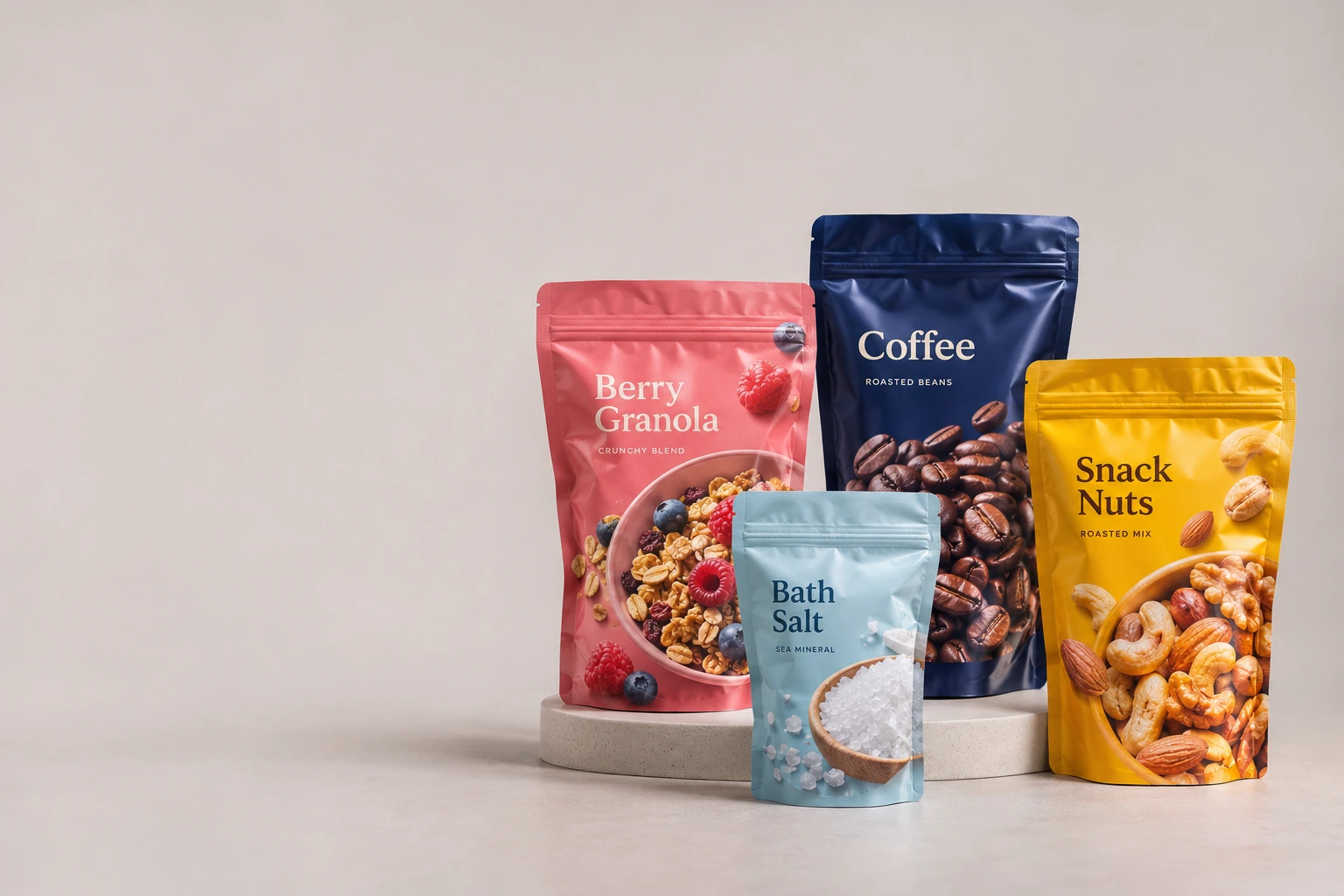
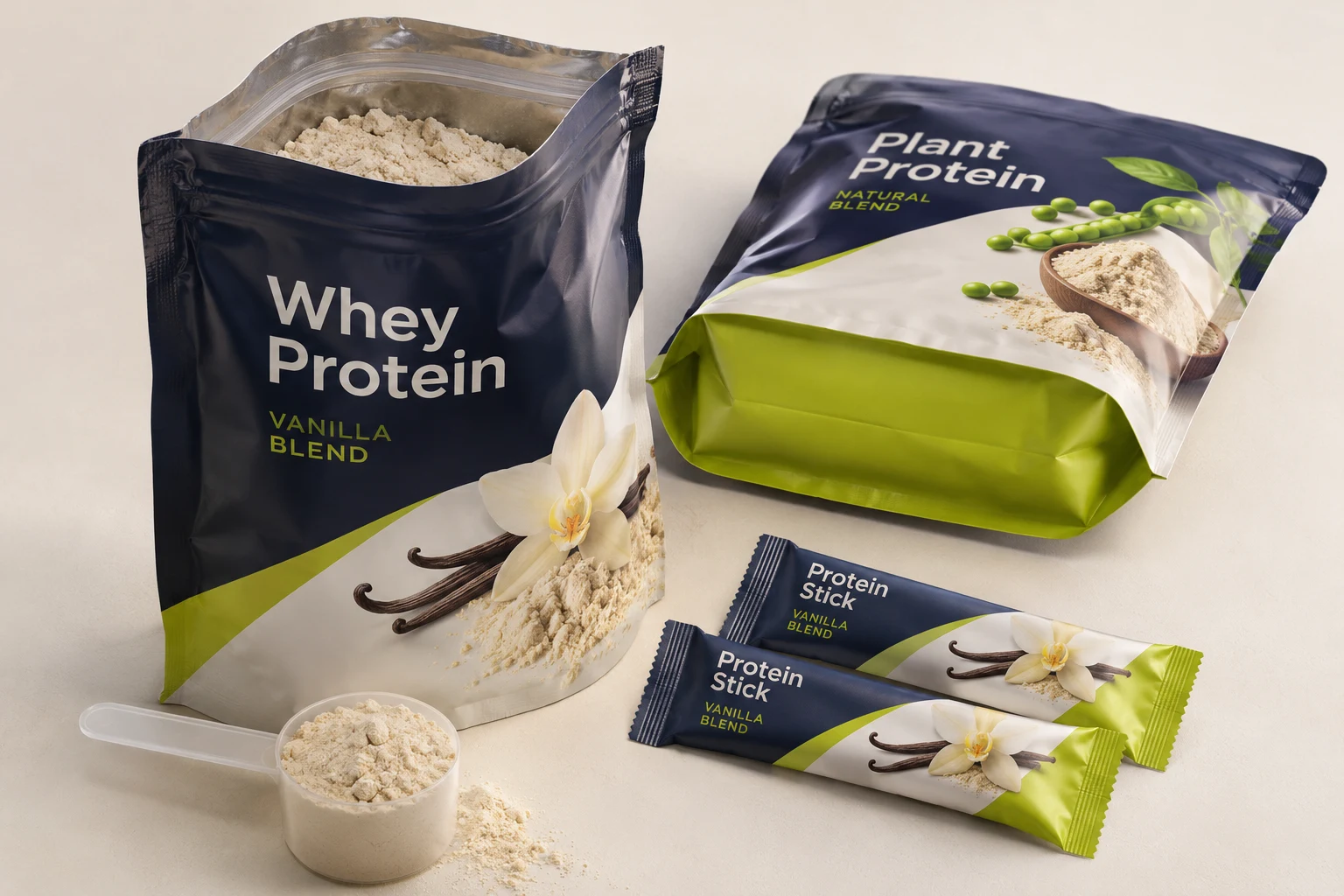
Stand-up pouches
A practical direction for nutrition powder refills and smaller daily-use packs. Define the bottom gusset, fill height and access width, then review the filled pouch with the scoop or pouring method you intend.
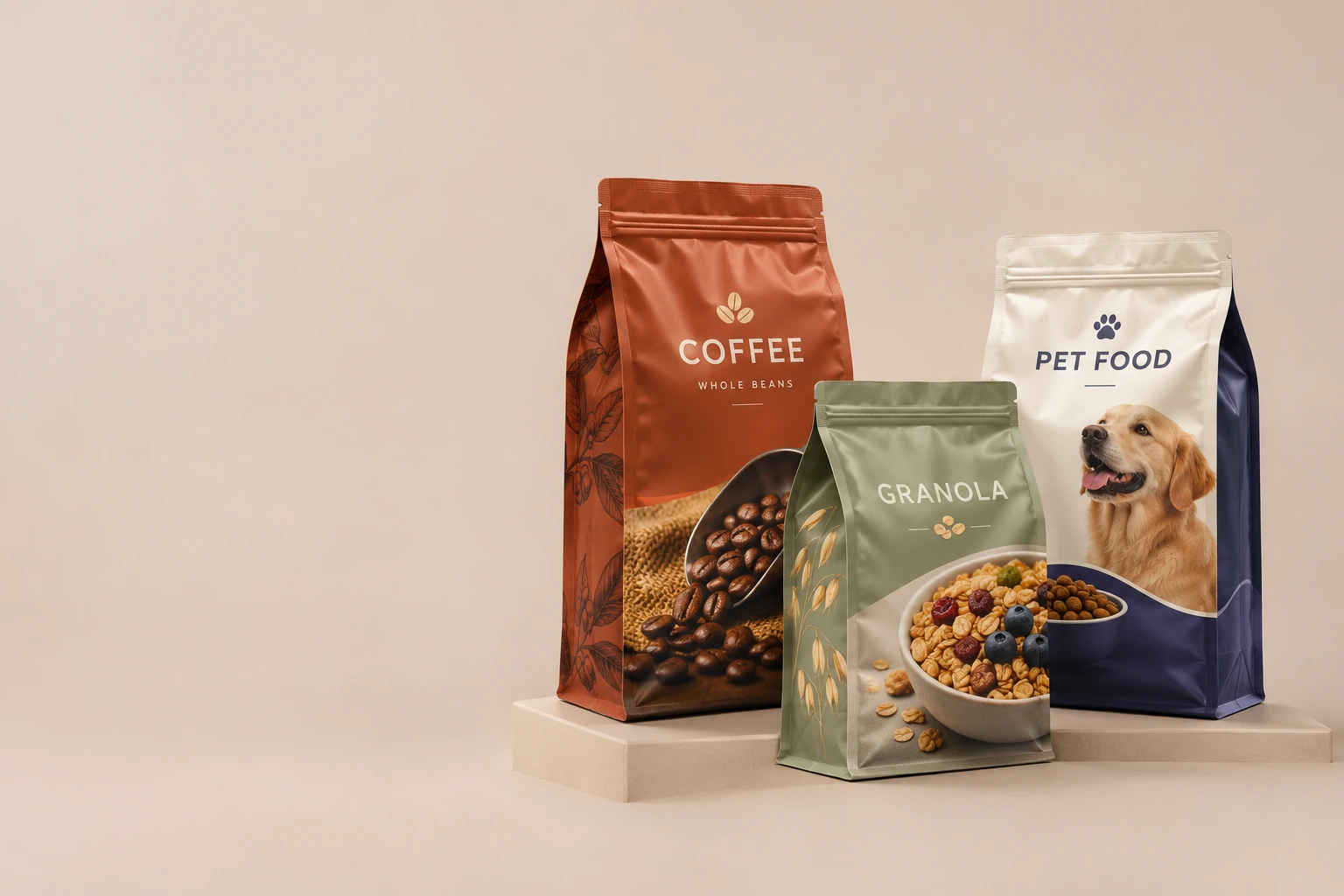
Flat-bottom pouches
Consider a structured presentation for a substantial powder range. The printable faces can separate brand messaging, preparation instructions and product information, while dimensions must still follow density, filling and closure requirements.
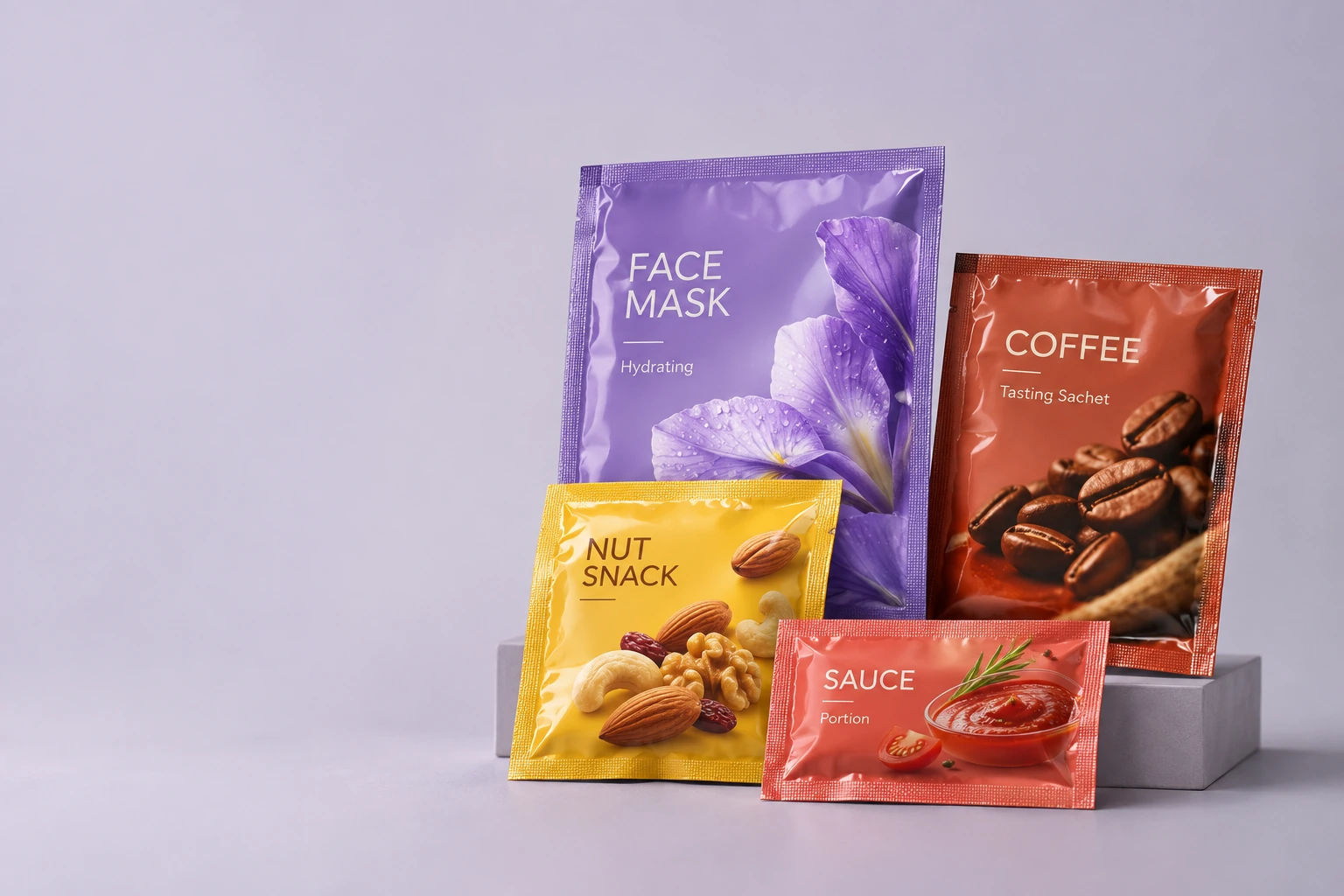
Three-side seal pouches
Explore sample and single-portion packs with a compact printable surface. Allocate enough seal space and readable information; a smaller portion can require a very different layout from the full-size retail pouch.
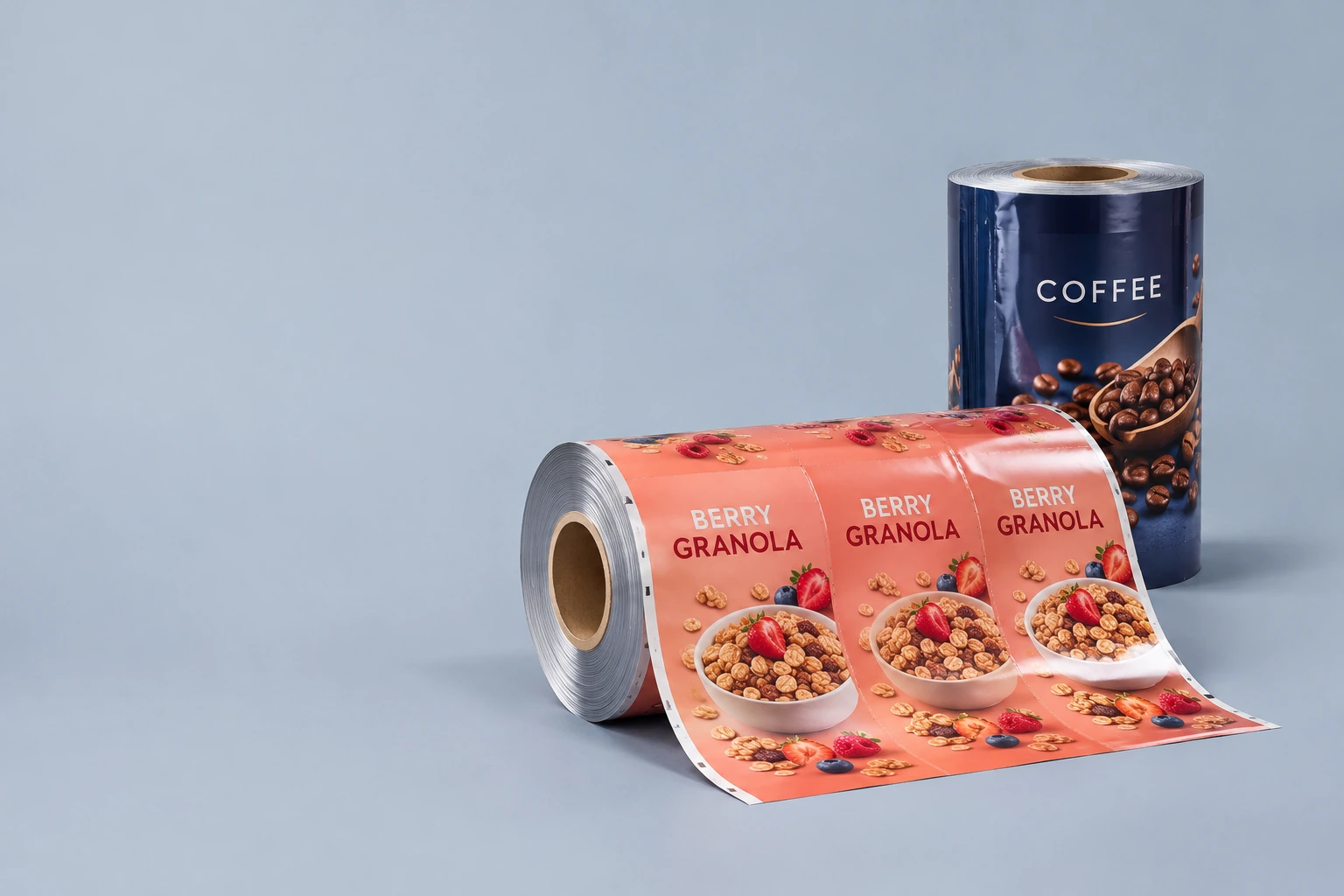
Printed rollstock
For portioning on customer equipment, specify width, repeat, winding, registration and sealing conditions. Stick packs and other narrow formats require confirmation of the forming equipment and material suitability, rather than being assumed from rollstock availability.
Powders, gummies and trial portions need different details.
Start with the way the product is filled, sold and used.
Protein powders
Consider powder density, dust during filling and the opening needed for scooping. Refill packaging should also match the way customers transfer the product to another container or store it in the original pouch.
Nutrition and wellness blends
For multi-ingredient powders, describe the formulation’s known sensitivities and the intended storage conditions. The packaging discussion should follow the product brief rather than assume every wellness blend needs the same barrier.
Supplement gummies
Give the piece size, coating and intended portion count. Discuss product contact, handling and the required closure; packaging for supplement gummies belongs with the nutrition brief rather than ordinary confectionery assumptions.
Trial and single-serving portions
Use compact pouches or suitable rollstock to explore measured portions. Confirm the actual filling equipment and pack format, especially for stick-pack requests, before preparing a final artwork dieline.
Plan for moisture, powder residue and scoop access.
Shape, print and material work best when the application is understood first.
Moisture and clumping
Share any known tendency for the blend to absorb moisture or form lumps. Packaging selection should support the product’s storage brief, with filled-product evaluation used to judge the intended experience over time.
Powder at the seal
Fine powders can reach the sealing area during dosing. Discuss fill height, dust management and the final closure with the packing team so the material brief reflects how the pouch will be sealed.
Scoop access
A scoop changes the space and access required. Provide its dimensions and whether it is inserted during filling; the finished opening should be assessed with the actual scoop and the expected fill level.
Dense information
Formula, preparation, serving and market-specific label text compete for space. Design the pouch around readable information rather than reducing all copy to fit a visual mockup that was never checked at actual size.
Match formula protection with visibility and light requirements.
Compare candidate materials against the contents, process and target market.

Protection matched to the formula
Identify moisture, oxygen or light concerns from your formulation team. Compare candidate structures against those requirements and the filling process; a film description alone cannot establish ingredient stability or a product shelf-life claim.
Opaque or windowed presentation
If light protection matters, discuss an opaque approach. If a window is requested, review the trade-off with the actual product and evidence needed, instead of treating visibility as a purely decorative choice.
Material goals with supporting detail
Recyclable mono-material, compostable and PCR packaging can be explored as distinct directions. For supplement contact, confirm the complete structure, intended market and relevant documentation before using any material claim on the printed pouch.
Printed Layers, Barrier Films & Sealant Functions
Select a role to see how appearance, protection and sealing connect.
Print & presentation
The outside carries your graphics and handling requirements. Review the print surface, finish and intended appearance on the agreed production material.
Protection & structure
Define what the contents need from moisture, oxygen, light and aroma protection. The appropriate structure depends on product, storage and processing conditions.
Contact & sealing
The inside interfaces with your product and filling operation. Review food-contact suitability where relevant, formulation compatibility and sealing behavior together.
Conceptual layer roles, not a fixed construction or thickness specification. Your complete pack needs an application-specific review.
Include the portion, scoop and packing method.
Share what you know. A current sample, drawing or filling-line specification can help resolve the remaining questions.
- Contents
- Powder, blend or gummy; describe bulk density, coating and known sensitivities.
- Portion plan
- Retail net weight, servings and any sample or refill versions.
- Scoop
- Scoop dimensions, insertion method and required opening access, if applicable.
- Packing
- Filling equipment, powder behavior and final sealing method.
- Structure brief
- Moisture, light and oxygen requirements from the product team.
- Print variants
- Formula, flavor, languages, coding area and quantity per design.
- Evidence
- Requested material documents and filled-product evaluation requirements.
Give formulas, preparation and batch information their place.
Bring the visual identity and the user experience into the same conversation.
Formula-first hierarchy
Make the formula and flavor easy to identify without crowding the front panel. Keep the brand’s claims aligned with approved product wording; packaging production does not establish the accuracy of nutritional or health claims.
Useful preparation graphics
Simple diagrams can explain mixing, portioning or refill use. Check the instructions at actual pouch size and against the opening method, particularly when the tear area removes part of the original printed surface.
Room for batch information
Plan a clear coding area that works with the equipment at the filling site. Avoid positioning critical batch or date information on folds, heavy patterns or a finish that has not been assessed for the intended coding method.
A coherent size ladder
Create a common design system for sample portions, retail packs and larger refills. Adjust the information layout and opening details to each format rather than shrinking one master artwork until the smallest pack becomes unreadable.
Custom Gravure Printing & Artwork Approval
Gravure production supports up to 10 colors. Digital printing is used for sampling.

Start with the production dieline
Confirm dimensions and format before final artwork. Keep critical content clear of folds, seals, zippers and any fitments.
Approve the right reference
Use digital sampling to evaluate the design, then agree the reference and expectations for gravure production. Review key colors and all artwork variants together.
Build a coherent range
Provide the full set of product names, languages and variable information so changes between designs are visible before production.
Packaging Samples & Pre-Production Trials
Visual approval, filling suitability and product protection answer different questions.
Review the appearance
Check the artwork hierarchy, dimensions and intended presentation. Record the approved version and any changes needed before the production reference is agreed.
Review the filled pack
Use the actual contents or a representative trial to check filling access, headspace, closure and handling. Include the team operating the filling process.
Agree what needs validation
Where protection, thermal processing or formula compatibility matters, define the trial and acceptance requirements for the actual material and intended use.
Our Flexible Packaging Manufacturing Process
Printing, lamination, curing, slitting, pouch making and inspection are integrated within IVAPAK.
Printing
Approved artwork becomes a controlled print reference.
Lamination
Selected film layers are combined for the agreed structure.
Curing
The laminated structure follows its required curing stage.
Slitting
Film is converted to the specified widths and rolls.
Pouch making
Premade pouch orders are converted to the chosen format.
Quality inspection
The finished order is checked against the agreed requirements.
Factory Equipment & Production Stages
Real production photographs from our factory media. Talk to the team about the process and documents relevant to your order.
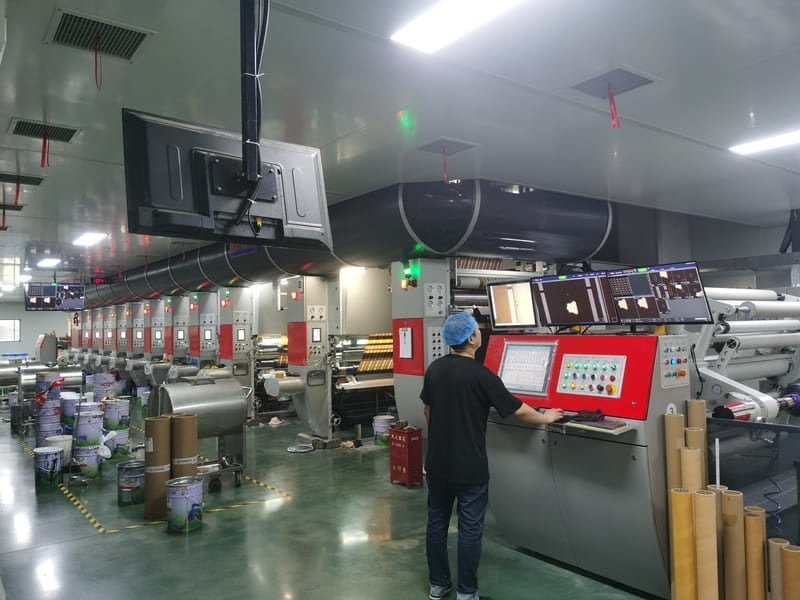
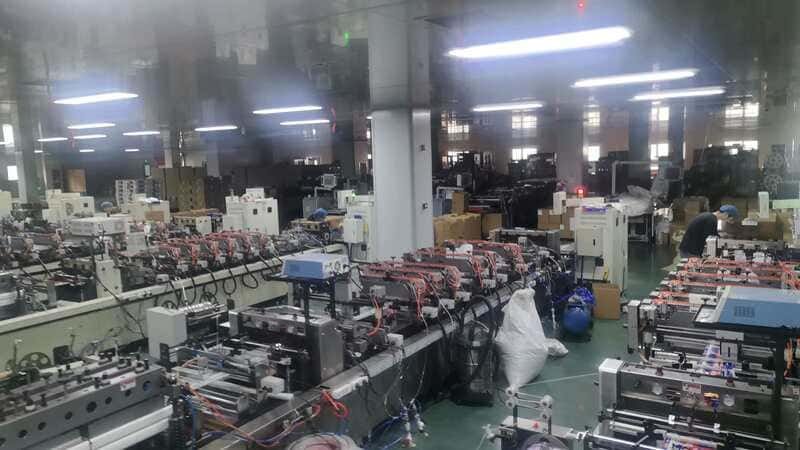
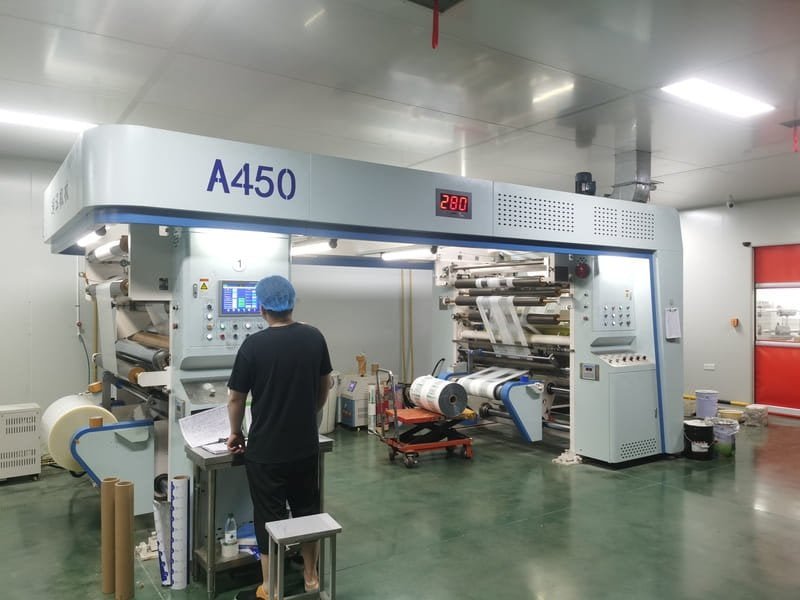
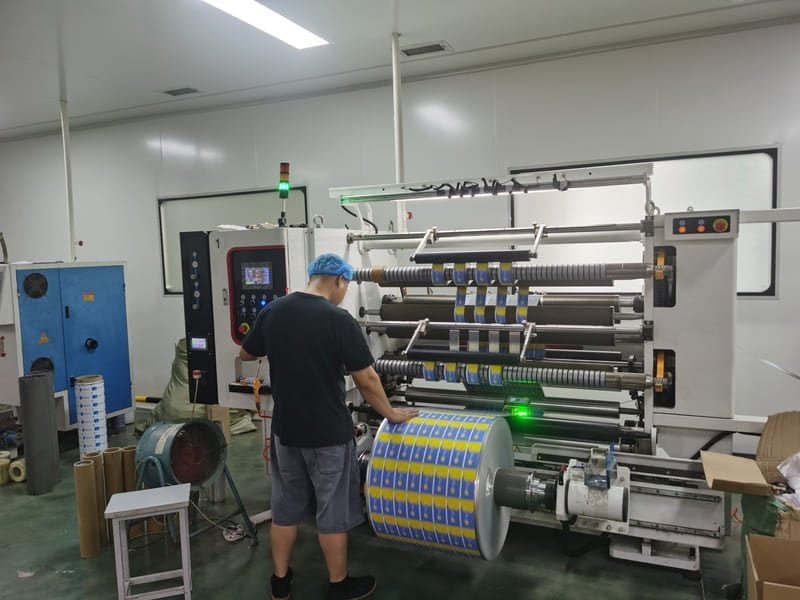
Review clean filling, serving access and label readability.
IVAPAK combines printing and converting with gravure production up to 10 colors and digital sampling. Factory certifications, food-contact documents and available SGS reports are reviewed against the material and use.
Can the powder be packed cleanly?
Agree a trial on representative filling and sealing conditions. Review fill accuracy, seal-area cleanliness and pouch handling with the co-packer, without assuming that an empty-pouch sample proves production readiness.
Can customers reach the product?
Assess opening width, scoop clearance and access near the bottom of a partly used pouch. Use the actual scoop and product so the review reflects the daily routine, not just the first opening.
Does storage support the product target?
Plan appropriate evaluation with your product team for moisture, texture or other relevant stability concerns. Define the conditions and target before selecting a test period or making a shelf-life statement.
Does all required text remain readable?
Review the final dieline at actual size, including folds, seals and the tear path. Check formula names, preparation instructions, coding spaces and market-approved text across every artwork version.
Factory Certifications & Material Documentation
Share your destination market and application so the relevant factory credentials and material documents can be reviewed.
BRCGS & ISO 9001
Factory and quality-management credentials support supplier evaluation. Request the current documents for your purchasing review.
Food-contact material review
For food applications, discuss material compliance with applicable FDA requirements and EU 10/2011 for the intended use. These are material and use requirements, not an FDA factory certification.
Available SGS reports
SGS testing reports can be provided. Confirm that the report scope, material and test conditions correspond to the packaging being specified.
Illustrative briefs for protein, discovery packs and gummies.
These planning examples show how requirements guide decisions. They are not named customer projects or measured performance results.
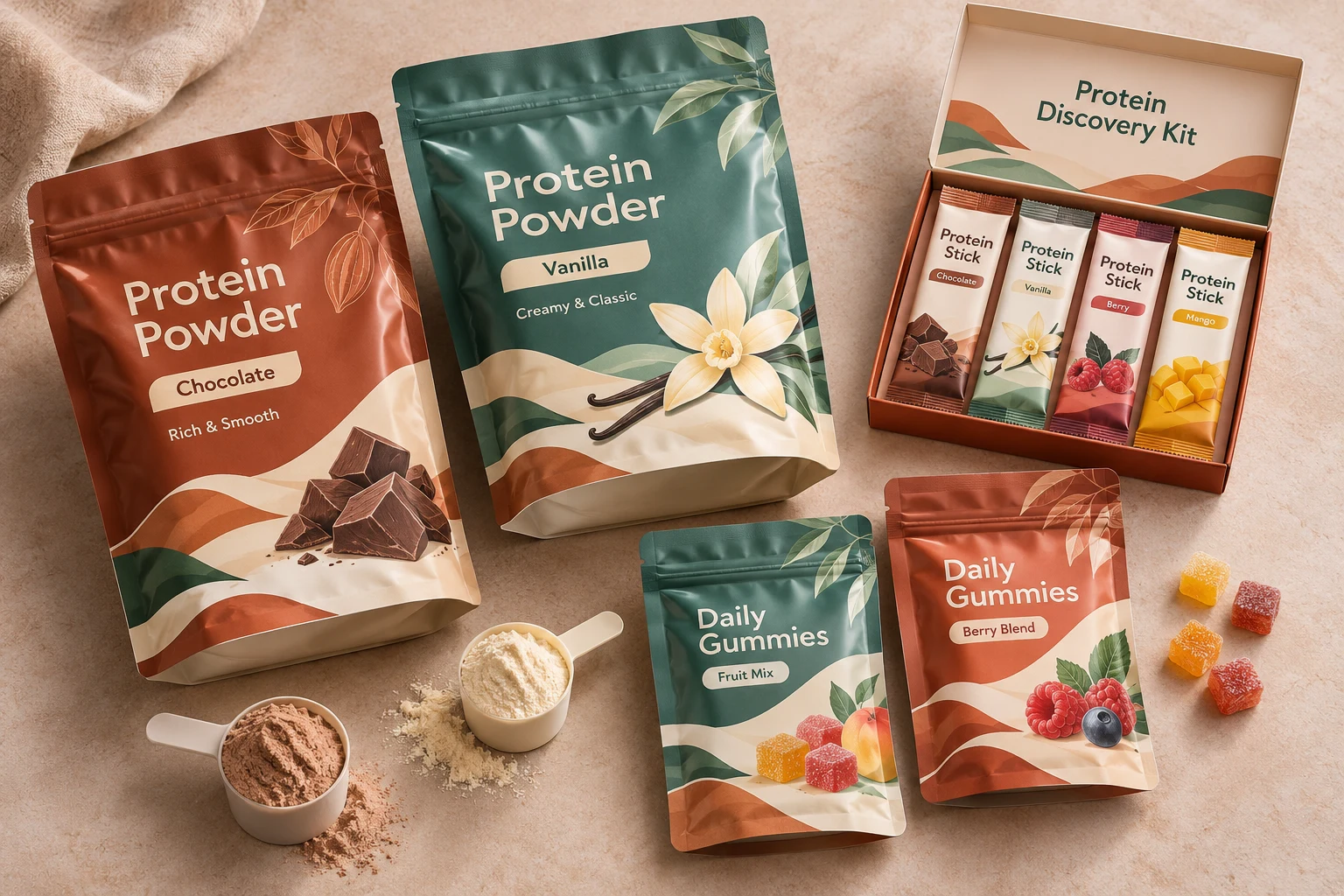
Illustrative plan: a protein refill pouch
A nutrition brand wants a refill format that is easier to recognize and practical to scoop.
Start with actual powder volume and scoop dimensions. Compare a stand-up and flat-bottom direction, then reserve a distinct panel for mixing instructions and the brand’s approved product information.
Illustrative plan: a discovery pack
A brand wants small portions of several nutrition blends for trial purchases.
Confirm the portioning equipment and feasible pack format first. Build a compact design with a clear flavor name and preparation method, and quote the actual quantity for each individual formula.
Illustrative plan: a gummy supplement range
A supplier wants a consistent pouch family for different supplement gummies.
Review piece size, coating, contact requirements and access before setting the dimensions. Give the formulas distinct visual cues and keep the supplement information legible on each finished pack.
Check actual powder volume before choosing the pouch.
Use these prompts to organize your requirements before requesting a quotation.
Bring the product and packing teams together
Collect the formulation’s protection requirements and the co-packer’s machine information before asking for a final specification. This prevents a visually approved pouch from reaching the filling site with unresolved practical questions.
Check volume with the actual powder
Equal weights of different blends may occupy different volumes. Share a filled reference or bulk density, and include headspace for filling, sealing and any scoop rather than sizing from weight alone.
Define the purpose of each sample
An artwork sample answers a design question. A filling trial, compatibility assessment or storage study answers a different question. State what each sample is expected to demonstrate before approving the bulk order.
List every version
Identify the number of formulas, flavors, sizes and languages, with quantities for each. Include expected launch timing and whether additional designs will follow, so print and production planning can reflect a realistic range.
Supplements & Nutrition Packaging FAQs
Useful answers for planning, specifying and ordering your pack.
Can you supply protein powder packaging?
Yes. Stand-up pouches, flat-bottom pouches, three-side seal formats and printed rollstock can be discussed according to the packing brief. Share the powder density, net weight, filling method and any scoop or resealing request to begin.
How do we choose the right size for a powder pouch?
Start with the volume of the actual blend, not only its weight. Include the headspace needed for filling and sealing, plus any scoop. A filled reference or sample comparison helps assess whether the pouch looks and works as intended.
Can a pouch include a scoop?
Tell us the scoop dimensions, material and insertion method. The pouch must leave practical access and space for the filled product. Scoop supply or special internal arrangements are not assumed and need separate confirmation in the project specification.
Do you make stick packs for supplements?
Narrow portion formats can be discussed through compatible rollstock or another confirmed production route. Send the forming and filling equipment details, pack dimensions and seal arrangement. Availability is confirmed before artwork or a quotation is finalized.
Which material prevents a powder from clumping?
There is no universal answer because the blend, filling environment, package and storage conditions interact. Share the product’s known moisture sensitivity and target. Candidate materials should be assessed with the filled product against the requirements established by your product team.
Can a printed pouch protect light-sensitive ingredients?
An opaque structure can be considered when light protection is part of the brief. The actual requirement and evidence should come from the formulation and stability evaluation. A dark printed design by itself is not a defined light-barrier specification.
Can you print supplement facts and multilingual information?
We can print customer-approved artwork within the confirmed layout and process. Provide final wording, languages and coding requirements. The brand remains responsible for its product information; we review how that information fits the printable pouch area.
What is the minimum order for a new nutrition range?
MOQ is confirmed for the size, structure, print and quantity per design. Send the proposed range with each formula and pack size listed separately. This gives a more useful quotation than one total volume that combines several different products.
No matching question. Try another term or contact Allen.
Explore a more specific packaging brief.
Go deeper into the application and the material decisions behind it.
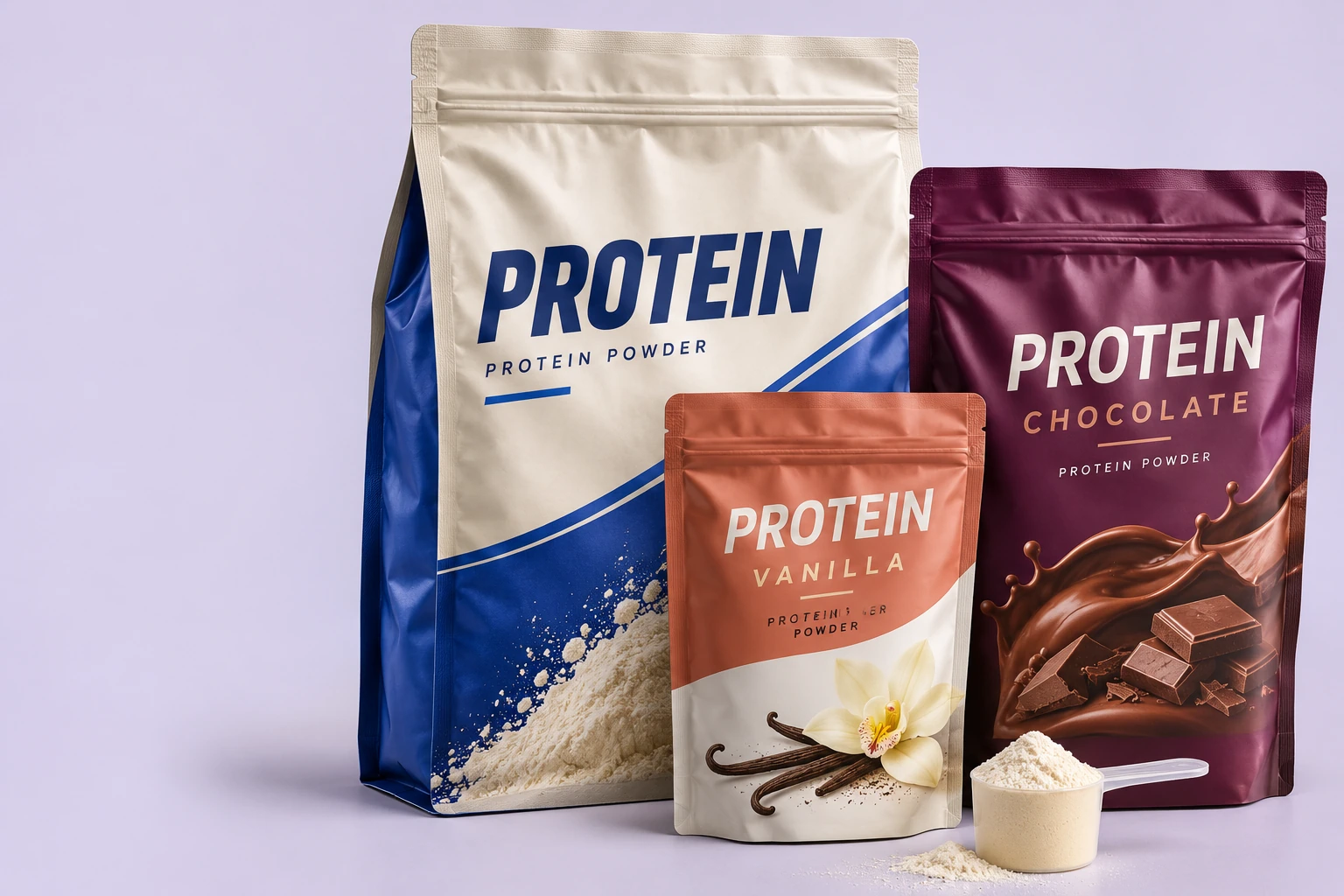
Request a Custom Packaging Quote
Plan packaging around your powder, portion and daily routine. Start with the product and fill weight, then refine protection, access and printing.
Tell us about your project.
Start with what you know. We will help with the rest.
We review your brief.
Our team checks your product, quantities and any missing specifications.
We clarify the options.
Discuss the format, materials and samples needed before a production decision.
You confirm the next step.
Review the quotation, artwork requirements and proposed production schedule.
Production Timing & Delivery Planning
*Standard orders typically complete production around 15 days after artwork approval. The confirmed schedule depends on the order; shipping time is additional.
Plan to the filling appointment
Plan approval and any co-packer trials before manufacturing. Confirm the order schedule and transport separately from the filling date.
Control formula and artwork revisions
Identify formula and artwork revisions clearly, including whether a product change also requires review of the packaging material.
Learn from the daily-use pack
Collect practical feedback on scooping, pouring, closure and label readability to refine repeat orders around actual use.
Repeat Orders & Packaging Specifications
Keep the agreed reference connected to every reorder.
Retain the approved reference
Use the previous order, artwork version and packaging specification as the starting point. Confirm whether dimensions, material and accessories remain the same.
Highlight what has changed
New ingredients, a different filling process, another destination market or revised storage conditions may require a new review before the next run.
Share useful feedback
If a concern arises, send the order reference, photographs and the conditions in which it occurred. Clear information helps the factory assess the issue and discuss the next step.
Related Packaging Products & Resources
Move between formats, applications and the manufacturing details that matter to your project.
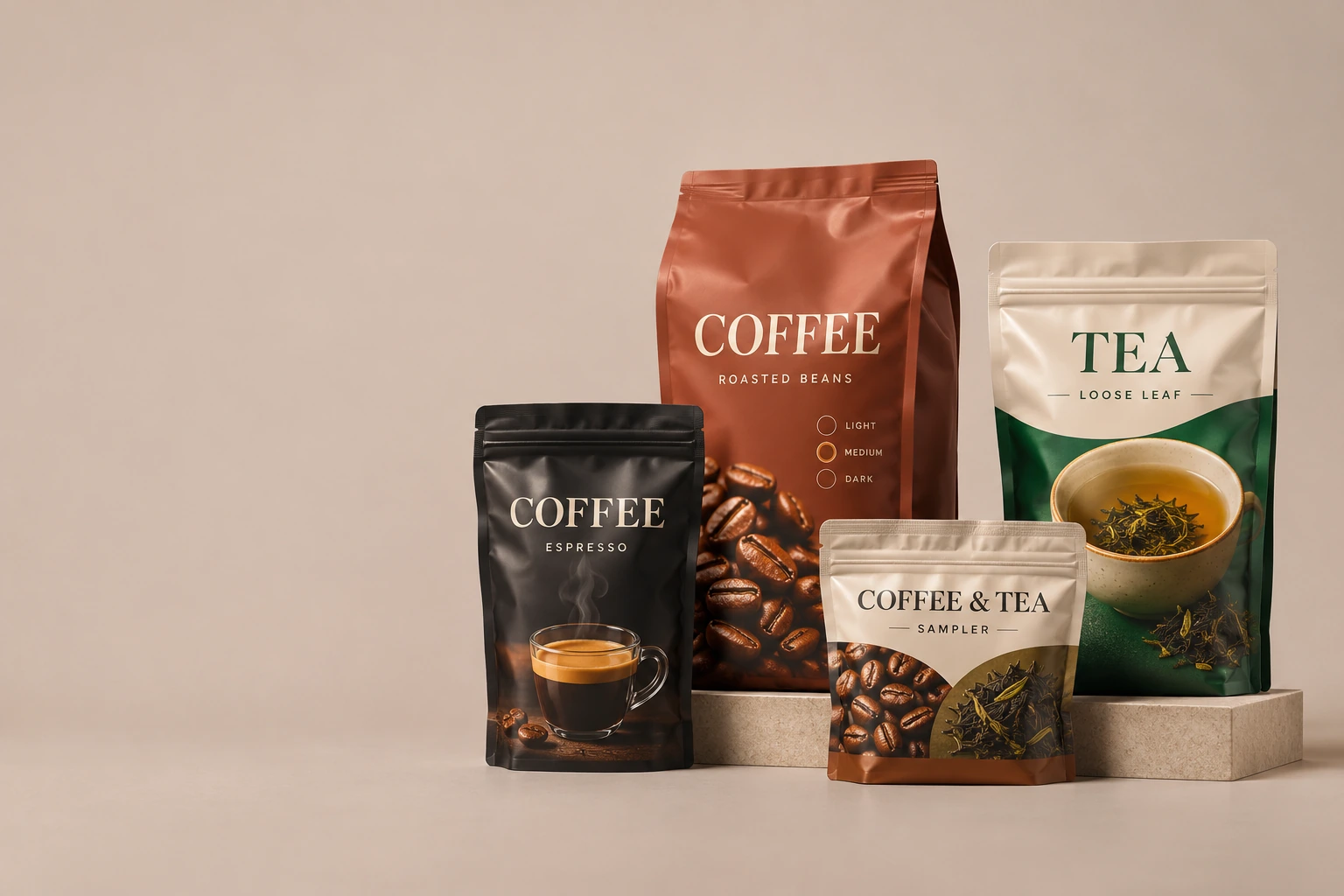
Coffee & Tea
Custom printed coffee and tea pouches. Discuss aroma protection, coffee degassing, resealing, retail presentation and materials with IVAPAK.
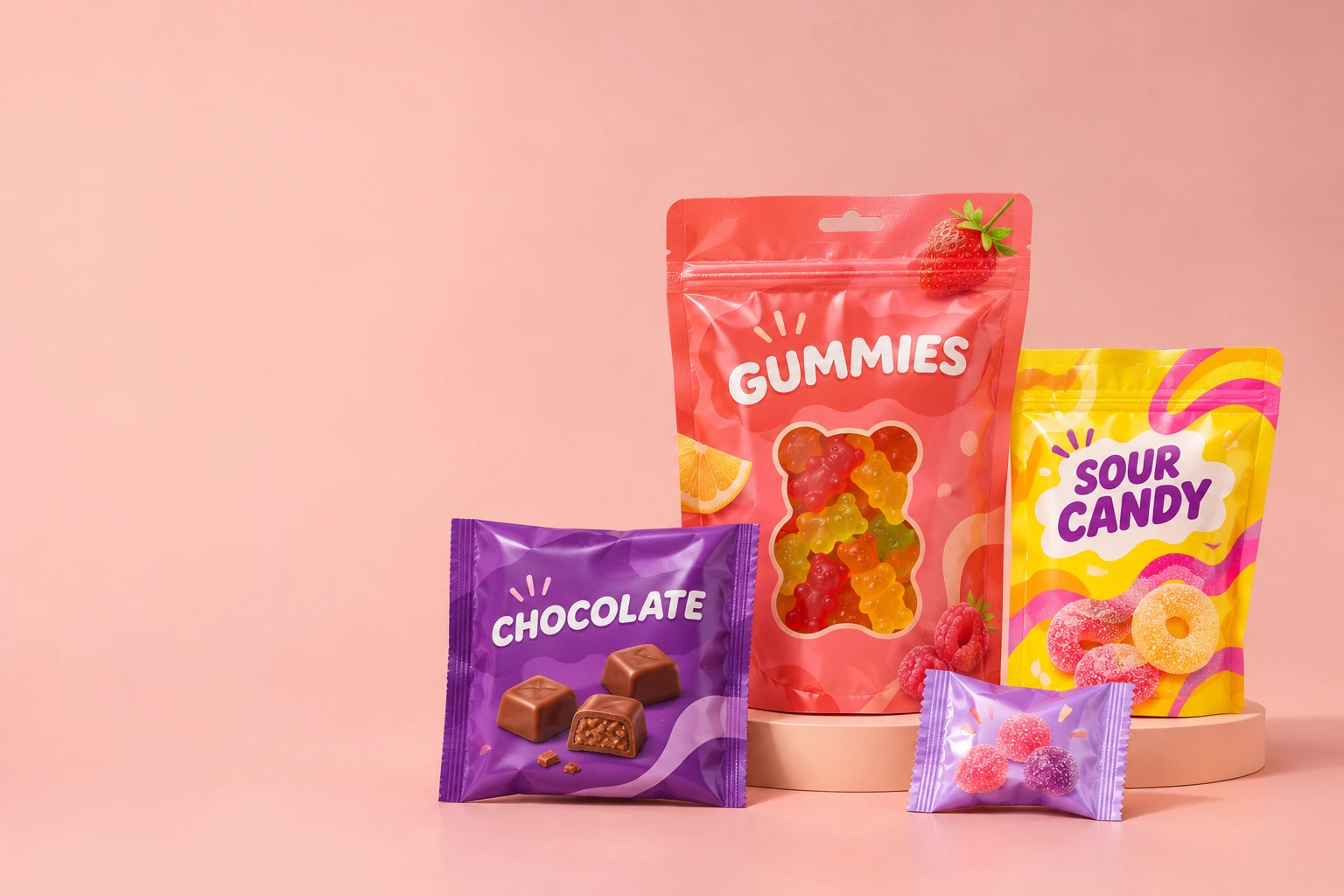
Confectionery & Candy
Custom printed candy pouches and confectionery rollstock. Explore portions, sharing packs, moisture requirements, display graphics and opening details.
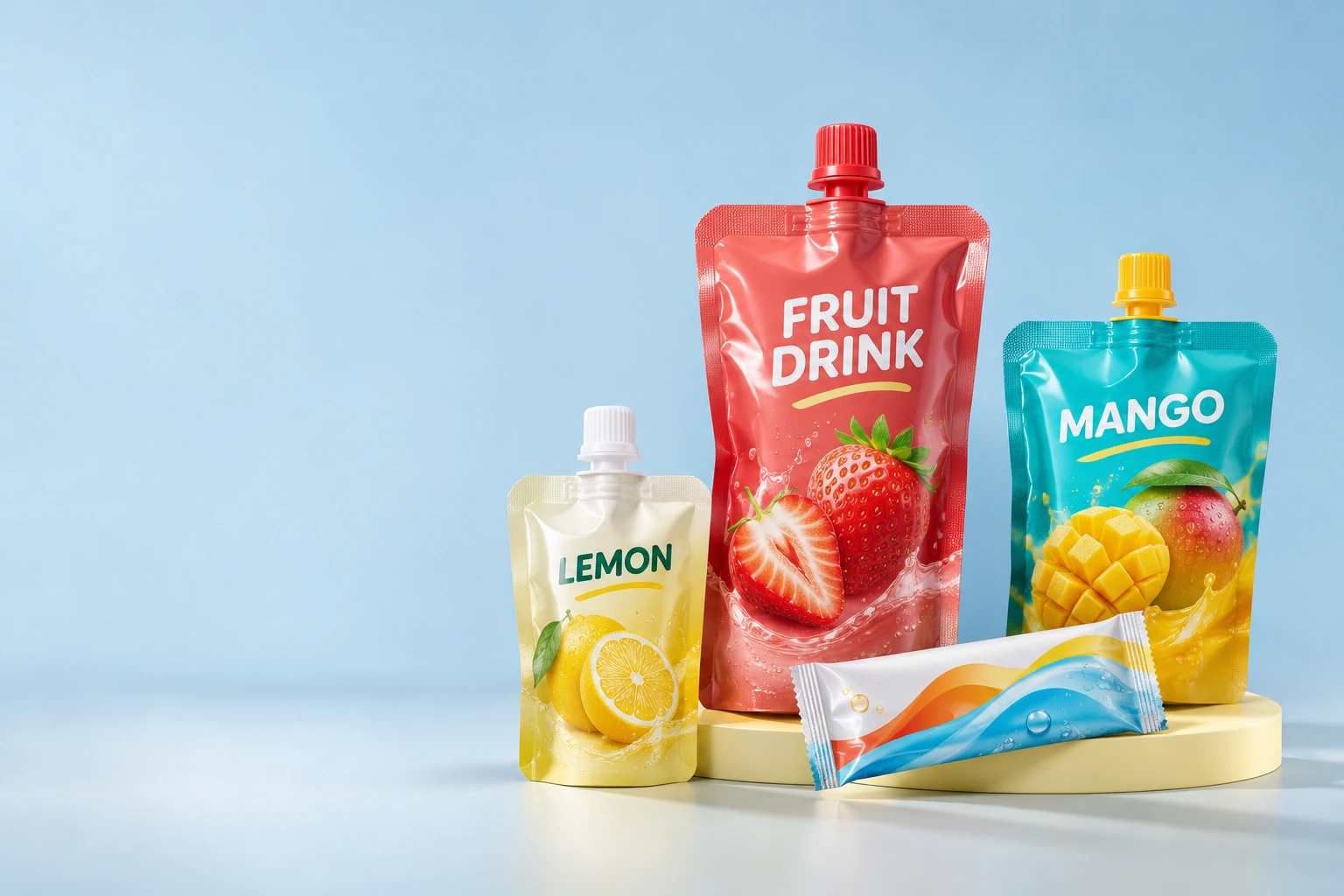
Beverages & Drink Pouches
Custom printed beverage pouches and rollstock. Discuss drink formulation, filling temperature, spouts, pressure requirements and practical dispensing.
Flexible Packaging Articles & Buying Guides
Read the latest articles from IVAPAK on flexible packaging, materials and project planning.
Browse our latest packaging articles.
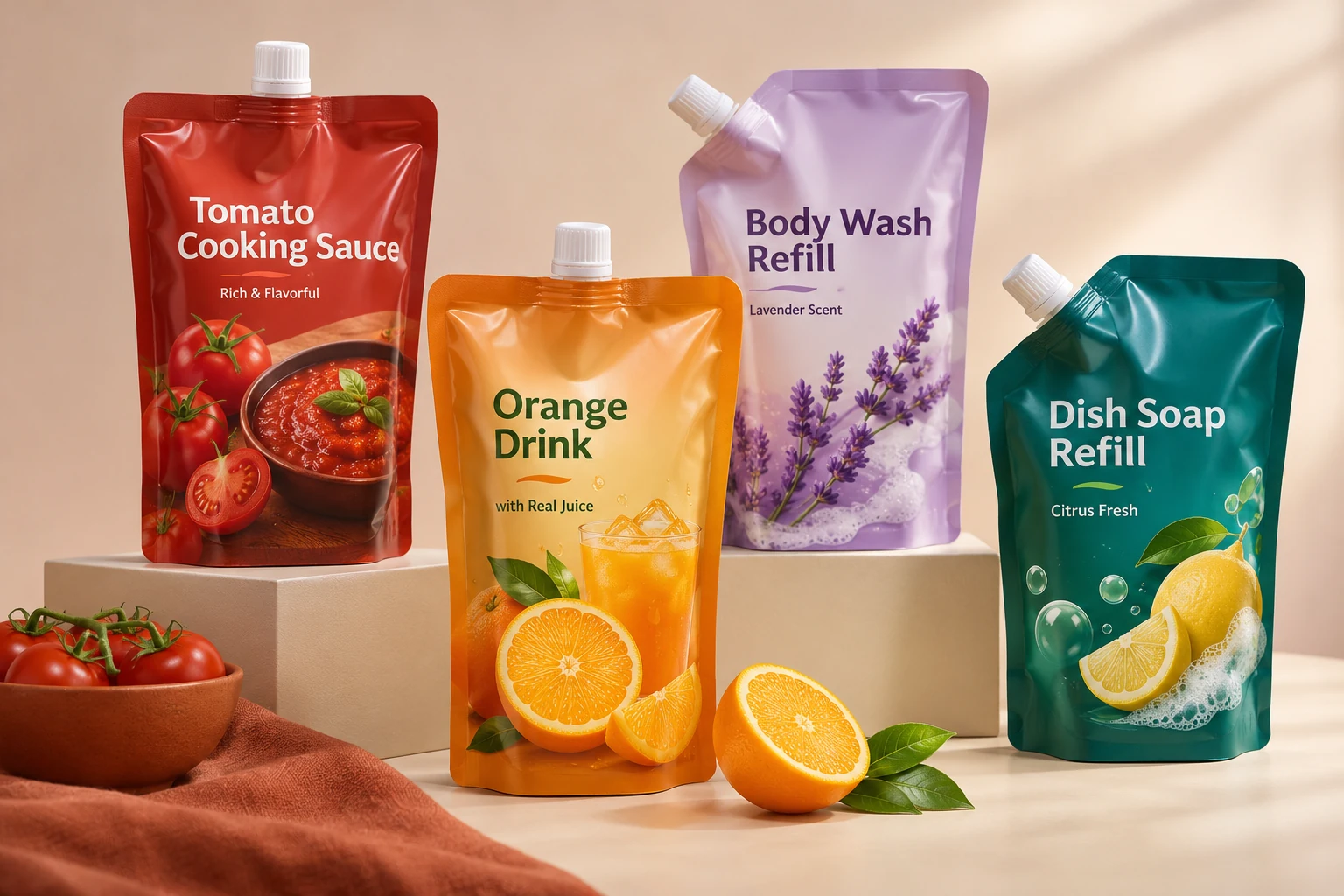
What Is a Spout Pouch?
Learn what a spout pouch is and how buyers should specify materials, format, spout size, closures, filling method, testing, and RFQ details.…
Read the article ↗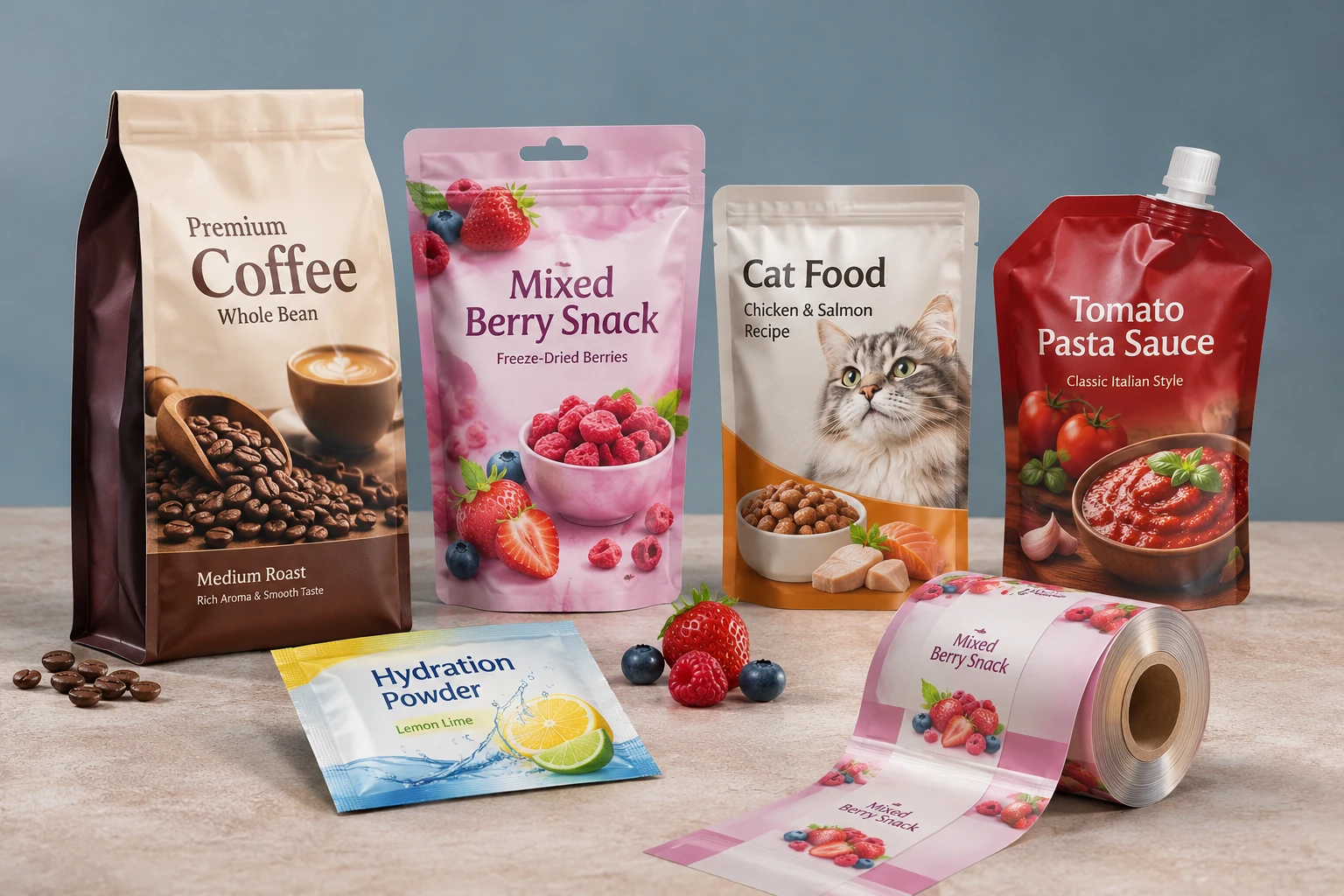
Custom Pouches for Flexible Packaging
Custom pouches explained through format, laminate, closure, print, filling, sustainability, validation, and RFQ details for flexible packaging pr…
Read the article ↗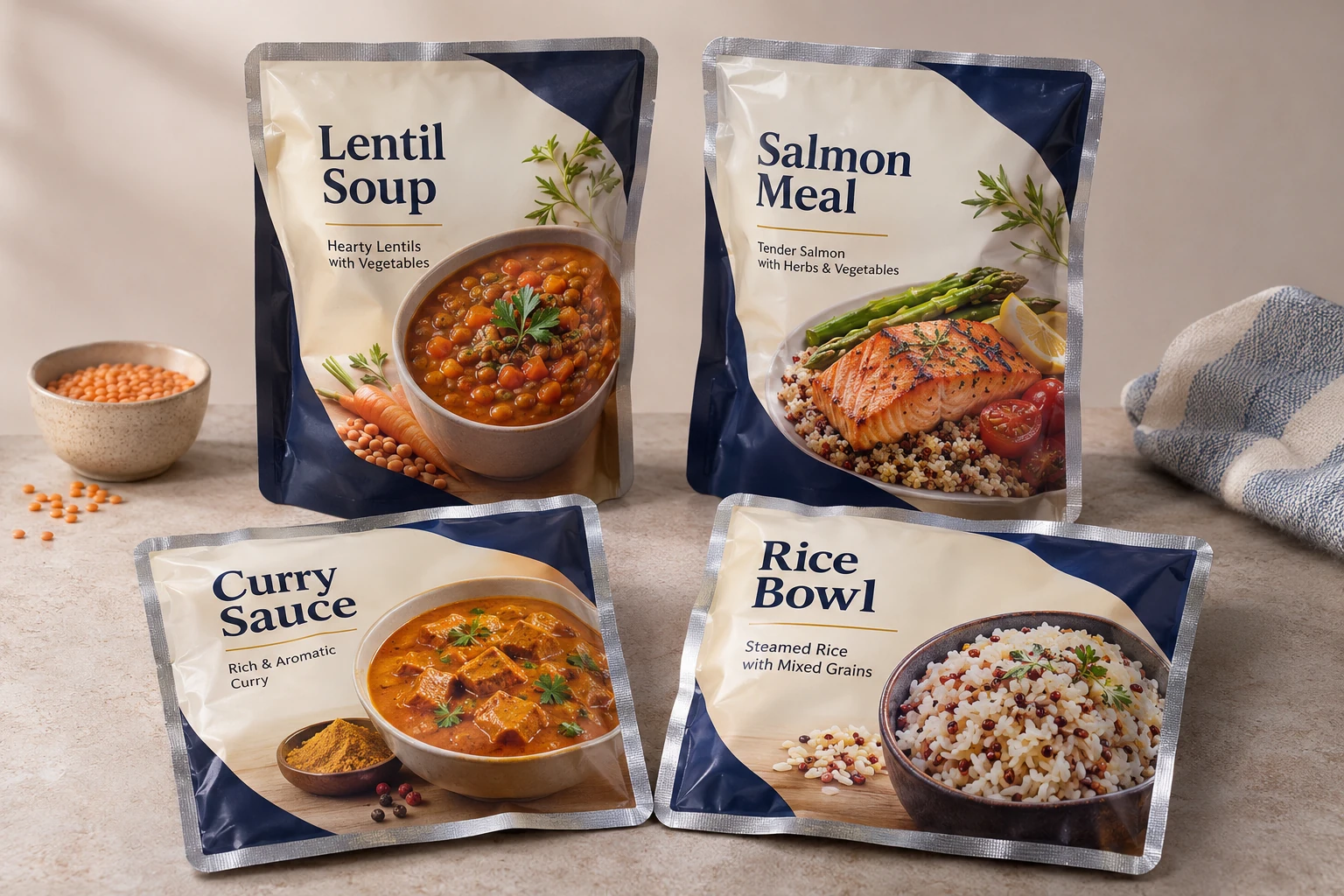
What Is a Retort Pouch?
Learn what a retort pouch is, how it differs from hot-fill and aseptic packs, and what to specify for laminate, sealing, process, and RFQ needs.…
Read the article ↗