
Custom Snack, Nut
& Dried Fruit Packaging
IVAPAK manufactures custom printed snack bags, nut pouches, dried fruit packs and rollstock film. Develop the portion size, brand artwork, material structure and opening features around texture, oil content and filling conditions. Source premade pouches or film for your own packing line directly from our factory.
Custom Snack Bags, Nut Pouches & Dried Fruit Packs
A crisp snack, an oil-rich nut and a soft dried fruit should not automatically share one structure. The product, portion size and filling line all influence the packaging decision. IVAPAK helps you bring those variables together, whether you buy premade pouches for a growing range or printed rollstock for an established packing operation.
Explore the full industry collection
Connect snack texture, shelf identity and packing requirements.
Three starting points for a better packaging brief.
Choose by product behavior
Describe texture, surface oils, edges and piece size so protection and handling follow the actual snack.
Build a visible range
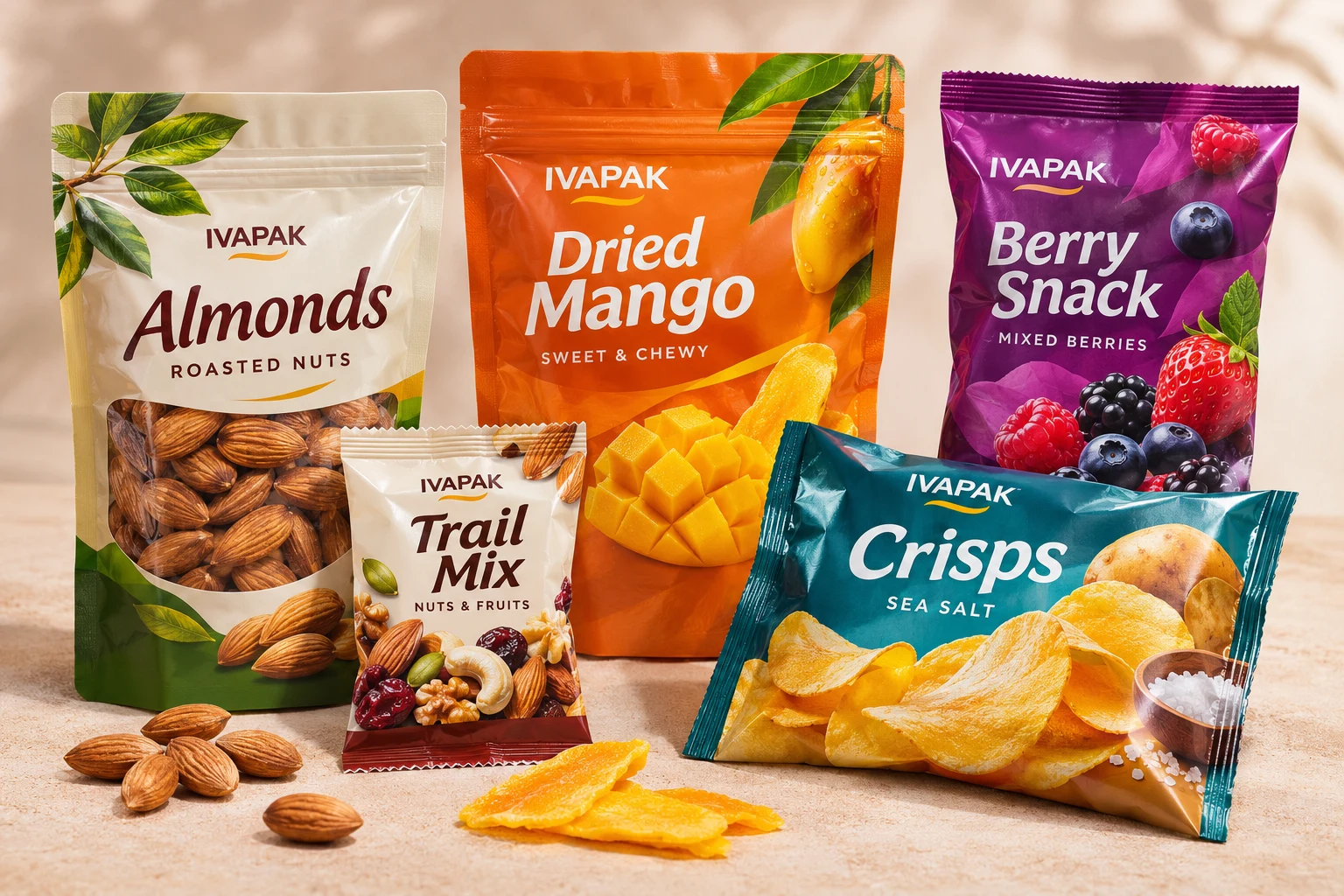
Use ingredient imagery and flavor colors within a consistent brand system, with each print design specified clearly.
Align print and packing
Coordinate rollstock artwork, repeat, winding and sealing with the pack formed on the customer’s equipment.
Pouch Formats & Printed Rollstock Options
Compare the shapes that suit your filling operation and retail presentation.
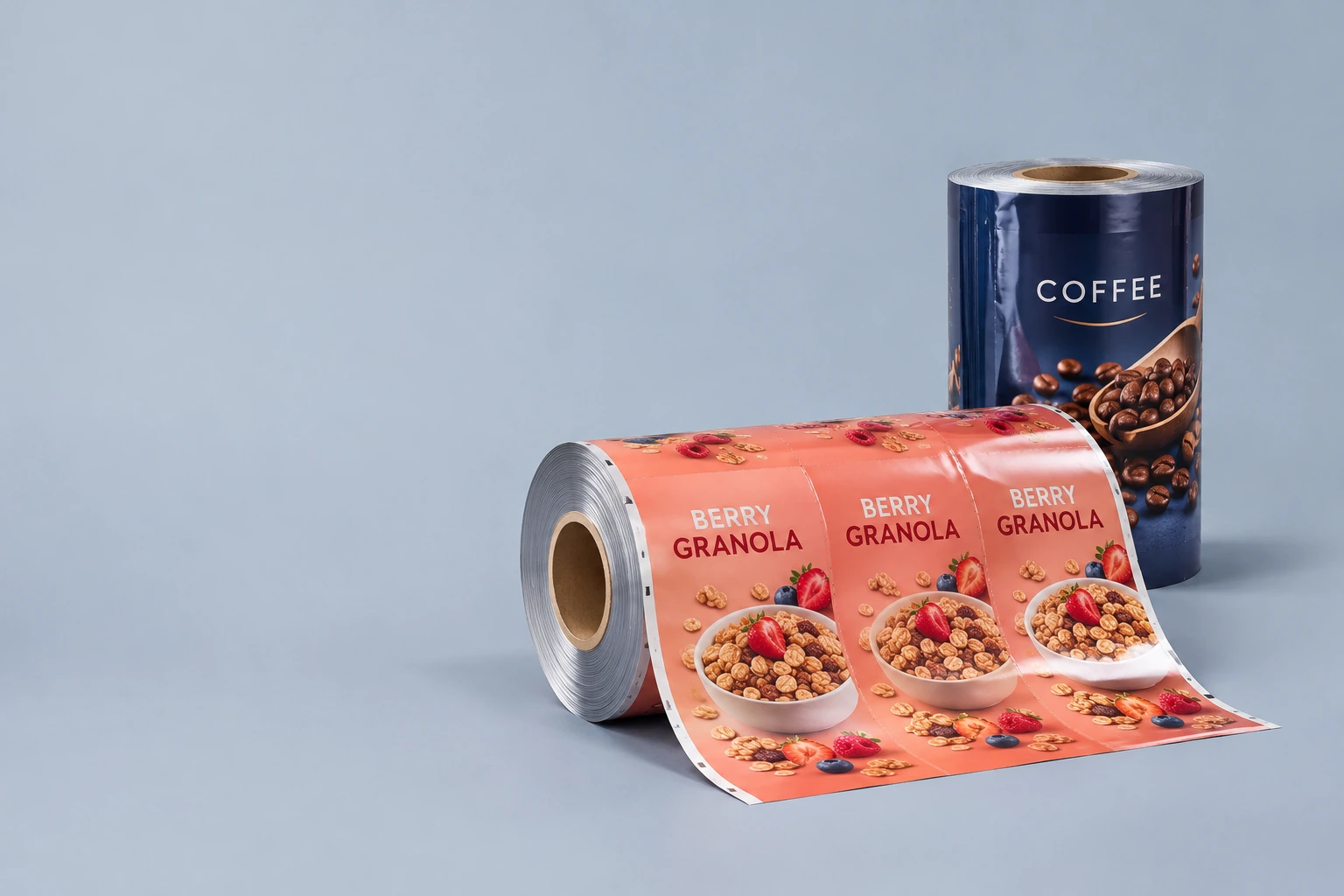
Printed rollstock
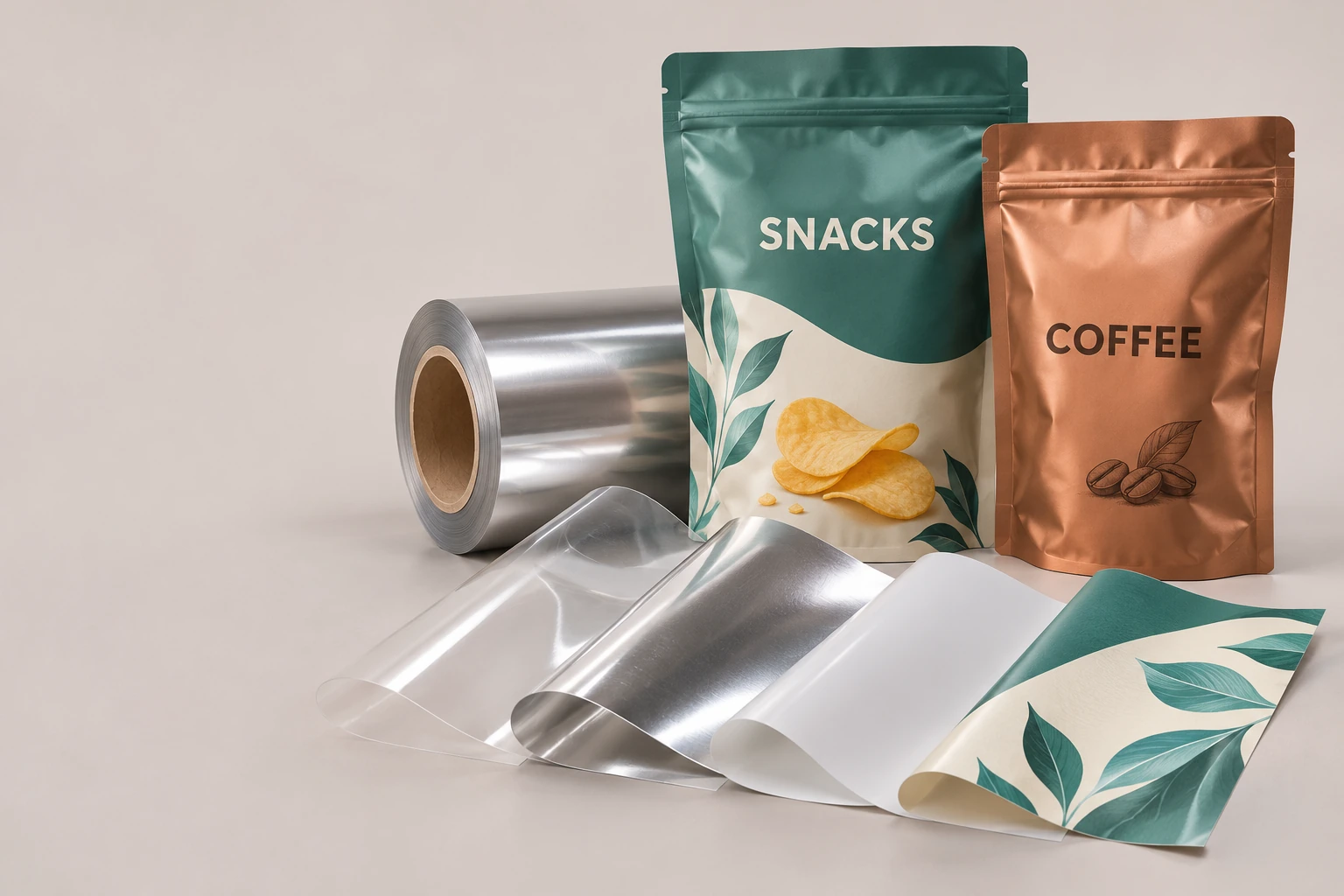
A direction for snacks packed on compatible forming and filling equipment. Provide film width, repeat, core and winding requirements, registration details and the sealing process; review a trial when the specification changes.
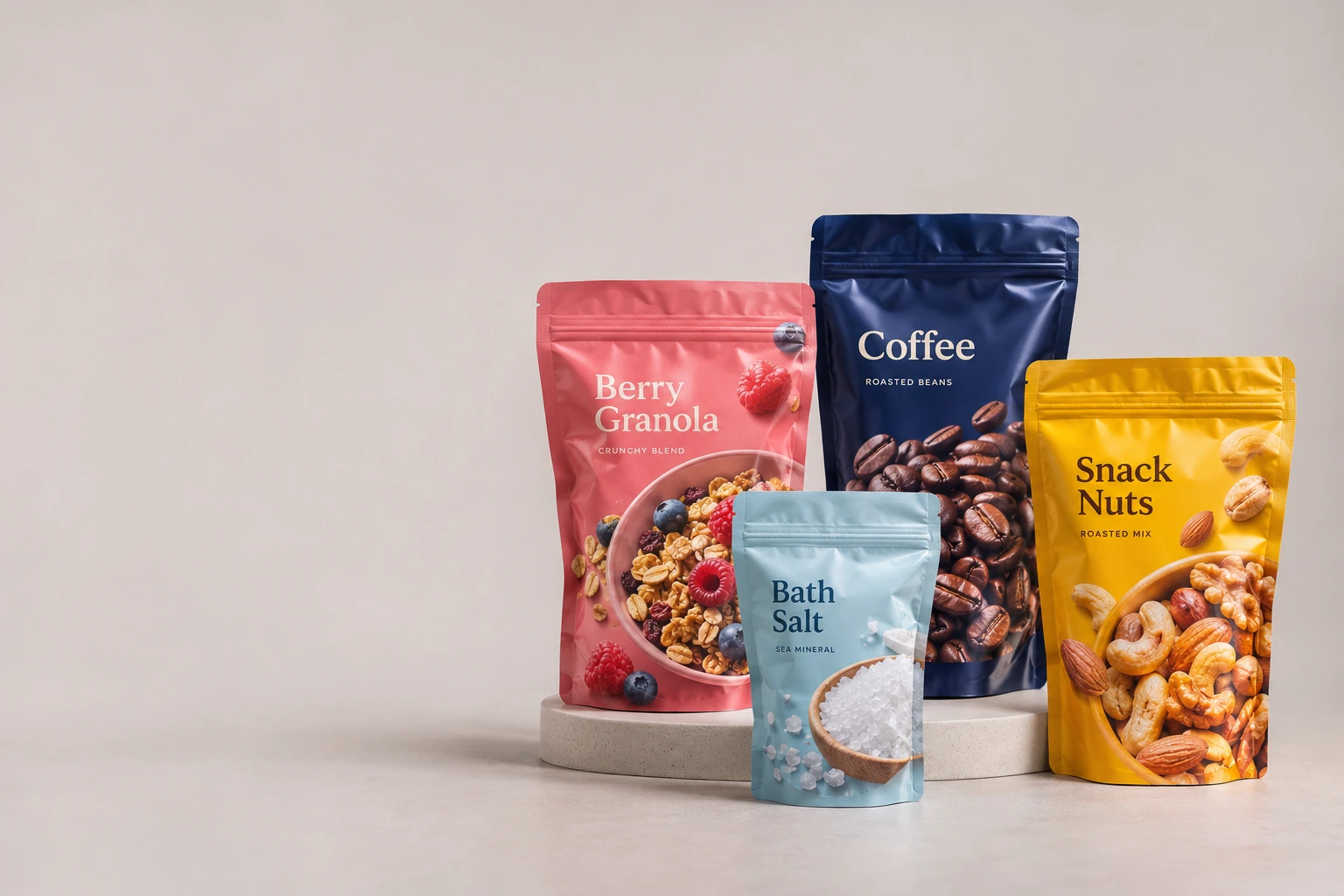
Stand-up pouches
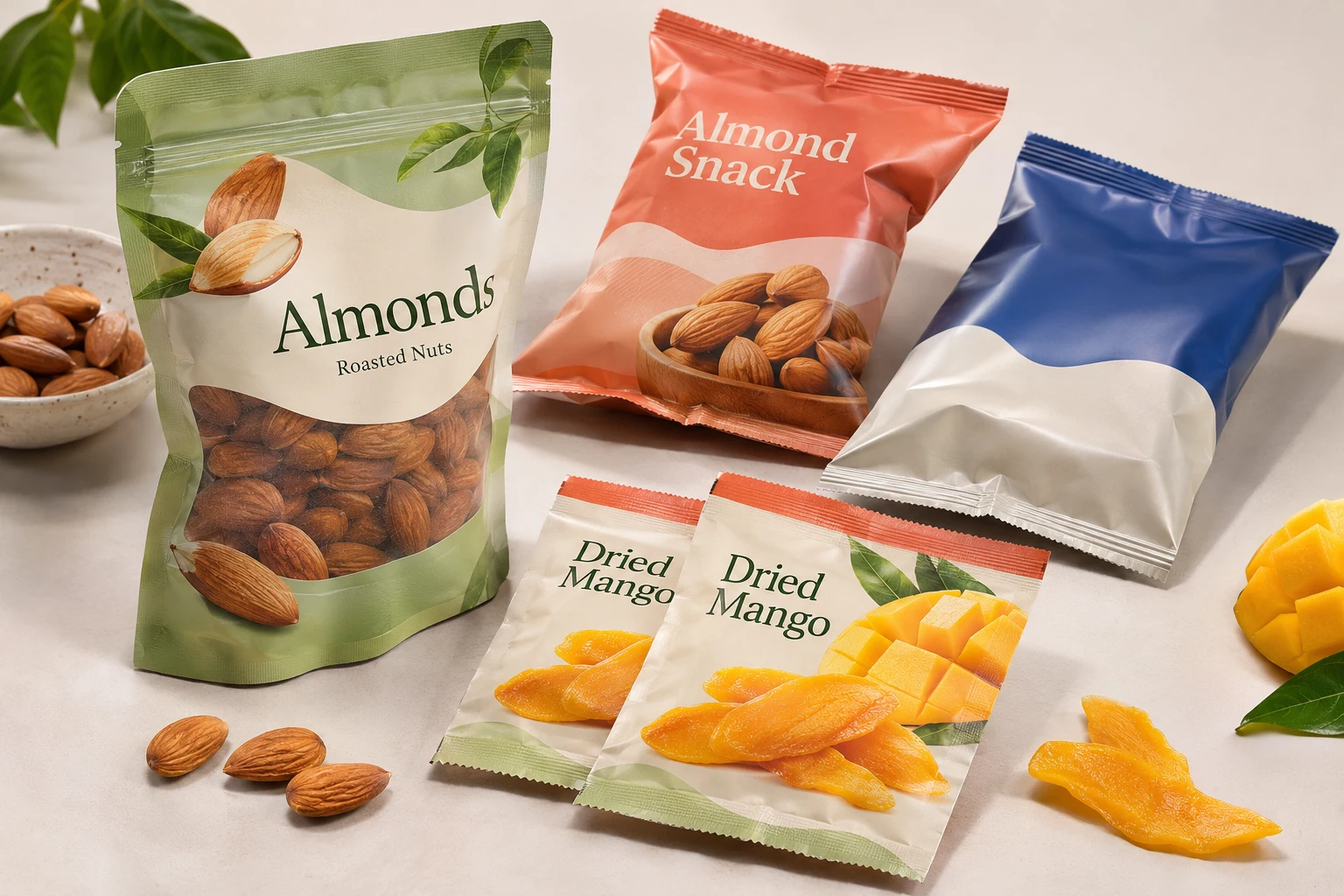
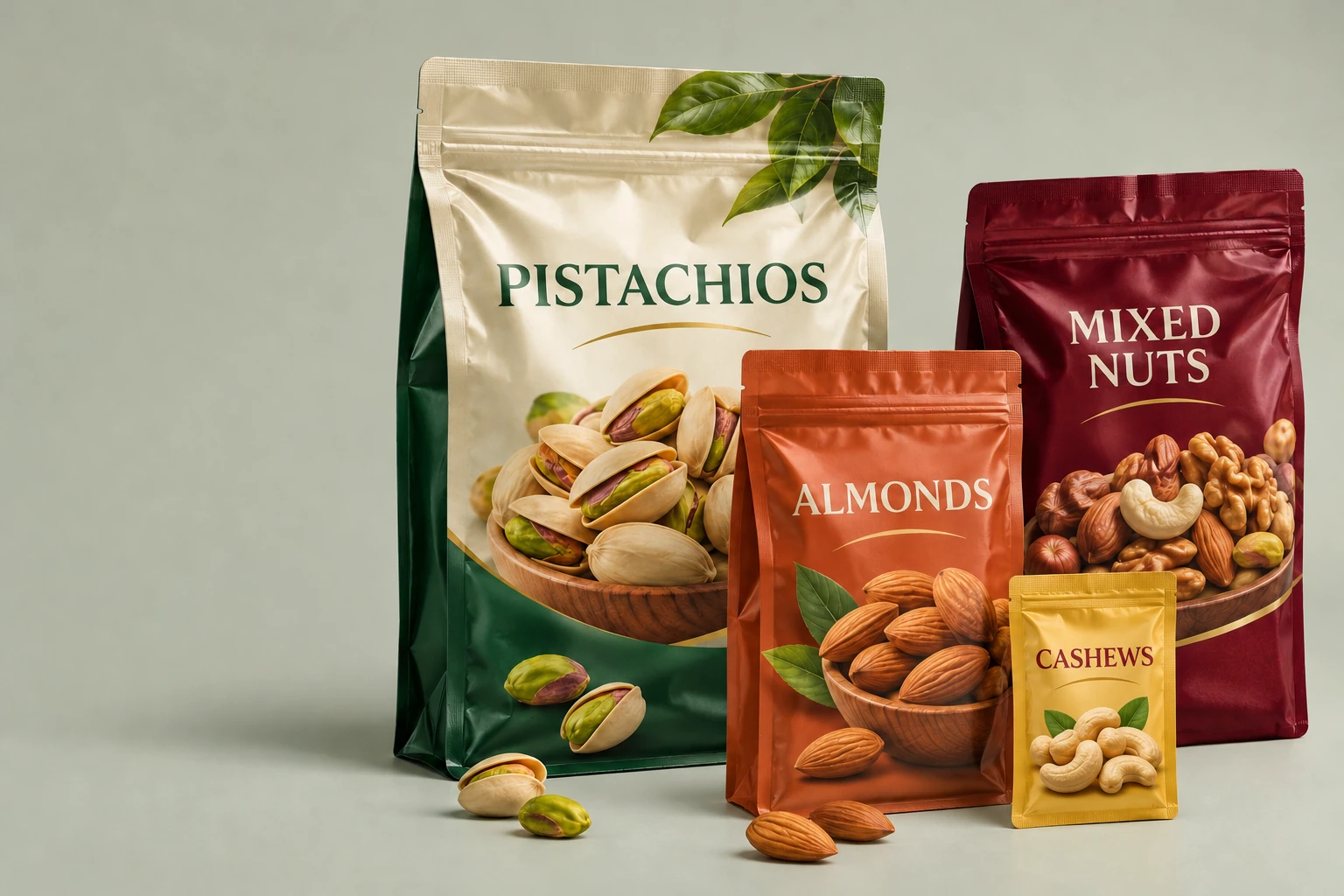
Explore a broad retail panel and a stable display for share-size nuts, dried fruit and snack mixes. Size the gusset and opening with the actual product, and confirm any requested resealing feature.
Three-side seal pouches
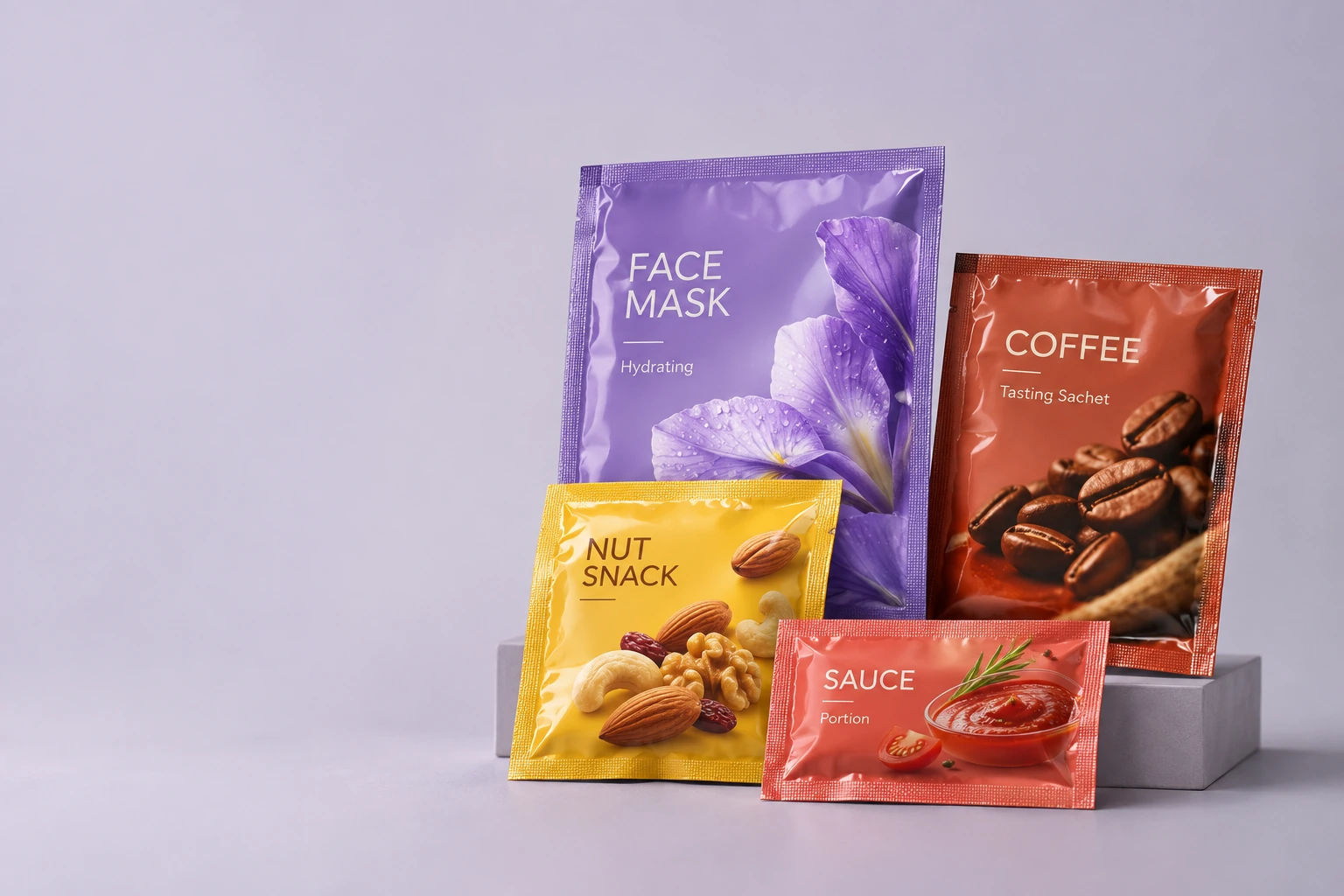
Consider a compact format for portions, samples and selected snack products. Define the filling opening and usable seal space, then check how the pieces settle in the pouch and how the consumer opens it.
Crunchy, oily or chewy? Start with the contents.
Start with the way the product is filled, sold and used.
Nuts and seed mixes
Describe the nut types, roasting or seasoning and any surface oil. Include the portion size and intended storage conditions when discussing oxygen and moisture protection and the look of the filled pack.
Crunchy snacks
Chips, crisps and other fragile snacks need a brief that considers texture and physical handling. State the filling process and desired headspace rather than reducing the pouch solely to its printed dimensions.
Dried fruit
Soft pieces, sticky surfaces and different fruit sizes can affect filling and use. Discuss the product-contact surface, seal area and intended opening so the pouch is practical beyond the first retail impression.
Mixed snack portions
Trail mixes and assorted snacks combine ingredients with different shapes and behavior. Share the actual mixture, not just its product name, and consider how it settles during filling and transport.
Moisture, oils and fragile pieces shape the brief.
Shape, print and material work best when the application is understood first.
Crunch and moisture
Identify the product’s desired texture and the conditions that threaten it. Moisture protection is a requirement to discuss and assess with the product, rather than a promise that follows automatically from a glossy or metallic appearance.
Oils and flavor changes
For nuts and seasoned products, include oil contact and the intended storage route in the brief. Discuss relevant oxygen protection and product evaluation with your quality team instead of applying one shelf-life claim to every recipe.
Speed and sealing consistency
Machine speed is meaningful only with the actual equipment, product and film. Review sealing conditions, registration and handling together; a material change should not be assumed to run identically without a suitable trial.
Fragility and sharp edges
A delicate crisp and a hard nut present different handling questions. Check the filled pack, headspace, outer carton and distribution route to define what the packaging needs to withstand.
Define protection around texture, contact and sealing needs.
Compare candidate materials against the contents, process and target market.

A barrier brief for texture
Translate the food’s needs into a discussion about moisture, oxygen and light where relevant. Compare candidate structures under stated conditions, and use filled-product evaluation to support the intended shelf-life and sensory targets.
Sealant and product contact
Seasoning, crumbs, oil and sticky fruit can all matter at the final seal. Share the filling arrangement and contact conditions so the structure is reviewed as part of the packing process.
Mono-material alternatives
For a recyclable mono-material request, include the target market, packing equipment and food protection brief. Review the complete finished pack and local recovery conditions; a material change also needs a practical production assessment.
Printed Layers, Barrier Films & Sealant Functions
Select a role to see how appearance, protection and sealing connect.
Print & presentation
The outside carries your graphics and handling requirements. Review the print surface, finish and intended appearance on the agreed production material.
Protection & structure
Define what the contents need from moisture, oxygen, light and aroma protection. The appropriate structure depends on product, storage and processing conditions.
Contact & sealing
The inside interfaces with your product and filling operation. Review food-contact suitability where relevant, formulation compatibility and sealing behavior together.
Conceptual layer roles, not a fixed construction or thickness specification. Your complete pack needs an application-specific review.
Describe the recipe, portion and packing equipment.
Share what you know. A current sample, drawing or filling-line specification can help resolve the remaining questions.
- Product
- Nut, dried fruit, crisp or mix; note oils, seasoning, edges and stickiness.
- Portion
- Target weight, volume and intended headspace.
- Format
- Premade pouch or rollstock; current dimensions or a sample.
- Machine
- Equipment, film width, repeat, winding and seal conditions for rollstock.
- Use
- Single serving, sharing or repeated use; closure requirements.
- Graphics
- Flavors, ingredient images, languages and quantity for each design.
- Storage
- Intended conditions, distribution route and product evaluation target.
Make flavors distinct across pouches and formed packs.
Bring the visual identity and the user experience into the same conversation.
Make flavor recognizable
Use clear product cues and a consistent flavor color system. Consider how the pack appears both upright and in a retail tray, and avoid placing the only flavor identifier on a folded edge.
Choose the right window strategy
A window can show the contents, but its shape and material implications should be reviewed with the protection brief. Decide where it helps the shopper and where printed imagery communicates the product more consistently.
Design for the actual formed pack
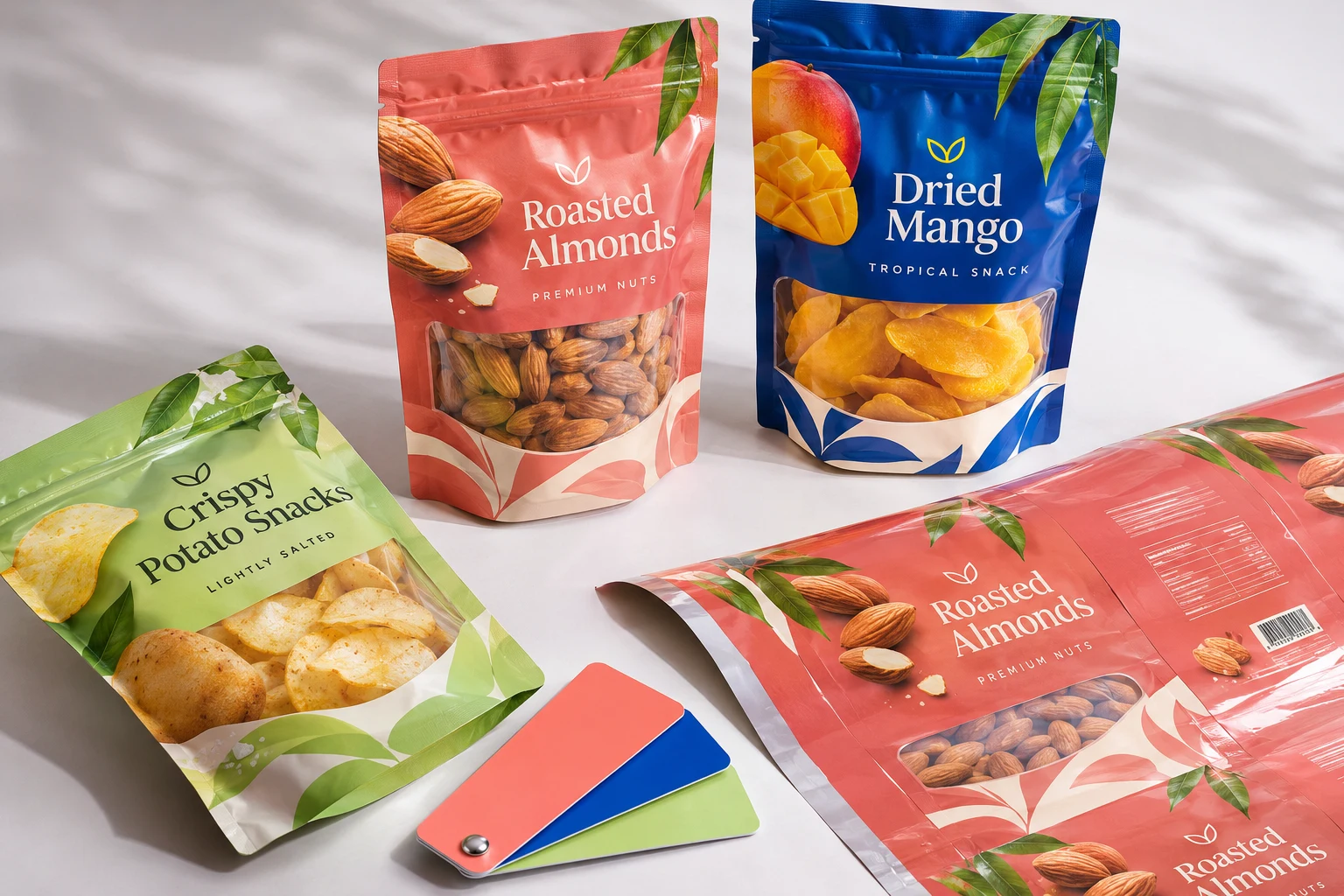
Rollstock artwork must account for the seam, folds and repeat. Work from a confirmed layout so the main product image, barcode and opening instructions remain in useful positions after forming.
Scale portions thoughtfully
A single-serve pack and a sharing pouch may belong to one range but need different information priorities. Keep the identity consistent while giving larger packs room for storage guidance and smaller packs a clear opening cue.
Custom Gravure Printing & Artwork Approval
Gravure production supports up to 10 colors. Digital printing is used for sampling.
Start with the production dieline
Confirm dimensions and format before final artwork. Keep critical content clear of folds, seals, zippers and any fitments.
Approve the right reference
Use digital sampling to evaluate the design, then agree the reference and expectations for gravure production. Review key colors and all artwork variants together.
Build a coherent range
Provide the full set of product names, languages and variable information so changes between designs are visible before production.
Packaging Samples & Pre-Production Trials
Visual approval, filling suitability and product protection answer different questions.
Review the appearance
Check the artwork hierarchy, dimensions and intended presentation. Record the approved version and any changes needed before the production reference is agreed.
Review the filled pack
Use the actual contents or a representative trial to check filling access, headspace, closure and handling. Include the team operating the filling process.
Agree what needs validation
Where protection, thermal processing or formula compatibility matters, define the trial and acceptance requirements for the actual material and intended use.
Our Flexible Packaging Manufacturing Process
Printing, lamination, curing, slitting, pouch making and inspection are integrated within IVAPAK.
Printing
Approved artwork becomes a controlled print reference.
Lamination
Selected film layers are combined for the agreed structure.
Curing
The laminated structure follows its required curing stage.
Slitting
Film is converted to the specified widths and rolls.
Pouch making
Premade pouch orders are converted to the chosen format.
Quality inspection
The finished order is checked against the agreed requirements.
Factory Equipment & Production Stages
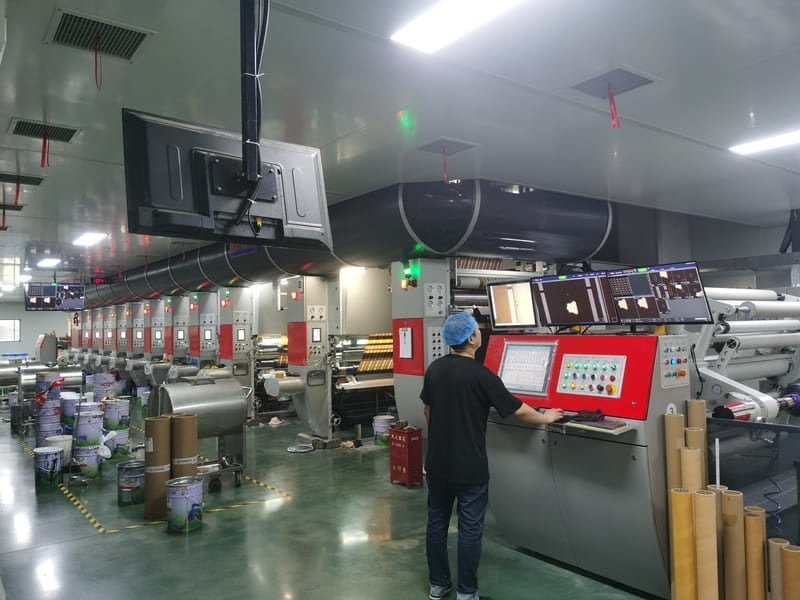
Real production photographs from our factory media. Talk to the team about the process and documents relevant to your order.
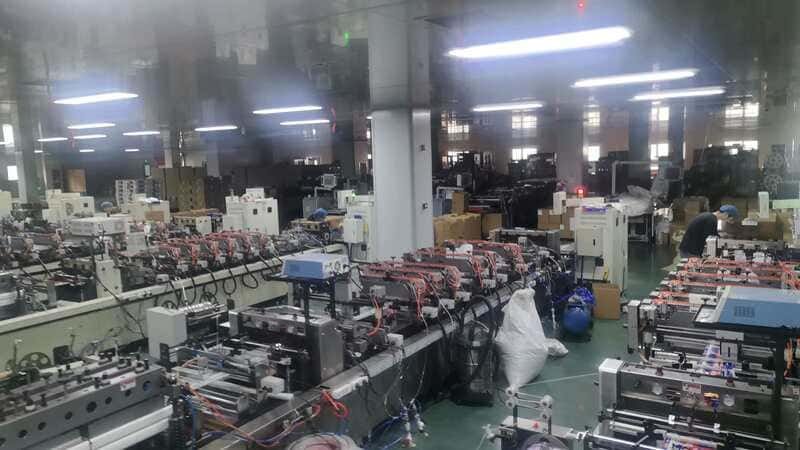
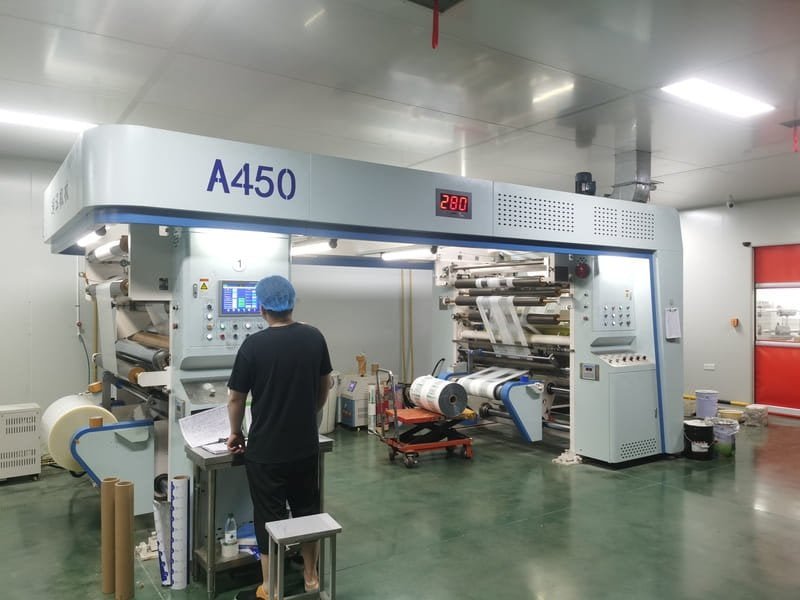
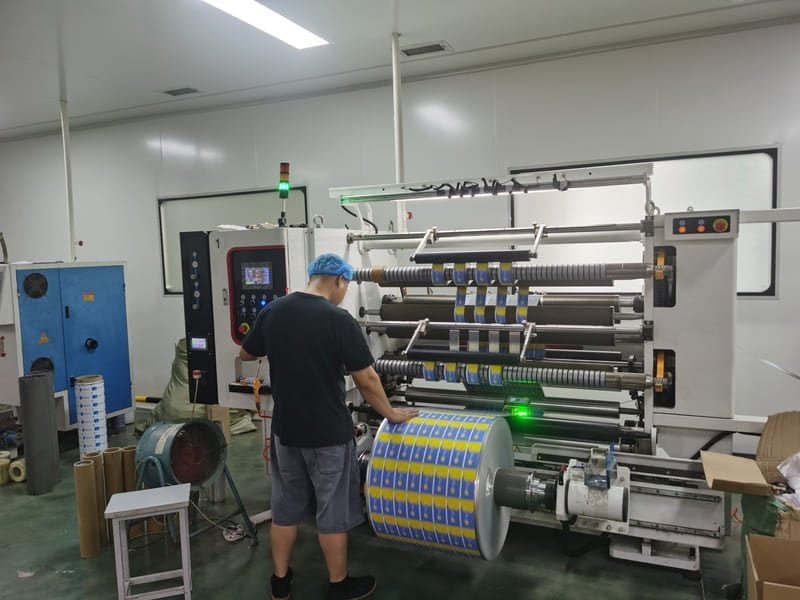
Check line behavior, texture and product handling.
IVAPAK integrates printing, lamination, curing, slitting, pouch making and inspection. Since 2003, the factory has focused on custom pouches and rollstock, with BRCGS and ISO 9001 certifications and food-contact documentation reviewed for the agreed structure and use.
How does the film run?
Agree a representative machine trial for rollstock changes. Check registration, forming, cutting and final sealing with the intended snack, and record the conditions so the result can guide the production specification.
Does the filled pack retain the intended texture?
Plan product evaluation under the storage and distribution conditions relevant to the launch. A material data sheet can inform selection, but it does not replace assessment of the actual filled snack package.
Can the seal area stay clean?
Review crumbs, seasoning and oil around the filling seal. Define the acceptance criteria and adjustments with the packing team so closure quality is assessed under realistic operating conditions.
Does distribution damage the product?
Assess the pouch and outer carton together, including headspace and pack orientation. If breakage or puncture is a concern, agree handling checks that reflect the route rather than an arbitrary empty-pouch demonstration.
Factory Certifications & Material Documentation
Share your destination market and application so the relevant factory credentials and material documents can be reviewed.
BRCGS & ISO 9001
Factory and quality-management credentials support supplier evaluation. Request the current documents for your purchasing review.
Food-contact material review
For food applications, discuss material compliance with applicable FDA requirements and EU 10/2011 for the intended use. These are material and use requirements, not an FDA factory certification.
Available SGS reports
SGS testing reports can be provided. Confirm that the report scope, material and test conditions correspond to the packaging being specified.
Illustrative plans for nuts, snack film and fruit portions.
These planning examples show how requirements guide decisions. They are not named customer projects or measured performance results.
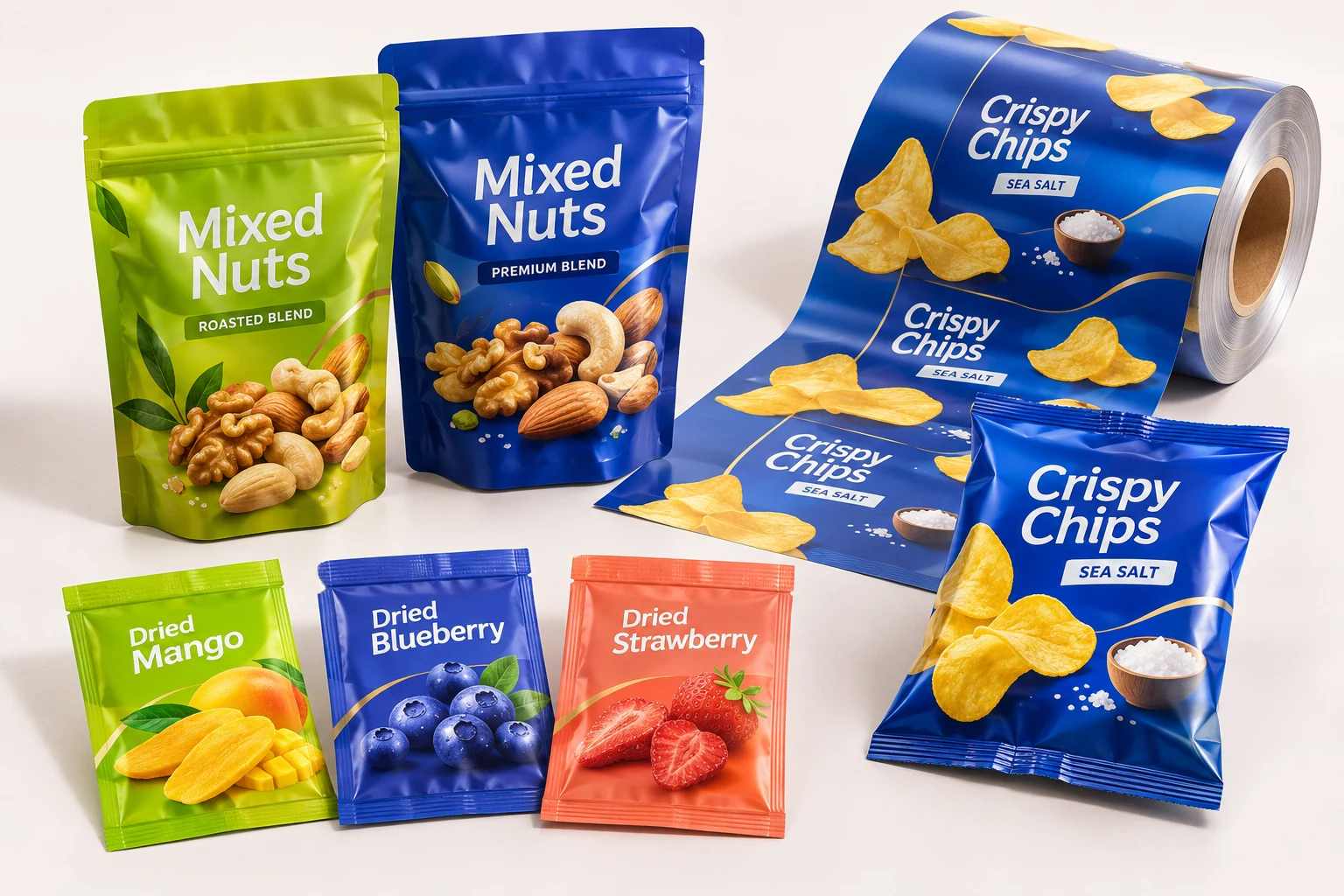
Illustrative plan: premium nut pouches
A brand wants a recognizable family for several roasted nut recipes.
Review the oil-contact and storage brief, then develop a consistent stand-up format with distinct flavor graphics. Confirm the size using filled samples and list quantities separately for every recipe design.
Illustrative plan: a snack rollstock change
A packer wants refreshed graphics while introducing a different film direction.
Separate artwork approval from film qualification. Confirm the repeat, winding and sealing brief, arrange the appropriate line trial, and use the result to settle the final rollstock specification.
Illustrative plan: dried fruit portions
A supplier wants compact portions for a mixed retail selection.
Assess piece size, stickiness and filling access first. Explore a three-side seal format with simple flavor identification and a readable opening cue, then review how the filled portions fit the outer pack.
Compare recipes and machine requirements before comparing quotes.
Use these prompts to organize your requirements before requesting a quotation.
Describe the recipe variation
Tell us which products share a base recipe and which differ in oil, seasoning or texture. A mixed range may need separate structural review even when the pouch dimensions and printed style are similar.
Bring the machine specification
For rollstock, ask the packing team for the full film requirements and a current roll label or sample. A photograph of the finished bag alone cannot define winding, repeat or sealing conditions.
Plan the shelf-life evaluation
Agree what your product team will measure or observe: crunch, odor, appearance or another relevant target. Choose representative filling and storage conditions before treating a candidate structure as the final solution.
Compare like-for-like quotations
Keep dimensions, structure, print versions and quantity per version consistent when comparing options. Note any differences in closures, finish and delivery terms so a lower price is not mistaken for the same specification.
Snacks, Nuts & Dried Fruit Packaging FAQs
Useful answers for planning, specifying and ordering your pack.
Which packaging is best for nuts?
The answer depends on the nuts, preparation, surface oil, fill weight and sales route. Stand-up pouches, three-side seal packs and printed rollstock can all be discussed. Start with the product and storage target before selecting a material or closure.
Can one film cover crisps, nuts and dried fruit?
It may be possible for some products, but it should not be assumed. Their texture, moisture and contact requirements can differ. Share each product brief so a common structure is considered only where the application and packing process support it.
Can you guarantee our packing line speed?
A speed target needs assessment on your equipment with the actual film and product. Provide the current operating conditions and desired change. A trial can help establish suitability; the pouch supplier should not promise a machine speed from artwork or dimensions alone.
Can snack pouches have a transparent window?
A window can be reviewed with the format, structure and food protection requirements. Tell us the desired size and location. The visual benefit needs to be considered alongside barrier, print and the appearance of the real product in the pack.
Do you supply small snack portions as premade bags?
Three-side seal pouches can be discussed for suitable portions. Send the product dimensions, fill weight and filling method. For automatic form-fill-seal operations, printed rollstock may be the more relevant direction, subject to equipment compatibility.
How are flavor variations handled in printing?
Provide the artwork and order quantity for each flavor. A shared layout can make the family consistent, but each design still needs its own review and production planning. Gravure supports up to 10 colors, with digital printing used for sampling.
What should we check before switching to mono-material?
Review the complete structure, product protection, sealing process and destination market’s recycling conditions. Include a machine trial where appropriate. A mono-material direction should be assessed as a packaging change, not simply a replacement sustainability symbol on existing artwork.
How do we request a quotation?
Send the snack type, format, size, quantity per design and artwork status. For rollstock, add machine and film specifications. Include your storage target, any resealing or window request, and when packaging needs to arrive at the filling site.
No matching question. Try another term or contact Allen.
Explore a more specific packaging brief.
Go deeper into the application and the material decisions behind it.
Request a Custom Packaging Quote
Keep the packaging brief focused on texture, portions and the packing line. Tell us about your product and the way customers will use the pack.
Tell us about your project.
Start with what you know. We will help with the rest.
We review your brief.
Our team checks your product, quantities and any missing specifications.
We clarify the options.
Discuss the format, materials and samples needed before a production decision.
You confirm the next step.
Review the quotation, artwork requirements and proposed production schedule.
Production Timing & Delivery Planning
*Standard orders typically complete production around 15 days after artwork approval. The confirmed schedule depends on the order; shipping time is additional.
Match the packing schedule
Plan approval and line trials before the snack production run, with manufacturing and transport timing confirmed separately.
Keep variant replenishment clear
Use consistent flavor, size and artwork names, and list the quantity needed for each variant when replenishing the range.
Record practical feedback
Share observations about line behavior, opening, texture and transport with the order reference and the conditions involved.
Repeat Orders & Packaging Specifications
Keep the agreed reference connected to every reorder.
Retain the approved reference
Use the previous order, artwork version and packaging specification as the starting point. Confirm whether dimensions, material and accessories remain the same.
Highlight what has changed
New ingredients, a different filling process, another destination market or revised storage conditions may require a new review before the next run.
Share useful feedback
If a concern arises, send the order reference, photographs and the conditions in which it occurred. Clear information helps the factory assess the issue and discuss the next step.
Related Packaging Products & Resources
Move between formats, applications and the manufacturing details that matter to your project.
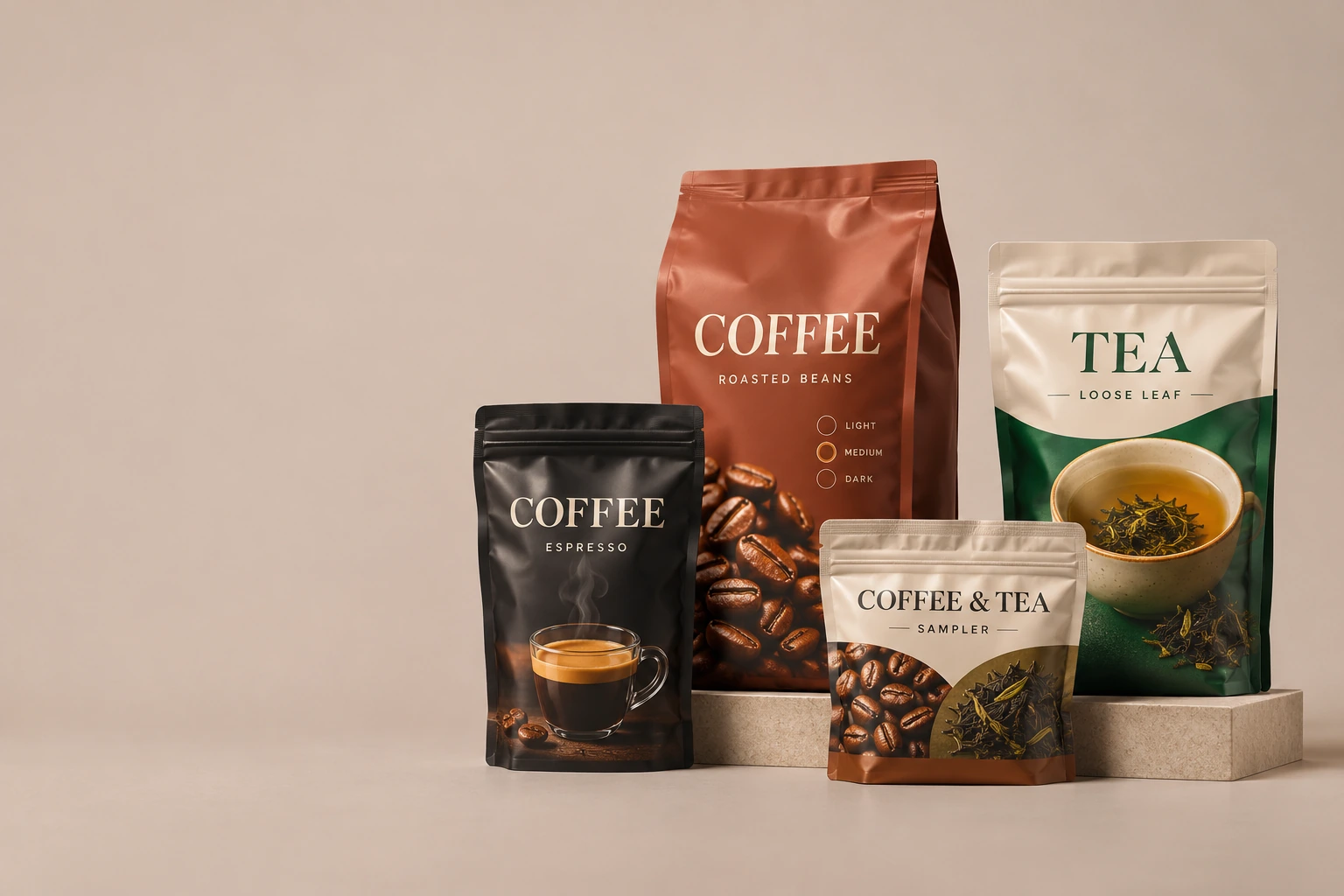
Coffee & Tea
Custom printed coffee and tea pouches. Discuss aroma protection, coffee degassing, resealing, retail presentation and materials with IVAPAK.
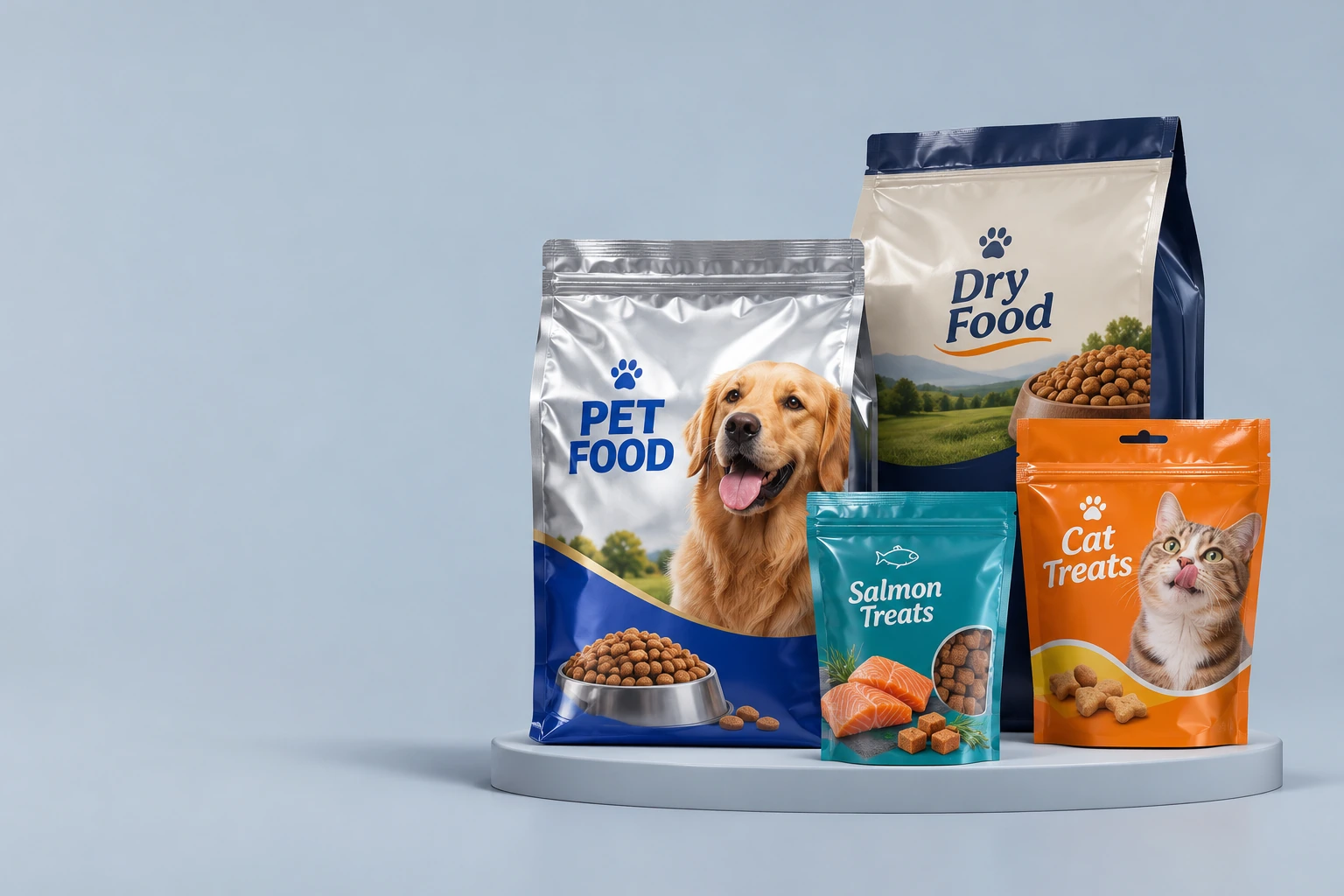
Pet Food & Treats
Printed packaging for dry pet food, treats and wet-food projects. Explore pouch formats, grease contact, load requirements and retort planning.
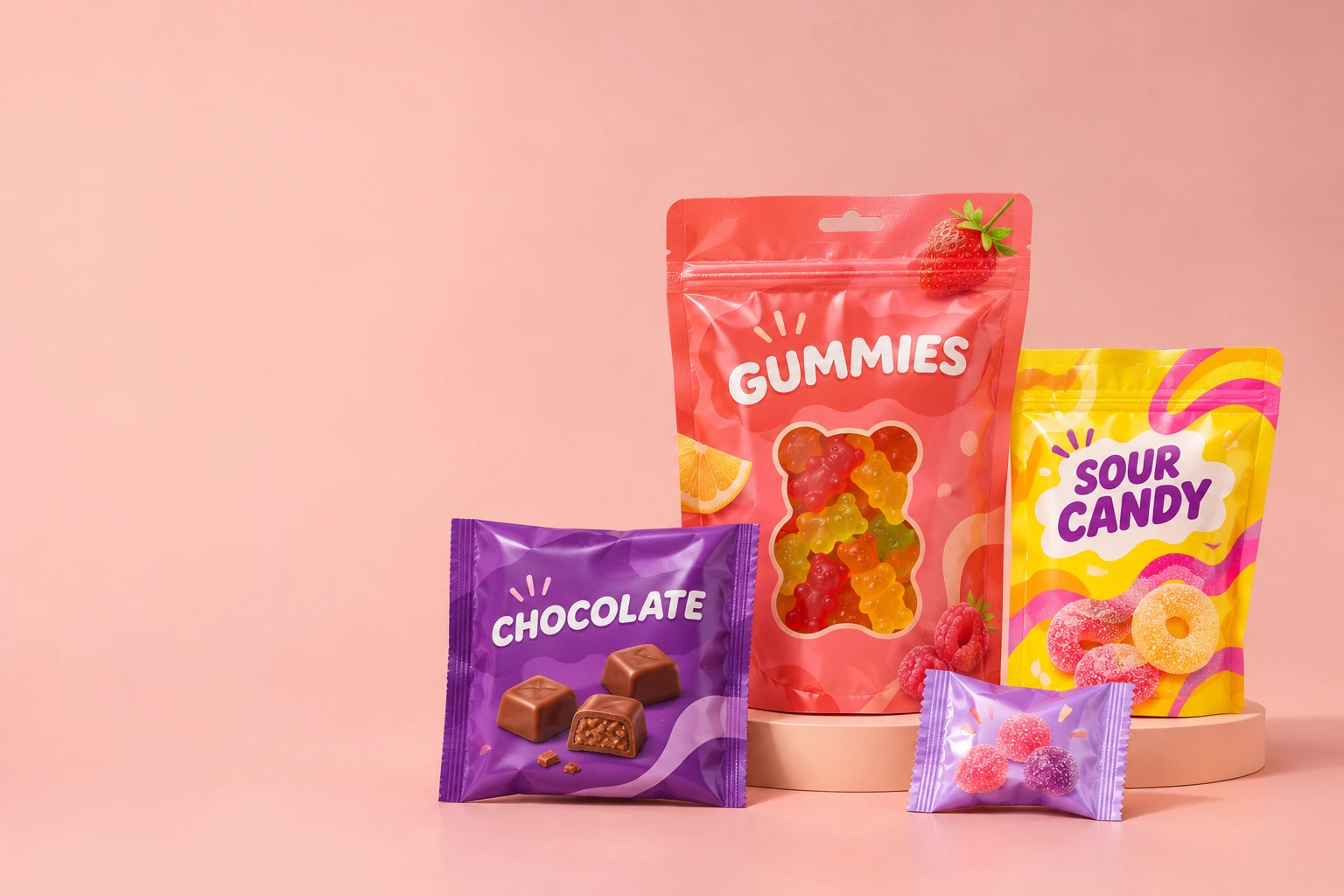
Confectionery & Candy
Custom printed candy pouches and confectionery rollstock. Explore portions, sharing packs, moisture requirements, display graphics and opening details.
Flexible Packaging Articles & Buying Guides
Read the latest articles from IVAPAK on flexible packaging, materials and project planning.
Browse our latest packaging articles.
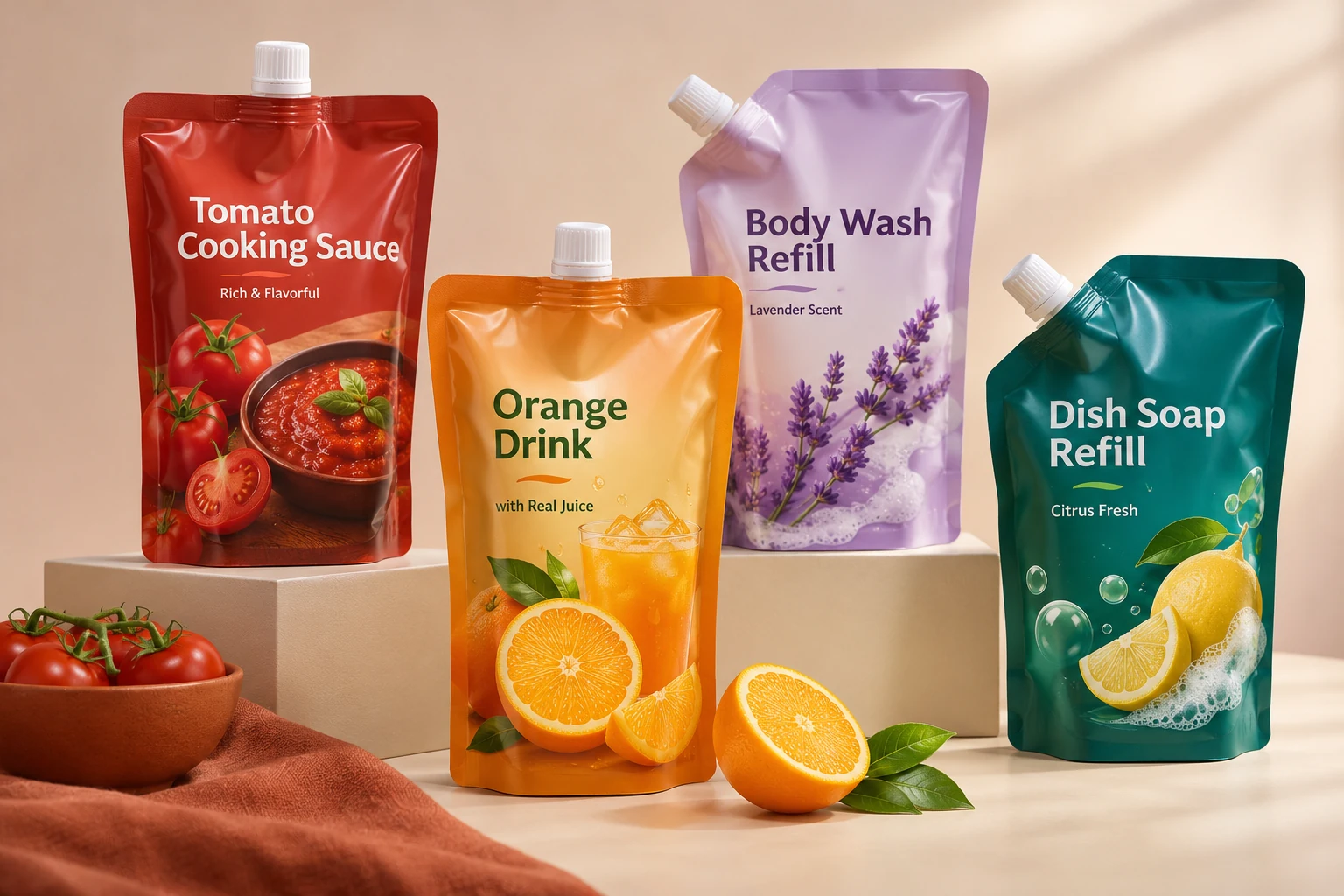
What Is a Spout Pouch?
Learn what a spout pouch is and how buyers should specify materials, format, spout size, closures, filling method, testing, and RFQ details.…
Read the article ↗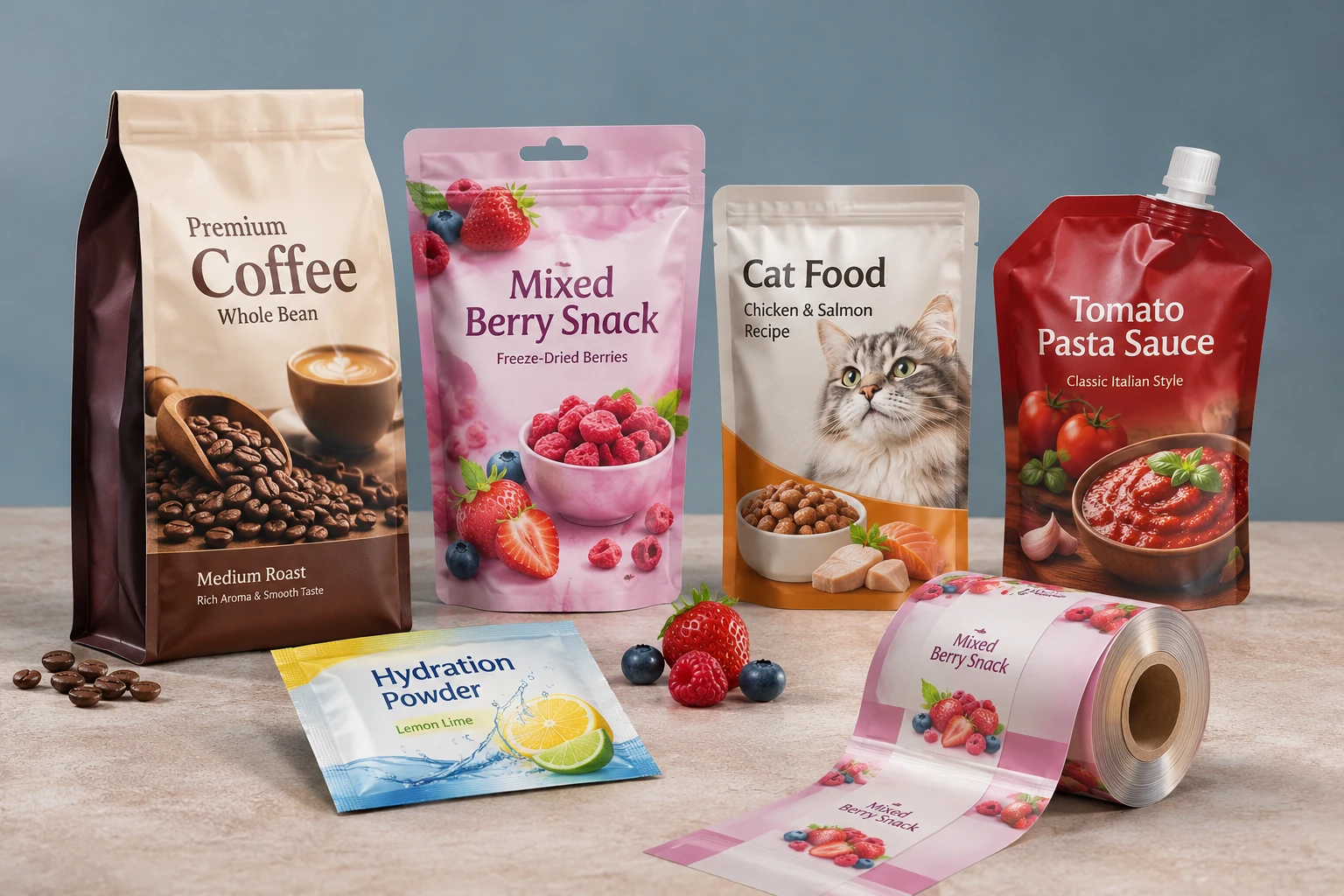
Custom Pouches for Flexible Packaging
Custom pouches explained through format, laminate, closure, print, filling, sustainability, validation, and RFQ details for flexible packaging pr…
Read the article ↗
What Is a Retort Pouch?
Learn what a retort pouch is, how it differs from hot-fill and aseptic packs, and what to specify for laminate, sealing, process, and RFQ needs.…
Read the article ↗