
Spout pouches / The bag, fitment and fill together
Custom Spout Pouch
Manufacturer
IVAPAK manufactures custom printed spout pouches for sauces, beverages, personal care and household refill products. Customize the pouch size, artwork and material structure, with spout position and cap options reviewed for your formulation and filling equipment. Contact our Shanghai factory for samples, MOQ and a project quotation.
01 / Understand the format
Custom Spout Pouches for Liquids & Refills
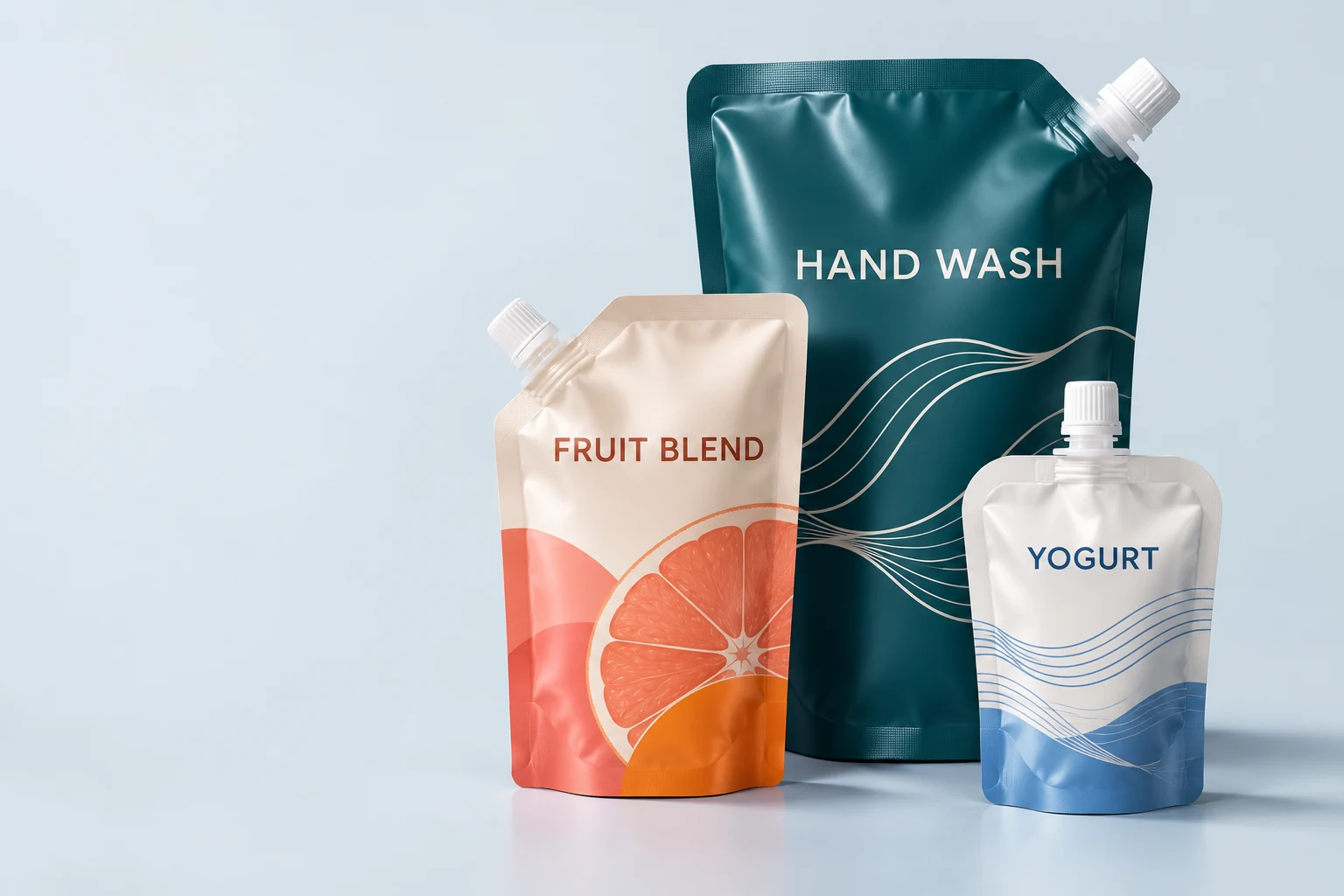
A spout pouch combines a flexible body with a fitment that is sealed into the pouch and closed with a cap. Product flow, filling access, cap handling and the fitment-to-film joint must work together. The right starting point is the contents and process, then the pouch geometry.
Compare packaging formatsViscosity, particles, oils, solvents and storage conditions guide compatibility and the way the product flows through the opening.
Through-spout and open-edge filling use different access, handling and final-closure arrangements.
The pouch seams, fitment weld and cap seal each need their own place in the approved packaging specification.
02 / The purchase specification
Pouch Capacity, Spout Positions & Cap Options
The drawing needs more than a pouch outline. Link the fitment and cap references to the body dimensions, sealant, filling route and finished-pack requirements.
 01 / BODY & CAPACITY
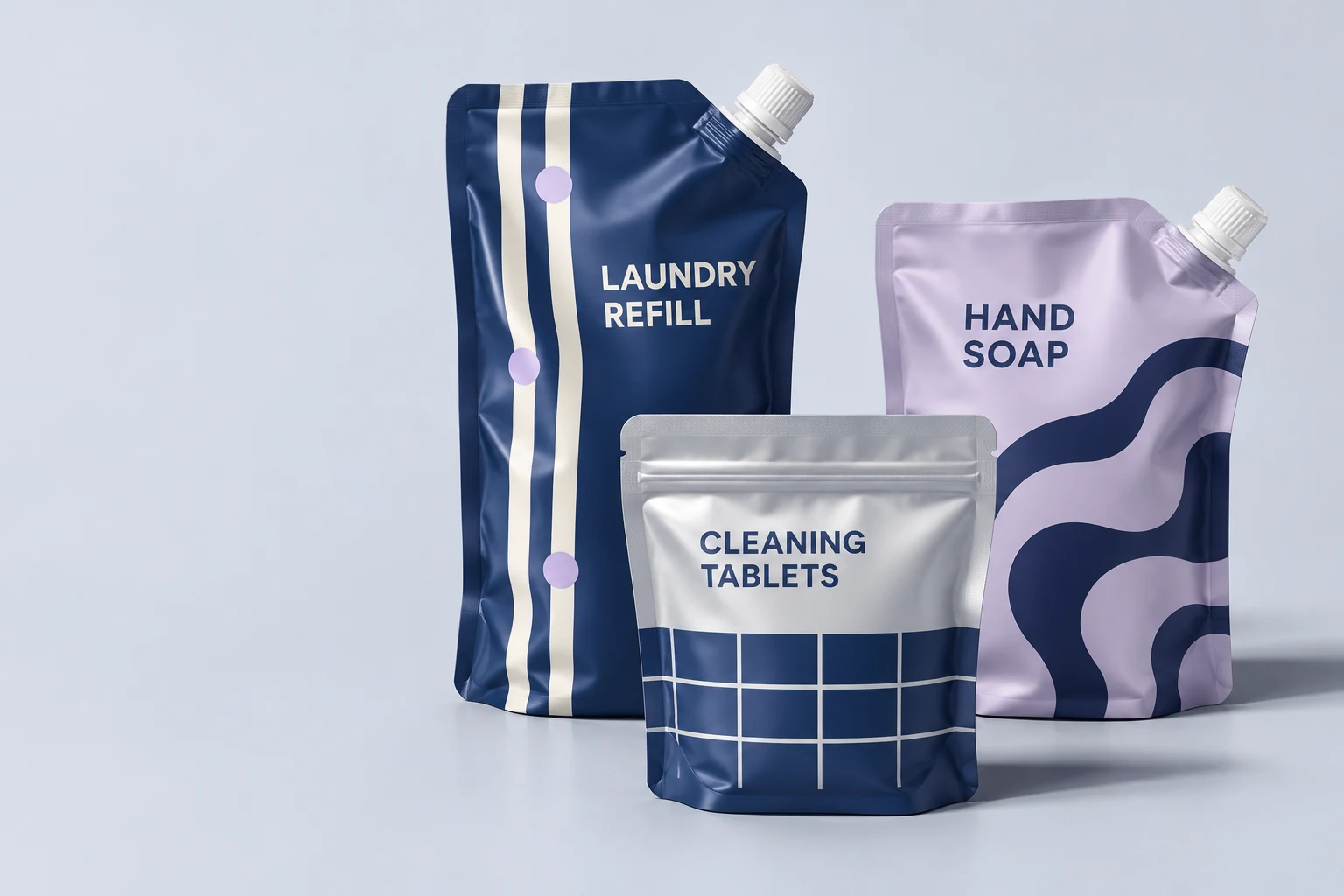
Usable Pouch Capacity & Filling Headspace
The target fill, product density and any foam determine the space required. Filled dimensions and base opening also affect how the pouch is held and poured.
Target volume or weight, density where relevant, filled shape and required headspace.
 02 / SPOUT POSITION
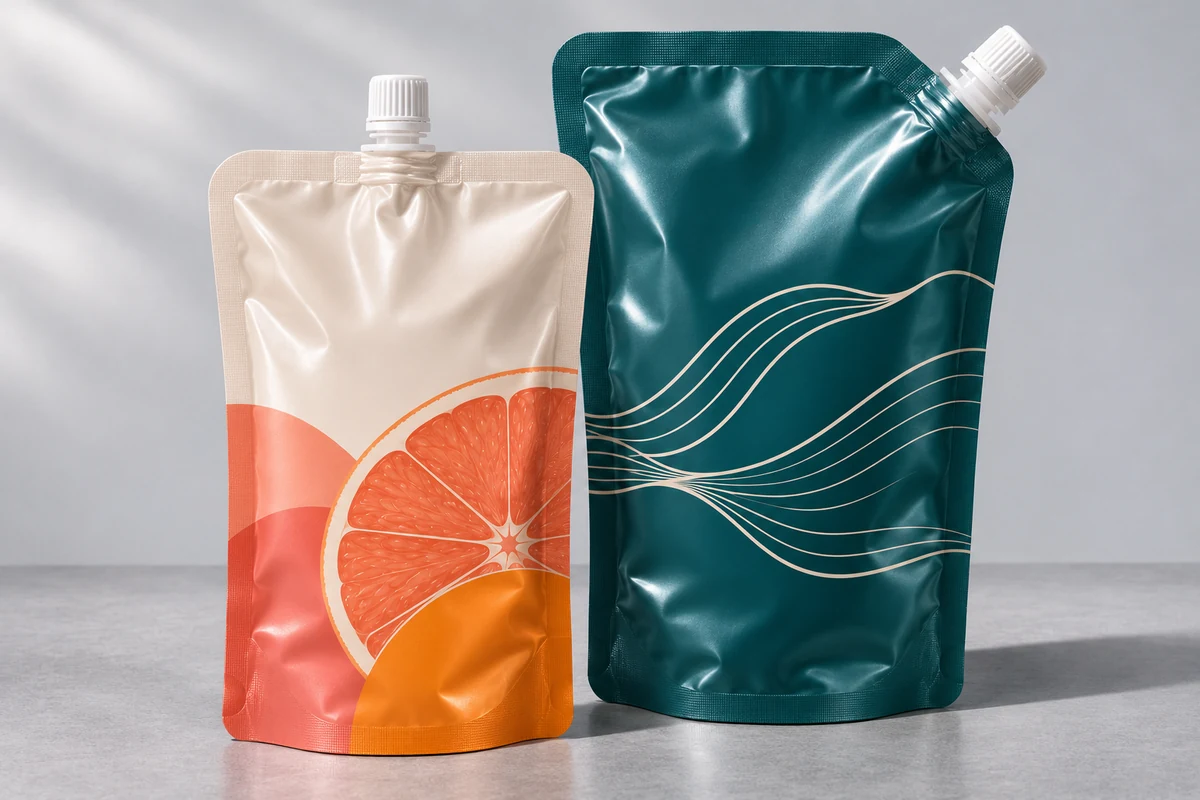
Center or Corner Spout Position
A top-center or corner position changes pouch handling and the pouring angle. Equipment clearance and the consumer’s grip need to be reviewed together.
Proposed position on a drawing, filling-line clearances and the intended dispensing action.
 03 / FLOW OPENING
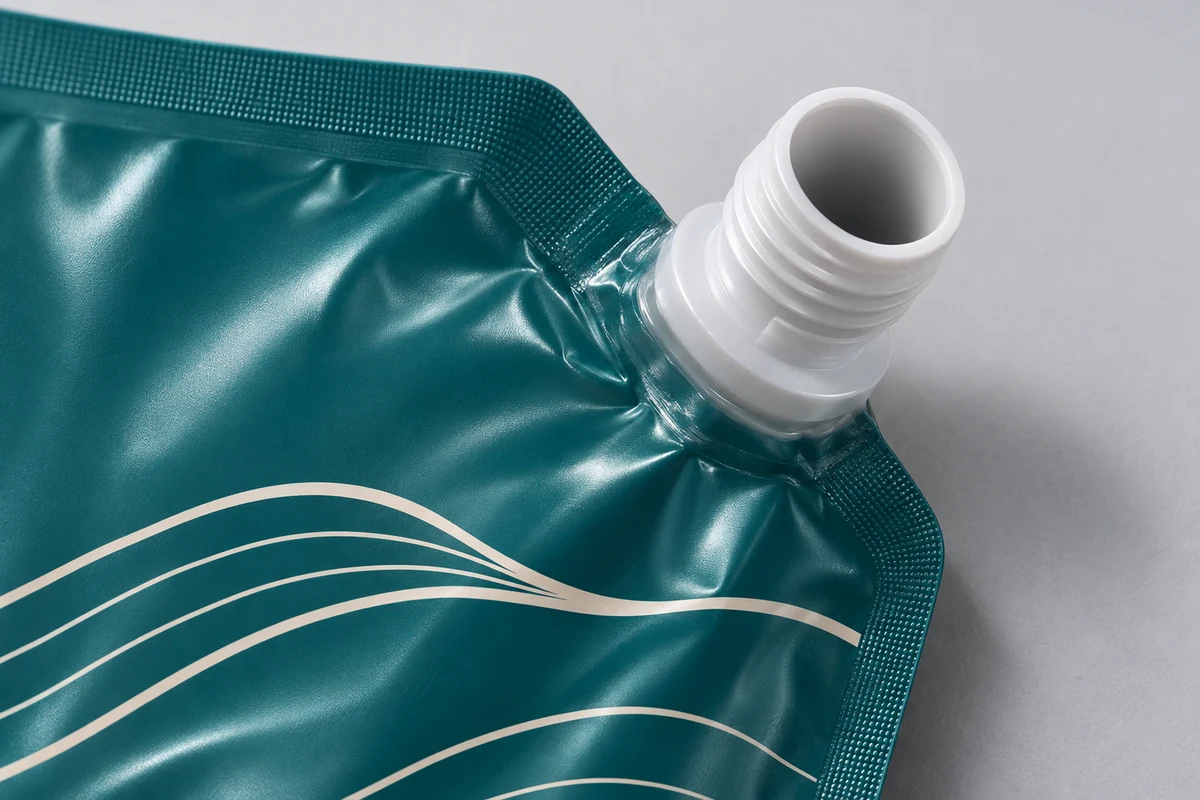
Spout Opening & Product Flow
The internal opening must suit product viscosity and particles as well as the filling nozzle. A nominal external size alone does not define the usable flow path.
Fitment drawing or reference, product flow characteristics, particle information and nozzle dimensions.
 04 / WELD FLANGE
Fitment Weld Flange & Sealant Film
The fitment’s sealing flange and the pouch sealant form a critical joint. Material compatibility, geometry and the sealing process are evaluated as a combination.
Fitment material and flange reference, laminate proposal and the relevant filling or heat exposure.
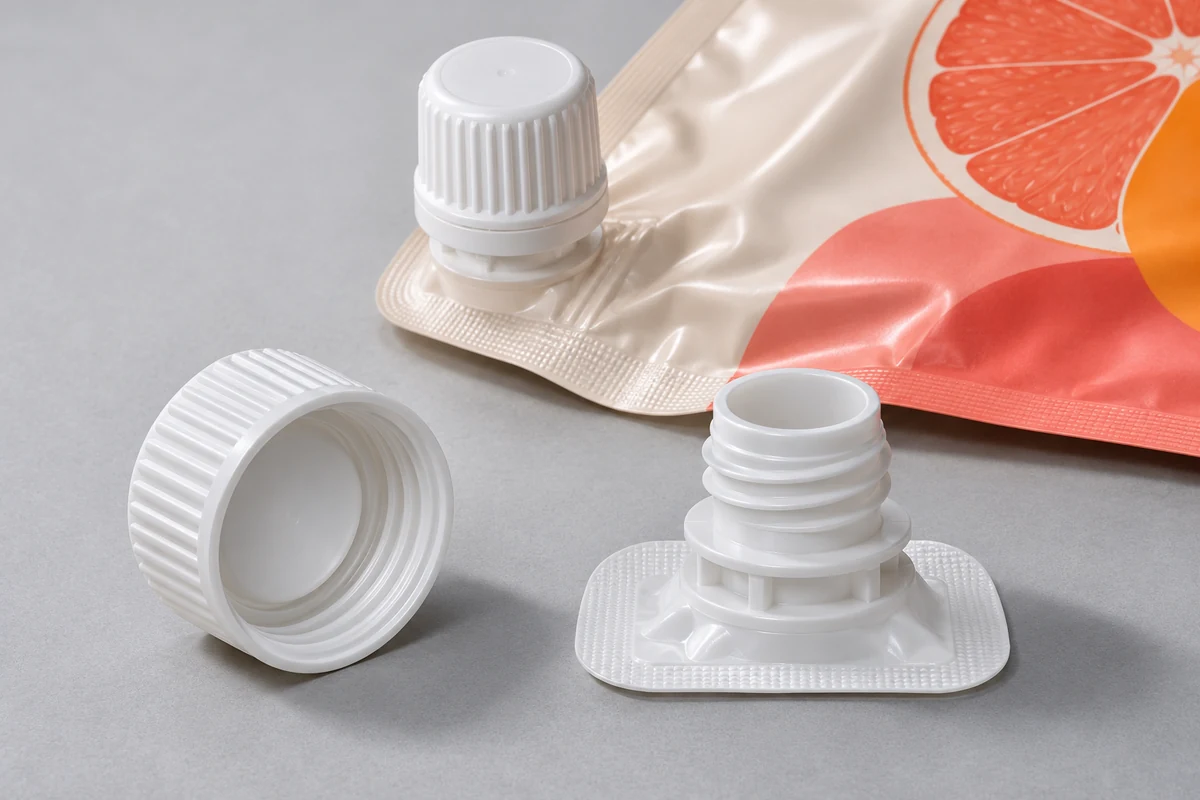 05 / CAP & SEAL
Cap Threads & Sealing Features
The cap must match the fitment and its sealing system. Application method, opening effort and any requested tamper-evidence need an agreed component reference.
Matched cap/fitment reference, cap application process and required opening or tamper-evidence features.
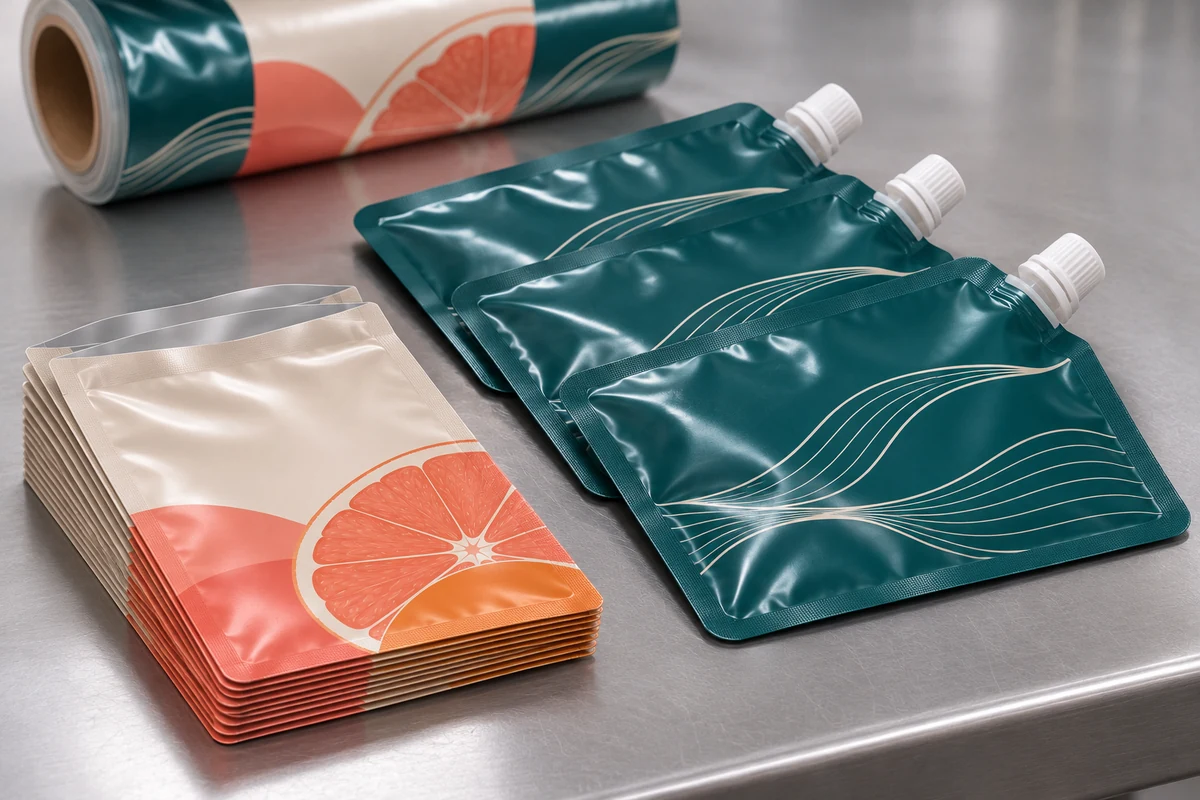 06 / SUPPLY CONDITION
Pouch Supply Condition for Filling
The selected route determines whether a pouch is supplied for filling through the spout or through an open edge. Cap condition and handling arrangements must be explicit.
Open or closed filling edge, cap fitted or separate, pouch orientation and equipment handling format.
Use an approved drawing and representative samples to connect appearance, dimensions and intended use.
Add what you know to your brief ↗03 / Match the application
Spout Filling, Open-Edge Filling & Process Requirements
Select the route closest to your product. The filling method, handling and consumer-use sequence influence the specification.
Filling Through the Spout
Product enters through the installed fitment, followed by the specified cap-closing sequence. The neck, nozzle, venting and cap handling must suit the line.
- Fitment reference and nozzle clearance
- Product flow, foam and filling temperature
- Cap application and finished-pack leak checks
Filling Through an Open Pouch Edge
Product enters through a defined open part of the pouch, which is then heat sealed. Spout position and the final sealing area must leave enough room for the process.
- Open-edge and fitment layout drawing
- Nozzle access and seal-zone protection
- Final heat-seal conditions and inspection
Filling Temperature & Process Sequence
Elevated-temperature filling and post-fill processing add requirements for the film, fitment, cap and seals. They need a specific project assessment.
- Temperature, time and cooling sequence
- Contents, target storage and handling
- Complete-pack validation for the intended process
04 / Industry requirements
Spout Pouches for Sauces, Drinks & Home Care
Explore the protection, filling and handling questions behind each application.
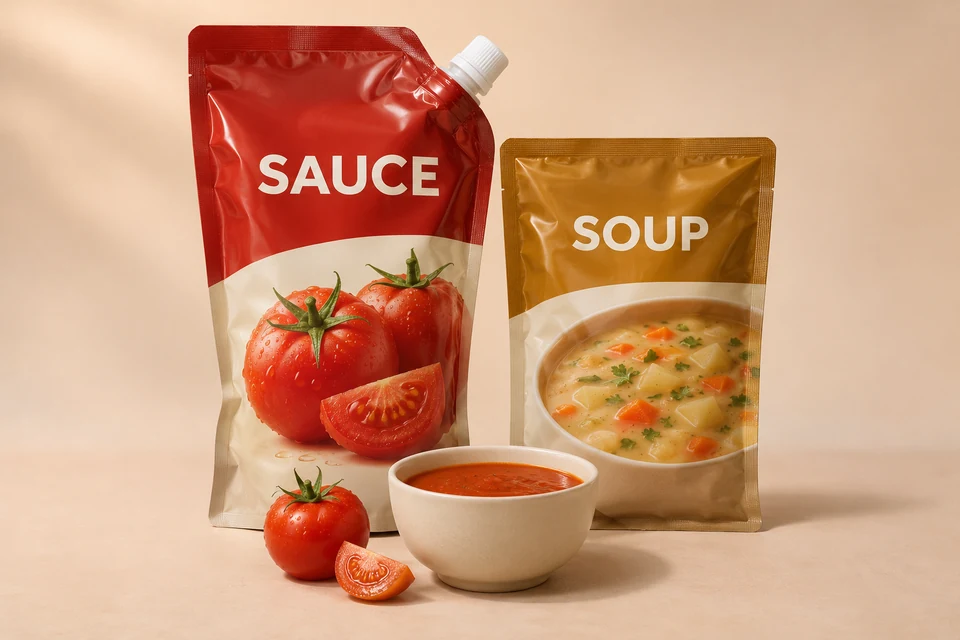
Sauces, Soups & Condiments
Match viscosity, particles and fill temperature to the opening and sealing route.
Explore this industry ↗
Home Care & Detergent
Review the formulation, refill action and compatibility of every product-contact component.
Explore this industry ↗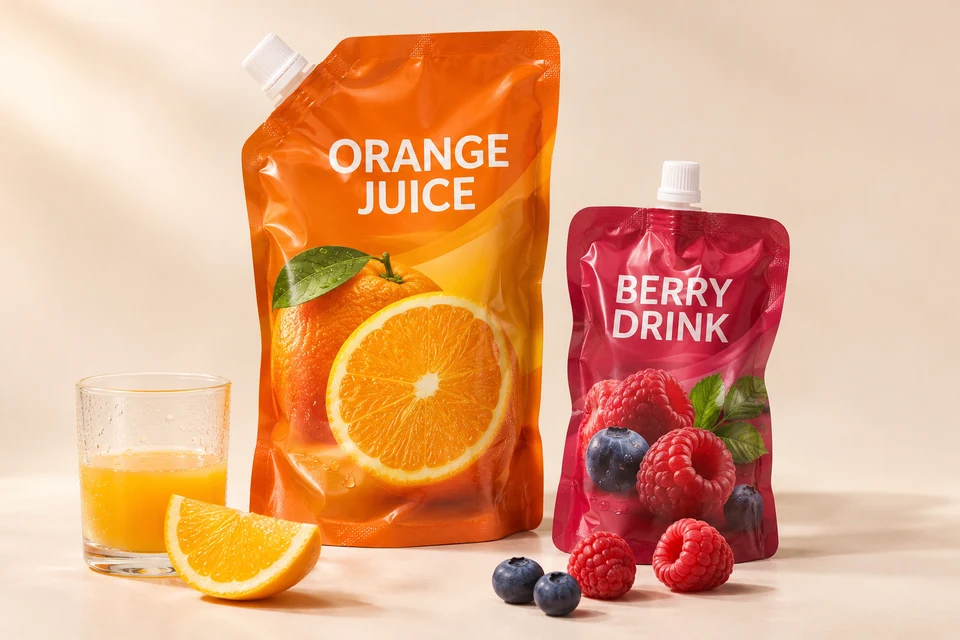
Beverages & Drink Pouches
Connect fill conditions, cap handling and dispensing to the finished package.
Explore this industry ↗05 / Material decisions
Liquid Packaging Materials & Barrier Requirements
Film appearance alone does not establish protection, processing compatibility or an end-of-life outcome. Define the role and the evidence together.
Presents the brand and use instructions on a body that flexes while handled.
Scuffing, wet handling and legibility around the shoulder and spout.
Provide the protection and handling response required by the contents and process.
Oxygen, moisture or light sensitivity, formulation contact and any thermal exposure.
Contacts the product and forms body seals and the joint with the fitment.
Compatibility with the formulation, selected fitment and final-seal conditions.
Form the filling and dispensing pathway and the reclosable sealing interface.
Matched component references, product compatibility, cap sealing and the process temperature range required.
06 / A closer design decision
Pouch Seams, Spout Welds & Cap Seals
A good body seal cannot compensate for an unsuitable cap or fitment joint. Locate each interface in the drawing and agree how it will be assessed under the intended filling, storage and handling conditions.
01 / Pouch seams
Inspect the pouch perimeter and any customer-completed seal. Include folds, wrinkles and product residue in the review.
02 / Fitment weld
Assess where the flange joins the inner sealant, including the transition into the adjacent pouch seam and any stress during pouring.
03 / Cap closure
Use the matched cap and fitment reference. Define application, sealing and opening requirements with the component and filling process.
07 / Customization & print
Custom Spout Pouch Shapes & Printing
Customize the pouch body, spout position and printed artwork around your product. The spout format is highlighted below; compare it with other pouch shapes available for a different packaging brief.
Shape illustrations from our wider factory range. Dimensions, materials, closures and tooling are confirmed for your application. Flat sachets and zipper variants share their underlying pouch construction.
Another format in our factory range
Three-Side Seal Pouch
Flat format · Three sealed edges
A compact flat pouch with one edge left open for filling. Customize the usable area, tear location and front-and-back artwork.
Explore this packaging formatAnother format in our factory range
Stand-Up Pouch
Bottom gusset · Shelf display
A bottom gusset opens as the pouch fills. Customize width, height and gusset depth, then place your artwork around the seal and fold zones.
Explore this packaging formatAnother format in our factory range
Flat Zipper Pouch
Resealable · Flat body
A flat pouch with a resealable zipper. Coordinate the zipper position, opening clearance and printed information with the fill volume.
Explore this packaging formatAnother format in our factory range
Stand-Up Zipper Pouch
Resealable · Bottom gusset
Combine a standing base with a zipper. Customize the body proportions, reclosure position and artwork for repeated use.
Explore this packaging formatAnother format in our factory range
Pillow Pack
Back seal · Rollstock formed
A back-sealed pack formed from rollstock. Match film width, print repeat and end-seal allowances to the filling machine and product.
Explore this packaging formatA starting point for this product
Spout Pouch
Dispensing fitment · Custom position
Choose a center or corner spout around pouring, grip and filling access. Coordinate the pouch shape, fitment and printed use instructions.
Discuss this formatAnother format in our factory range
Back-Seal Gusseted Bag
Back seam · Expanding sides
A back seal and folded side gussets provide additional volume. Plan the rear seam, gusset folds and artwork across the formed faces.
Explore this packaging formatAnother format in our factory range
Side-Gusset Pouch
Side folds · Added volume
Side gussets expand around the contents. Customize the panel proportions and plan graphics that remain readable across the folded surfaces.
Explore this packaging formatAnother format in our factory range
Flat Sachet
Small portions · Sample packs
A small flat pack for a single portion or sample. Reserve enough room for seals, the tear path and legible artwork at the final size.
Explore this packaging formatAnother format in our factory range
Flat-Bottom Pouch
Box-style base · Multiple panels
A flat base and defined side panels create a structured pack. Customize panel widths, base depth and artwork across the visible faces.
Explore this packaging formatAnother format in our factory range
Flat-Bottom Zipper Pouch
Structured base · Resealable top
Bring a resealable opening to a flat-bottom format. Review the zipper, opening access, panel layout and the filled-pack proportions together.
Explore this packaging formatAnother format in our factory range
Die-Cut Shaped Pouch
Custom outline · Tooling review
An individually shaped outline can support a distinctive display. Review die-cut tooling, seal margins, filling access and artwork together.
Explore this packaging formatCustom artwork for production, with colors approved on the specified material.
Review artwork and presentation before confirming the production brief.
Discuss matte or gloss appearance, clear areas and artwork across the finished pack.
Position & body shape
Top-center and corner-spout layouts can be discussed around pouring, grip and filling access. Final configurations depend on the confirmed pouch and component setup.
Opening & cap style
Provide a component reference if the line already has one. Flow opening, closure type and any special cap requirements are confirmed together.
Brand & use graphics
Use up to 10-color gravure printing for production. Give filling volume, use directions and the intended grip area a clear place in the layout.
Material goals
A recycling-oriented design includes the fitment and cap, as well as the film. Review the full package against the chosen material and target-market requirements.
Send your preferred format, dimensions, material needs, artwork and order quantity. We will review the combination with you.
Customize my packaging08 / Practical project checks
Flow, Leakage & Filled-Pack Handling Checks
Select a point to review, then add it to your inquiry. Product, material, filling and handling conditions need to be considered together.
Viscosity, Particles & Spout Flow
- What to record
- Product temperature and viscosity, particles, nozzle dimensions, fill rate and when foam appears.
- What to review
- Usable spout opening, nozzle fit, filling sequence, venting and available headspace.
Leak Checks: Seam, Fitment or Cap
- What to record
- Whether the leak comes from the cap, flange weld or adjacent seam, plus the lot and conditions when it appeared.
- What to review
- Component matching, cap application, weld continuity, formulation and handling loads.
Temperature & Material Compatibility
- What to record
- Product condition during use, pour angle, opening size, residue and how the consumer holds the pouch.
- What to review
- Flow path, viscosity, particles, body flexibility, spout position and dispensing sequence.
Filled-Pack Drop & Handling Review
- What to record
- Fill volume, headspace, cap condition, leak location, carton arrangement and transport exposure.
- What to review
- Complete-package integrity, compression or drop loads, temperature exposure and compatibility over time.
09 / Connected manufacturing
Our Pouch Manufacturing Process
Printing, material conversion, pouch making and inspection are coordinated in one factory. The agreed construction determines the exact production route.
Factory photographs / use the arrows or swipe
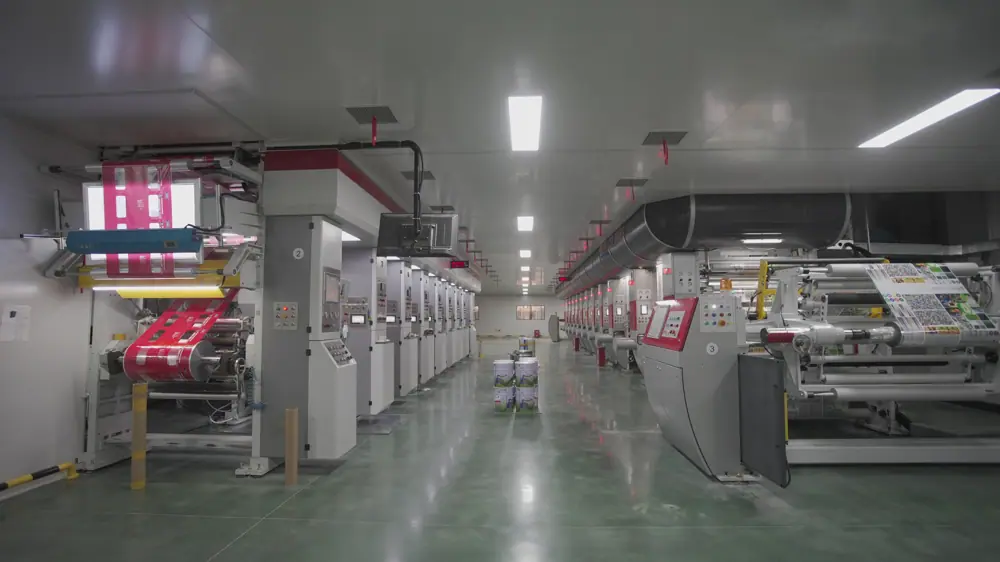
Printing
Approved artwork is carried into the production web.
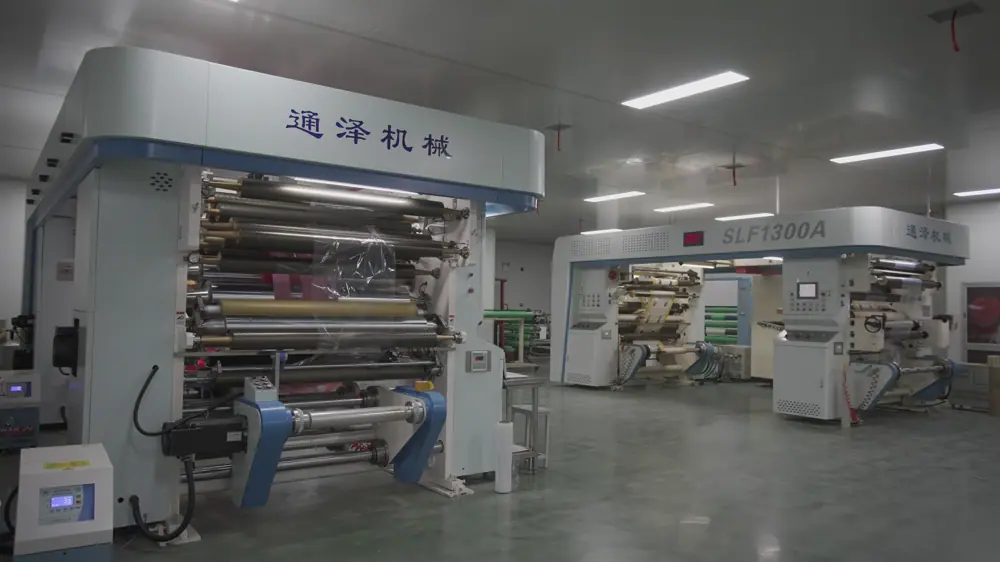
Lamination
Layer selection and converting conditions remain connected.
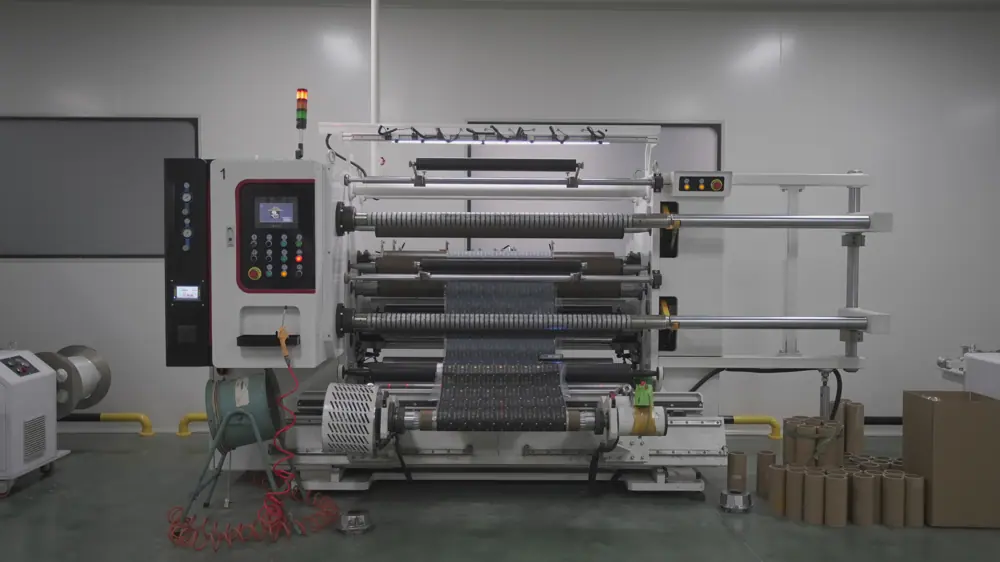
Slitting
The web is prepared for the specified pouch-making layout.
IVAPAK has supplied custom printed flexible packaging since 2003. Confirm the construction, available options and acceptance requirements before production.
Explore manufacturing10 / Quality & documentation
Quality Inspection & Material Documentation
Tie each inspection point and supporting document to the product you are ordering.
- Component identity
Record the pouch structure and matched fitment/cap references, including dimensions that affect equipment handling.
- Three-interface integrity
Agree separate inspection points for body seams, the fitment weld and cap closure within the finished-package evaluation.
- Filling & dispensing
Plan checks using the actual formulation and temperature, with observations for flow, foam, opening and residual product.
- Compatibility & documents
Match the material and component documentation to the intended contents and conditions; define any aging or distribution evaluation needed.

11 / Before the production order
Samples, MOQ & Pre-Production Approval
MOQ is reviewed by size, structure and quantity per design. Digital printing supports artwork sampling; material samples and filled-pack or process trials answer separate questions. Ask our factory to confirm the sample format, approval steps and production quotation for your project.
Confirm the route and components
Agree the filling path, pouch supply condition and matched cap and fitment before the final dieline is approved.
Run a representative fill
Check filling, closing, leak locations and dispensing with the intended formulation and operating conditions.
Approve the complete pack
Evaluate the filled package under its planned storage and handling conditions, then retain the agreed references for production.
12 / Your project brief
Request Pricing for Your Custom Pouches
Fill in what you know. This tool organizes the details into the inquiry form below, ready for your review.
A current drawing, material specification, filled-pack photo or sample can explain the starting point. Send supporting files to Allen after your initial inquiry.
Allen@ivapak.comYour message will appear below for review. Adding a brief does not send the form.
13 / Practical answers
Custom Pouch Ordering FAQs
Clear answers for purchasing, packaging development and artwork teams.
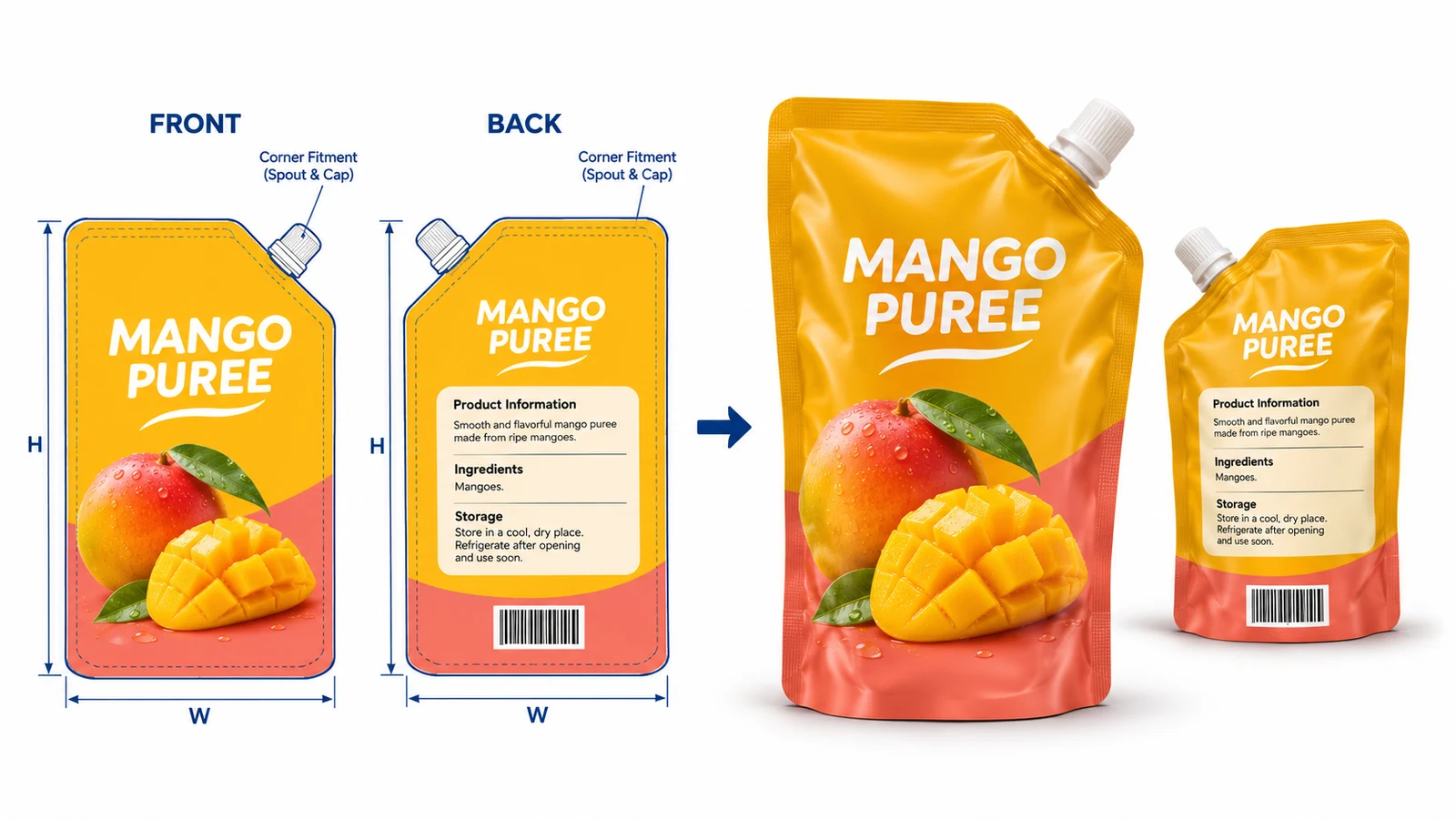
Illustrative artwork-to-pack concept. Final dimensions, seal areas and construction are confirmed on your project drawing.
Can you recommend a spout from the fill volume alone?
Volume helps define the body, but the opening also depends on viscosity, particles, dispensing and the filling nozzle. Send the formulation characteristics, process and any existing component reference.
Should we fill through the spout or through the top?
Use the route supported by your equipment and agreed pouch configuration. Through-spout filling centers on the fitment and cap system; open-edge filling also needs a defined final heat seal and protection of that seal area.
Can the same pouch be used for drinks and detergent?
The product-contact requirements differ. Film, fitment and cap must be reviewed against each formulation and intended use. A successful application with one product does not establish compatibility with another.
Are hot-fill and retort spout pouches the same?
No. Hot filling and post-fill retort expose the package to different process conditions. Provide the complete temperature, time and cooling sequence so the body, fitment, cap and seals can be evaluated for that process.
Can you provide a child-resistant or special safety cap?
A special cap is a separate component and validation requirement. Describe the required feature, target market and any component or testing reference; availability and suitability must be established for the project.
Is a spout pouch automatically recyclable if its film is mono-material?
The film, fitment, cap, labels and other components all contribute to the complete package. Recycling claims also depend on the relevant collection and sorting system; review the full construction and target market.
What information is needed for price and MOQ?
Send the body size, fill, material needs, spout and cap references, quantities per design and filling route. Components and configurations can affect the MOQ and schedule. Production printing is gravure with up to 10 colors.
How long will production take?
Standard orders typically take approximately 15 days after artwork approval. Confirm timing against the selected components, specification, order quantity and production plan. Transport and arrival time are additional.
14 / Factory-direct inquiry
Request a Factory-Direct Quote
Share the application, reference pack or requirements you already have. Allen can help connect the format, material, print and production plan.
Dimensions, structure, available options, artwork, quantity per design and delivery requirements are reviewed together.
Around 15 days for standard production.After artwork approval, subject to the confirmed order schedule. Shipping and arrival timing are additional.
Tell us about your project.
15 / Repeat supply
Production Lead Times & Repeat Orders
Review changes to the contents, process, artwork or destination market before placing a repeat order.
Keep the cap, fitment, body construction and filling settings with the approved order specification.
Changes in ingredients, viscosity or processing can affect compatibility and flow, even if the same printed pouch is requested.
Provide the lot, leak interface, component references and handling history to make follow-up investigation specific.