
Custom printed rollstock film
Custom Printed Rollstock
Film Manufacturer
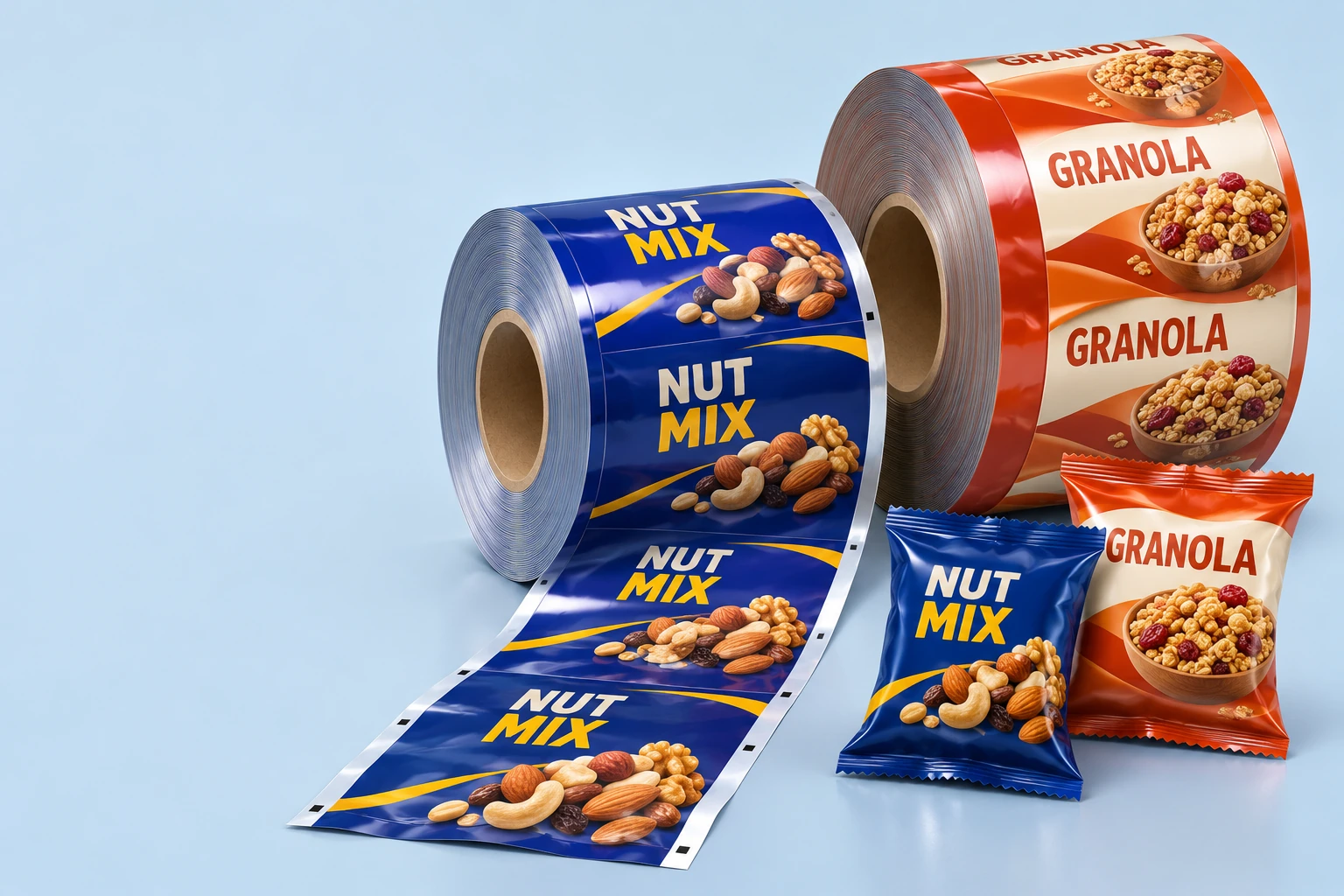
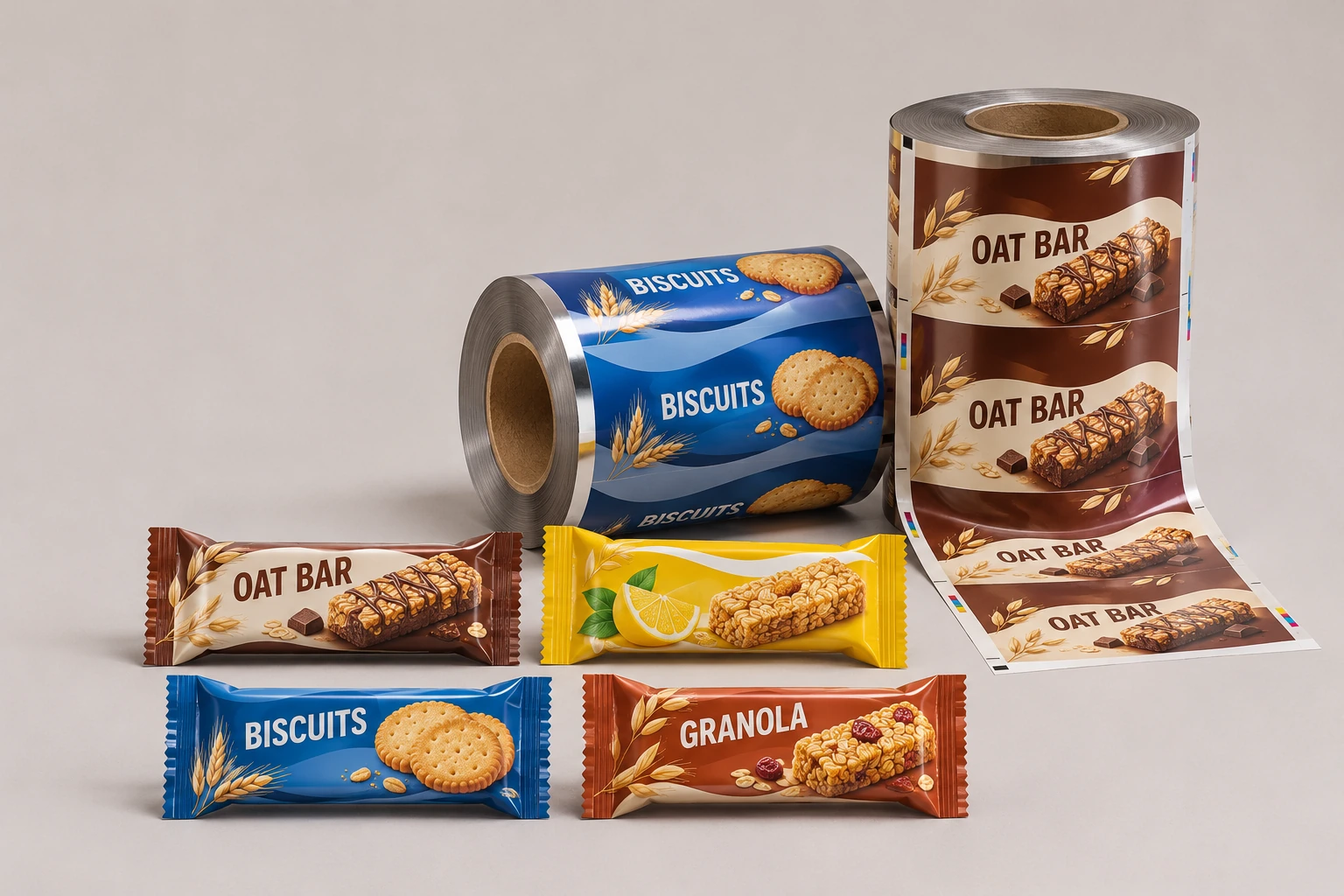
IVAPAK manufactures custom printed rollstock film for brands that form, fill and seal packaging on their own equipment. Specify the film structure, web width, print repeat, winding direction and sealing requirements with our Shanghai factory. Up to 10-color gravure printing supports production; digital printing is available for sampling.
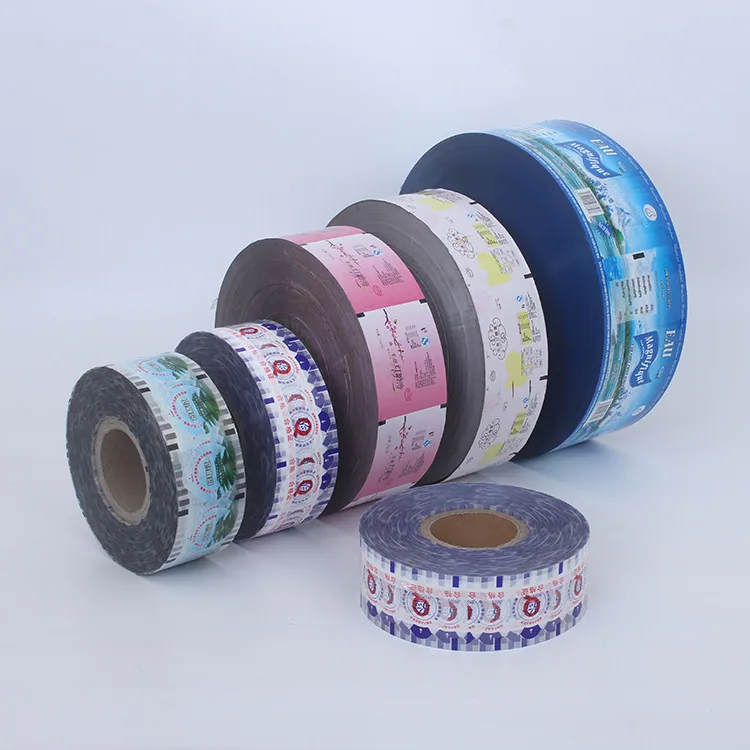
01 / The film and the finished pack
Custom Rollstock Film for Your Packaging Line
Need ready-made pouches?Rollstock is a continuous printed web delivered in rolls. Your equipment turns it into a finished pack, so the film has two jobs: protect the product and work through the machine’s handling, registration and sealing process.
Moisture, oxygen, aroma, light and handling.
Width, repeat, unwind, reel format and seals.
Approved artwork, color and print placement.
02 / Explore the reel
Film Width, Print Repeat & Reel Specifications
Select a specification below or use the numbered points on the roll. Each detail connects the artwork, film production and packing line.
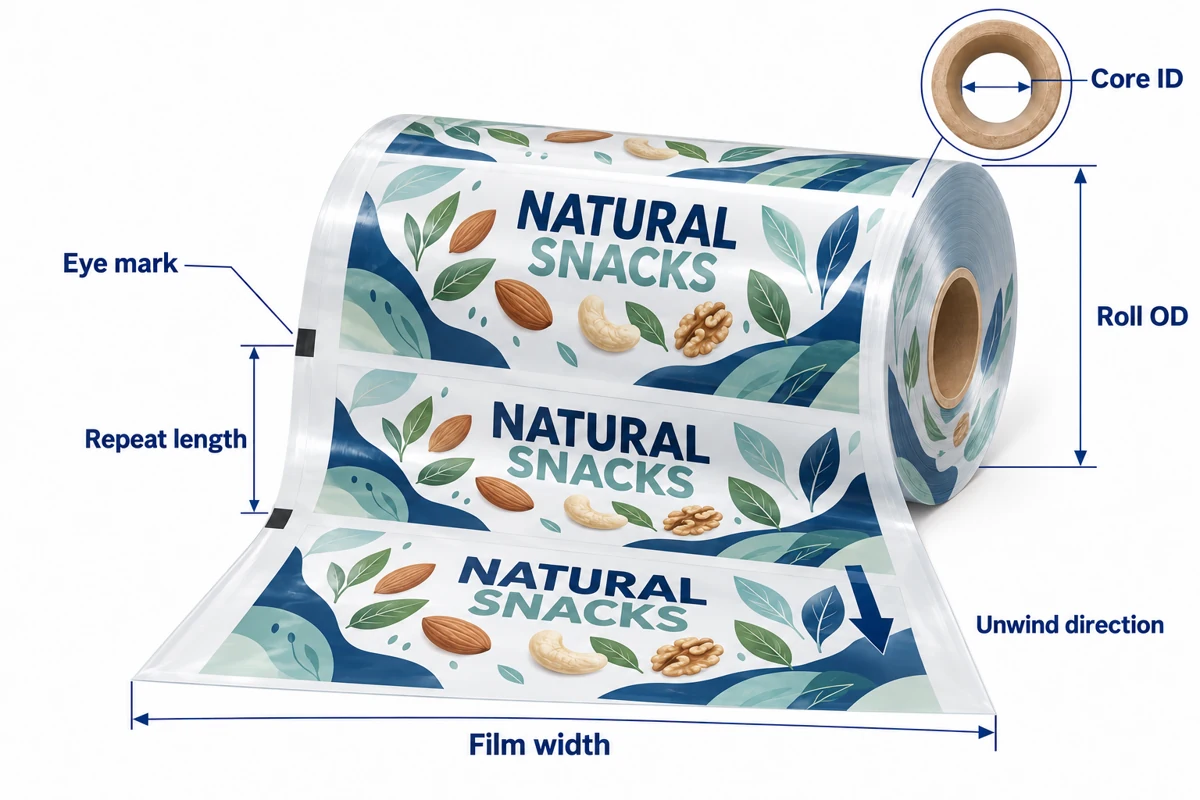
Finished Film Web Width
The width of the flat film determines how it fits the forming layout. It is measured across the web, not around the roll.
Finished width and tolerance; for multi-lane work, include the complete lane layout.
Print Repeat & Cut-Off Length
The repeat is the distance between equivalent points on successive printed designs. It connects the artwork to the sealing and cutting cycle.
Approved repeat or cutoff, cut position and the layout of each lane.
Registration Mark & Sensor Position
The registration sensor uses the mark to position the printed design relative to the cut. Mark contrast, background and the reading path all matter.
Mark size, location, sensor side and relationship to the cut. Keep competing graphics out of the reading path.
Reel Winding Direction & Print Orientation
A print-out instruction alone is incomplete. The leading artwork edge, reference viewpoint, sealant face and eye-mark side also belong on the drawing.
An annotated unwind diagram or a marked sample from a film that already runs on the line.
Core Size, Reel Diameter & Reel Weight
Core inside diameter, maximum roll outside diameter and roll weight affect mounting, clearance and handling. These are separate dimensions from web width.
Core ID, maximum OD, maximum roll weight and any receiving or handling limits.
Reel Labels & Traceability
Quantity, winding condition, splice requirements and roll identification become part of the supply specification, especially when several designs or lines are involved.
Quantity per SKU, roll length or weight basis, splice rules, labels and protective packing.
Illustrative dimensions, not a fixed specification. A winding code needs its reference drawing; “print-out” alone does not define the leading artwork edge.
Put these details into your brief ↗03 / Start with the equipment
VFFS, HFFS & Other Film Converting Routes
A machine model, an approved web drawing or a current running film gives the project a practical starting point.
Vertical Form-Fill-Seal Applications
The web forms around a tube, receives the product and is sealed into individual packs. Snacks, dry foods and frozen products often use this route.
- Forming set and finished pack drawing
- Web width, repeat and longitudinal seal
- Jaw conditions and product drop behavior
Horizontal Form-Fill-Seal Applications
Film wraps around products moving along a horizontal infeed. Product pitch, the longitudinal seal and the artwork need to work as one layout.
- Product dimensions and machine model
- Fin or lap seal and the film feed path
- Registration layout and maximum roll size
Multi-Lane Web Layouts
Small packs can be formed in one or several lanes. The complete web layout must account for every longitudinal seal, cross seal, cut and printed repeat.
- Pack size, lane count and lane pitch
- Seal layout and eye-mark arrangement
- Dose, product flow and filling conditions
Film performance depends on the actual equipment and operating conditions. A process name alone does not establish compatibility or running speed.
04 / Product protection starts here
Rollstock Applications by Product Type
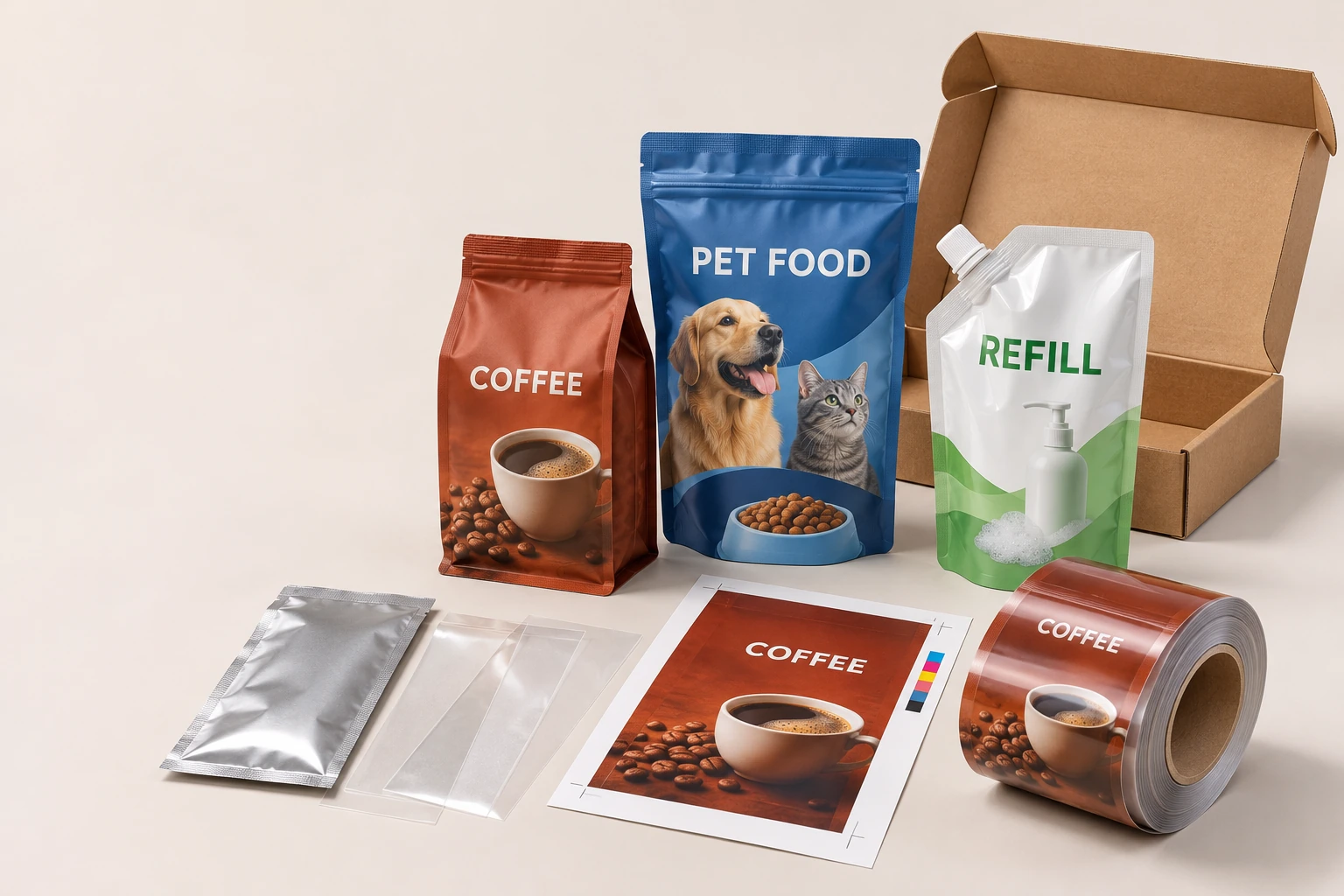
The same delivery format can serve very different products. Build the protection requirements around what goes inside.
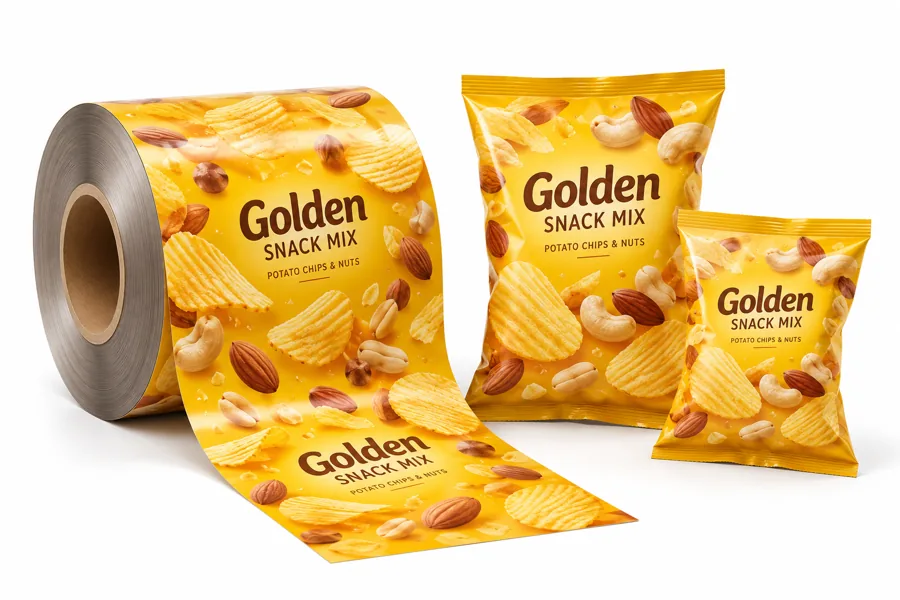
Snacks, nuts & dried fruit
Crispness, oil sensitivity and moisture protection—alongside smooth forming and sealing.
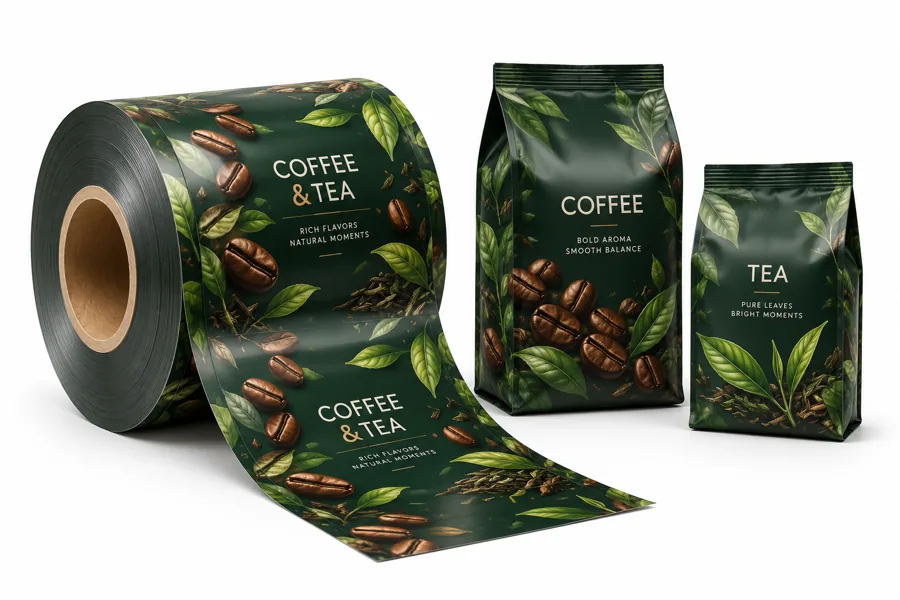
Coffee & tea
Aroma, oxygen exposure and the product’s condition when it is packed.
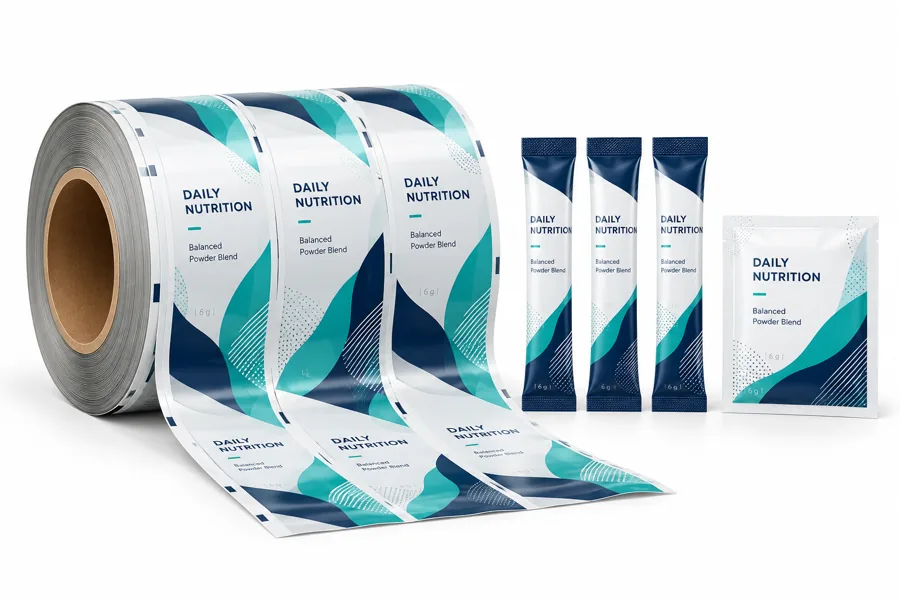
Supplements & nutrition
Moisture-sensitive powders, dose size, lane layout and a clean seal zone.
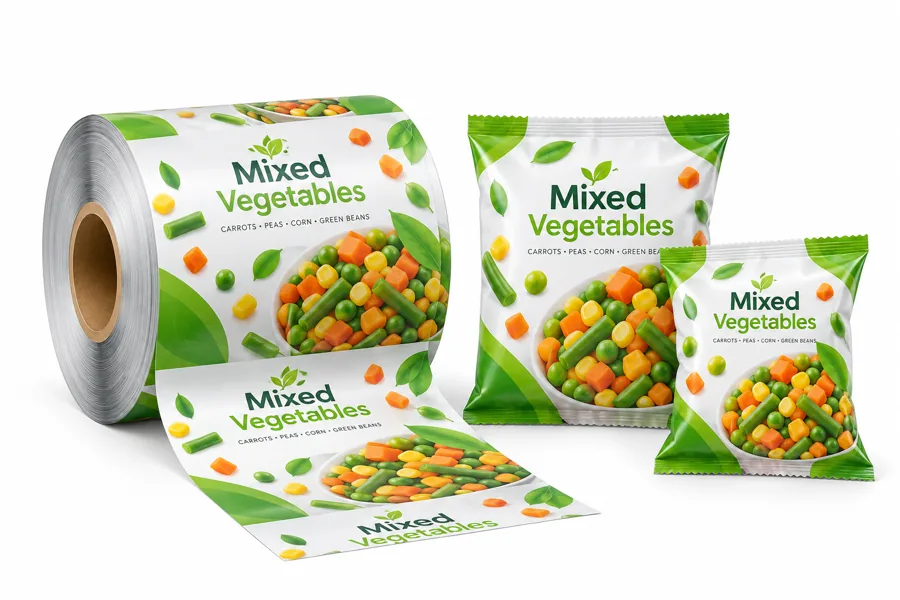
Frozen food
Cold storage, product edges and the way a filled pack is handled when frozen.
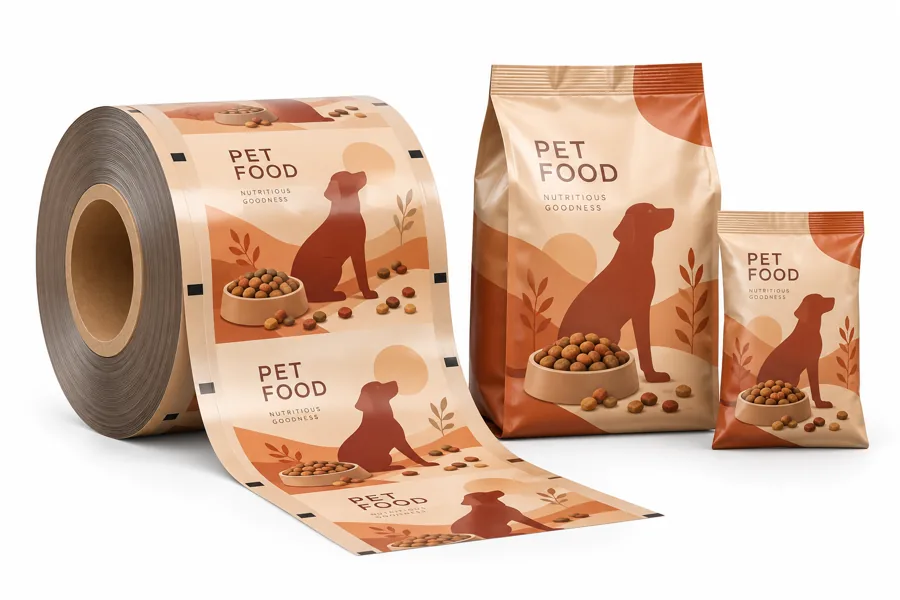
Pet food & treats
Shape, oil content and pack weight guide toughness, protection and seal requirements.
Application images are packaging design concepts. Final artwork, structure and performance are project-specific.
05 / Structure selection
Laminated Film Structures & Barrier Functions
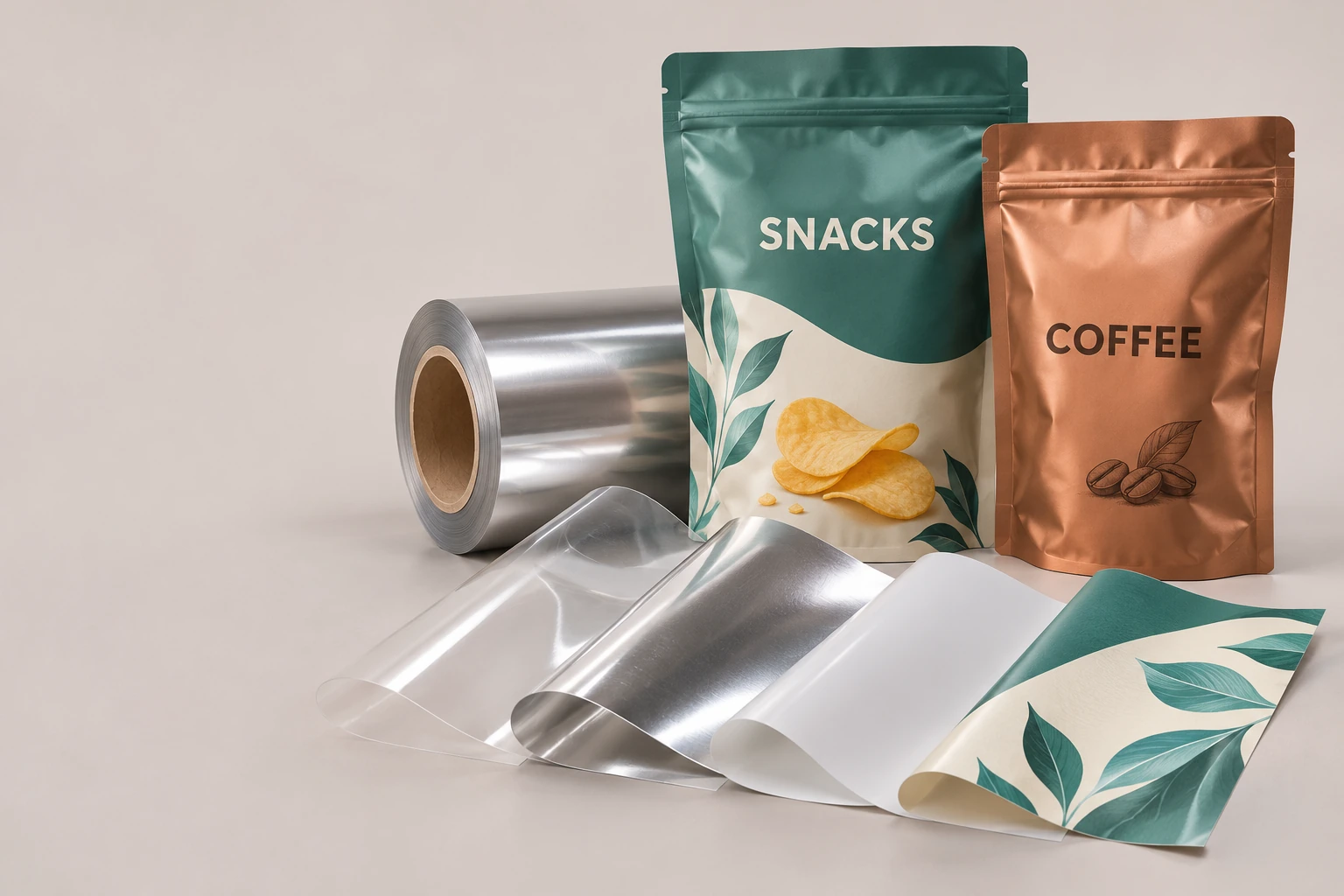
The outside supports print and handling. The barrier system manages protection. The sealant meets the contents and closes the pack.
Clear laminate
Example / PET / PEA clear printed outer web and a heat-seal layer can retain a product-viewing area.
Does the pack need a window, and what oxygen or moisture protection must it provide?
Metallized laminate
Example / PET / VMPET / PEA metallized film adds a barrier layer and metallic appearance. It is different from a separate foil layer.
What light screening and finished-film barrier data does the product need?
Foil laminate
Example / PET / AL / PEA separate aluminum foil layer provides an opaque barrier. Converting and handling remain part of the final pack evaluation.
How sensitive is the product, and what handling and pack-integrity checks are required?
Polyolefin direction
Example / PE- or PP-basedA construction centered on one polymer family can support a recycling-oriented project, with its own barrier and sealing requirements.
Which recycling system is relevant, and what changes would the packing line need?
Illustrative structure families for project review, not fixed constructions or thickness specifications. Metallized film and aluminum foil are different barrier approaches. Recyclability depends on the complete structure and destination market.
Explore the three material directions06 / The sealing interface
Sealant Layers & Sealing Requirements
The film surfaces, jaw conditions and filled product work together. A laminate suitable for a fin seal is not automatically suitable for a lap seal.
Fin seal
The inner sealing surfaces meet. The web layout needs the right seal allowance and artwork placement.
Lap seal
The inside meets the outside of the film, changing which surfaces must bond to form the closure.
Diagrams show the interface concept only. Seal-strength and leak checks must reflect the selected material, equipment and intended use.
07 / A practical running review
Film Tracking, Registration & Sealing Checks
A short video, the roll label and current settings are more useful than “the film does not run.” Select an issue to build a useful report.
Trace where the web starts to move.
- What to record
- Where the drift or wrinkle begins; the film path; roll condition; whether the issue changes as the reel unwinds.
- What to review
- Web width, reel alignment, winding condition, tension and forming setup.
Look at the film–machine interface.
- What to record
- Which film faces contact the machine; operating speed; environmental conditions; whether the problem changes during a run.
- What to review
- Friction behavior (COF), stiffness and the relevant machine-contact surfaces.
Connect the mark, sensor and cut.
- What to record
- Printed repeat, an eye-mark close-up, the sensor reading path and photographs of the affected finished packs.
- What to review
- Mark contrast and placement, interfering print, sensor setup and registration relative to cutting.
Check the seal on filled and empty packs.
- What to record
- Filled and empty pack samples; jaw conditions; seal appearance; any powder, oil or liquid in the seal area.
- What to review
- Sealing faces, temperature, dwell time, pressure, wrinkles and product trapped in the seal.
Locate the stress or heat exposure.
- What to record
- Exact damage location; startup versus steady running; heat-contact areas; the conditions when the issue appears.
- What to review
- Web handling, local tension, sharp contact points, material response and the thermal process.
These are review directions, not an automatic diagnosis. Film, equipment setup and operating conditions are assessed together.
08 / Customization & print
Custom Printed Film for Different Pack Shapes
One printed reel can be specified for different forming routes. Match the finished shape, film width, print repeat and seal zones to your equipment. The formats below are forming examples; machine capability determines the final configuration.
Formed-pack illustrations; tooling and machine compatibility are confirmed for each line. Flat sachets and zipper variants share their underlying pouch construction.
A starting point for this product
Three-Side Seal Pouch
Flat format · Three sealed edges
A compact flat pouch with one edge left open for filling. Customize the usable area, tear location and front-and-back artwork.
Explore this packaging formatA starting point for this product
Stand-Up Pouch
Bottom gusset · Shelf display
A bottom gusset opens as the pouch fills. Customize width, height and gusset depth, then place your artwork around the seal and fold zones.
Explore this packaging formatA starting point for this product
Pillow Pack
Back seal · Rollstock formed
A back-sealed pack formed from rollstock. Match film width, print repeat and end-seal allowances to the filling machine and product.
Discuss this formatA starting point for this product
Back-Seal Gusseted Bag
Back seam · Expanding sides
A back seal and folded side gussets provide additional volume. Plan the rear seam, gusset folds and artwork across the formed faces.
Explore this packaging formatA starting point for this product
Side-Gusset Pouch
Side folds · Added volume
Side gussets expand around the contents. Customize the panel proportions and plan graphics that remain readable across the folded surfaces.
Explore this packaging formatA starting point for this product
Flat Sachet
Small portions · Sample packs
A small flat pack for a single portion or sample. Reserve enough room for seals, the tear path and legible artwork at the final size.
Explore this packaging formatCustom artwork for production, with colors approved on the specified material.
Review artwork and presentation before confirming the production brief.
Discuss matte or gloss appearance, clear areas and artwork across the finished pack.
Keep the file revision, size, structure and quantity together for every design.
Reserve seal allowances, code space and print-safe areas. Check text and barcodes on the finished pack.
Show opaque, clear and metallic areas, plus the intended gloss or matte appearance.
Supply the brand reference and agree the visual target on the production material.
Send your preferred format, dimensions, material needs, artwork and order quantity. We will review the combination with you.
Customize my packaging09 / Manufacturing the reel
Our Printed Rollstock Manufacturing Process
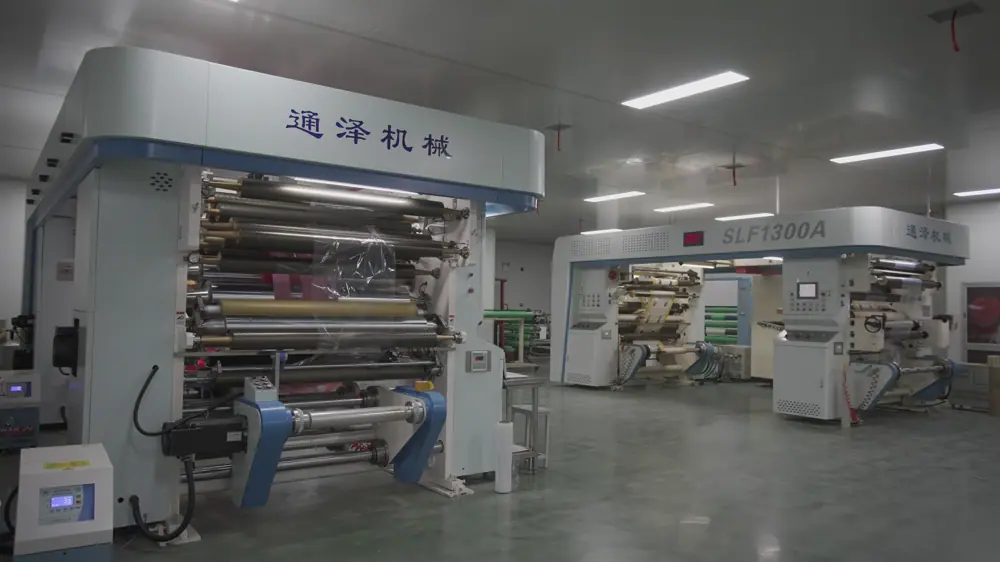
Printing, lamination, curing and slitting are connected within our manufacturing process. Explore the real production stages.
Four converting stages / swipe or use the arrows
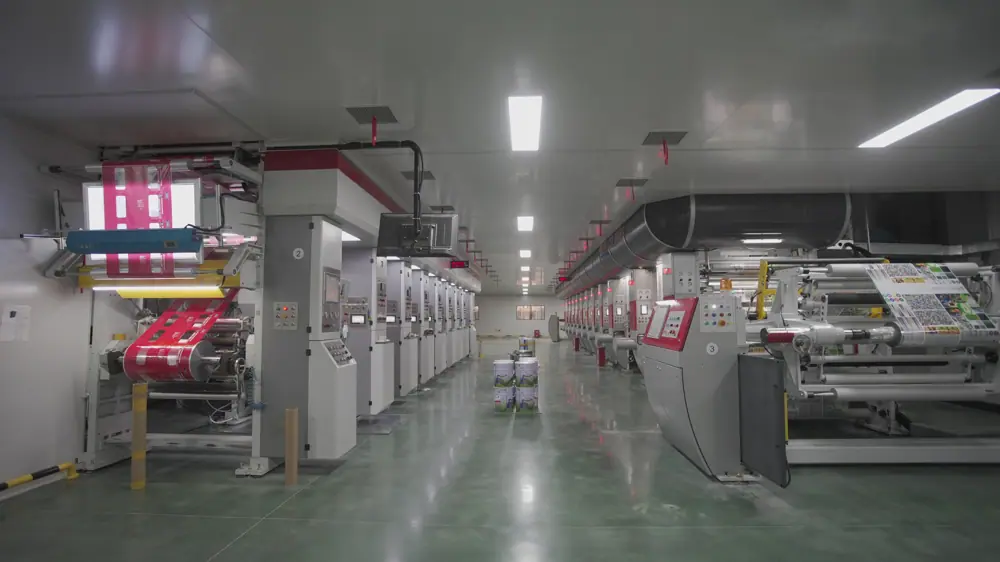
Approved artwork moves into gravure production, with up to 10 colors.
Laminate
Selected films are combined into the agreed packaging construction.
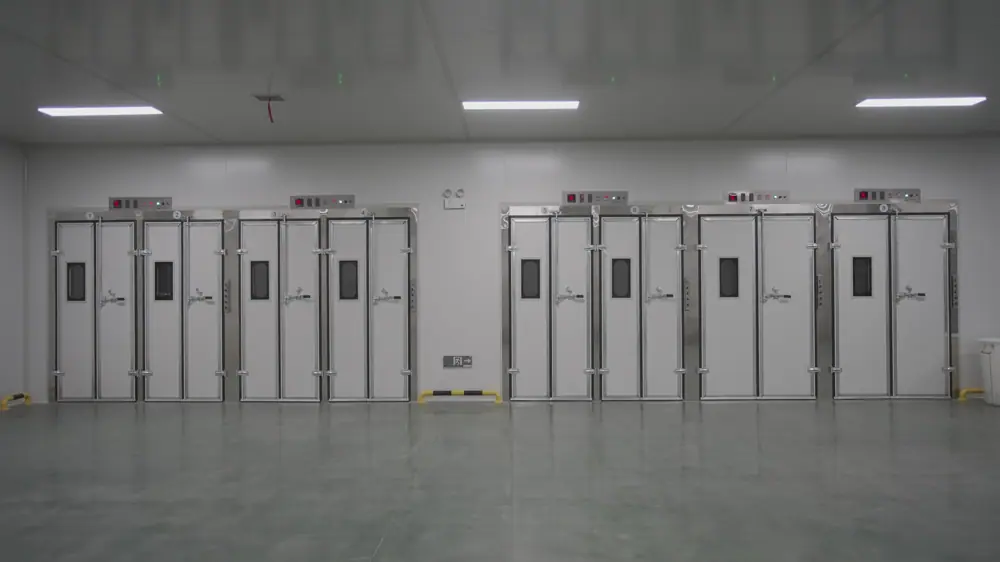
Cure
The laminate completes the curing stage required by its materials and process.
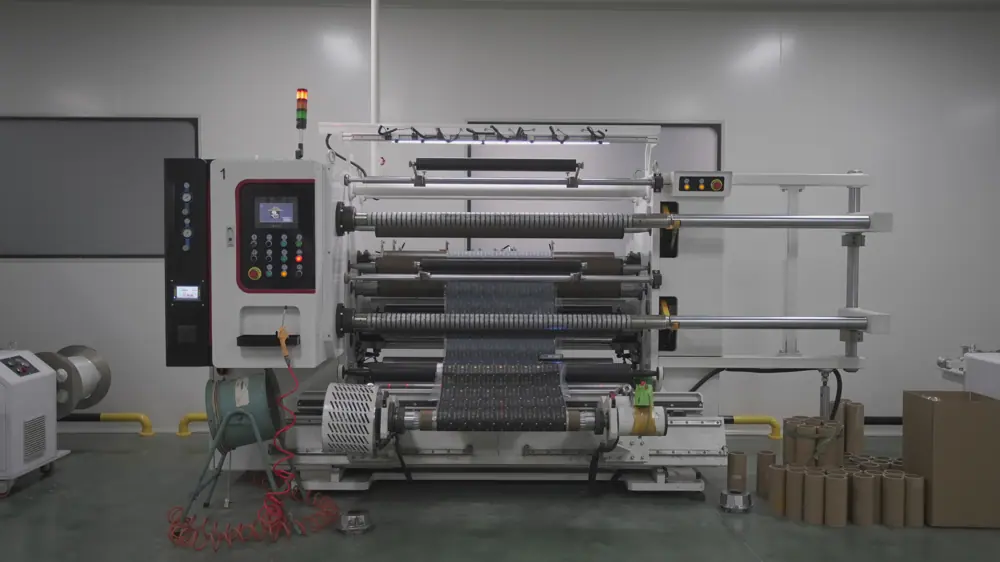
Slit & wind
Film is converted to the specified width, orientation and finished-roll format.
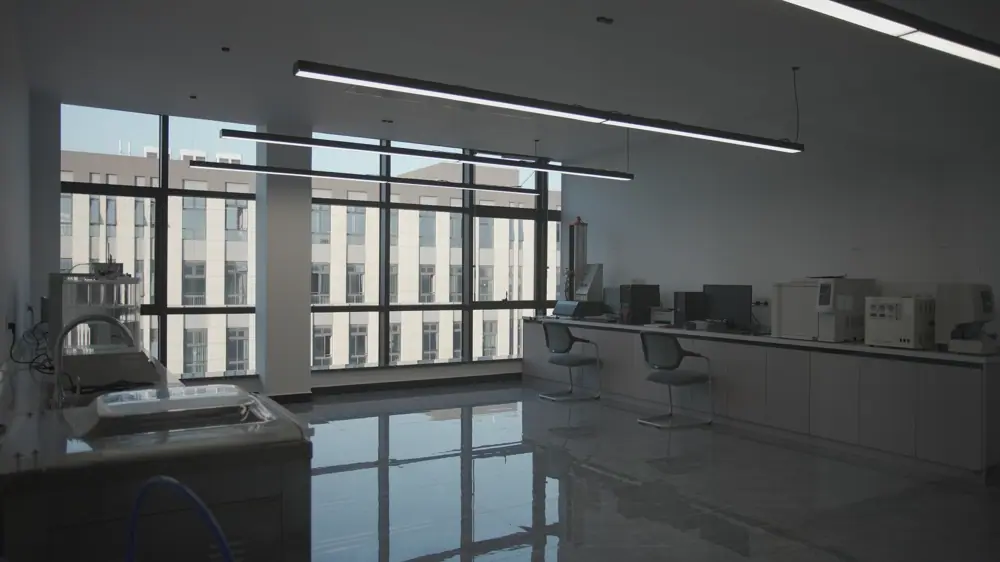
After converting, rolls are inspected and packed. Rollstock leaves the factory on the reel; forming, filling and final pack sealing take place on your line or your co-packer’s equipment.
See our manufacturing10 / Inspect & document
Film Quality Inspection & Acceptance Criteria
A useful quality plan ties each requirement to the actual material, finished reel and intended application.
- Print & dimensions
Artwork revision, color reference, web width, repeat and registration layout.
- Reel condition
Core and roll dimensions, unwind, winding appearance, splice requirements and identification.
- Material & seal performance
Construction, thickness, relevant barrier data, bond/seal requirements and application-specific checks.
- Food-contact information
Evidence for the selected material, destination market and intended conditions of use.
11 / Before a full production order
Samples, MOQ & Packing-Line Trials
For a new structure, new line or material transition, agree the sample format and trial scope before the full production order.
Does it communicate correctly?
Approve text, layout, repeat, eye-mark placement and the intended appearance.
Is the construction appropriate?
Review the sample, structure and relevant documents against the product and processing brief.
Does it work in the actual process?
Evaluate a representative roll on the intended equipment, then check the filled and sealed pack.
12 / Build your inquiry
Request a Custom Rollstock Quotation
Bring your machine information and what you know about the film. These optional fields prepare a structured message for Allen.
A current specification, roll label, flat sample and finished pack are a practical starting point. Share files with Allen after your initial inquiry.
Allen@ivapak.comThis prepares a message below. Review it before sending; it is not an automatic technical approval or quotation.
13 / Practical answers
Printed Rollstock Ordering FAQs
The questions that help connect your purchasing team, artwork and packing line.
More packaging answersWhat is the difference between web width and print repeat?
Web width is measured across the flat film. Print repeat is measured along the direction the film travels. Both come from the complete machine layout, including seals, cuts and any lanes.
Can you work from our existing film?
Yes. Share the current specification, roll label, a flat film sample and a finished pack. Add the machine details and the change you want to make. These give the project a practical reference for the proposed replacement.
How do we specify unwind direction?
Use an annotated diagram or marked sample showing the wound face, leading artwork edge, feed direction, sealant side and eye-mark position. A generic winding number without its reference drawing can be ambiguous.
Can one film run on every VFFS or flow-wrap machine?
Compatibility depends on the material and the line configuration. Friction, stiffness, sealing behavior and the machine’s film path all affect performance. Provide the equipment specification and plan a trial where compatibility has not been established.
What is the MOQ, and can we order several designs?
MOQ is evaluated by specification and design. Send quantities, dimensions and material requirements for each SKU so the printing setup and production plan can be quoted clearly. Several designs in one inquiry do not automatically share one MOQ.
Do you offer digital printing?
Digital printing is used for sampling. Production uses gravure printing with up to 10 colors. The artwork sample and the production run are assessed against the approval method agreed for the project.
Can we explore recyclable, compostable or PCR film?
These are different material directions to review for your product and line. Each has its own construction, documentation and end-of-life considerations. PCR food-contact suitability needs separate evaluation; none of these labels automatically establishes machine compatibility.
What about lidding or a specialized filling process?
Send the container material, sealing method, equipment details and intended application. Specialized projects need their own structure and seal review rather than assuming an ordinary form-fill-seal film will work.
How long does production take?
Standard orders typically take approximately 15 days after artwork approval. The specification, quantity and production schedule determine the confirmed timing. Shipping and arrival time are additional.
Explore a more specific packaging brief.
Go deeper into the application and the material decisions behind it.
14 / Your next production run
Send Your Film & Machine Requirements
You do not need every field ready. A product description, current pack photo or existing specification gives Allen a useful first reference.
Structure, artwork, quantity per design, printing setup and delivery requirements belong in the same conversation.
Around 15 days for standard production.After artwork approval, subject to the confirmed order schedule. Shipping and arrival time are additional.
Tell us about your rollstock project.
15 / Repeat supply
Production Lead Times & Repeat Orders
Tell us when the product, artwork, machine, filling conditions or market requirements change. The relevant part of the specification can then be reviewed.
Structure, dimensions, roll orientation and agreed acceptance requirements.
SKU, artwork revision and the visual reference used for approval.
Quantity by design, packing information, production timing and shipping scope.