
Stand-up pouches / A filled-pack specification
Custom Stand-Up Pouch
Manufacturer
IVAPAK manufactures custom printed stand-up pouches for food, supplements, pet treats and everyday products. Customize the dimensions, bottom gusset, printed artwork and suitable opening features around your fill and packing line. Work directly with our Shanghai factory on material selection, samples and order quantities.
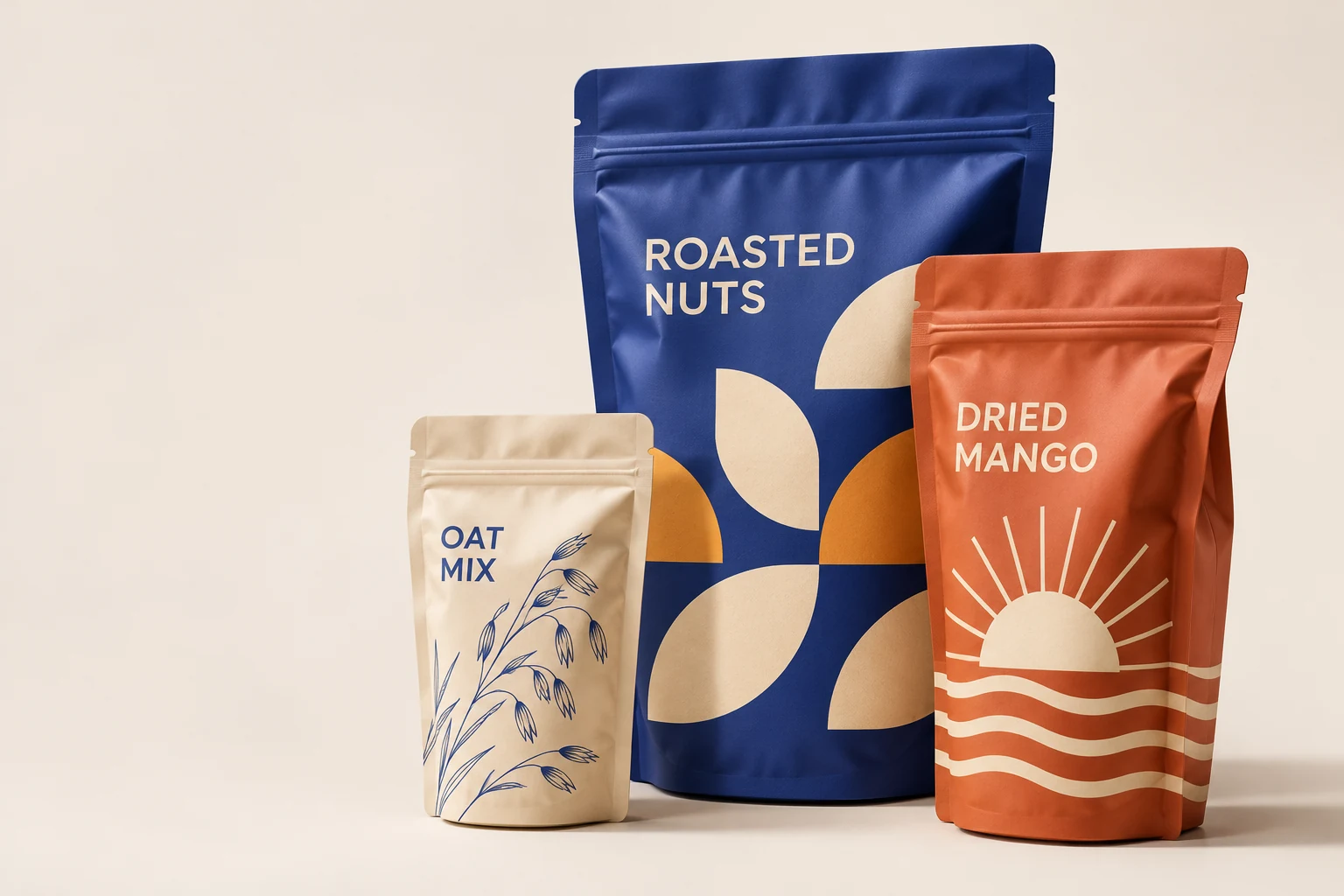
01 / Understand the format
Custom Stand-Up Pouches: Structure & Uses
A stand-up pouch uses a folded bottom that opens as the pouch is filled. The flat dimensions describe an empty pouch; the filled footprint, usable capacity and standing behavior depend on the gusset geometry and the product inside. Start with your actual fill rather than a weight printed on a similar bag.
Compare packaging formatsConnect product bulk, target weight and headspace to the open pouch, including the space needed for filling and the final seal.
Plan brand graphics around the filled viewing area, with deliberate positions for a window, opening feature and product information.
Match the laminate, closure and fill opening to your packing method, handling conditions and consumer use.
02 / The purchase specification
Stand-Up Pouch Sizes, Gussets & Closures
An approved pouch drawing should separate external dimensions, the bottom-fold convention and usable space. These six details turn a visual reference into a purchase specification.
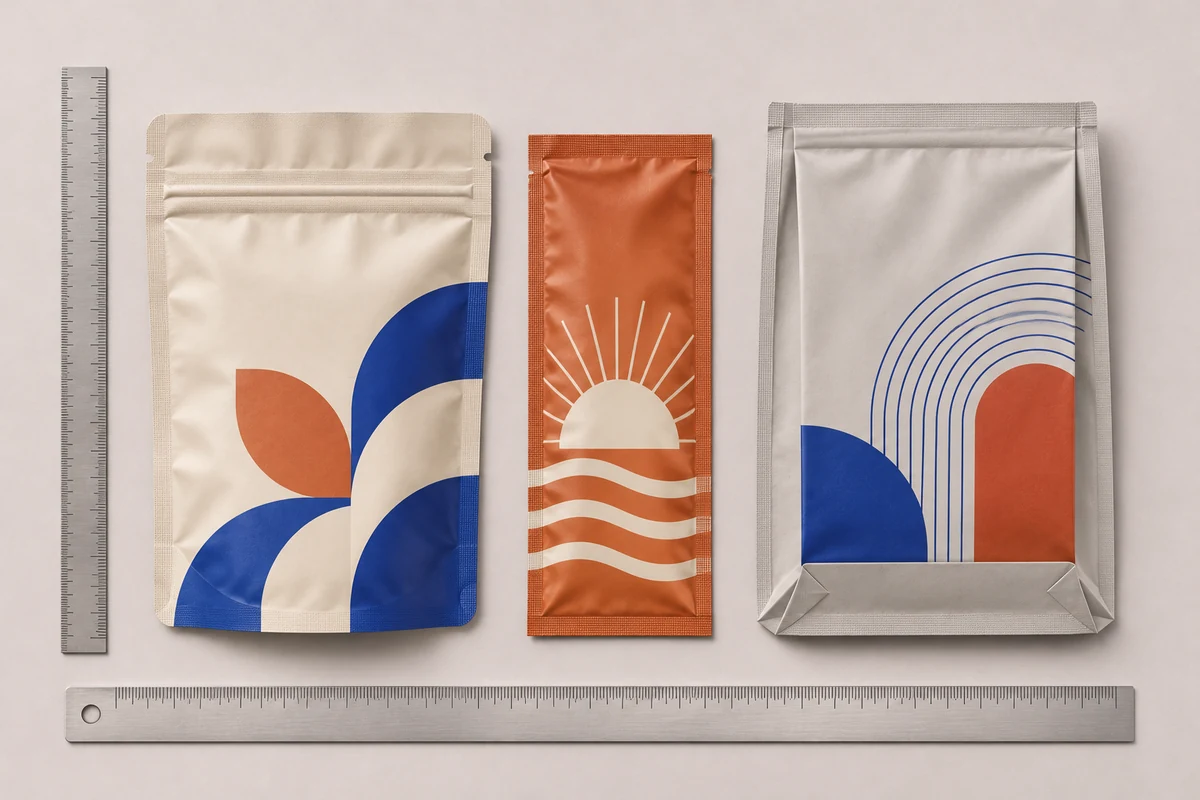 01 / WIDTH
External Width & Clear Filling Opening
External flat width includes the side-seal areas. The available opening and internal space are smaller, and must still admit the filling nozzle or the product itself.
Flat external width, side-seal widths and the minimum clear opening required by your filling method.
 02 / HEIGHT
Pouch Height & Top-Seal Allowance
Overall height includes areas used by the top seal, tear feature and any zipper. Usable fill height ends below the closure and the space reserved to keep the seal zone clean.
Overall height, top-seal allowance, closure position and the expected filled level.
 03 / BOTTOM GUSSET
Bottom Gusset: Folded and Opened Dimensions
A gusset dimension may be written as a folded depth or as the full opened dimension. A drawing prevents a doubled or halved interpretation and locates the bottom seals.
Gusset depth with a section drawing, the agreed measurement convention and a filled sample if available.
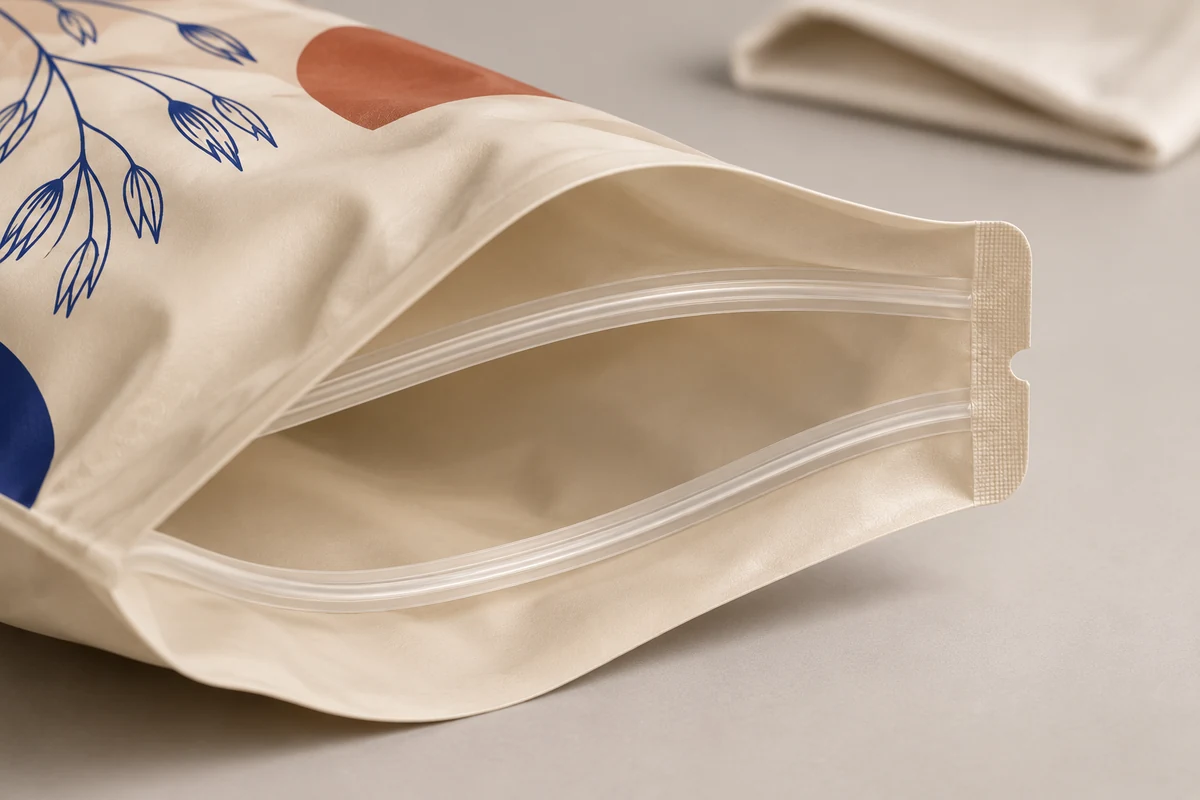 04 / OPENING & RECLOSURE
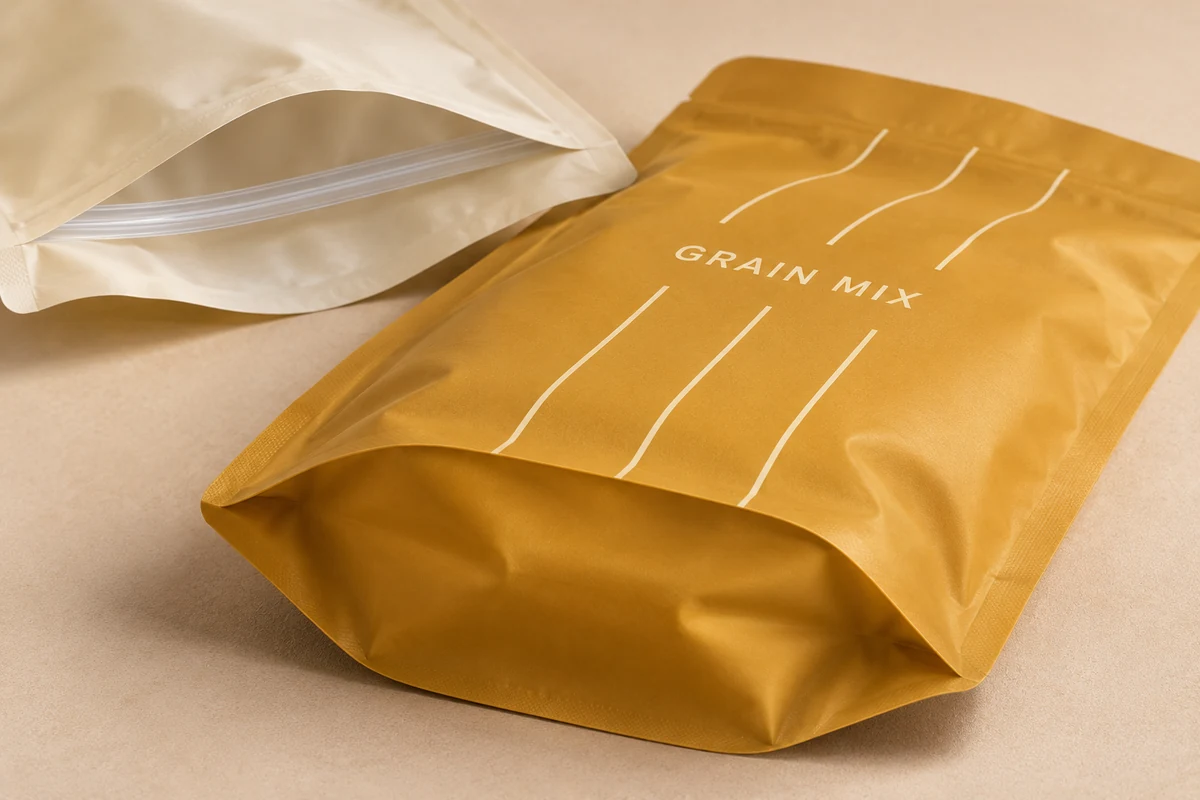
Initial Heat Seal & Resealable Zipper
The initial heat seal protects the unopened pack. A zipper, where specified, supports reclosure after opening and needs room for both filling and access.
First-opening method, reclosure need, zipper-to-top distance and the filling machine’s opening arrangement.
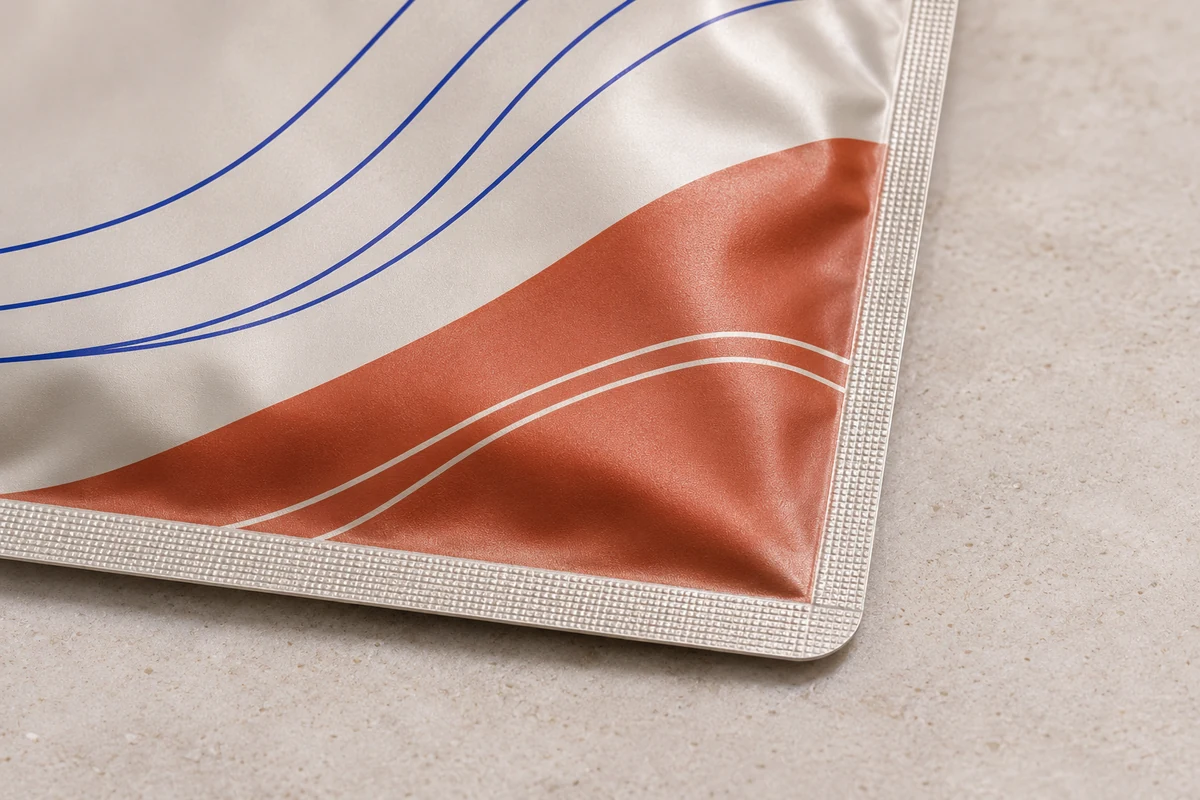 05 / SEALS & CORNERS
Seal Intersections & Rounded Corners
Side seals and bottom-seal intersections shape the base. Wrinkles, trapped product and changes in film thickness at folds are useful points to examine on filled samples.
Seal drawing, corner treatment, inspection criteria and the distribution conditions for the finished pouch.
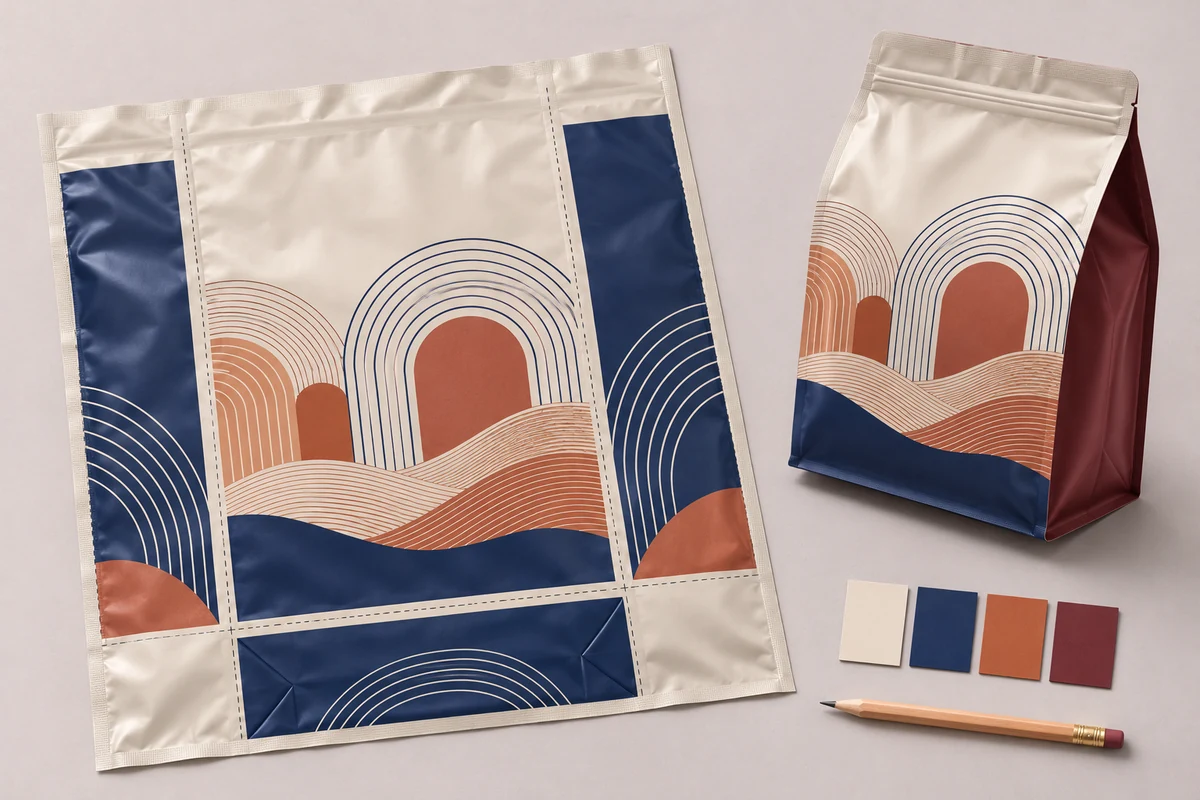 06 / DISPLAY AREA
Printed Display Area on the Filled Pouch
The front changes shape when the bottom opens and the product settles. Keep critical text and codes clear of folds, seals and any area that curves away from view.
Artwork dieline, front/back orientation, window position and the intended shelf or hanging presentation.
Use an approved drawing and representative samples to connect appearance, dimensions and intended use.
Add what you know to your brief ↗03 / Match the application
Filling Options for Dry Products, Powders & Liquids
Select the route closest to your product. The filling method, handling and consumer-use sequence influence the specification.
Let the product settle into its base.
Granules, snacks and treats can occupy very different volumes at the same weight. Shape, oil content and fragile edges influence the fill and structure.
- Product sample or bulk-density reference
- Target weight plus settled fill height
- Drop behavior, product edges and headspace
Keep the filling path clear of the seal.
Powder dust, a mound above the fill line or an included scoop can interfere with closing the pouch. The mouth and usable height need to suit the dosing process.
- Powder flow and dust behavior
- Nozzle clearance and scoop dimensions, if used
- Clean seal zone and closure access
Review the filled pouch under handling loads.
Pourable contents change how the pouch loads its base and seals. Formulation, filling conditions and the planned way of dispensing belong in the first discussion.
- Formulation, fill temperature and viscosity
- Filling route and final-seal method
- Filled-pack leak and distribution evaluation
04 / Industry requirements
Stand-Up Pouch Applications
Explore the protection, filling and handling questions behind each application.

Snacks, Nuts & Dried Fruit
Balance visible shelf impact with moisture, oxygen and oil-related protection needs.
Explore this industry ↗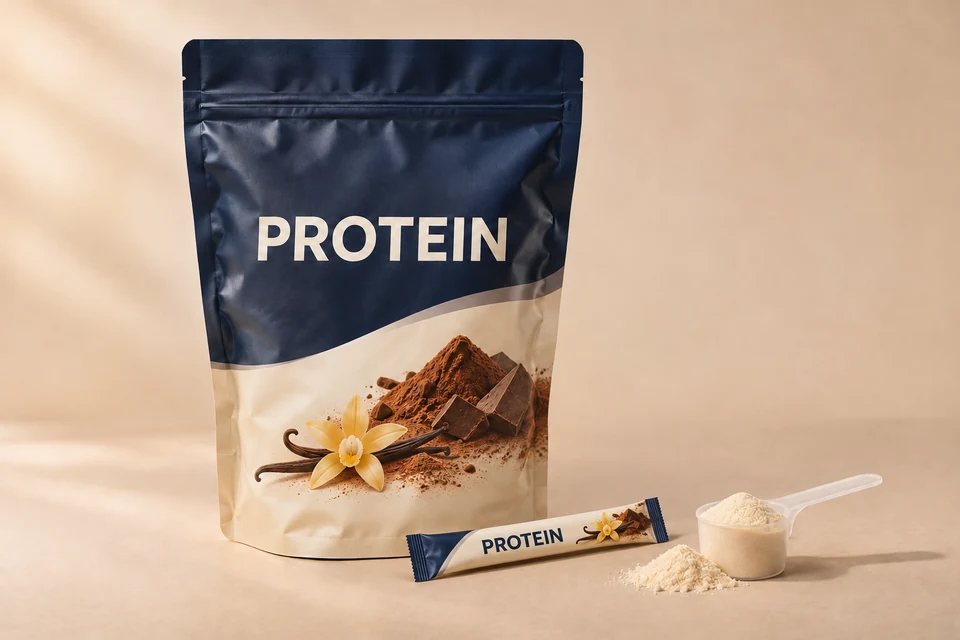
Supplements & Nutrition
Plan space for powders, scoops and repeat opening while keeping the seal area clean.
Explore this industry ↗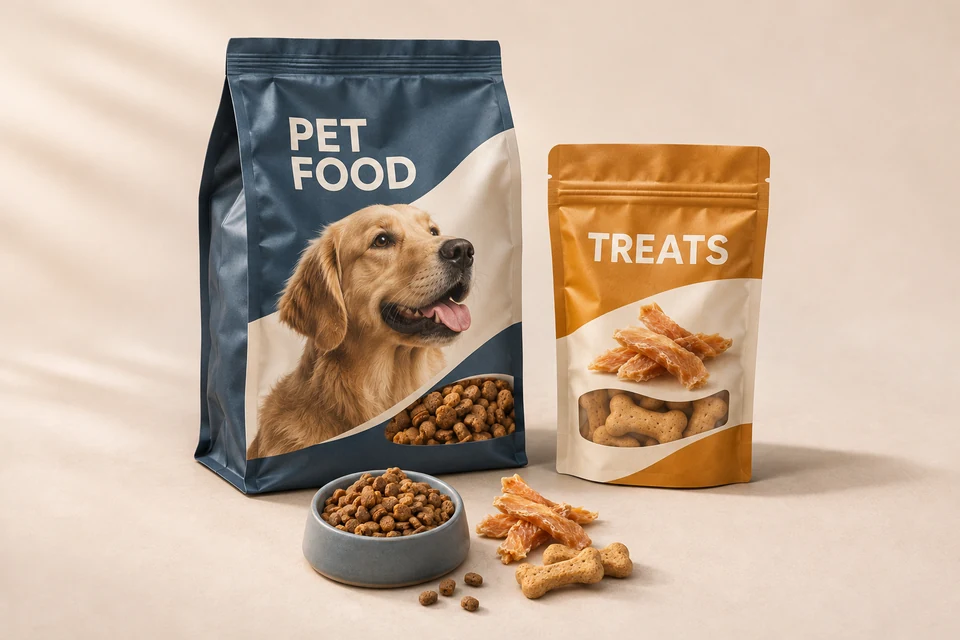
Pet Food & Treats
Connect product shape, fats, fill weight and the way a pet owner retrieves each serving.
Explore this industry ↗05 / Material decisions
Barrier Films & Material Selection
Film appearance alone does not establish protection, processing compatibility or an end-of-life outcome. Define the role and the evidence together.
Carries the artwork and the specified gloss or matte appearance.
Print method, scuff exposure and artwork visibility on the filled pouch.
Controls the relevant transfer of moisture, oxygen or aroma, with light screening where needed.
Product sensitivity, storage conditions and the barrier evidence needed for the target shelf life.
Contributes handling strength and the way the bottom unfolds and holds its shape.
Puncture sources, fold behavior, stiffness and filled-pack handling.
Faces the contents and forms the seals at the pouch-making and filling stages.
Product compatibility, final-seal conditions and the supporting material documentation.
06 / A closer design decision
Filled Capacity & Bottom-Gusset Design
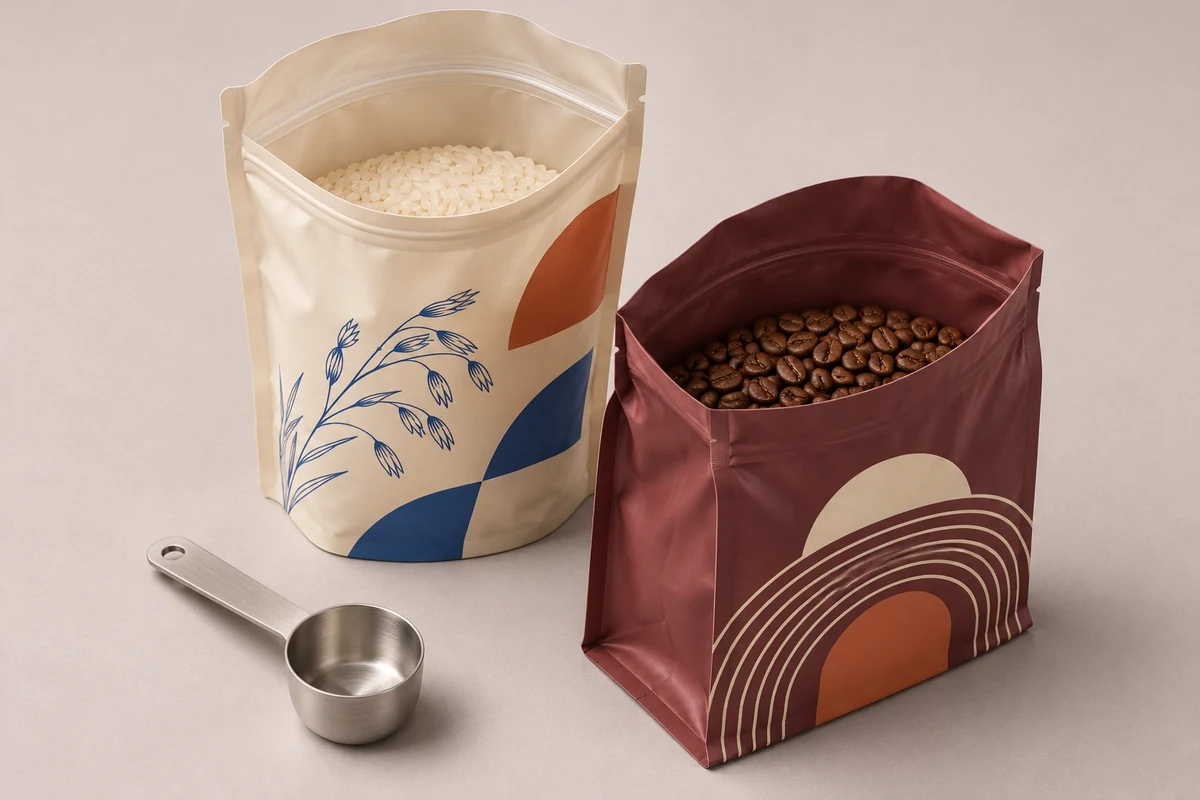
A pouch that fits coffee beans may be too large for a dense powder and too small for a light snack. Use a real fill trial to close the gap between dimensions and a sellable pack.
Start with occupied volume
Provide the actual product or a measured bulk-density reference. Include changes caused by settling, aeration or irregular pieces.
Leave working space
Allow for the nozzle, product fall, any scoop and a clean top-seal area. A brim-full empty-pouch volume is not the production fill target.
Assess the filled base
Stand the filled pouch on the intended surface, view the front and check whether the bottom opens consistently after normal handling.
07 / Customization & print
Custom Stand-Up Pouch Shapes & Printing
Start with a standing base and customize the body proportions, zipper, window and artwork. Explore stand-up variations alongside other formats from our factory.
Shape illustrations from our wider factory range. Dimensions, materials, closures and tooling are confirmed for your application. Flat sachets and zipper variants share their underlying pouch construction.
Another format in our factory range
Three-Side Seal Pouch
Flat format · Three sealed edges
A compact flat pouch with one edge left open for filling. Customize the usable area, tear location and front-and-back artwork.
Explore this packaging formatA starting point for this product
Stand-Up Pouch
Bottom gusset · Shelf display
A bottom gusset opens as the pouch fills. Customize width, height and gusset depth, then place your artwork around the seal and fold zones.
Discuss this formatAnother format in our factory range
Flat Zipper Pouch
Resealable · Flat body
A flat pouch with a resealable zipper. Coordinate the zipper position, opening clearance and printed information with the fill volume.
Explore this packaging formatA starting point for this product
Stand-Up Zipper Pouch
Resealable · Bottom gusset
Combine a standing base with a zipper. Customize the body proportions, reclosure position and artwork for repeated use.
Discuss this formatAnother format in our factory range
Pillow Pack
Back seal · Rollstock formed
A back-sealed pack formed from rollstock. Match film width, print repeat and end-seal allowances to the filling machine and product.
Explore this packaging formatAnother format in our factory range
Spout Pouch
Dispensing fitment · Custom position
Choose a center or corner spout around pouring, grip and filling access. Coordinate the pouch shape, fitment and printed use instructions.
Explore this packaging formatAnother format in our factory range
Back-Seal Gusseted Bag
Back seam · Expanding sides
A back seal and folded side gussets provide additional volume. Plan the rear seam, gusset folds and artwork across the formed faces.
Explore this packaging formatAnother format in our factory range
Side-Gusset Pouch
Side folds · Added volume
Side gussets expand around the contents. Customize the panel proportions and plan graphics that remain readable across the folded surfaces.
Explore this packaging formatAnother format in our factory range
Flat Sachet
Small portions · Sample packs
A small flat pack for a single portion or sample. Reserve enough room for seals, the tear path and legible artwork at the final size.
Explore this packaging formatAnother format in our factory range
Flat-Bottom Pouch
Box-style base · Multiple panels
A flat base and defined side panels create a structured pack. Customize panel widths, base depth and artwork across the visible faces.
Explore this packaging formatAnother format in our factory range
Flat-Bottom Zipper Pouch
Structured base · Resealable top
Bring a resealable opening to a flat-bottom format. Review the zipper, opening access, panel layout and the filled-pack proportions together.
Explore this packaging formatA starting point for this product
Die-Cut Shaped Pouch
Custom outline · Tooling review
An individually shaped outline can support a distinctive display. Review die-cut tooling, seal margins, filling access and artwork together.
Explore this packaging formatCustom artwork for production, with colors approved on the specified material.
Review artwork and presentation before confirming the production brief.
Discuss matte or gloss appearance, clear areas and artwork across the finished pack.
Zipper & opening
Describe whether the pack is single-use or repeatedly opened. Zipper format and tear features are selected around access, filling and available configurations.
Window & opacity
A window shows the product but changes the printed and light-screening areas. Set its position after checking the filled product level.
Gloss or matte artwork
Use up to 10-color gravure printing for production. Confirm color and surface references; digital artwork samples serve a different purpose from production validation.
Material direction
Conventional laminates and mono-material, compostable or PCR directions have different requirements. Review the whole pouch, including any closure, against the project goal.
Send your preferred format, dimensions, material needs, artwork and order quantity. We will review the combination with you.
Customize my packaging08 / Practical project checks
Standing Stability, Zipper & Seal Checks
Select a point to review, then add it to your inquiry. Product, material, filling and handling conditions need to be considered together.
Look at the filled shape before adding film thickness.
- What to record
- Fill weight, product distribution, base opening and photographs of the pouch from the front, side and underneath.
- What to review
- Gusset dimensions, bottom-seal geometry, product settling and the balance between height and footprint.
Follow the product from nozzle to seal.
- What to record
- Product in the seal area, fill height, nozzle position and examples of both empty-pouch and filled-pouch seals.
- What to review
- Mouth clearance, filling control, clean sealing allowance and the actual heat-seal settings.
Check access as well as the closure profile.
- What to record
- The condition after first opening, powder or crumbs in the profile, and how users grip and reclose the pouch.
- What to review
- Zipper location, opening clearance, selected closure and the consumer-use sequence.
Locate the leak at a specific seam.
- What to record
- Leak location, whether it appears before or after handling, affected lot and filled-pack samples.
- What to review
- Fold intersections, seal continuity, local product damage and the agreed handling conditions.
09 / Connected manufacturing
Our Pouch Manufacturing Process
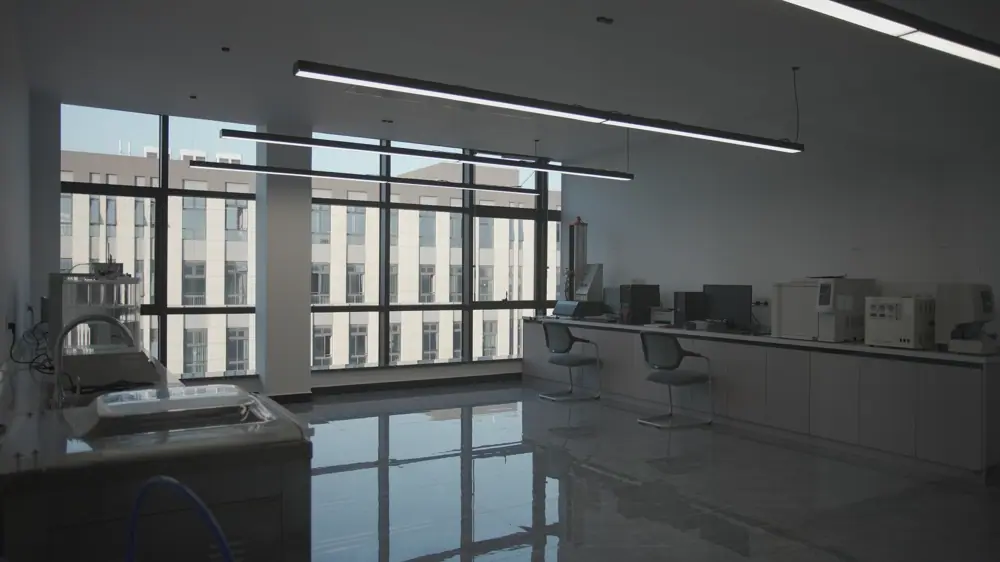
Printing, material conversion, pouch making and inspection are coordinated in one factory. The agreed construction determines the exact production route.
Factory photographs / use the arrows or swipe
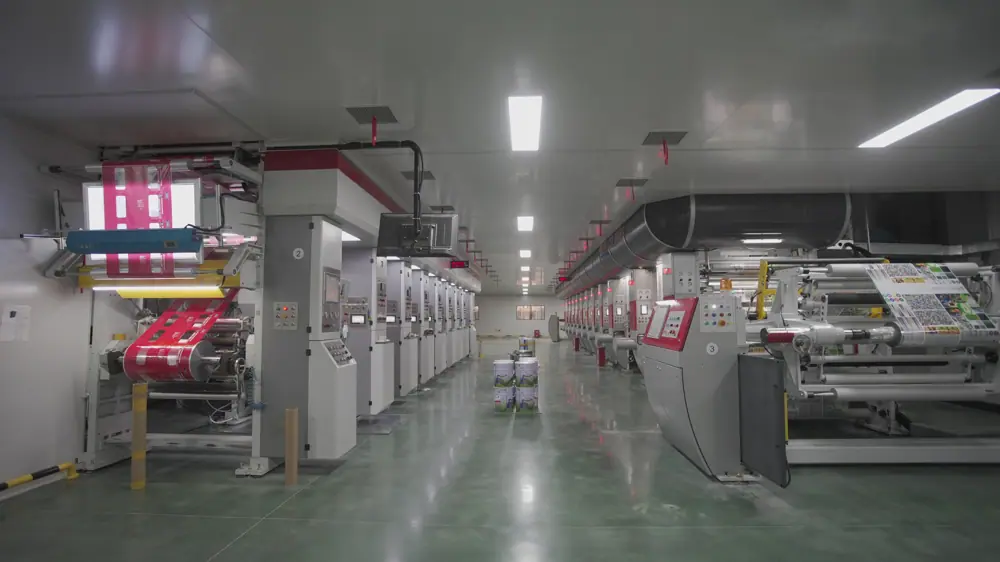
Printing
Approved artwork is carried into the production web.
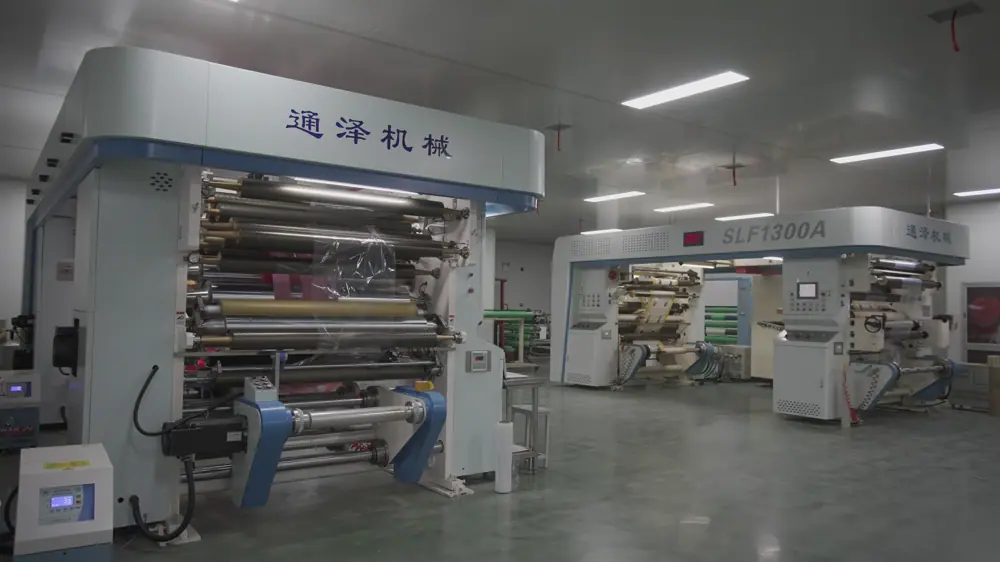
Lamination
Layer selection and converting conditions remain connected.
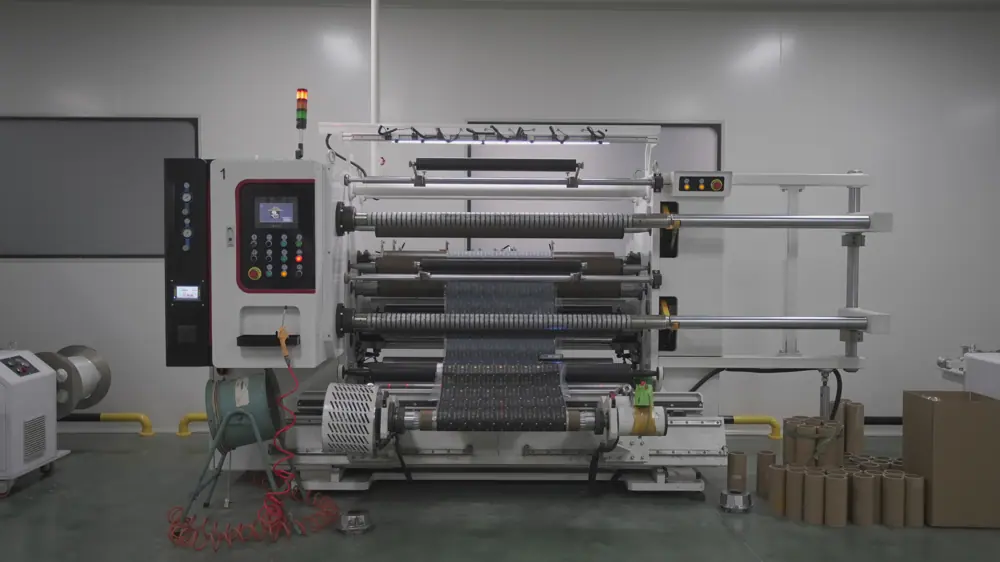
Slitting
The web is prepared for the specified pouch-making layout.
IVAPAK has supplied custom printed flexible packaging since 2003. Confirm the construction, available options and acceptance requirements before production.
Explore manufacturing10 / Quality & documentation
Quality Inspection & Material Documentation
Tie each inspection point and supporting document to the product you are ordering.
- Dimensions & usable opening
Agree measurement points for width, height and gusset, plus the opening clearance and placement of closures or tear features.
- Seal geometry
Define the seals to inspect and how wrinkles, channels or inconsistent fold intersections will be assessed.
- Filled-pack behavior
Plan standing, opening, reclosure and handling checks with the actual fill. Record the conditions and acceptance criteria.
- Print & material identity
Tie artwork revision, color reference, laminate and applicable food-contact documents to the ordered specification.
11 / Before the production order
Samples, MOQ & Pre-Production Approval
MOQ is reviewed by size, structure and quantity per design. Digital printing supports artwork sampling; material samples and filled-pack or process trials answer separate questions. Ask our factory to confirm the sample format, approval steps and production quotation for your project.
Approve the dieline
Confirm dimensions, gusset convention, opening positions, print orientation and the safe areas for important artwork.
Approve a filled sample
Evaluate capacity, front appearance, standing and consumer access with the intended contents.
Approve the packing conditions
Establish the final seal and handling checks on your equipment, then record the accepted specification for production.
12 / Your project brief
Request Pricing for Your Custom Pouches
Fill in what you know. This tool organizes the details into the inquiry form below, ready for your review.
A current drawing, material specification, filled-pack photo or sample can explain the starting point. Send supporting files to Allen after your initial inquiry.
Allen@ivapak.comYour message will appear below for review. Adding a brief does not send the form.
13 / Practical answers
Custom Pouch Ordering FAQs
Clear answers for purchasing, packaging development and artwork teams.
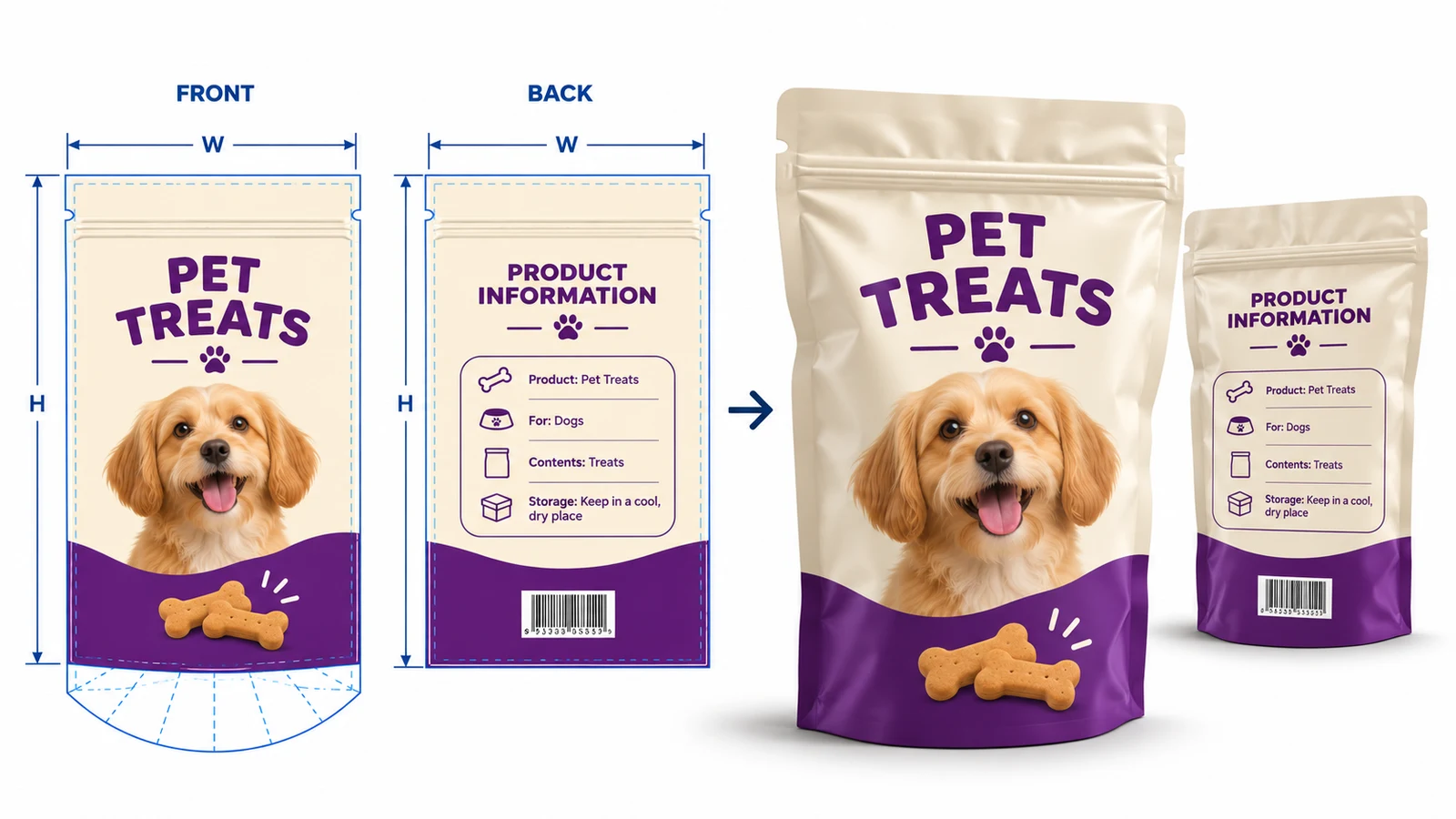
Illustrative artwork-to-pack concept. Final dimensions, seal areas and construction are confirmed on your project drawing.
How should we specify stand-up pouch size?
Use external flat width, overall height and a clearly defined bottom-gusset measurement. Add seal widths, closure positions and the target fill. An annotated drawing or marked existing pouch is more reliable than a weight-based size name.
Can you choose a pouch from our target weight?
Weight is a starting point. We also need the product’s volume or bulk behavior, required headspace and filling method. A filled sample helps confirm capacity and the way the bottom opens.
Does a zipper replace the final heat seal?
A zipper supports reclosure after opening. For a heat-sealed retail pouch, the initial top seal remains a separate part of the pack specification and is completed after filling. Define both features on the drawing.
Can a stand-up pouch include a window?
A window can be reviewed with the material and print design. Its size and location need to suit the visible fill level, barrier requirements and any light-sensitive contents.
Can we add a coffee valve or another accessory?
Send the product, filling conditions and the accessory requirement. Valve type, position, availability and compatibility are assessed for the project rather than assumed for every stand-up pouch.
Can we change to a recyclable material without changing the design?
A material change can affect stiffness, sealing, barrier behavior and the base. Review the complete construction, closure and target-market recycling conditions, then evaluate the filled pouch and packing process.
What are the printing method and MOQ?
Production uses gravure printing with up to 10 colors; digital printing is used for sampling. MOQ depends on the size, material, artwork and quantity for each design, so include these details in your inquiry.
When can the pouches be ready?
Standard orders typically take approximately 15 days after artwork approval. The confirmed specification, quantity and production schedule determine the final timing. Shipping and arrival time are additional.
14 / Factory-direct inquiry
Request a Factory-Direct Quote
Share the application, reference pack or requirements you already have. Allen can help connect the format, material, print and production plan.
Dimensions, structure, available options, artwork, quantity per design and delivery requirements are reviewed together.
Around 15 days for standard production.After artwork approval, subject to the confirmed order schedule. Shipping and arrival timing are additional.
Tell us about your project.
15 / Repeat supply
Production Lead Times & Repeat Orders
Review changes to the contents, process, artwork or destination market before placing a repeat order.
Retain the drawing, product fill, closure choice and accepted appearance so the next order has the same starting point.
A new recipe, fill weight, nozzle or material can change the pouch behavior even when the artwork is unchanged.
If an issue arises, share the lot reference, photographs, samples and when it occurs to focus the review.