
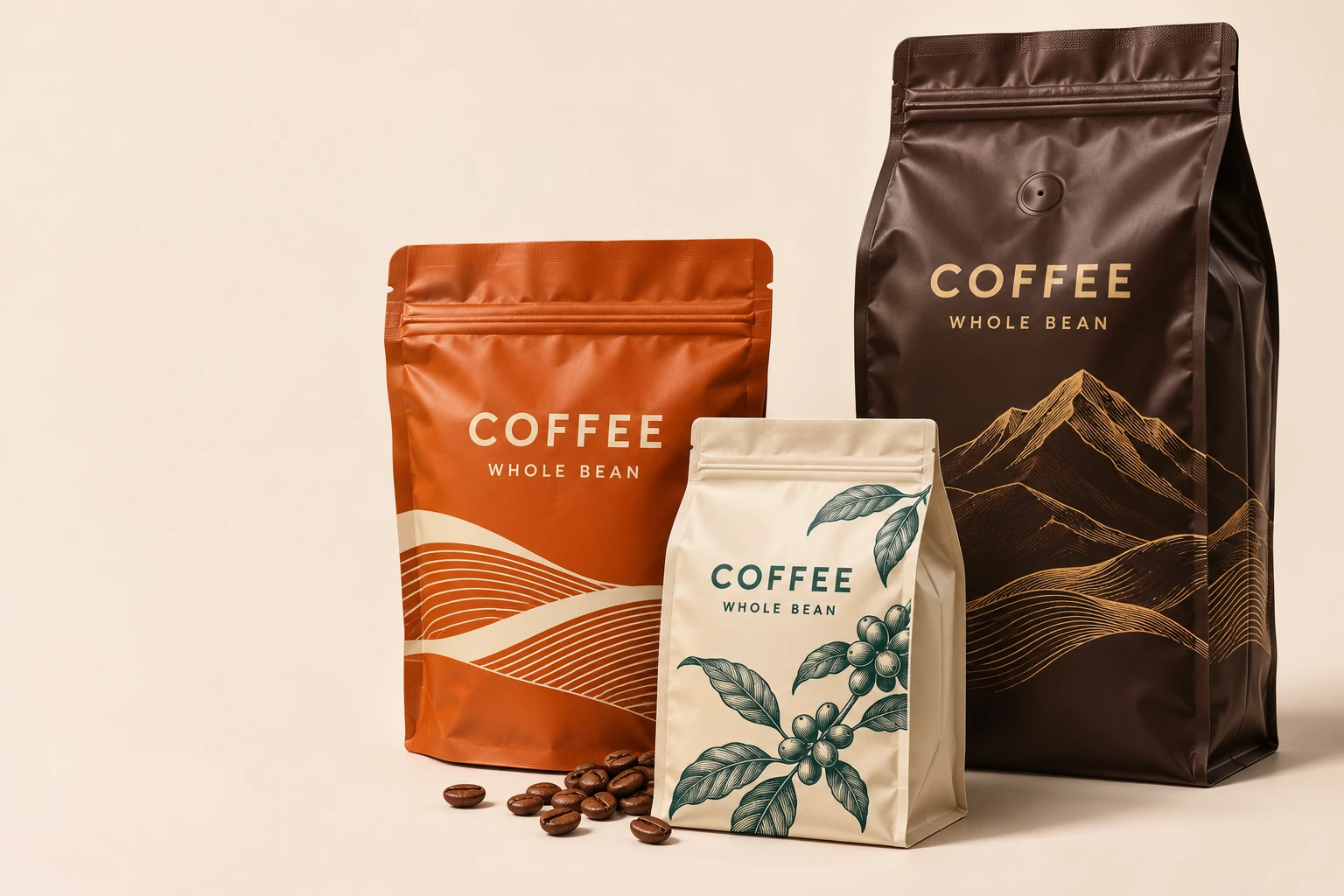
Custom Coffee Bean Bags
Your roast deserves a package with a plan.
Custom printed coffee bean bags, made around your roast, filling process and retail format. Work directly with IVAPAK on bag dimensions, barrier materials, degassing valves and a consistent printed range.
Keep the roast in focus. Plan for the gas.
Freshly roasted beans release carbon dioxide. Your bag needs to manage that gas while the laminate and seals limit exposure to the surrounding environment. The right brief connects roasting, packing and distribution.
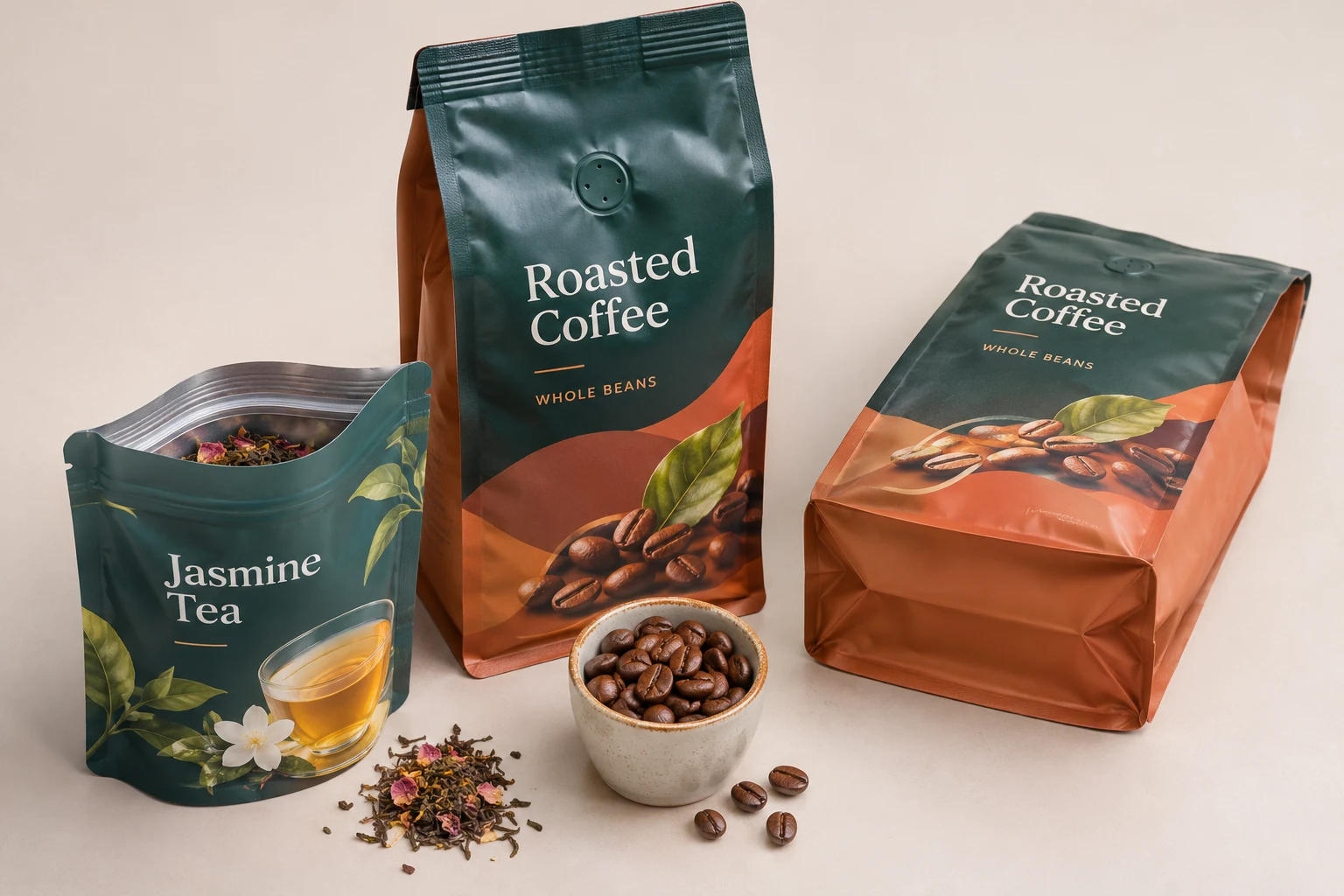
Degassing
Share the interval between roasting and filling. Valve choice and position must suit the bag, product and packing method.
Aroma & oxidation
Set a shelf-life target and storage conditions. The valve alone does not define oxygen protection; review the complete laminate and seals.
Shelf presentation
Choose a base that stands reliably at the intended fill weight, with enough headspace for filling and sealing.
Choose the coffee bag around the way you sell.
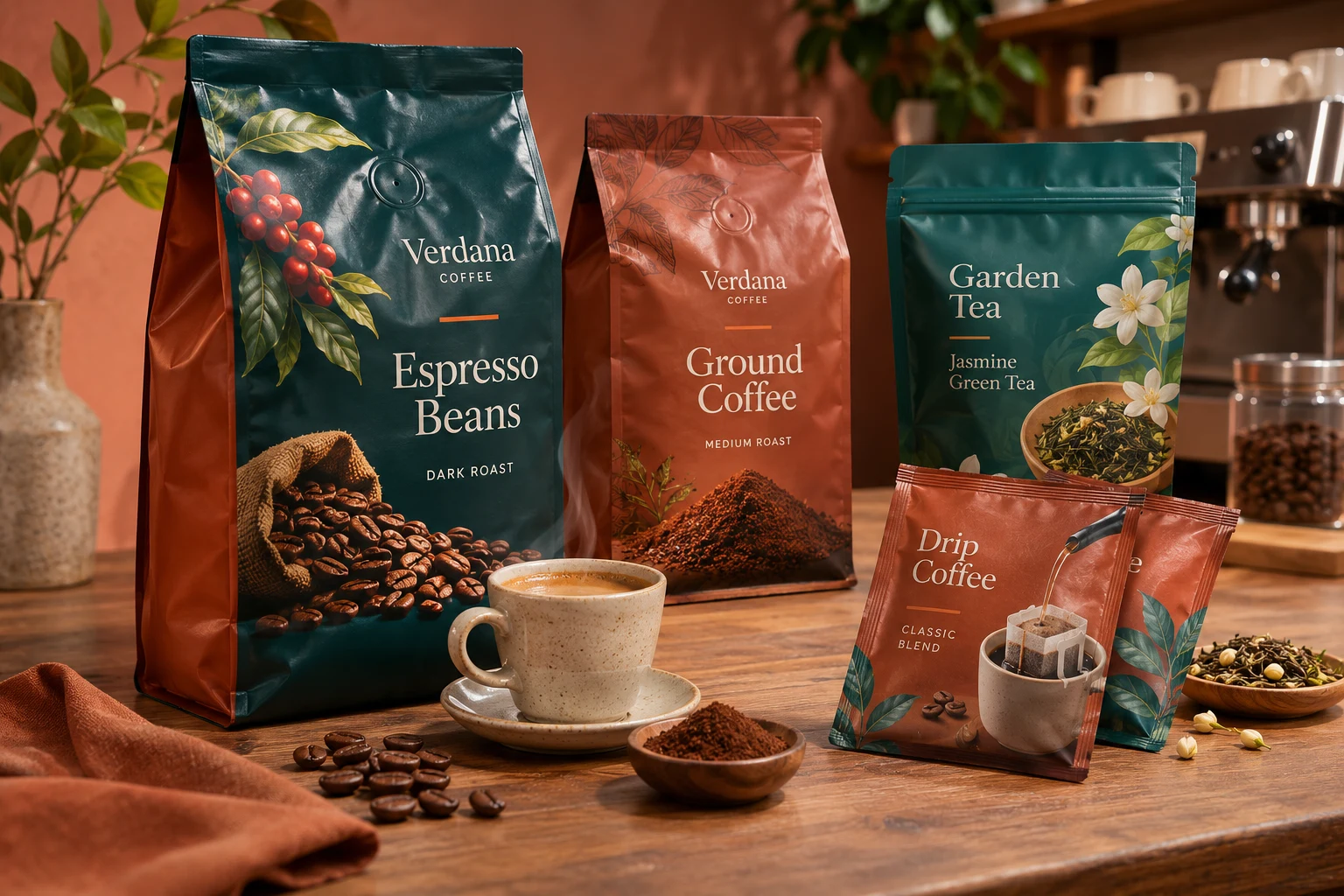
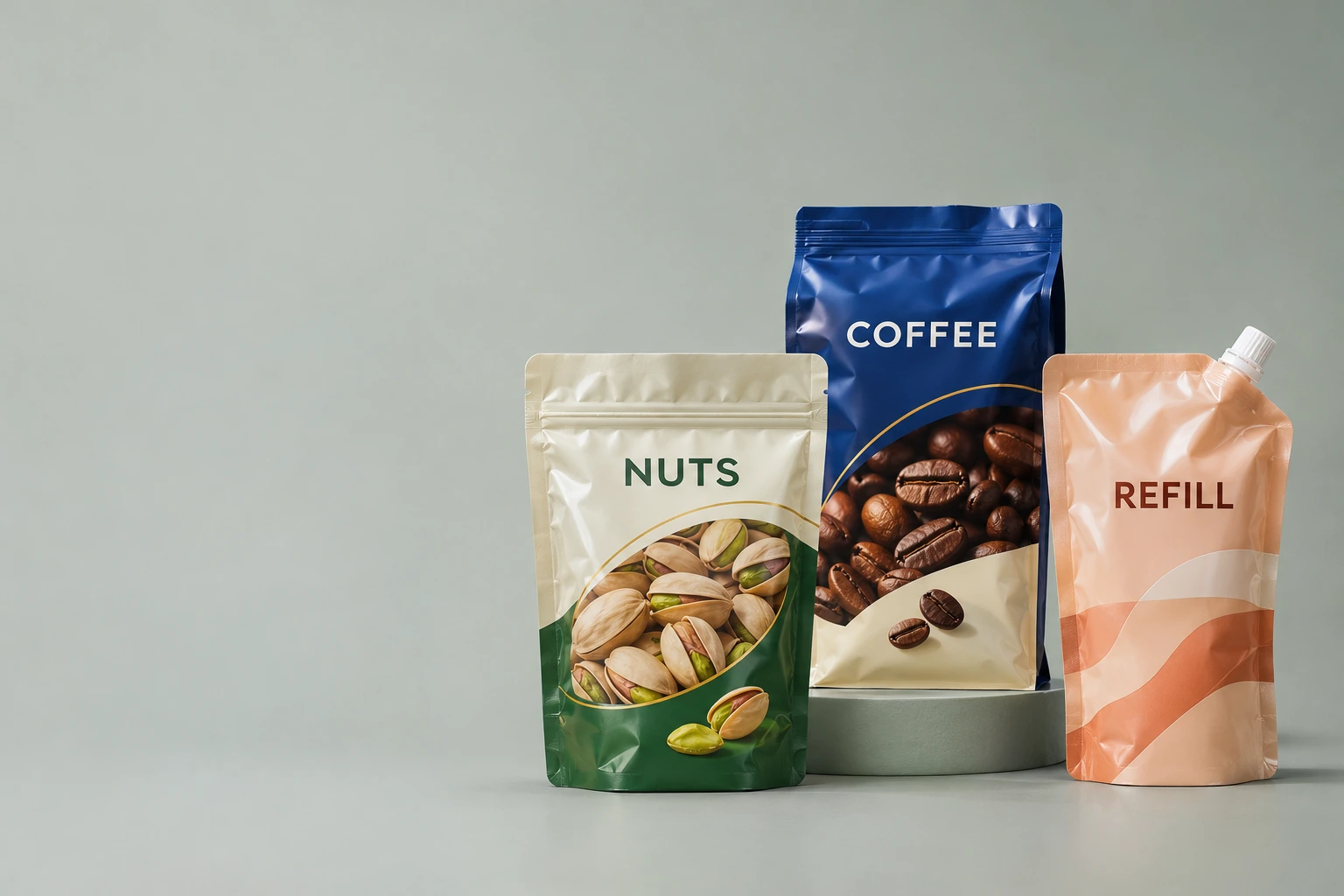
Flat-bottom bags
A box-style base and separate display panels suit retail coffee ranges. Check the filled depth, valve zone and shelf footprint.
Explore this formatStand-up pouches
A bottom gusset supports smaller retail packs and sample ranges. Review zipper access and how the filled pouch opens.
Explore this formatThree-side seal bags
A compact format for tasting packs and single-release samples. Confirm the open filling side and tear-notch location.
Explore this formatCustom materials. Purpose in every layer.
Metallized or foil-containing laminates can be starting points for opaque coffee packaging. A mono-material route needs its own review of barrier, valve and zipper compatibility.
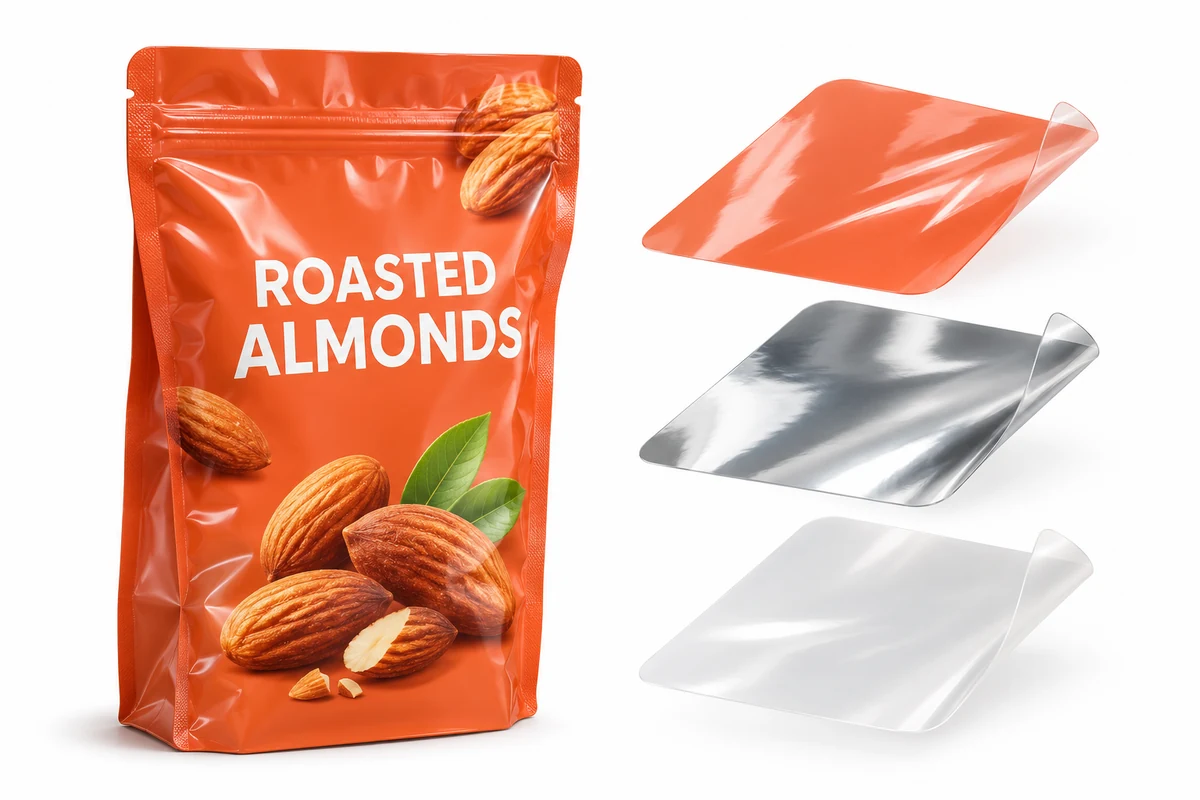
Metallized barrier laminate
Carries the graphic and supports handling. Specify print coverage and surface finish.
A thin metal coating adds barrier and light protection. Confirm the film grade and measured performance.
Forms the product-contact sealing surface. Select the grade and gauge around the sealing process.
An opaque structure family. Metallized PET is not a separate aluminum foil layer. Adhesive and ink systems are part of the final specification; not all functional layers are shown.
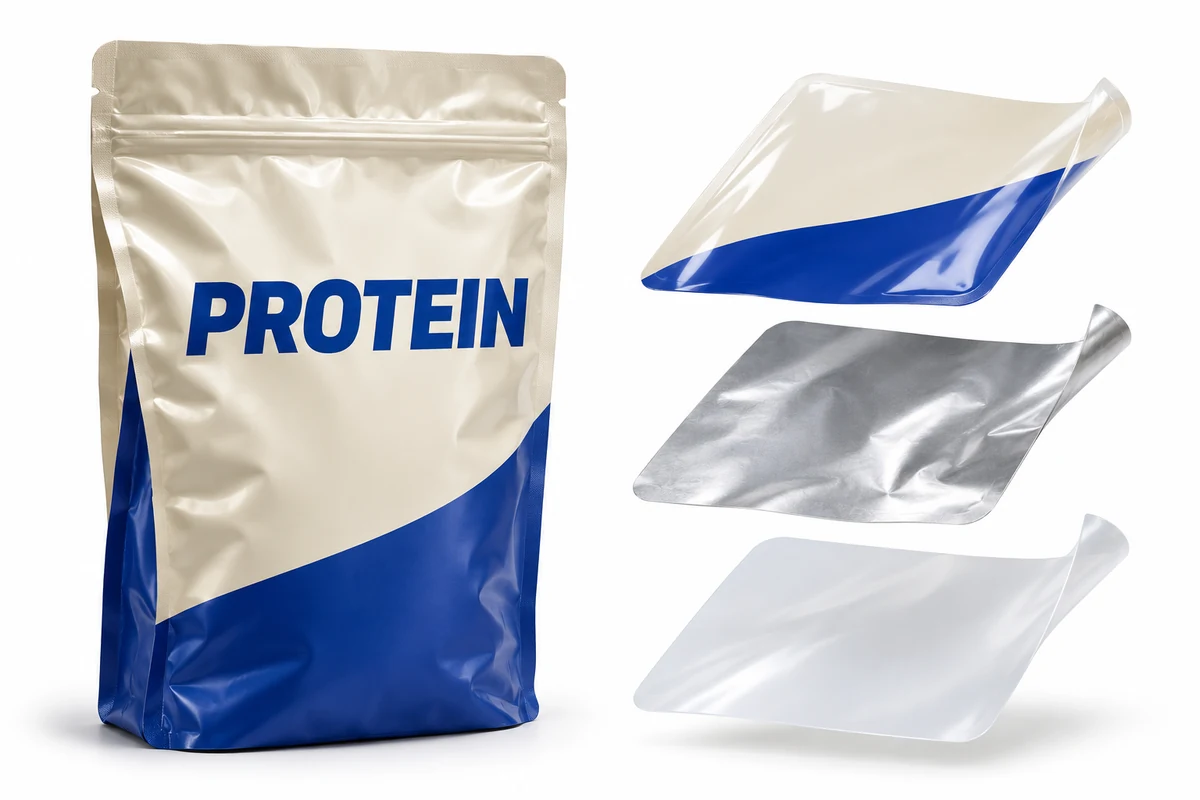
Aluminum foil laminate
Supports printing and handling, with the intended finish agreed before production.
A separate foil layer provides an opaque barrier. Gauge, flexing and pinhole risk need review.
The sealing layer is selected for product compatibility and packing conditions.
For applications requiring an opaque barrier. Validate the complete pack rather than assuming a shelf life. Adhesive and ink systems are part of the final specification; not all functional layers are shown.
Mono-material development route
Review orientation, stiffness and print requirements for a PE-based outer web.
A same-family architecture may support a recycling route. Any barrier additions need separate compatibility review.
Match the sealant to the equipment and confirm the performance of closures and the converted pack.
Simplified functional roles, not a fixed three-layer recipe. Recyclability depends on the full pack and available local systems. Adhesive and ink systems are part of the final specification; not all functional layers are shown.
Five decisions before the first bag is printed.
Coffee and fill weight
Whole beans, roast profile and nominal weightBulk density changes the space needed; a gram weight is not a bag dimension.
Valve and position
Valve requirement and preferred panelCheck valve clearance against artwork, fill level, zipper and packing equipment.
Dimensions and opening
Width, height, gusset and filling accessUse a filled sample to check standing stability and the sealing area.
Barrier and storage
Shelf-life goal, destination and warehouse conditionsCompare OTR/WVTR only with stated test conditions and the exact structure.
SKU quantities
Artwork count and quantity per designSeparate initial order volumes from expected replenishment batches.
What kind of coffee launch are you planning?
Choose a starting point. Add it to the inquiry, then fill in your own details.
Retail coffee bean range: please advise on flat-bottom bags, a valve, zipper and print consistency across roast variants.
Test the filled bag with your coffee.
- Fill with your beans and check usable volume.
- Assess valve placement and zipper access.
- Check the sealed pack after handling and shipment simulation.
- Validate the target storage period with the actual coffee.
Ask which sample is appropriate: an existing format sample, an artwork sample, a structure sample or a production trial. Their purposes and costs differ.
Discuss a sample plan ↗One family of bags. A distinct identity for every roast.
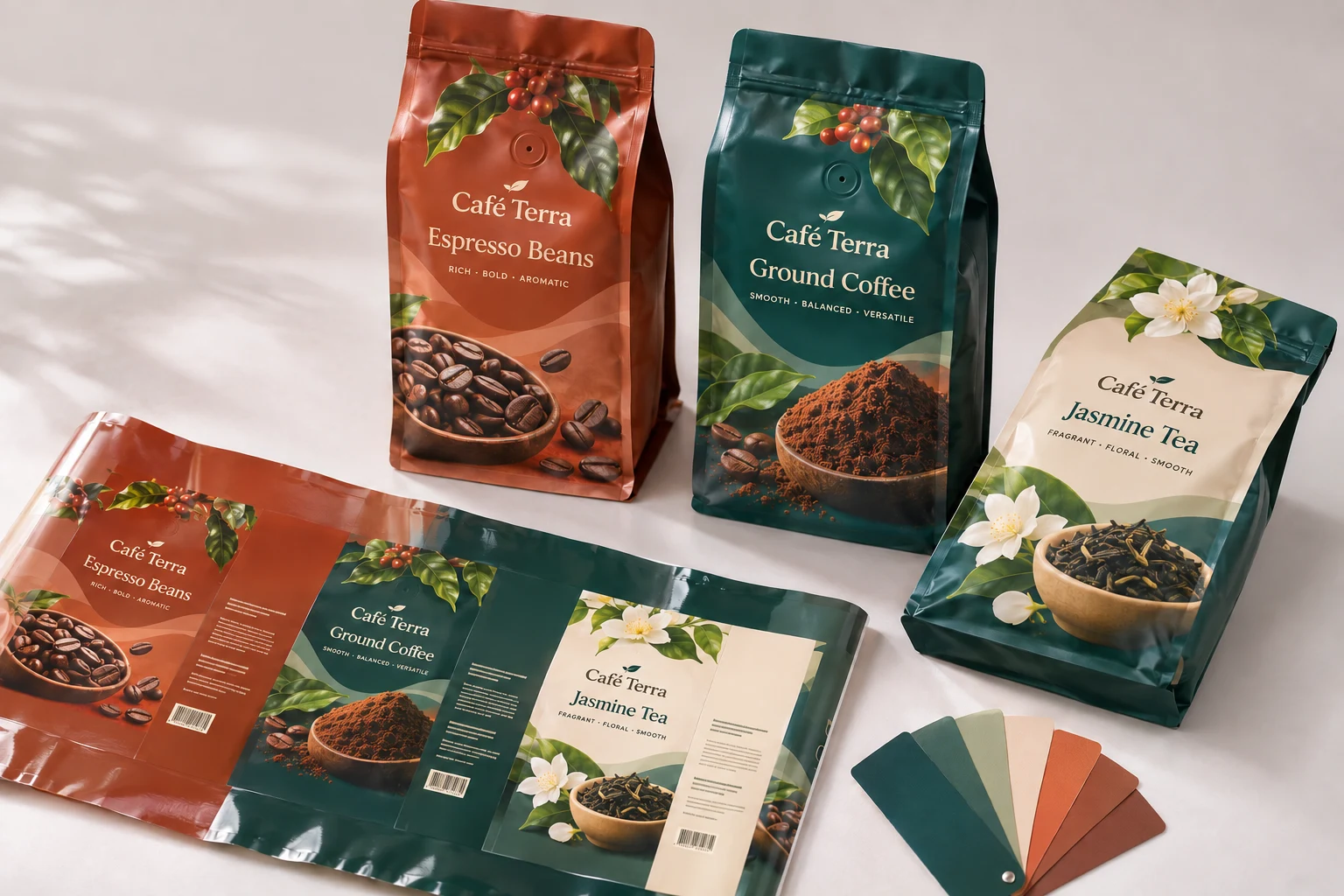
Plan the roast name, origin, tasting notes, barcode and valve position on the actual dieline. Large artwork areas can continue across the front, back and side panels; folds and seals need intentional clearance.
- Keep critical text away from folds, zipper and valve zones.
- Agree a print reference and review solids, fine type and contrast.
- Confirm the exact artwork version for every roast and pack size.
Production: gravure printing, up to 10 colors. Digital printing is used for sampling. Artwork approval does not replace material or filled-pack validation.
A factory conversation, from brief to batch.
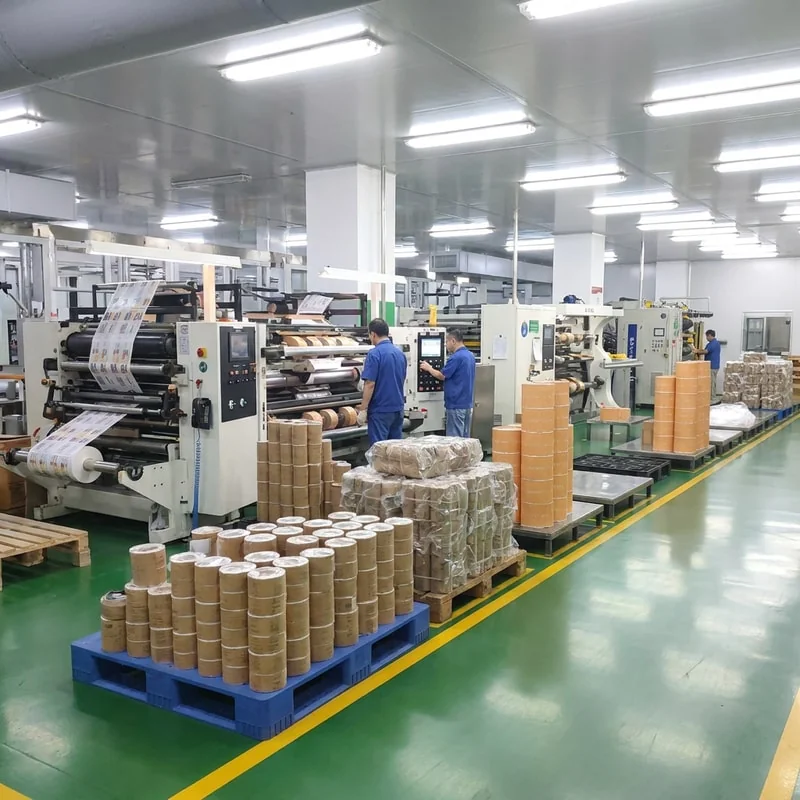
Shanghai IVAPAK Packaging Products Co., Ltd. has manufactured flexible packaging since 2003. Work directly with the production team to connect the agreed specification, approved artwork and inspection requirements.
Defined specification
Agree dimensions, construction, print reference, quantities and the checks required for your pack.
Relevant documentation
Request current BRCGS and ISO 9001 certificates, plus applicable material and SGS test information for your use conditions.
Six stages. One agreed production brief.
Confirm the brief
Product, format, dimensions, quantities and intended use.
Review the structure
Material candidates, closure or machine requirements and sampling.
Approve the artwork
Dieline, print reference, version and orientation.
Print & laminate
Gravure printing, lamination and the required curing stage.
Convert & inspect
Slit rollstock or make pouches, then inspect against the agreed specification.
Pack & dispatch
Confirm the packing list, shipment arrangements and reorder reference.
Do all coffee bean bags need a valve?
Not every process has the same requirement. Tell us when the beans are packed after roasting and how the sealed product is stored. We can review a valve configuration for your brief; a valve does not replace the required barrier structure.
Can you make 250 g, 500 g and 1 kg coffee bags?
We can review those target fill weights and custom sizes. Final dimensions depend on your bean density, headspace, gusset and filling process. Confirm fit with a sample instead of choosing dimensions from weight alone.
Can I use a window on a coffee bag?
A window changes light exposure and may affect the structure. Define the desired visible area and the required storage performance before approving a transparent zone.
Can coffee bags be recyclable?
A mono-material structure may be suitable after checking the required barrier and the compatibility of valves, zippers, inks and adhesives. Collection and recycling availability also depend on the destination market.
What affects the minimum order and price?
Dimensions, material, valve, zipper, printing cylinders, number of designs and quantity per design all affect the quotation. Send the pack sizes and SKU breakdown for a specific proposal.
Continue building your packaging brief.
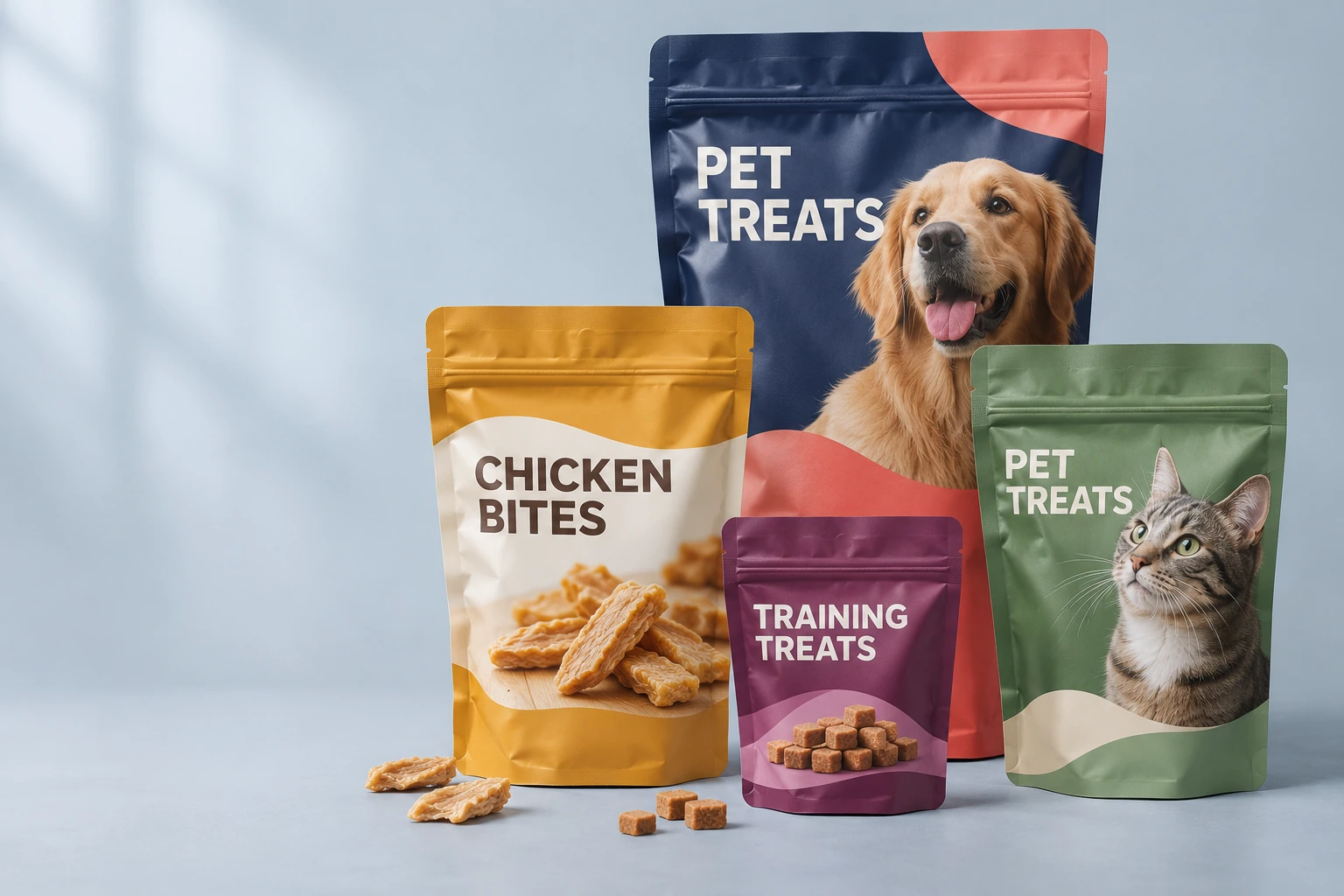 Pet treat pouches
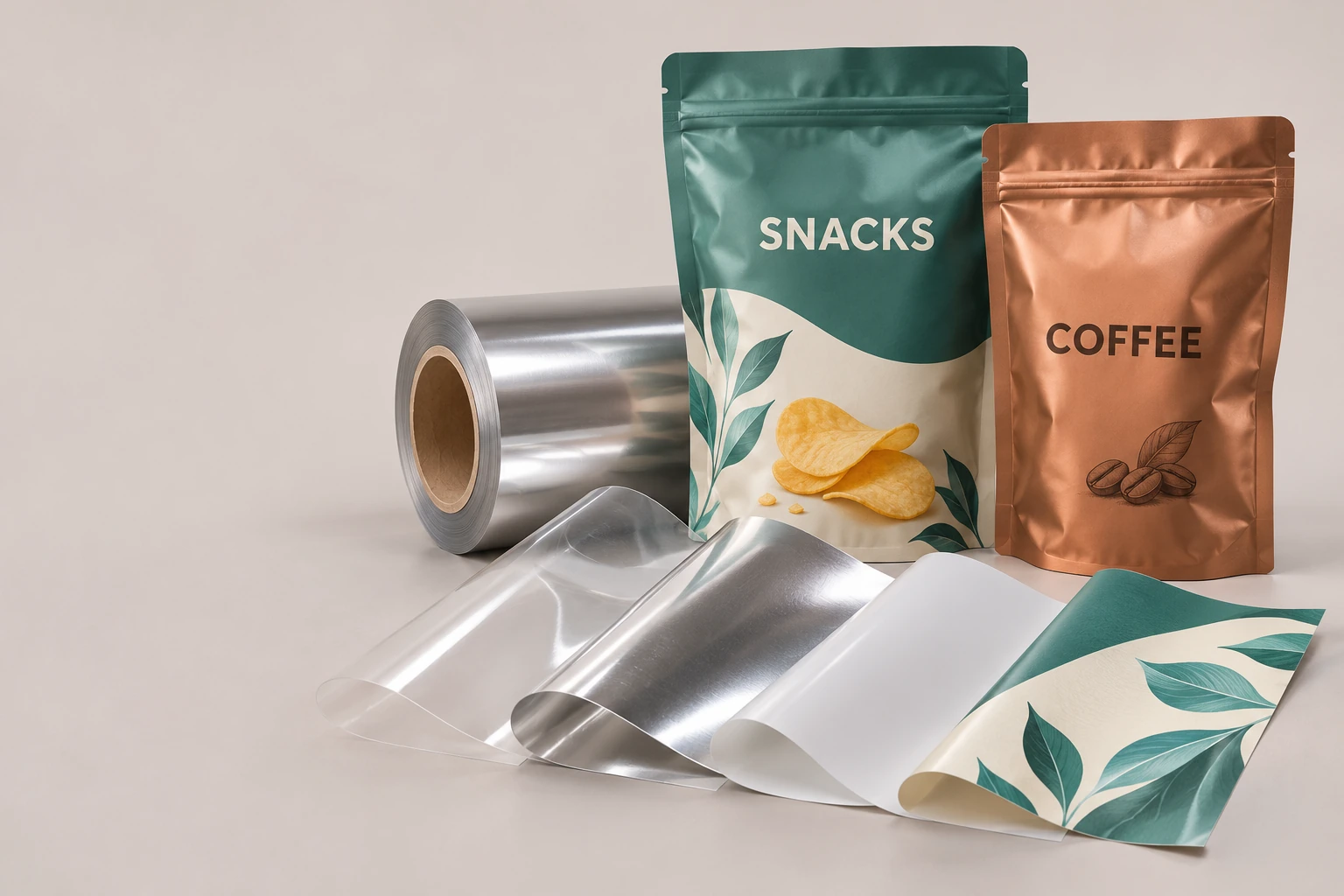 Materials & barrier structures
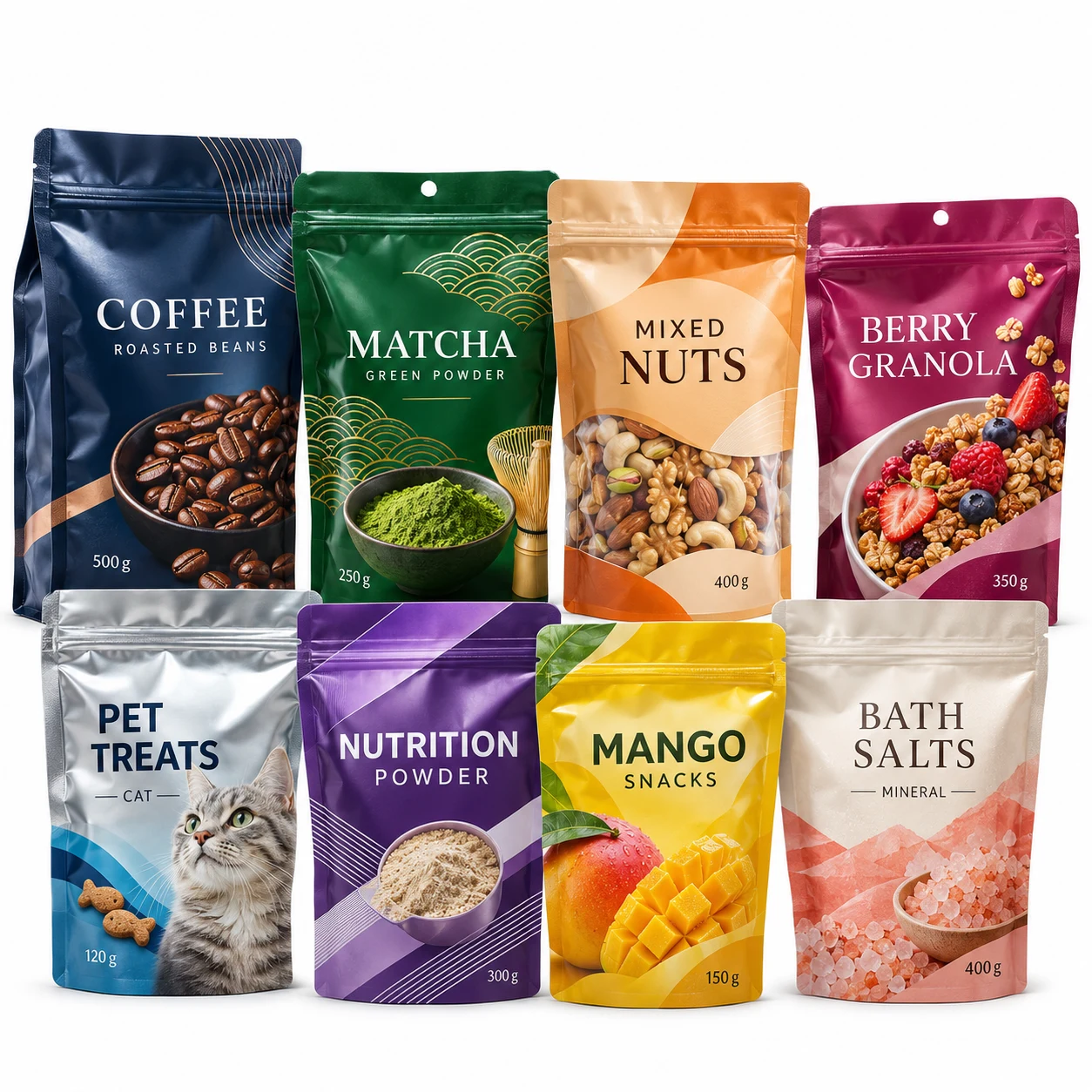 Coffee & Tea Packaging
Let’s build your next coffee bag.
Share the details you have. We can work through the format, specification and next steps together.
- Coffee and fill weight: Whole beans, roast profile and nominal weight
- Valve and position: Valve requirement and preferred panel
- Dimensions and opening: Width, height, gusset and filling access
- Order plan: quantity per design, artwork status and delivery destination.
Direct to the manufacturing team. Share drawings or additional files by email after your initial inquiry.
Request a custom packaging quote
No complete specification yet? Start with the product and the quantity you have in mind.
Confirm the production window.
Regular orders typically take around 15 days after artwork approval. Confirm the schedule for your construction, quantity and materials; transit time is additional.
Keep the approval reference.
Record the agreed artwork, structure, dimensions and inspection criteria so future orders start from the same documented brief.
Stay connected after delivery.
Share batch details, photos and samples if an issue arises. Our team can review the evidence and discuss the next steps with you.