
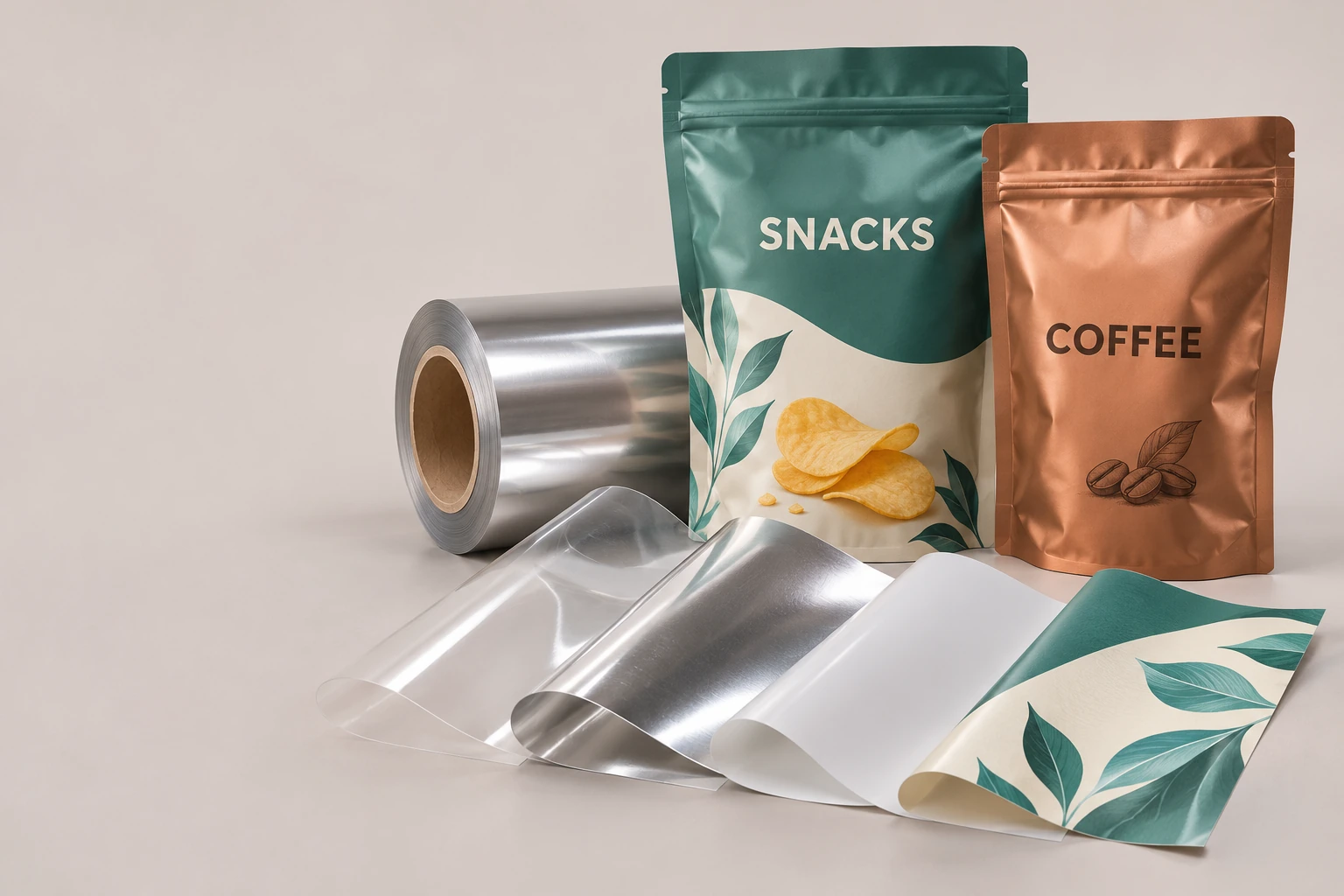
Flexible Packaging Materials & Barrier Structures
Every layer starts with a requirement.
Choose flexible packaging materials around your product, filling conditions and storage goals. Explore how outer films, barrier layers and sealants work together, then build a specification with the IVAPAK manufacturing team.
Start with what the pack must protect.
A material name is not a complete specification. Grade, thickness, adhesive, processing and seal quality all influence the performance of the finished package.
Product sensitivity
Identify exposure to oxygen, moisture, light, oils and product edges. Agree which risks matter for the intended storage period.
Packing & treatment
Define the filling temperature, machine, seal configuration and any post-fill heat treatment before choosing a laminate.
Destination & disposal
Review the intended use and market requirements. Recyclable, compostable and PCR describe different material approaches.
The same material brief leads to different formats.
Premade pouches
Stand-up, flat-bottom and three-side seal formats bring different gussets, closures and stress points to the laminate review.
Explore this formatSpouted packaging
Liquid contact, fitment compatibility, drop resistance and sealing around the spout need to be reviewed as a complete pack.
Explore this formatPrinted rollstock
The structure must protect the product and meet machine requirements for forming, tracking and sealing.
Explore this formatExplore the role of every layer.
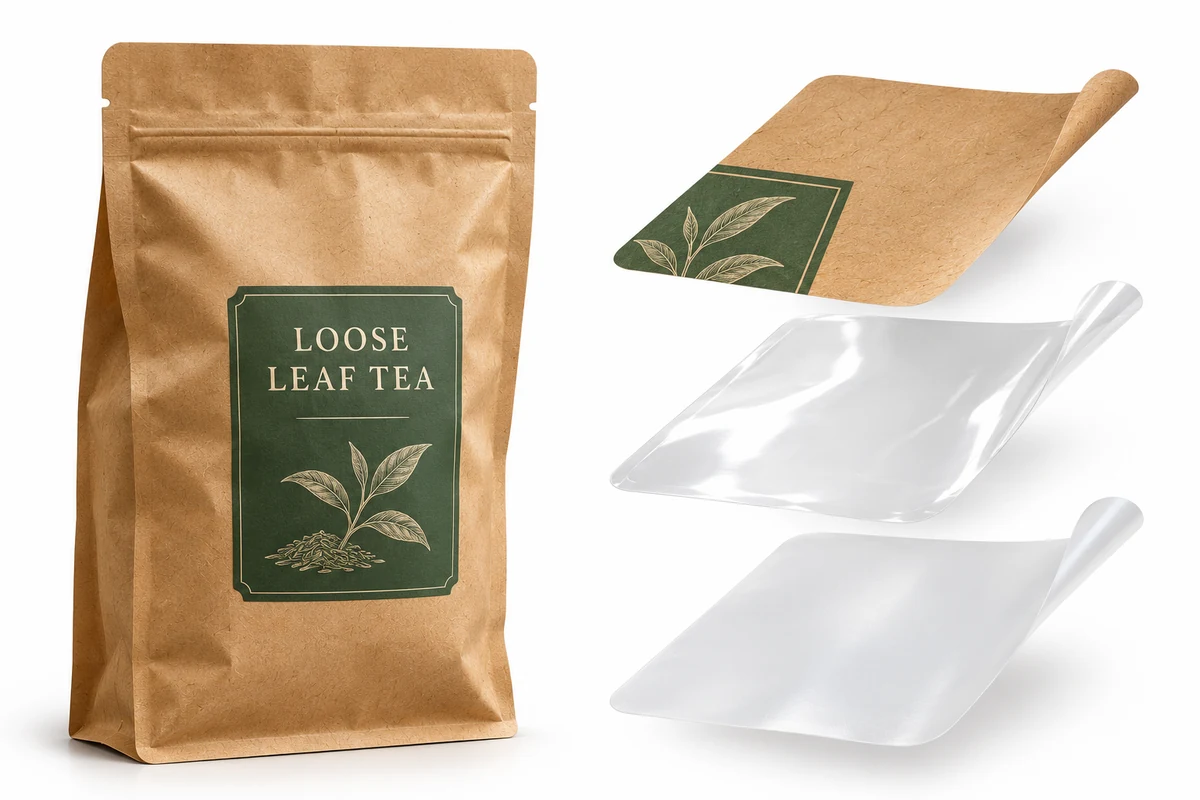
Select a structure to explore the layer roles. These are example architecture families, shown from the outside toward the product. Final grades, gauges, inks and adhesives are specified for the application.
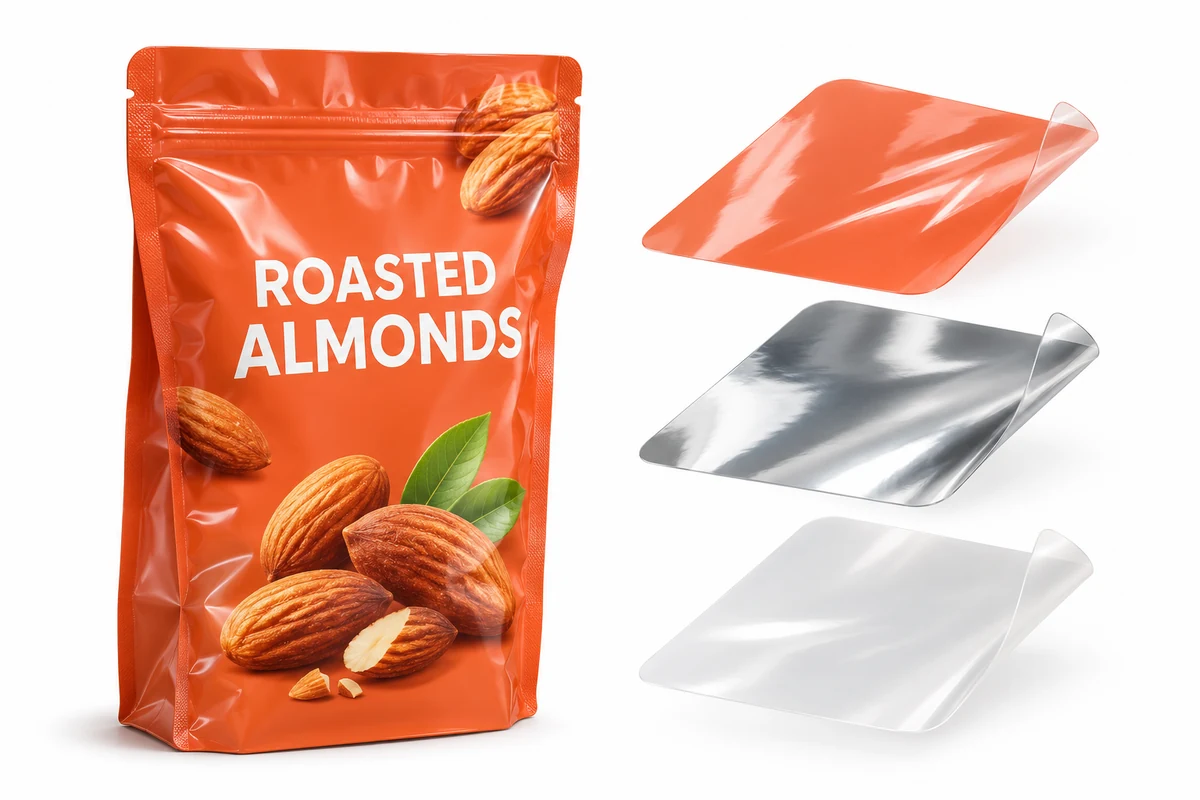
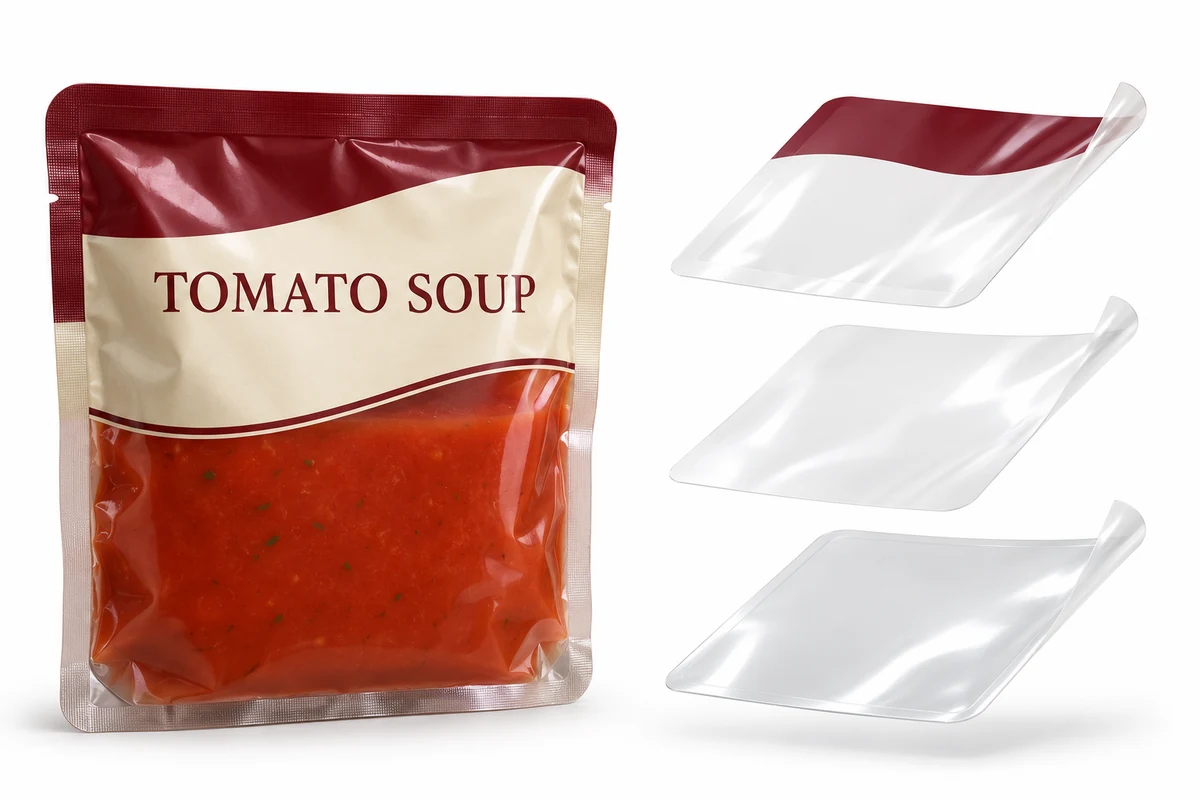
Metallized barrier laminate
Carries the graphic and supports handling. Specify print coverage and surface finish.
A thin metal coating adds barrier and light protection. Confirm the film grade and measured performance.
Forms the product-contact sealing surface. Select the grade and gauge around the sealing process.
An opaque structure family. Metallized PET is not a separate aluminum foil layer. Adhesive and ink systems are part of the final specification; not all functional layers are shown.
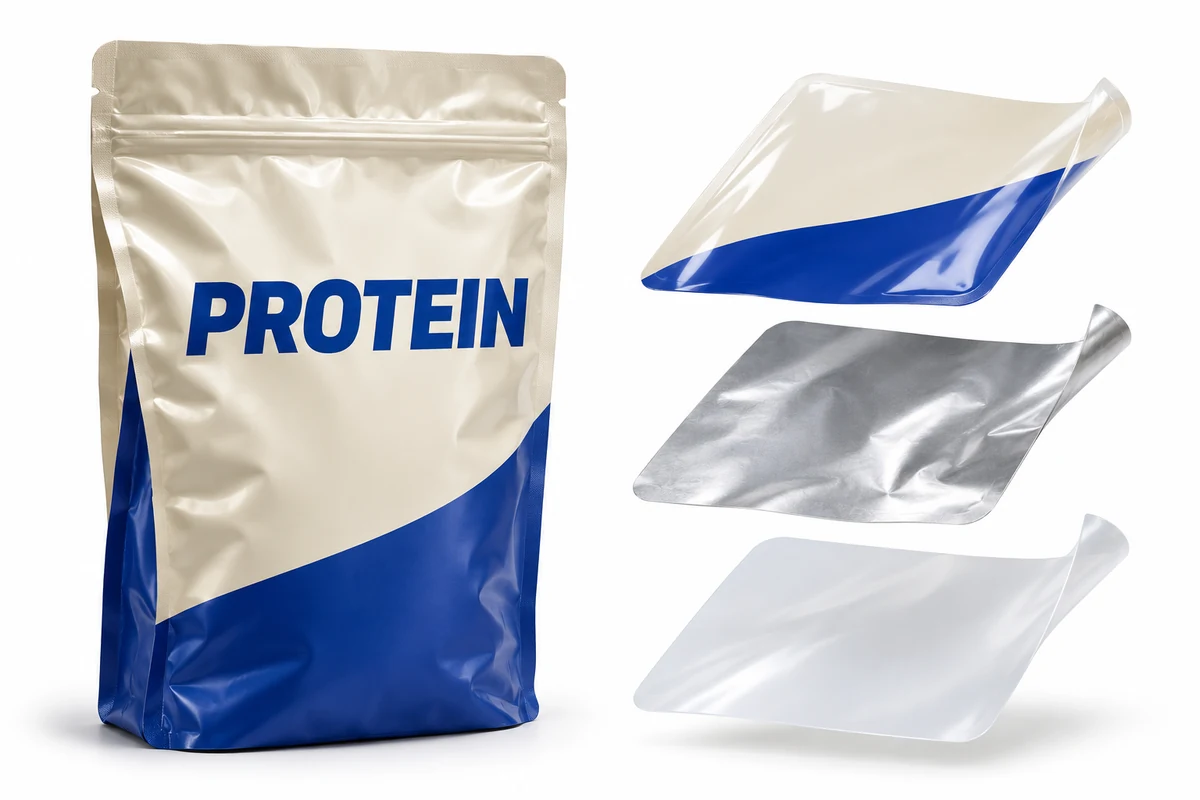
Aluminum foil laminate
Supports printing and handling, with the intended finish agreed before production.
A separate foil layer provides an opaque barrier. Gauge, flexing and pinhole risk need review.
The sealing layer is selected for product compatibility and packing conditions.
For applications requiring an opaque barrier. Validate the complete pack rather than assuming a shelf life. Adhesive and ink systems are part of the final specification; not all functional layers are shown.
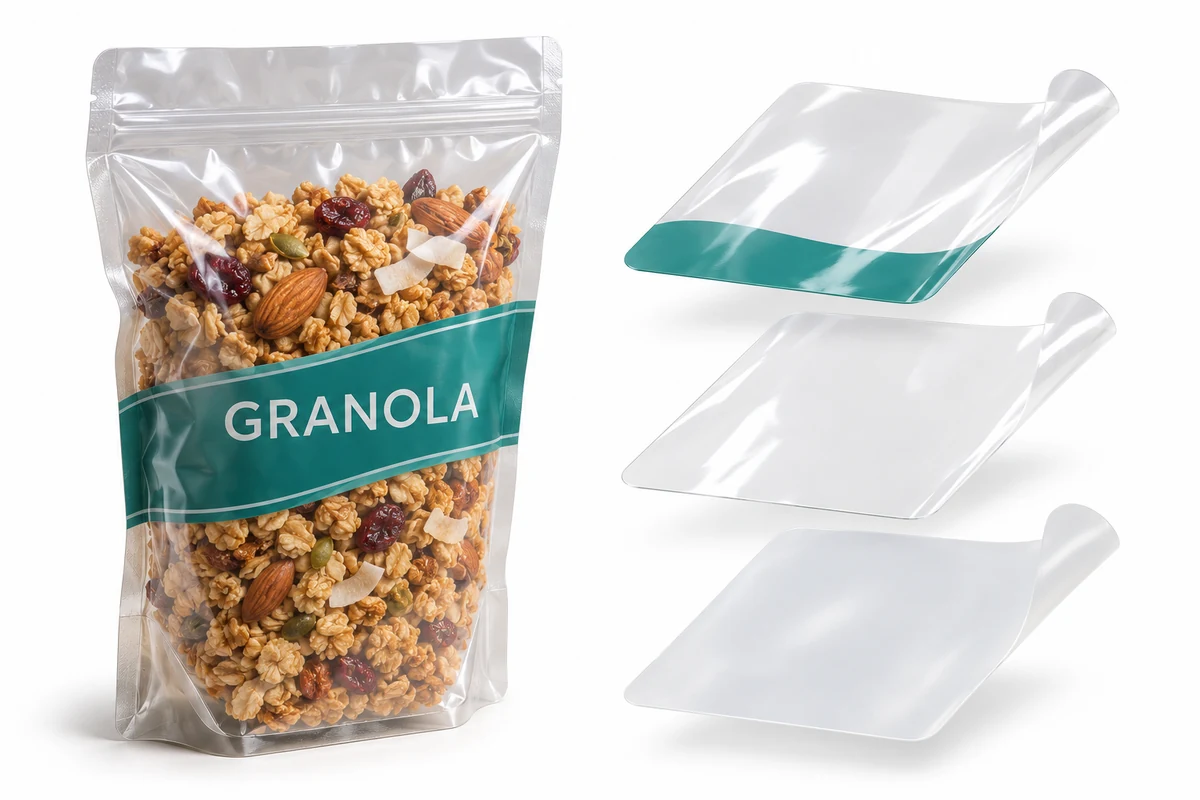
Transparent reinforced laminate
Balances printed areas and product visibility. Define the window and print coverage.
Supports toughness and puncture resistance. Grade and thickness matter for the application.
Supports sealing and product contact. Confirm seal behavior with the filling process.
Transparency is not a promise of a particular oxygen barrier. Compare the full specification against the product target. Adhesive and ink systems are part of the final specification; not all functional layers are shown.
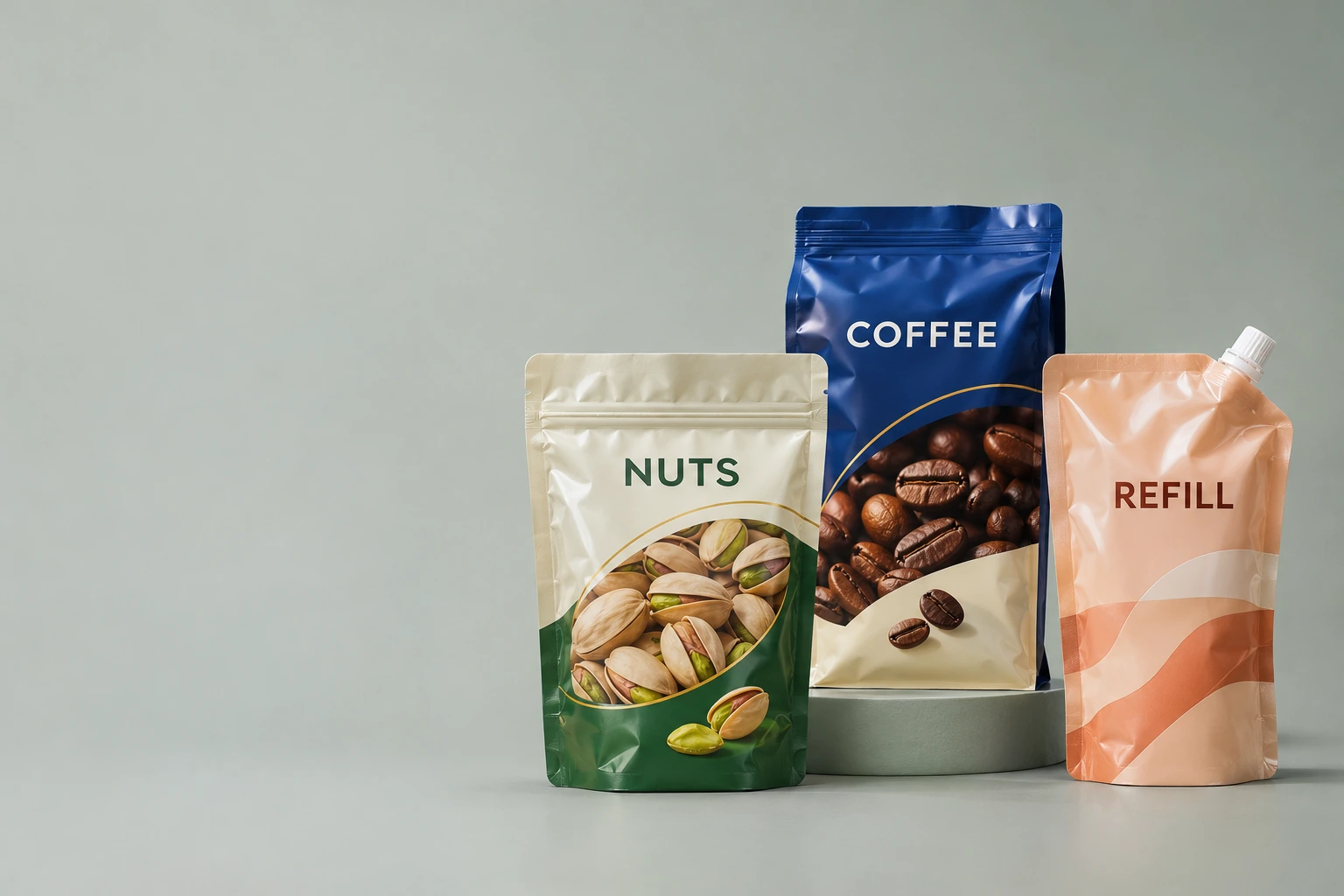
Mono-material development route
Review orientation, stiffness and print requirements for a PE-based outer web.
A same-family architecture may support a recycling route. Any barrier additions need separate compatibility review.
Match the sealant to the equipment and confirm the performance of closures and the converted pack.
Simplified functional roles, not a fixed three-layer recipe. Recyclability depends on the full pack and available local systems. Adhesive and ink systems are part of the final specification; not all functional layers are shown.
Use measurable targets, not material shorthand alone.
OTR
Oxygen transmission rate with stated conditionsCompare the same units, temperature, humidity and test method. A low value on a film report is not a finished-pack shelf-life result.
WVTR
Water-vapor transmission rate with stated conditionsHumidity and temperature influence the measurement. Match targets to the product and distribution environment.
Thickness and grade
Each layer, total gauge and agreed toleranceTwo structures with the same abbreviated name can perform differently.
Seal integrity
Sealant, sealing window and acceptance methodReview the actual machine, seal contamination risk and filled-pack checks.
Mechanical performance
Puncture, flexing, drop or handling requirementsSelect checks that reflect product edges, pack weight and distribution.
Supporting documents
Material specification and relevant use conditionsAsk for documentation that matches the proposed structure and application.
Which requirement should lead the material review?
Choose a starting point. Add it to the inquiry, then fill in your own details.
Material review: oxygen- and aroma-sensitive product. Please discuss barrier targets, light exposure and a suitable structure.
Check the proposed structure at three levels.
- Film: review the specification and relevant barrier data.
- Converted pack: check seals, fitments and mechanical behavior.
- Filled product: validate storage and distribution requirements.
- Record the approved construction and change-control requirements.
Ask which sample is appropriate: an existing format sample, an artwork sample, a structure sample or a production trial. Their purposes and costs differ.
Choose and request a packaging sample ↗Specify the surface and the structure together.
Gloss, matte appearance and opaque or transparent areas affect how the product is presented. Print coverage, ink system and laminating requirements must be considered alongside the physical structure.
- Review clear windows before selecting the barrier architecture.
- Confirm print-side orientation and the intended product-contact layer.
- Separate the appearance sample from performance validation.
Production: gravure printing, up to 10 colors. Digital printing is used for sampling. Artwork approval does not replace material or filled-pack validation.

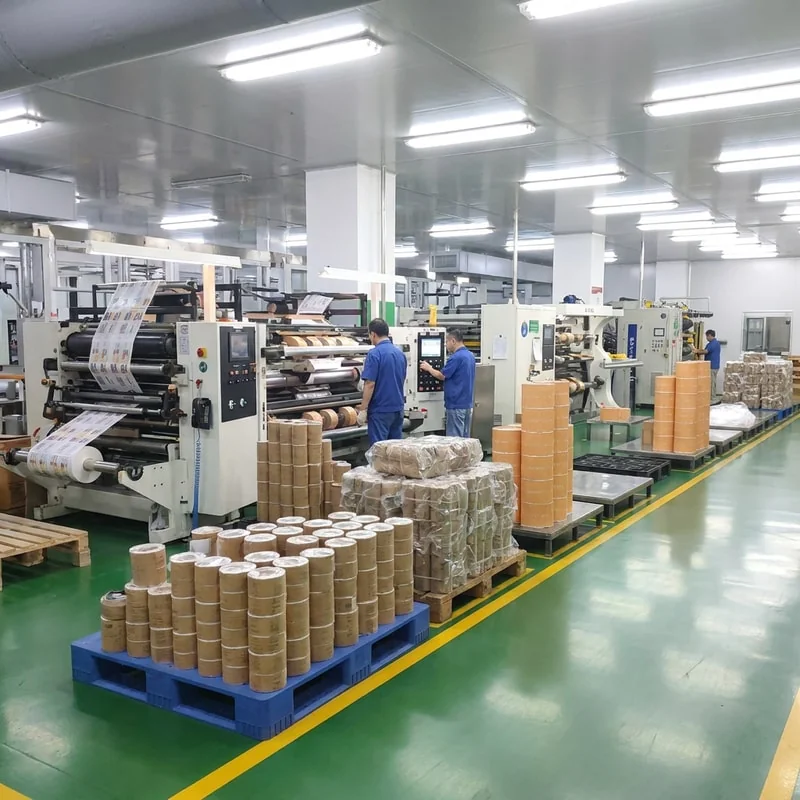
A factory conversation, from brief to batch.
Shanghai IVAPAK Packaging Products Co., Ltd. has manufactured flexible packaging since 2003. Work directly with the production team to connect the agreed specification, approved artwork and inspection requirements.
Defined specification
Agree dimensions, construction, print reference, quantities and the checks required for your pack.
Relevant documentation
Request current BRCGS and ISO 9001 certificates, plus applicable material and SGS test information for your use conditions.
Six stages. One agreed production brief.
Confirm the brief
Product, format, dimensions, quantities and intended use.
Review the structure
Material candidates, closure or machine requirements and sampling.
Approve the artwork
Dieline, print reference, version and orientation.
Print & laminate
Gravure printing, lamination and the required curing stage.
Convert & inspect
Slit rollstock or make pouches, then inspect against the agreed specification.
Pack & dispatch
Confirm the packing list, shipment arrangements and reorder reference.
Is metallized film the same as aluminum foil?
No. Metallized film has a very thin metal coating on a polymer substrate. Aluminum foil is a separate metal layer. They differ in construction and handling behavior; compare the specified laminate and test results.
Does a three-layer pouch always provide a higher barrier?
Layer count alone does not establish performance. Barrier depends on the materials, grades, thicknesses, processing and package integrity. Choose a structure against measurable targets.
Is kraft paper packaging automatically recyclable?
No. A paper surface can be laminated to plastic or foil layers. Recycling and compostability claims require assessment of the complete structure and the relevant collection or certification conditions.
Are recyclable, compostable and PCR the same?
No. Recyclability concerns an appropriate collection and recycling route; compostability concerns breakdown under specified composting conditions; PCR refers to post-consumer recycled content. One does not automatically imply the others.
Can a dry-food laminate be used for retort?
Do not assume so. Retort requires materials, inks, adhesives and seals suited to the specified thermal process, followed by validation of the complete filled package. Discuss the proposed cycle before selecting the structure.
How do we select a final structure?
Share the contents, filling process, storage conditions, shelf-life target, pack format and destination. We review candidates and the sampling or testing needed before approving the production specification.
Continue building your packaging brief.
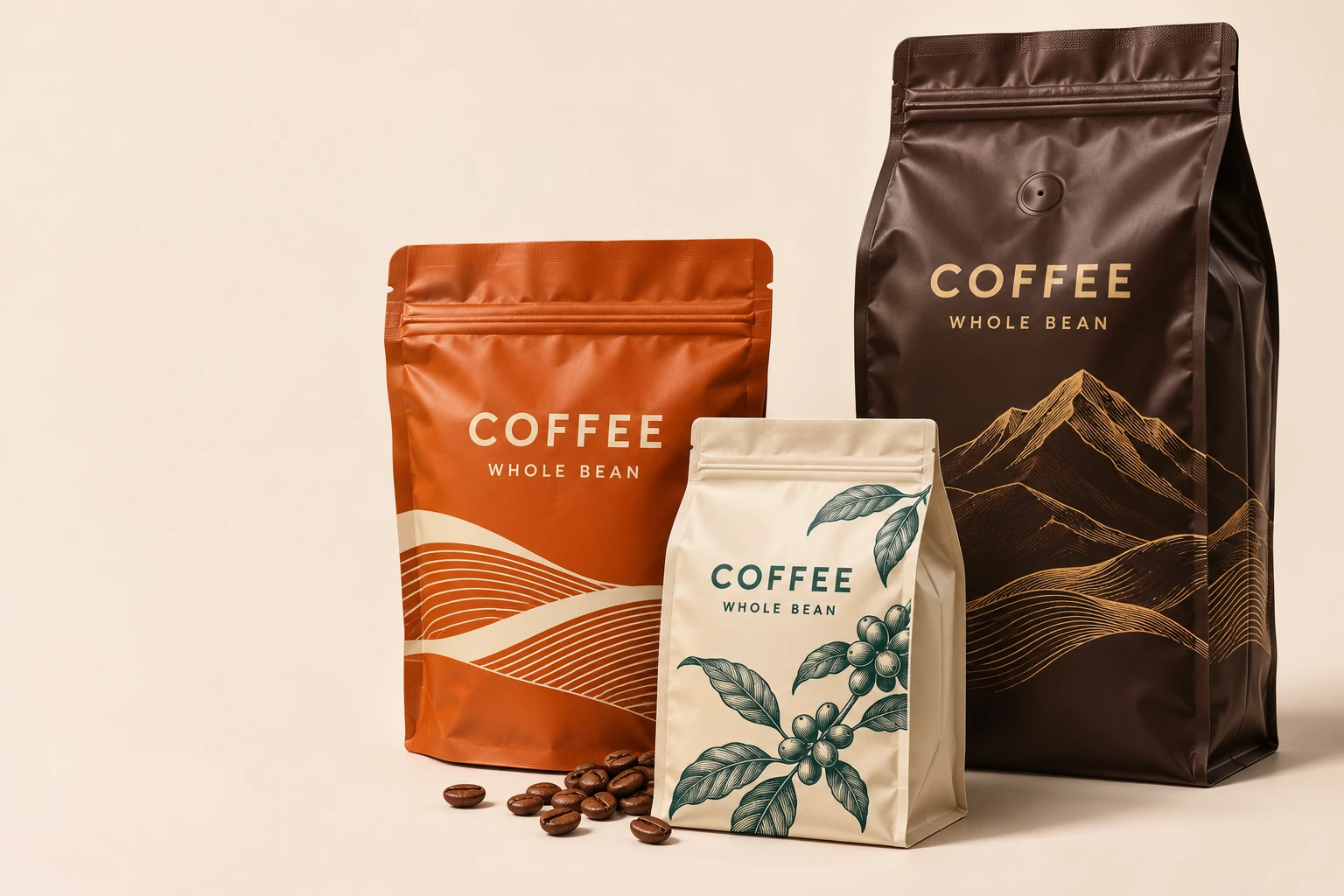 Coffee bean bags
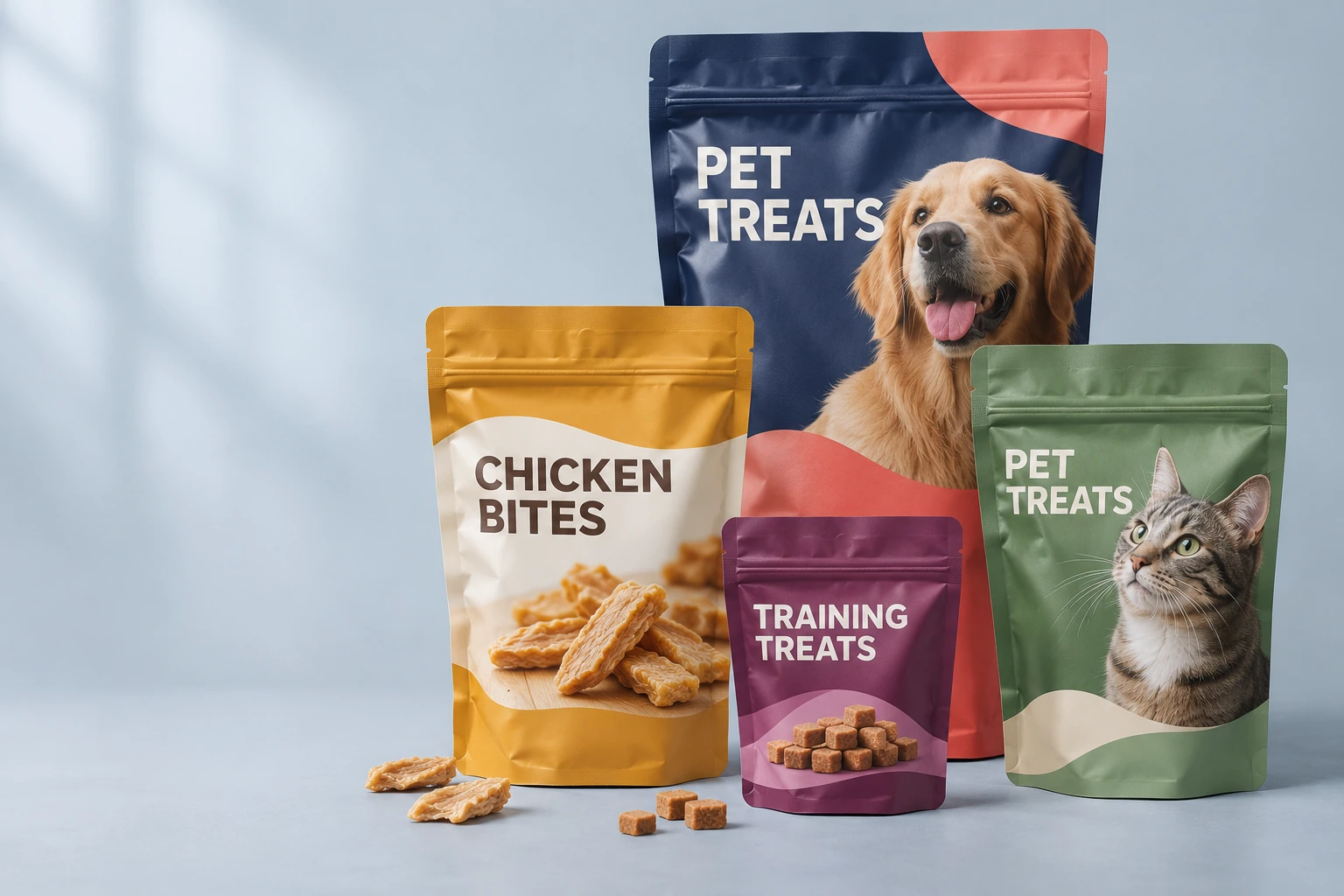 Pet treat pouches
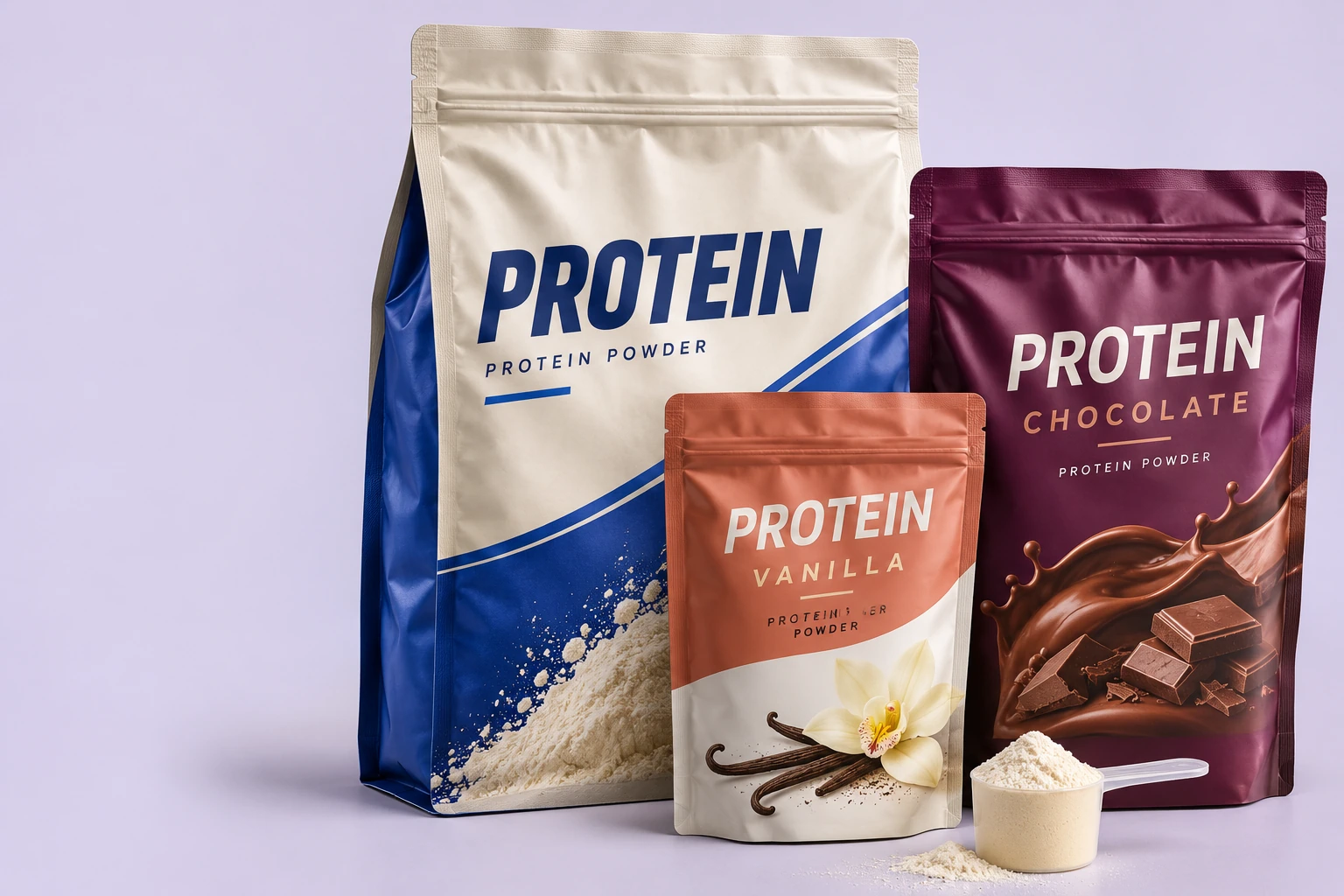 Protein powder bags
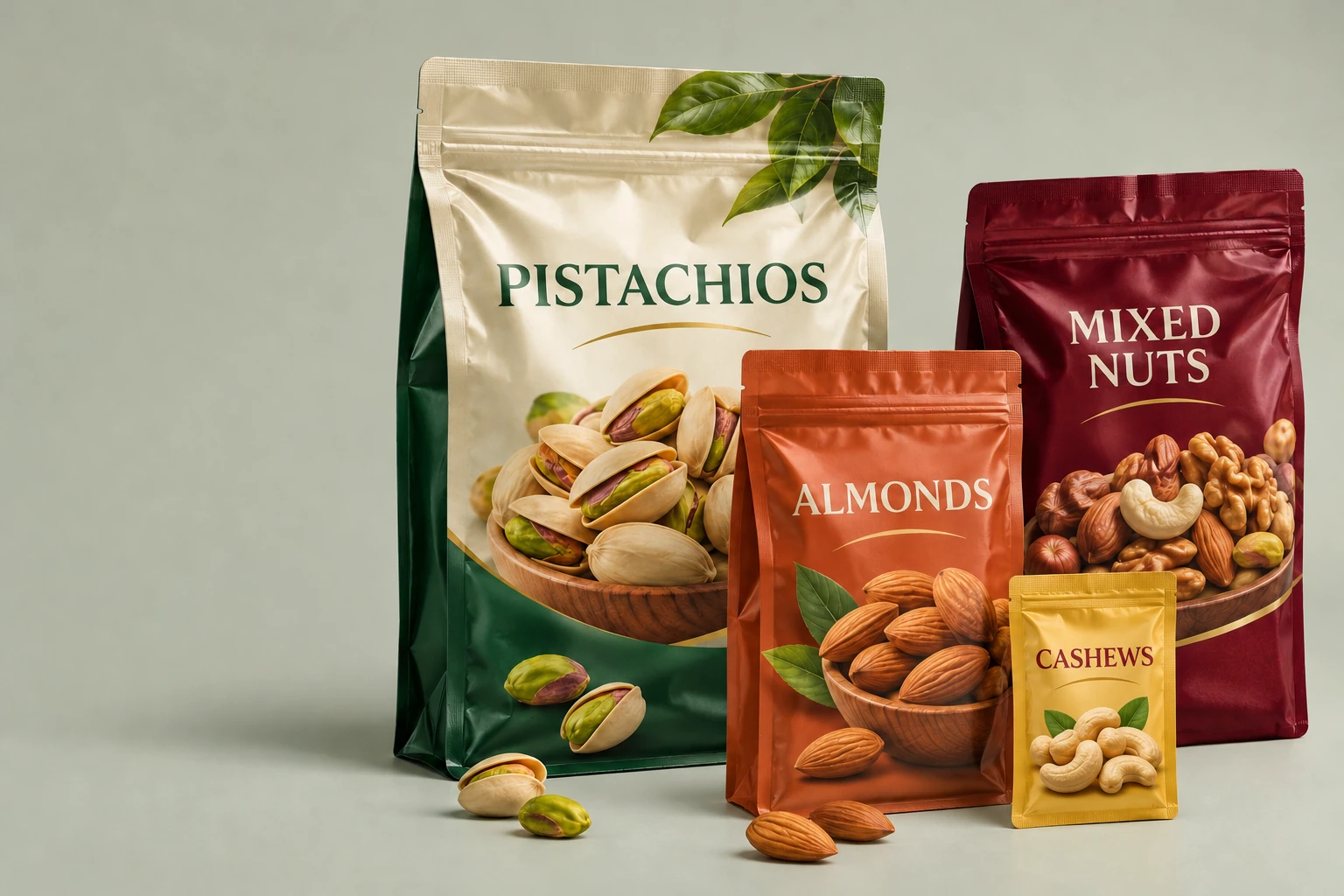 Nut packaging bags
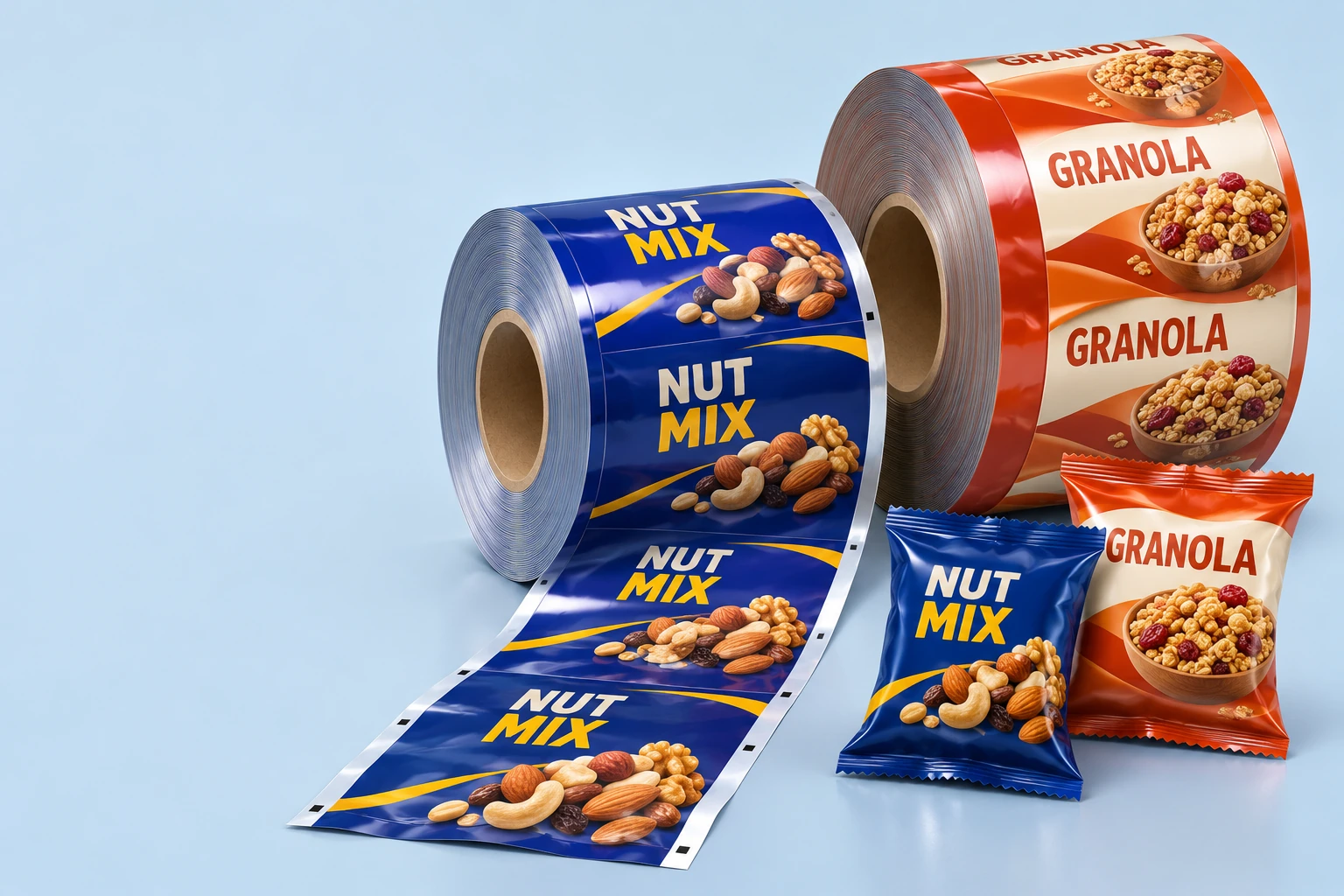 Printed VFFS film
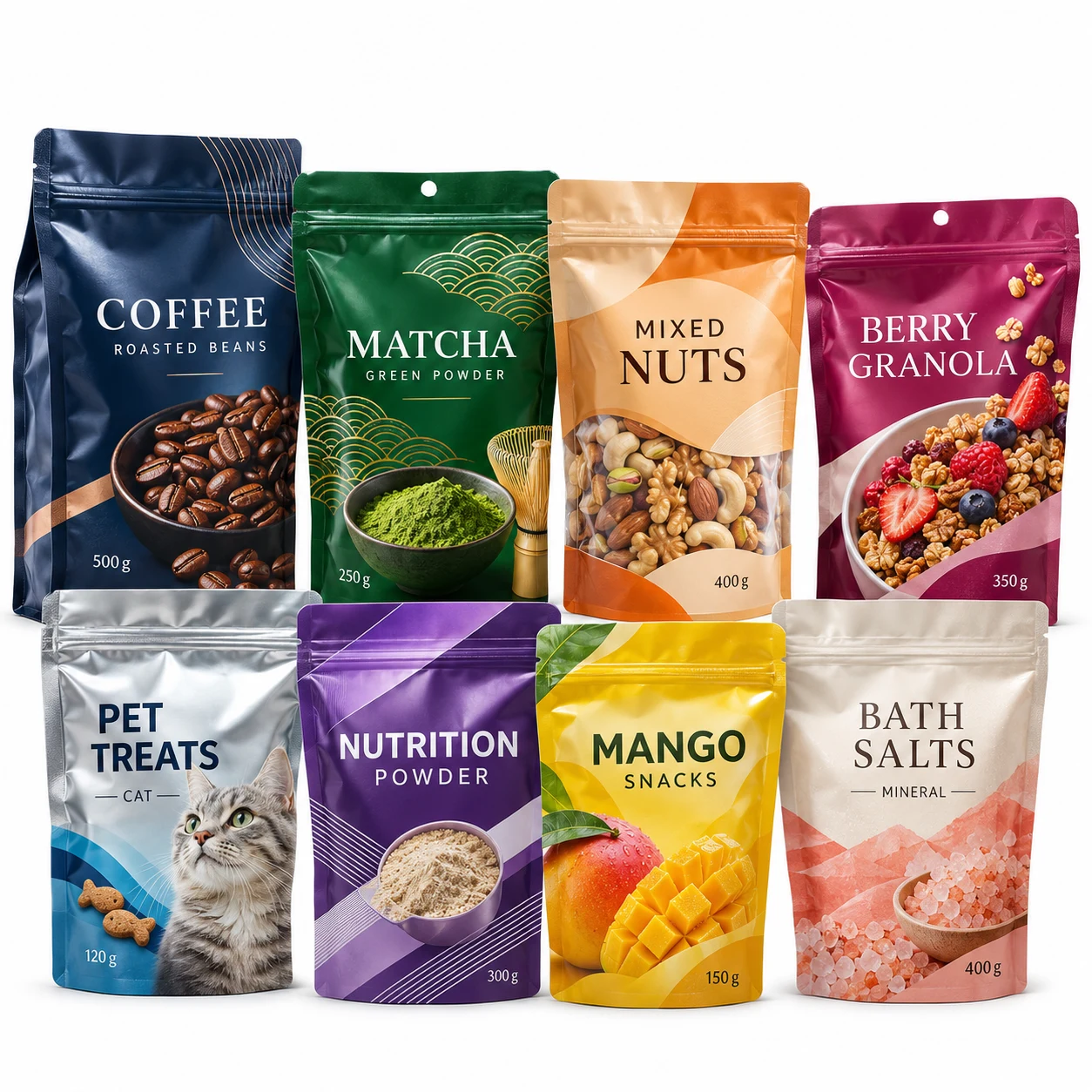 Explore packaging formats
Describe the product. Let’s build the structure.
Share the details you have. We can work through the format, specification and next steps together.
- OTR: Oxygen transmission rate with stated conditions
- WVTR: Water-vapor transmission rate with stated conditions
- Thickness and grade: Each layer, total gauge and agreed tolerance
- Order plan: quantity per design, artwork status and delivery destination.
Direct to the manufacturing team. Share drawings or additional files by email after your initial inquiry.
Request a custom packaging quote
No complete specification yet? Start with the product and the quantity you have in mind.
Confirm the production window.
Regular orders typically take around 15 days after artwork approval. Confirm the schedule for your construction, quantity and materials; transit time is additional.
Keep the approval reference.
Record the agreed artwork, structure, dimensions and inspection criteria so future orders start from the same documented brief.
Stay connected after delivery.
Share batch details, photos and samples if an issue arises. Our team can review the evidence and discuss the next steps with you.