
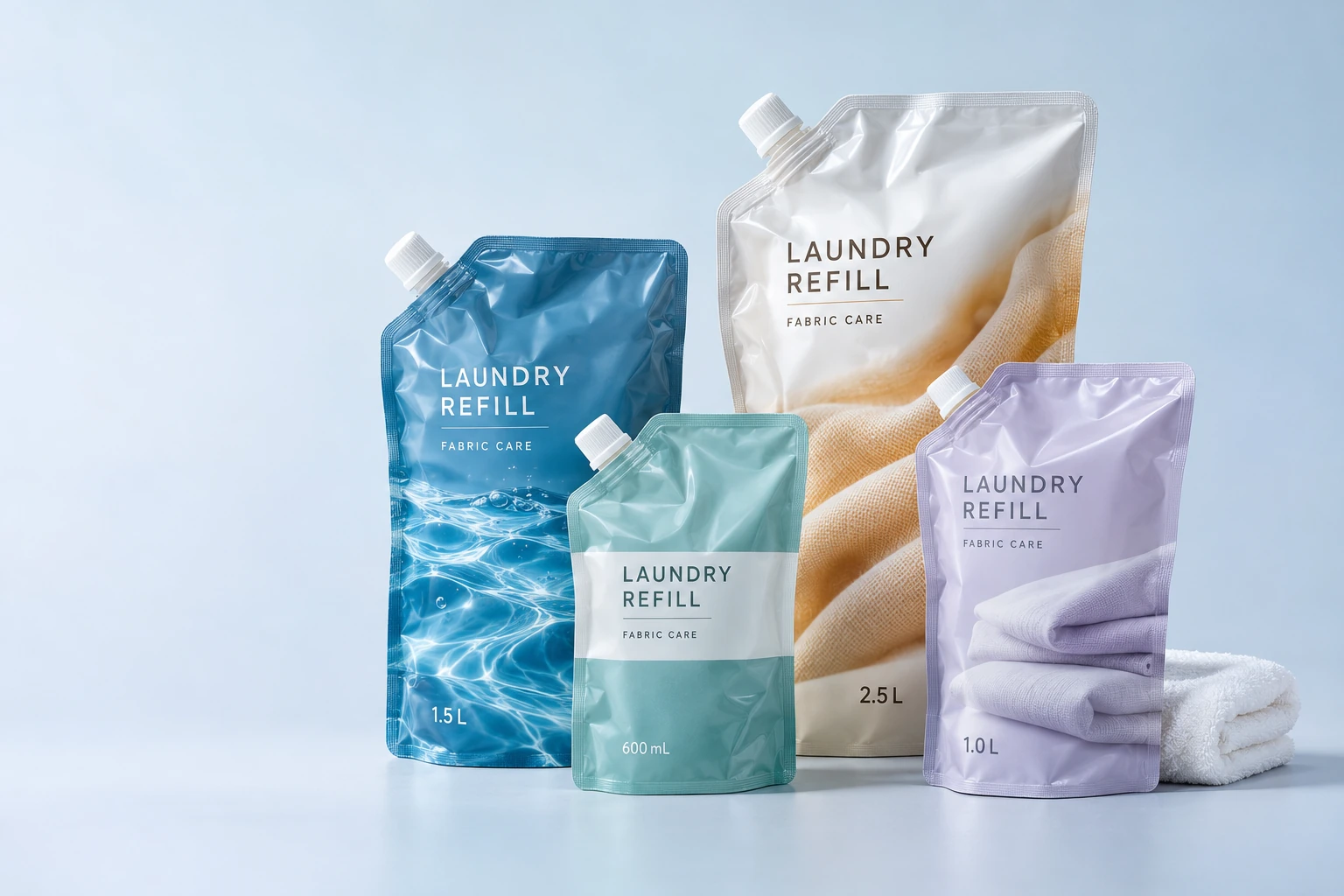
Custom Laundry Detergent Refill Pouches
A considered pour. A well-specified pack.
Custom printed laundry detergent refill pouches for liquid home-care brands. Review formulation compatibility, refill capacity, spout configuration and filled-pack handling directly with the manufacturing team.
A detergent refill begins with the formulation.
Liquid detergent formulas and concentrations differ. The pack should be reviewed against the actual formula and the loads created by filling, storage and delivery.
Formula contact
Share relevant surfactant, fragrance and solvent information, together with the product classification and compatibility requirements. A suitable food pouch is not automatically a suitable detergent pouch.
Filled weight
A larger refill places additional load on the base, seals and spout area. Review the full package and outer carton under the intended handling conditions.
A clean transfer
Coordinate the opening, pouring angle and bottle neck. Check grip, flow and drips using a filled sample with the intended detergent.
Build the refill around a real household routine.
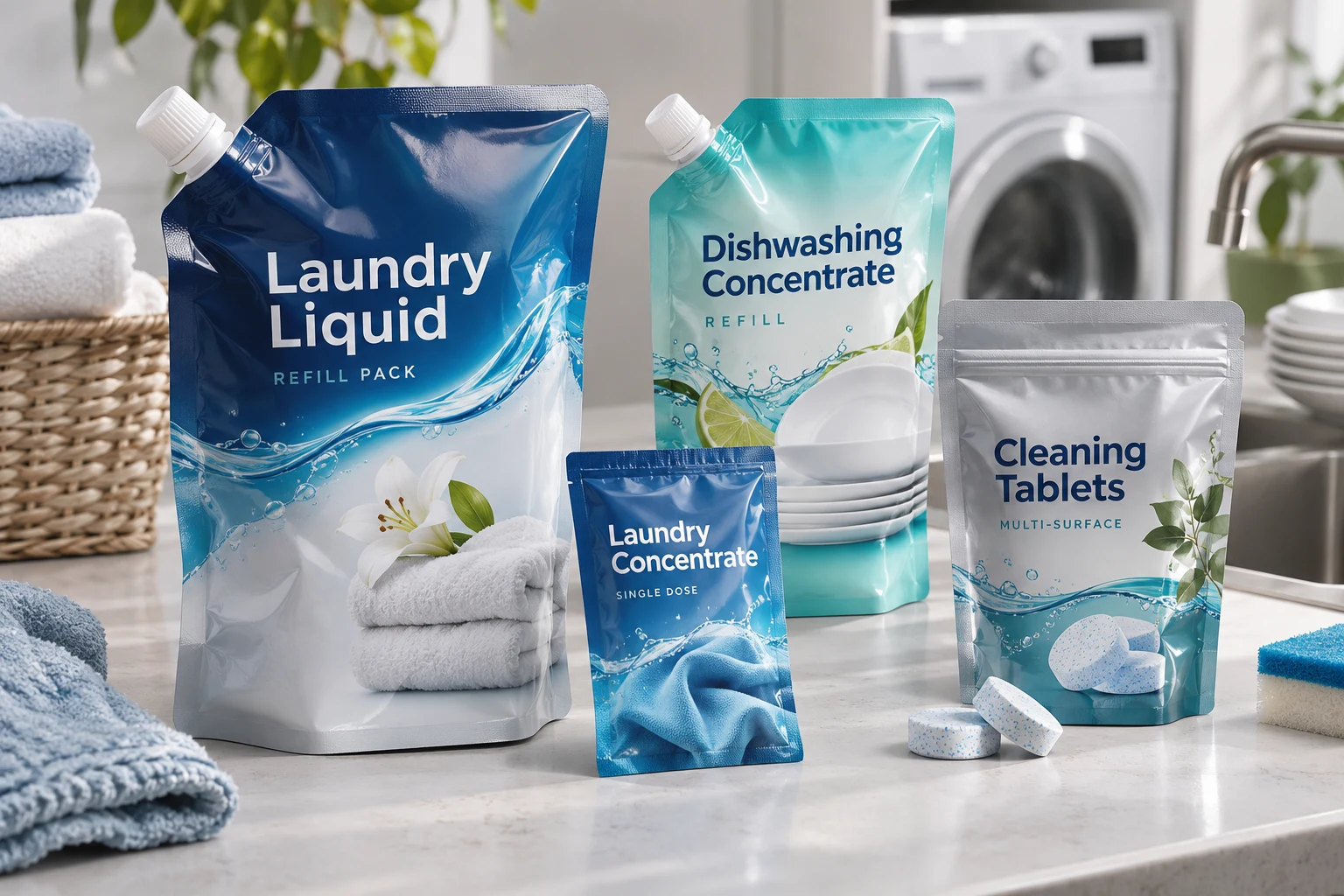
Spouted refill pouches
A reclosable fitment can support measured transfers or repeated use. Confirm closure integrity and the actual grip at the chosen capacity.
Explore this formatTear-open stand-up refills
A non-spouted pack can suit a single full transfer. The opening and tear path need to work with the viscosity of the detergent.
Explore this formatCustom printed rollstock
For brands forming and sealing packs on their own line, define the film and seam requirements with the equipment team.
Explore this formatCustom materials. Purpose in every layer.
Chemical compatibility is an application review, not a property established by layer names alone. Compare the proposed film, adhesives, sealant and fitment with the actual detergent; assess any mono-material route against the same criteria.
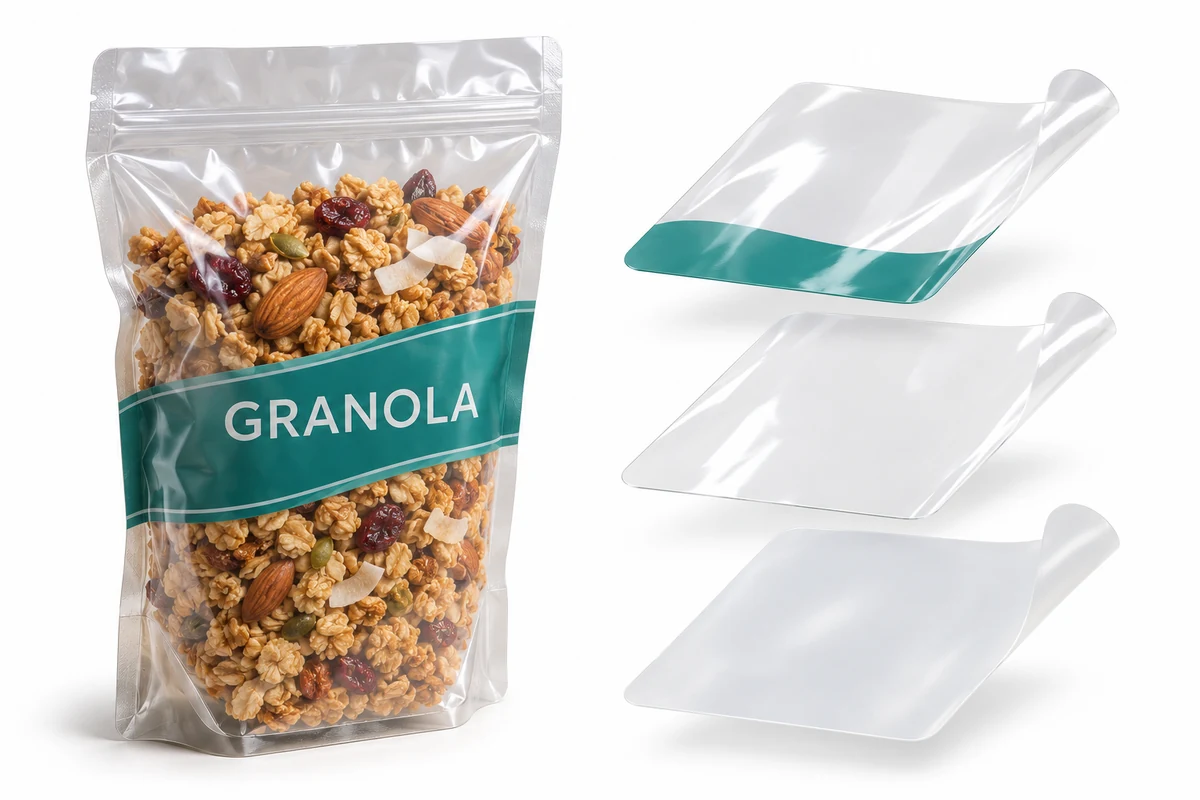
Transparent reinforced laminate
Balances printed areas and product visibility. Define the window and print coverage.
Supports toughness and puncture resistance. Grade and thickness matter for the application.
Supports sealing and product contact. Confirm seal behavior with the filling process.
Transparency is not a promise of a particular oxygen barrier. Compare the full specification against the product target. Adhesive and ink systems are part of the final specification; not all functional layers are shown.
Printed outer film and sealing layer
Supports print detail and handling. Specify the grade, gauge and intended finish.
Select the PE grade and gauge around the contents and sealing conditions.
A two-film example, not a fixed recipe. Product compatibility and the complete package must be reviewed; it is not a retort specification. Adhesive and ink systems are part of the final specification; not all functional layers are shown.
Mono-material development route
Review orientation, stiffness and print requirements for a PE-based outer web.
A same-family architecture may support a recycling route. Any barrier additions need separate compatibility review.
Match the sealant to the equipment and confirm the performance of closures and the converted pack.
Simplified functional roles, not a fixed three-layer recipe. Recyclability depends on the full pack and available local systems. Adhesive and ink systems are part of the final specification; not all functional layers are shown.
Six details for a detergent refill specification.
Formula and concentration
Relevant composition, pH, density and compatibility informationAgree which parts of the formula influence laminate, sealant and fitment selection. Different concentrates may require separate review.
Volume and filled mass
Nominal capacity, headspace and target bottle sizeConfirm actual filled dimensions and how the refill relates to the receiving bottle capacity.
Spout and closure
Fitment material, position, bore and cap requirementReview the selected cap application process and leakage acceptance criteria.
Opening and grip
Pouring direction and handling of the filled pouchCheck usability at the maximum planned fill, including the customer transfer into the bottle.
Distribution
Case configuration, stacking and expected drop/handling conditionsTest the package and shipping arrangement appropriate to the actual route.
Artwork and coding
Product variants, instructions and required warning spaceProvide market-approved label content. Keep safety and use information legible on the filled pack.
Which part of the refill needs review first?
Choose a starting point. Add it to the inquiry, then fill in your own details.
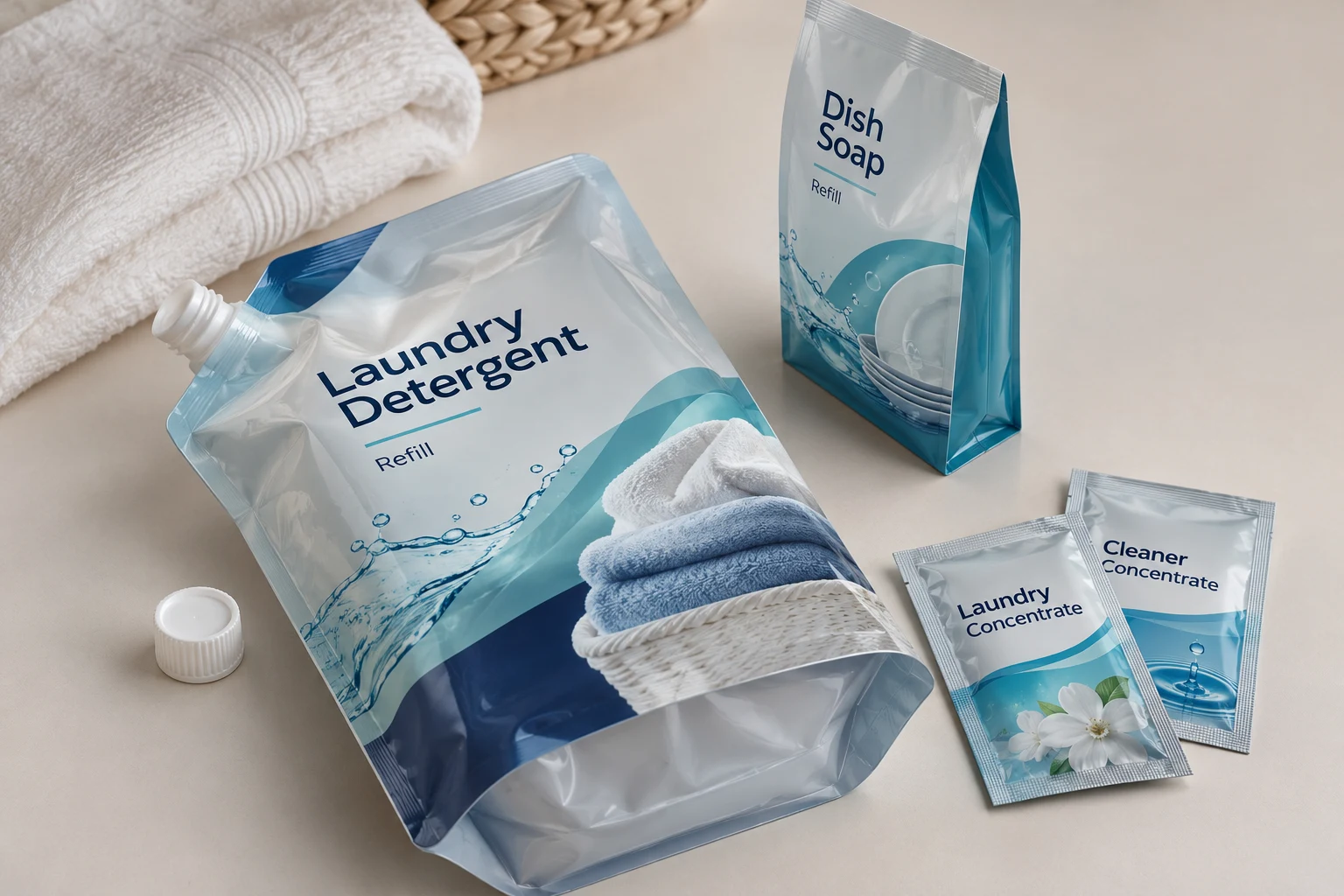
Laundry detergent refill range: please review formulation compatibility, refill volumes, spout options and artwork differentiation.
Validate the detergent, the pouch and the delivery route.
- Assess contact compatibility with the actual formulation over the agreed conditions.
- Inspect laminate appearance, seals, fitment area and any leakage after storage.
- Check pouring into the target bottle at the intended fill weight.
- Perform the agreed filled-pack handling checks with the planned secondary packaging.
Ask which sample is appropriate: an existing format sample, an artwork sample, a structure sample or a production trial. Their purposes and costs differ.
Discuss a sample plan ↗Clear instructions. Distinct scent and formula variants.
Use the print area to help customers recognize the product and refill it correctly. Make dosage, transfer instructions and required label information part of the artwork brief from the start.
- Keep detergent packaging clearly differentiated from food and drink graphics.
- Reserve readable areas for market-specific warnings and use instructions supplied by your team.
- Review coding positions, scent variants and SKU identification on the filled shape.
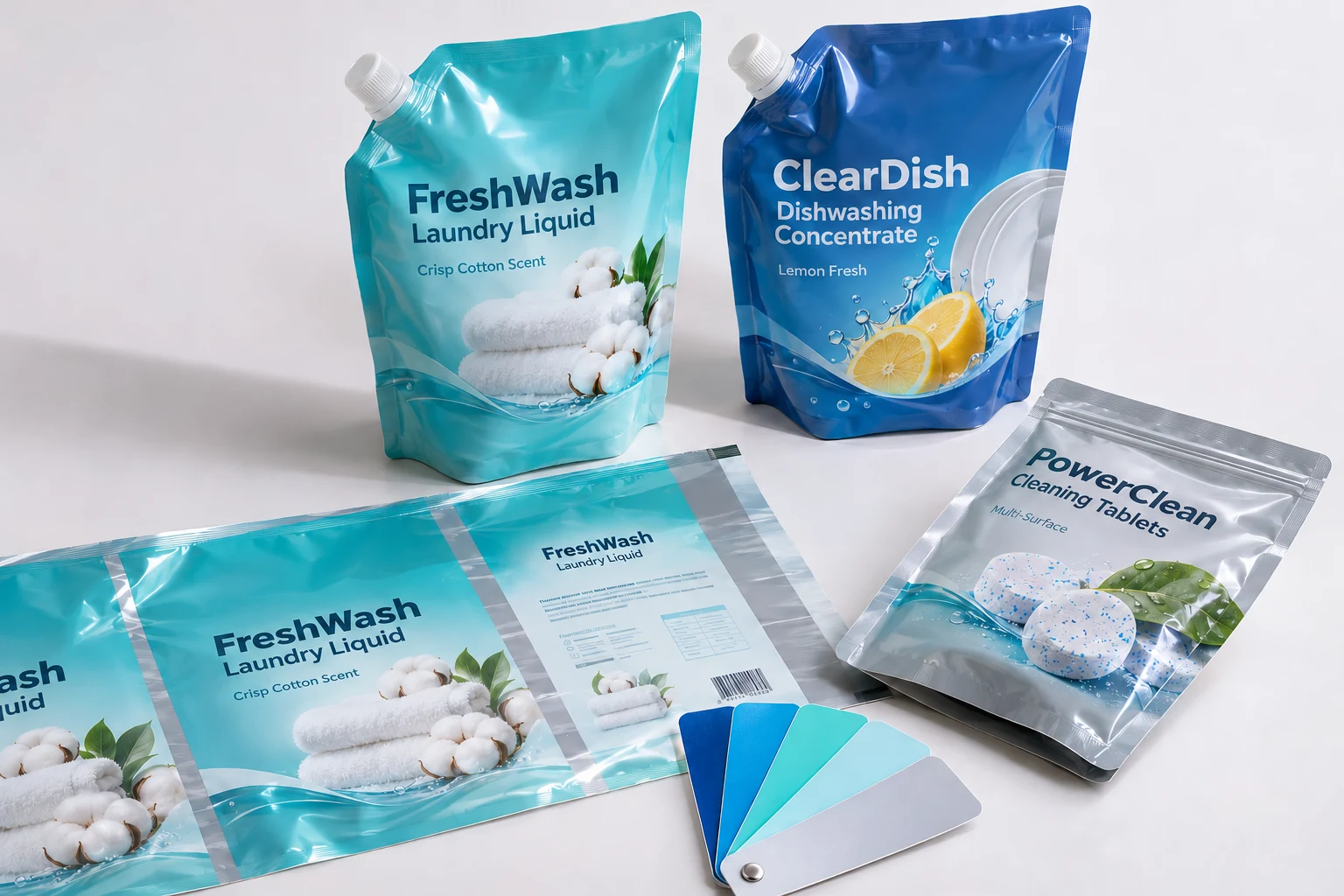
Production: gravure printing, up to 10 colors. Digital printing is used for sampling. Artwork approval does not replace material or filled-pack validation.
A factory conversation, from brief to batch.
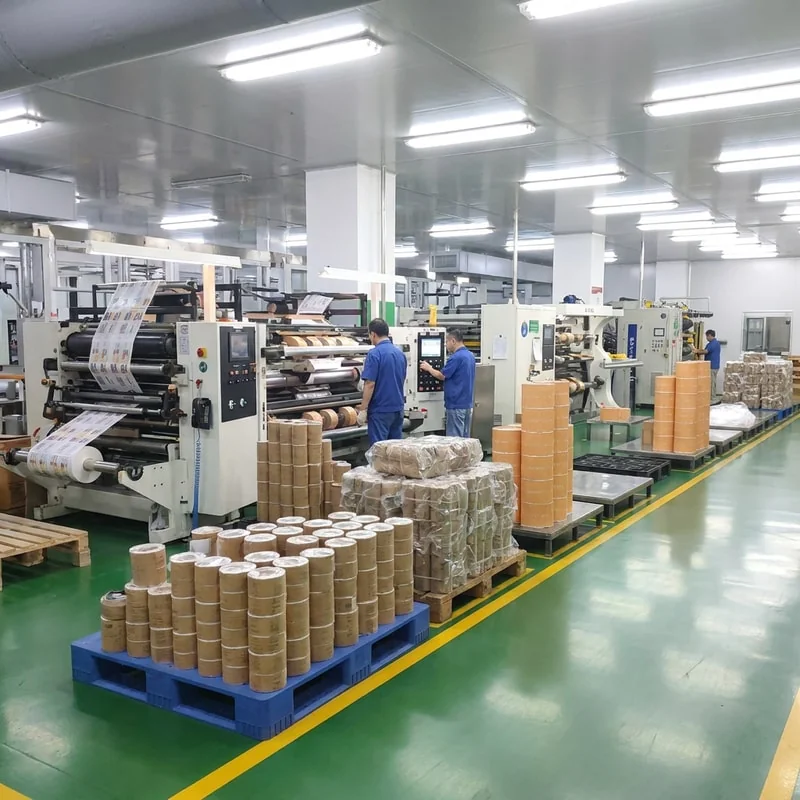
Shanghai IVAPAK Packaging Products Co., Ltd. has manufactured flexible packaging since 2003. Work directly with the production team to connect the agreed specification, approved artwork and inspection requirements.
Defined specification
Agree dimensions, construction, print reference, quantities and the checks required for your pack.
Relevant documentation
Request current BRCGS and ISO 9001 certificates, plus applicable material and SGS test information for your use conditions.
Six stages. One agreed production brief.
Confirm the brief
Product, format, dimensions, quantities and intended use.
Review the structure
Material candidates, closure or machine requirements and sampling.
Approve the artwork
Dieline, print reference, version and orientation.
Print & laminate
Gravure printing, lamination and the required curing stage.
Convert & inspect
Slit rollstock or make pouches, then inspect against the agreed specification.
Pack & dispatch
Confirm the packing list, shipment arrangements and reorder reference.
Can a standard liquid pouch be used for detergent?
It should not be assumed suitable. Detergent formulations, concentrations and storage conditions vary. The laminate and closure system require compatibility review and filled-product validation.
Does a refill pouch automatically reduce environmental impact?
A refill format alone does not establish a quantified environmental benefit. Any comparison needs a defined bottle baseline, pack weight, transport scenario and end-of-life assumptions. We do not attach an unsupported reduction percentage to the pouch.
Are these water-soluble detergent pod films?
No. This page covers outer flexible refill packaging for liquid detergent. It does not describe water-soluble unit-dose film or establish compatibility with detergent pods.
Can you provide child-resistant caps?
Any child-resistant closure requirement must be discussed as a specific, separately verified configuration. Do not treat an ordinary screw cap as child resistant. Share the market and certification requirement for feasibility review.
Can I use the same design across several capacities?
The visual system can be coordinated, but each bag size needs its own dieline and layout approval. Larger fills also require their own structural and handling review.
What information starts a refill quote?
Provide the formulation summary and compatibility requirements, fill volume, target bottle, spout preference, artwork count, quantities and delivery destination. Relevant existing samples help the review.
Continue building your packaging brief.
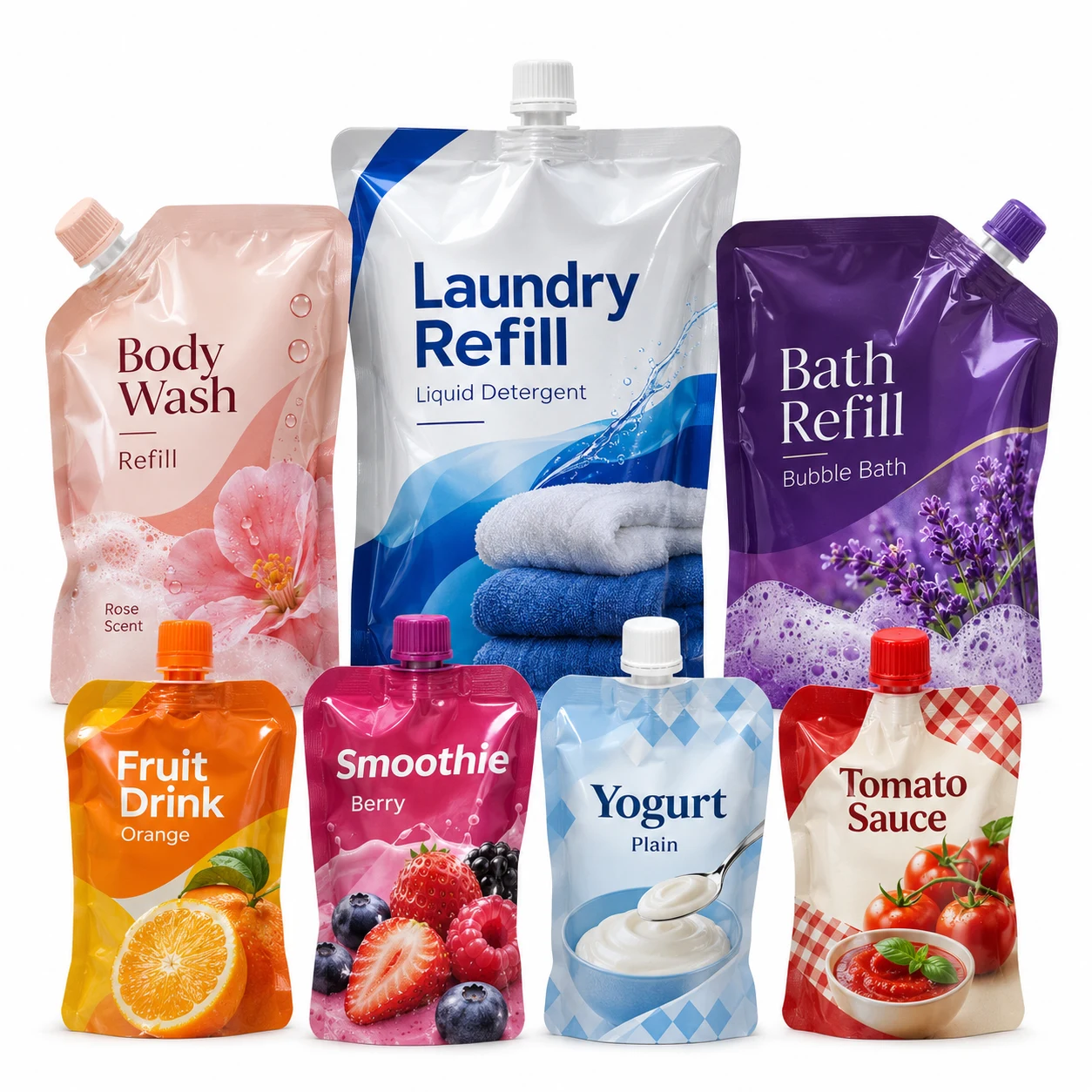
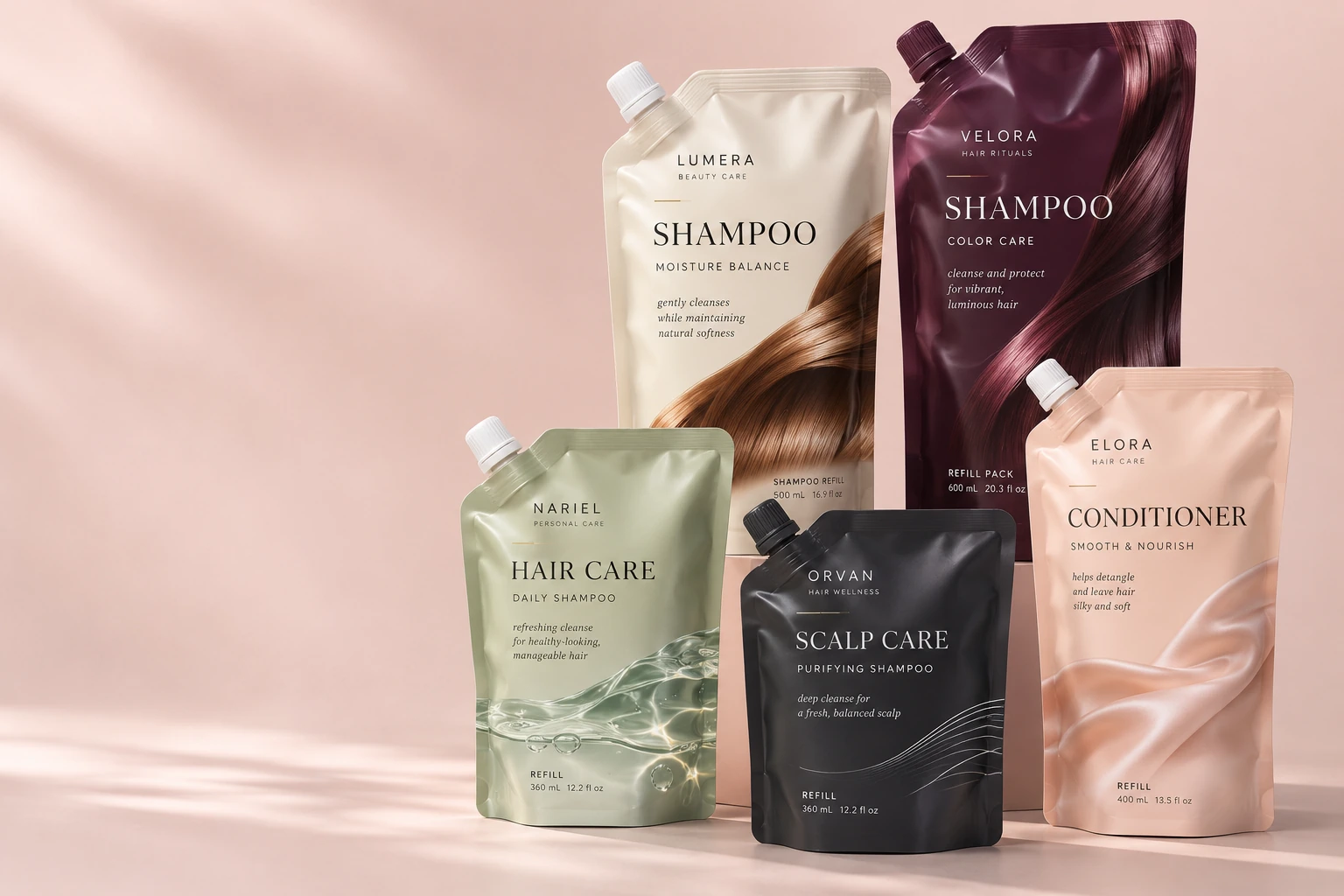 Shampoo refill pouch planning
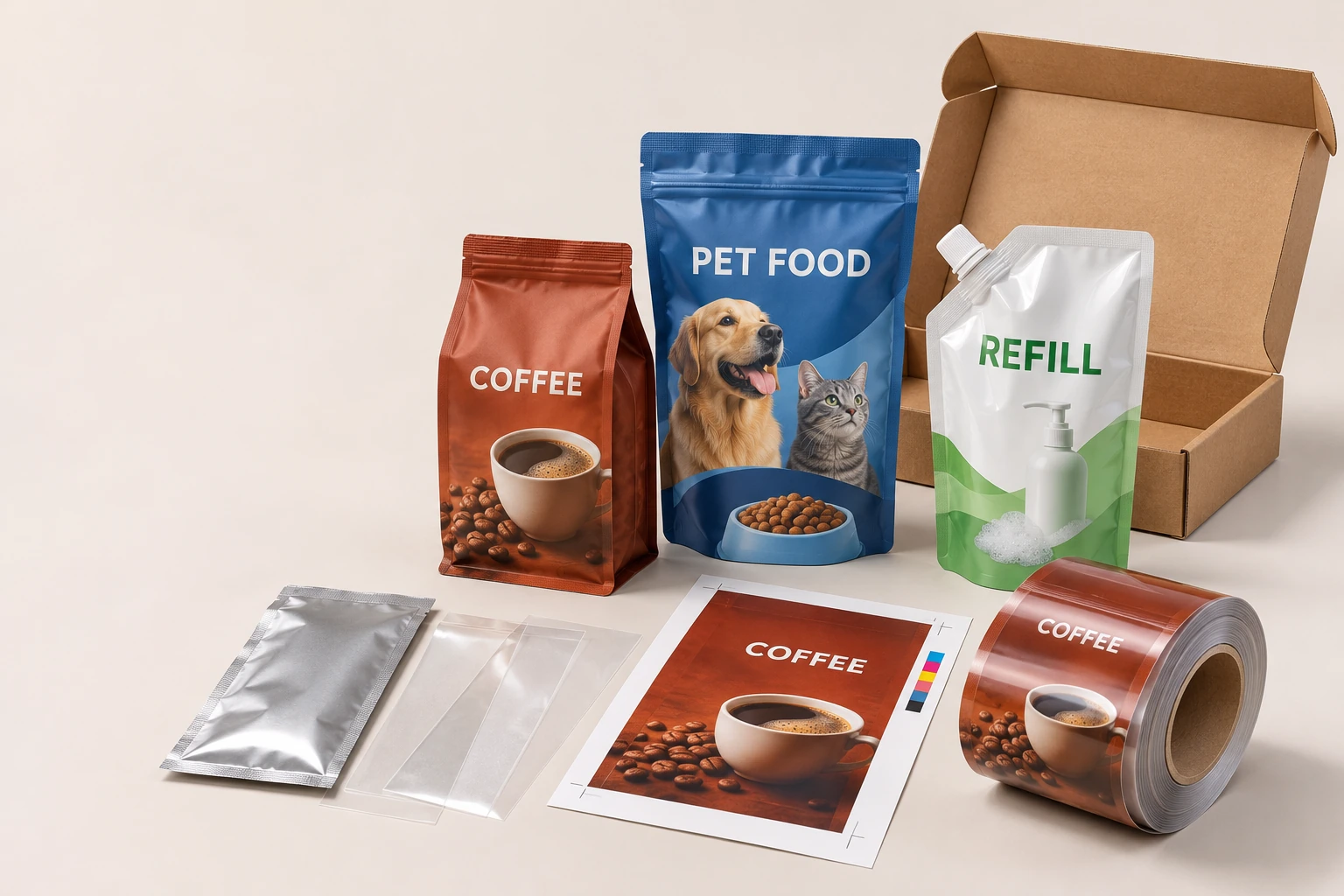 Packaging sample request
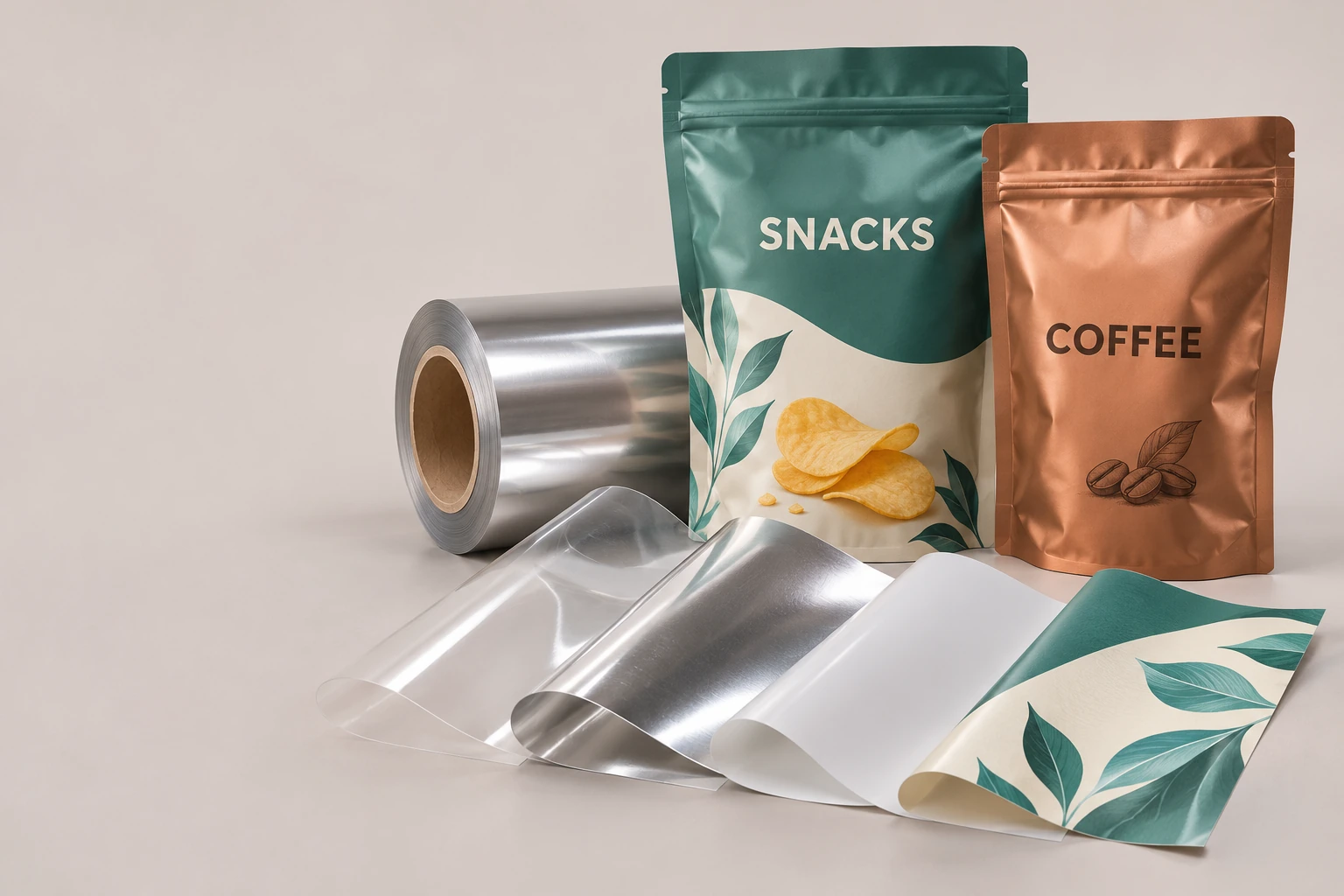 Compare material structures
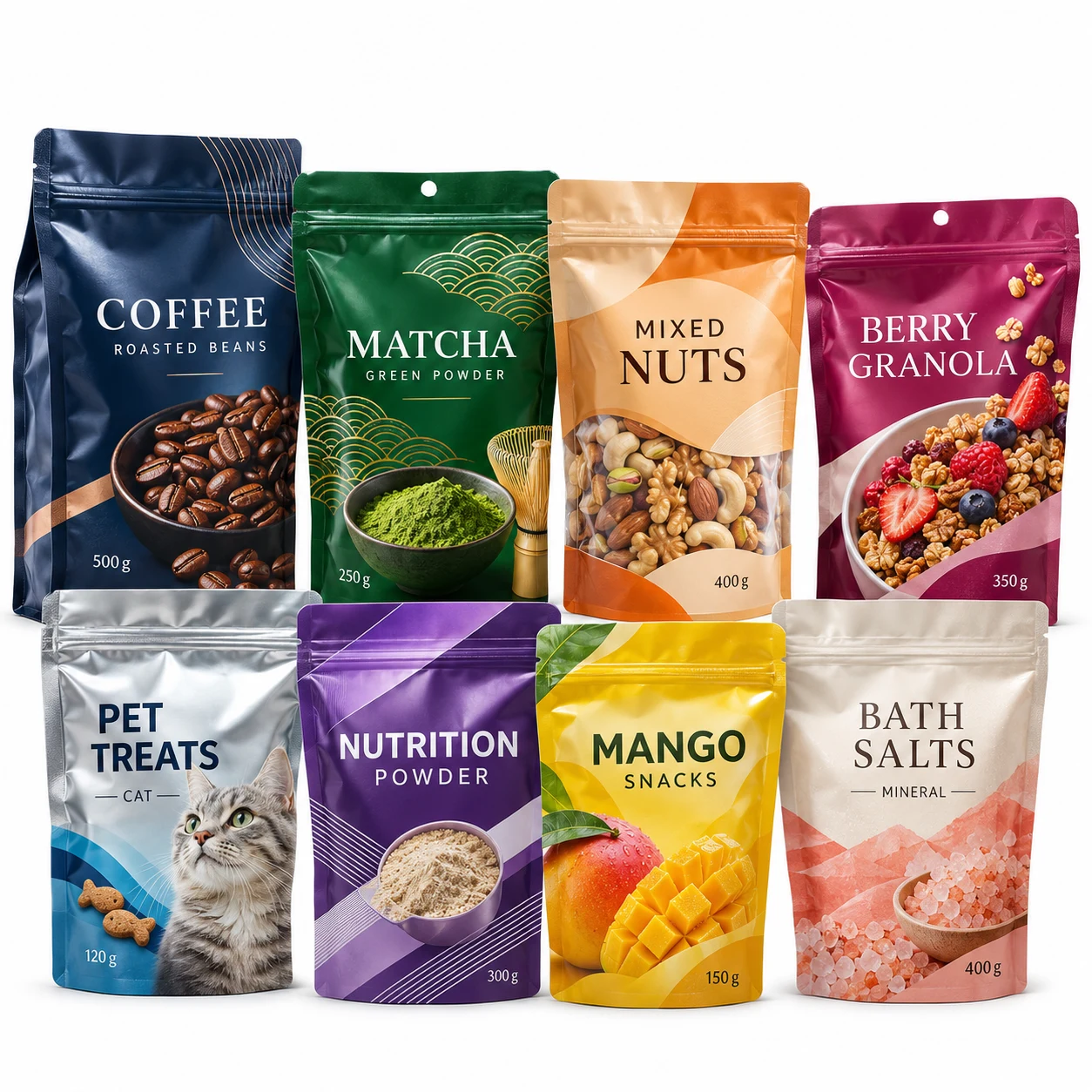 Home Care & Detergent Packaging
Bring the detergent brief. We’ll review the pack.
Share the details you have. We can work through the format, specification and next steps together.
- Formula and concentration: Relevant composition, pH, density and compatibility information
- Volume and filled mass: Nominal capacity, headspace and target bottle size
- Spout and closure: Fitment material, position, bore and cap requirement
- Order plan: quantity per design, artwork status and delivery destination.
Direct to the manufacturing team. Share drawings or additional files by email after your initial inquiry.
Request a custom packaging quote
No complete specification yet? Start with the product and the quantity you have in mind.
Confirm the production window.
Regular orders typically take around 15 days after artwork approval. Confirm the schedule for your construction, quantity and materials; transit time is additional.
Keep the approval reference.
Record the agreed artwork, structure, dimensions and inspection criteria so future orders start from the same documented brief.
Stay connected after delivery.
Share batch details, photos and samples if an issue arises. Our team can review the evidence and discuss the next steps with you.