
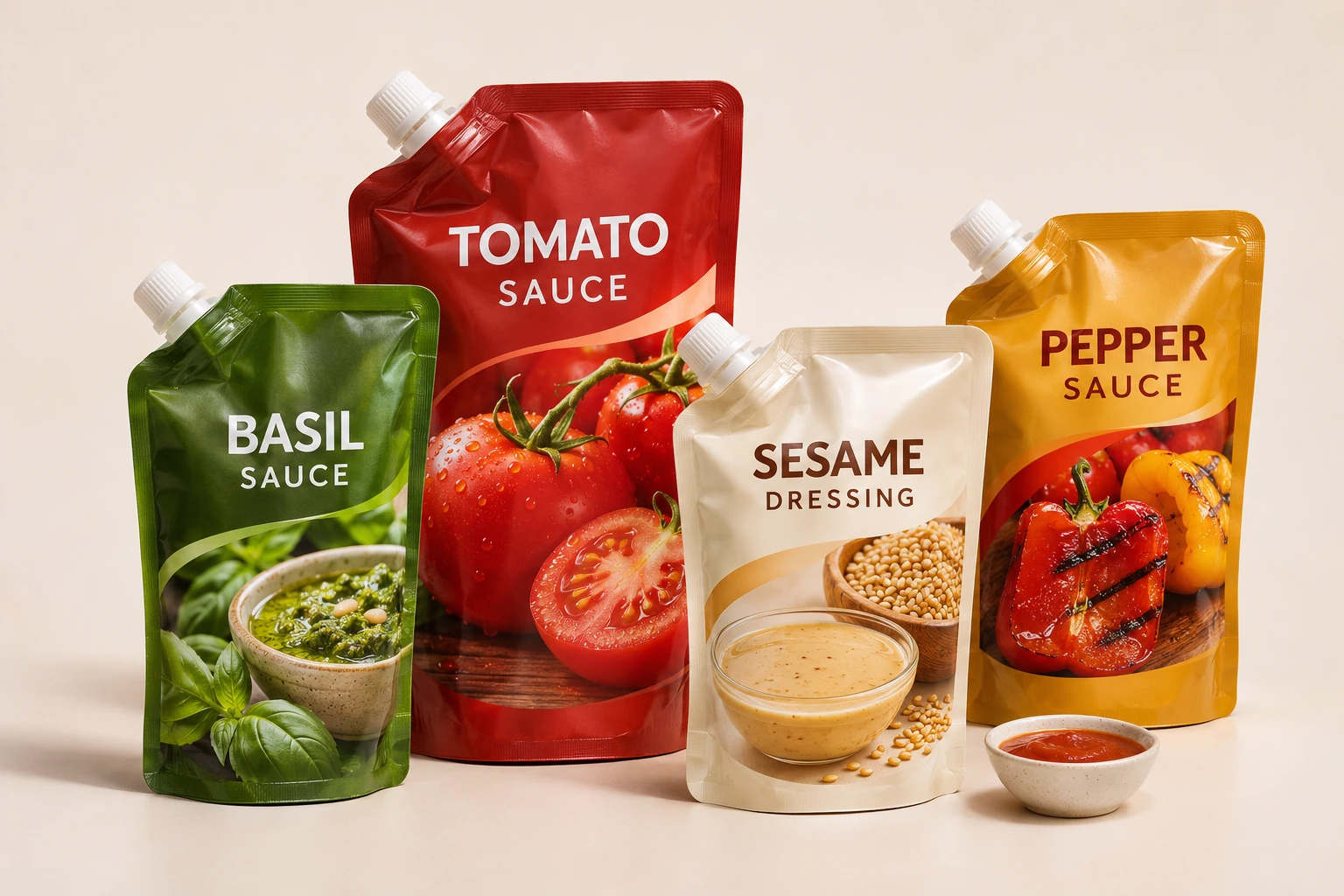
Custom Sauce Refill Pouches
A pouch designed around the way your sauce pours.
Custom sauce refill pouches for dressings, smooth sauces and condiment ranges. Develop the pouch, spout and printed design together with your recipe, filling method and intended refill container.
The sauce decides more than the capacity.
A nominal milliliter size does not describe flow, temperature or the opening the customer pours into. Bring those details into the specification early.
Flow and particles
A thick sauce or one containing pieces can behave differently from a smooth dressing. Describe viscosity at the intended use temperature and the largest relevant particles.
Treatment and storage
Identify cold filling, hot filling or any later heat treatment. These are separate process conditions; the complete pouch and fitment must be evaluated for the proposed route.
Refill experience
Check spout position, cap handling, bottle-neck clearance and the amount left after pouring. Review the actual filled pouch rather than a spout dimension alone.
Choose how the sauce leaves the pouch.
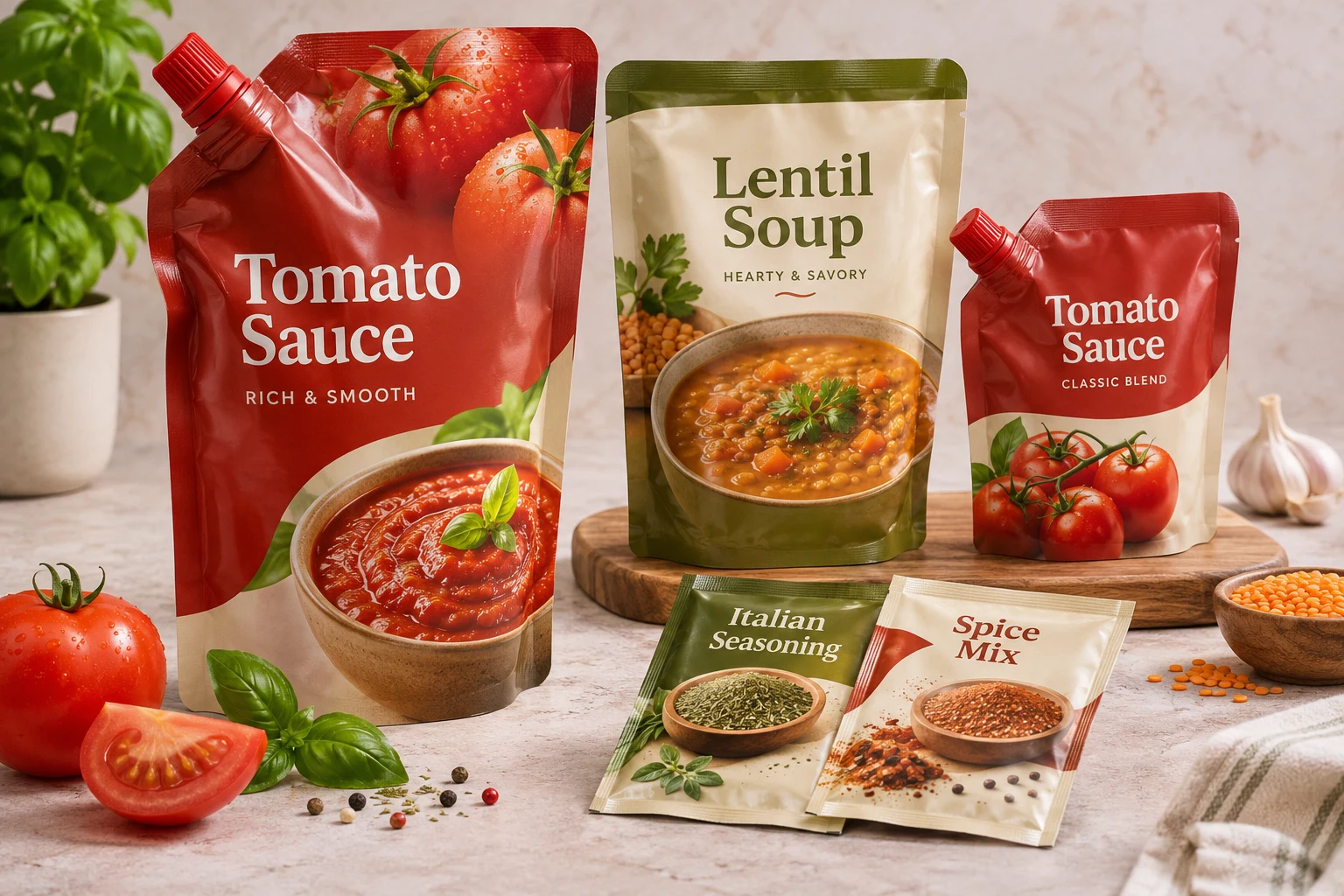
Corner-spout refill pouches
An angled dispensing position can suit pouring into a bottle or dispenser. Evaluate the approach angle and the grip on a filled pack.
Explore this formatCenter-spout pouches
A centered fitment offers a different handling and filling arrangement. Match the fitment and cap to the approved filling equipment.
Explore this formatTear-open refill packs
A non-spouted pouch may suit a single transfer. Define the tear path and opening size, and test whether the sauce pours cleanly.
Explore this formatCustom materials. Purpose in every layer.
The following are structure families for discussion, not temperature ratings. Food contact, oil and acid exposure, sealability and the actual filling or treatment process determine the specification. A PE-sealant example must not be assumed suitable for retort.
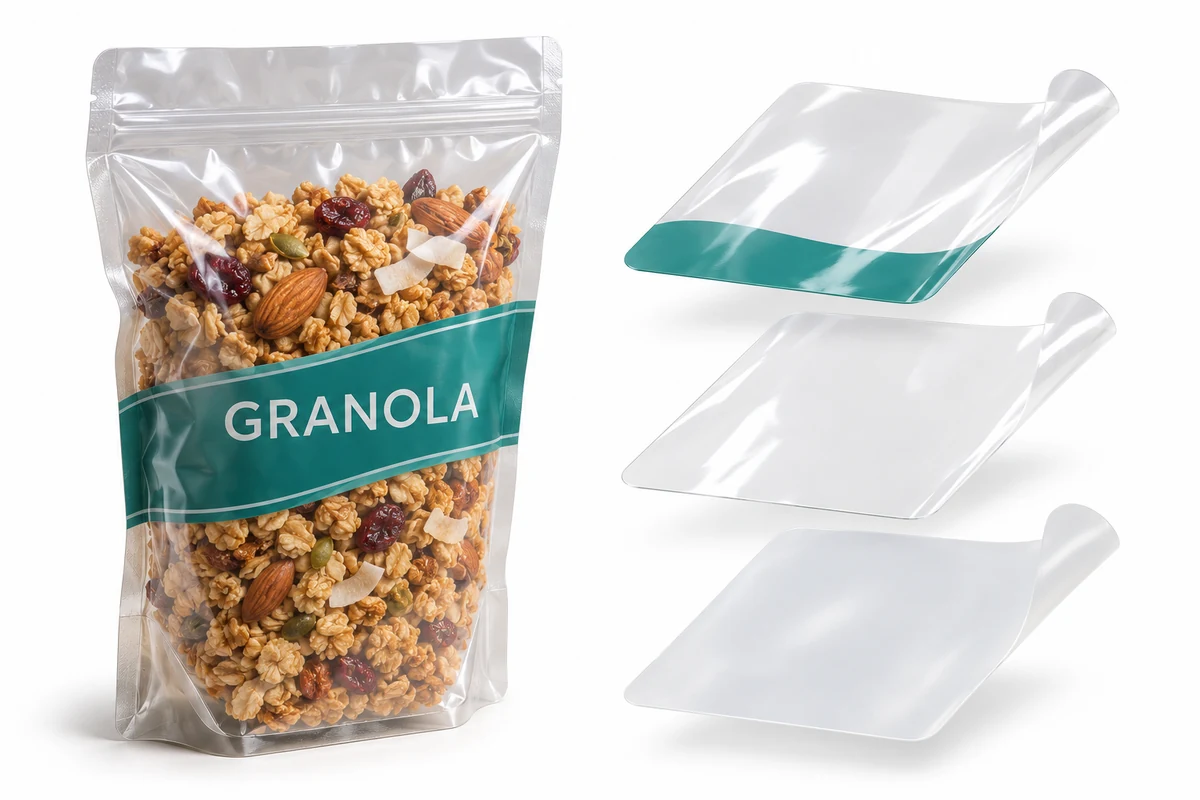
Transparent reinforced laminate
Balances printed areas and product visibility. Define the window and print coverage.
Supports toughness and puncture resistance. Grade and thickness matter for the application.
Supports sealing and product contact. Confirm seal behavior with the filling process.
Transparency is not a promise of a particular oxygen barrier. Compare the full specification against the product target. Adhesive and ink systems are part of the final specification; not all functional layers are shown.
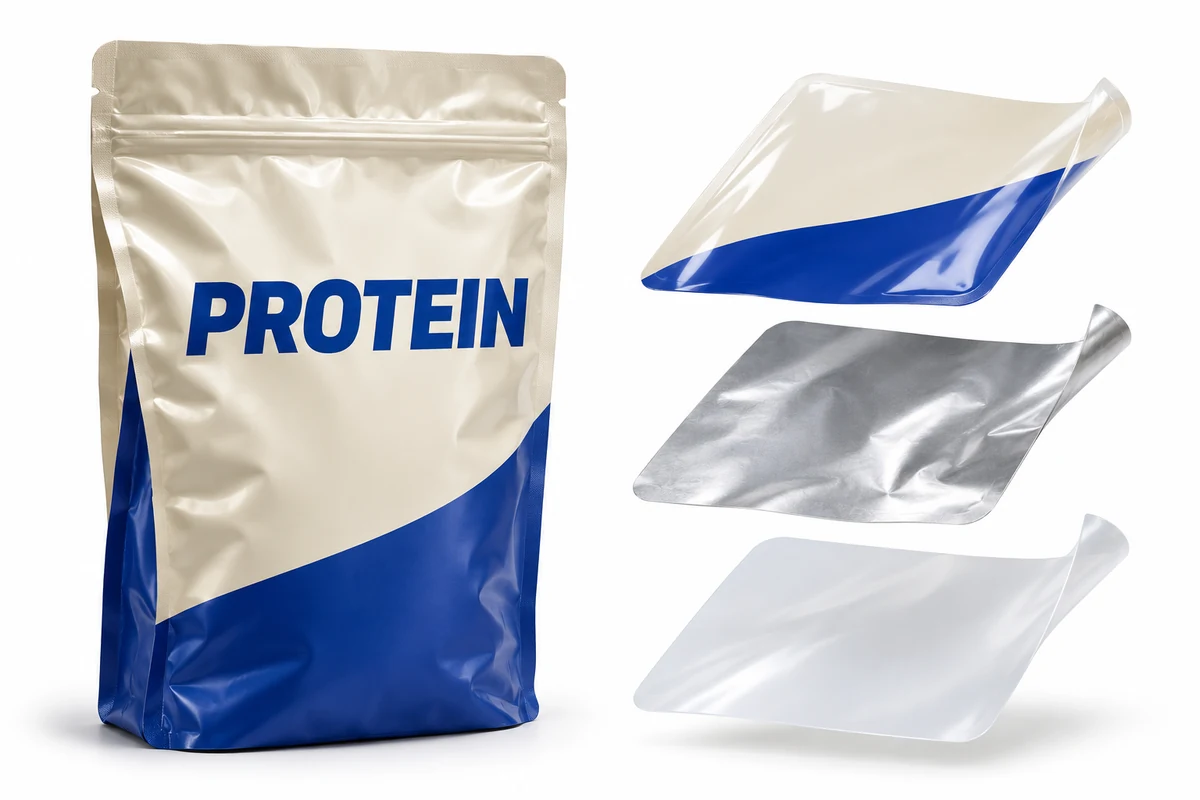
Aluminum foil laminate
Supports printing and handling, with the intended finish agreed before production.
A separate foil layer provides an opaque barrier. Gauge, flexing and pinhole risk need review.
The sealing layer is selected for product compatibility and packing conditions.
For applications requiring an opaque barrier. Validate the complete pack rather than assuming a shelf life. Adhesive and ink systems are part of the final specification; not all functional layers are shown.
Mono-material development route
Review orientation, stiffness and print requirements for a PE-based outer web.
A same-family architecture may support a recycling route. Any barrier additions need separate compatibility review.
Match the sealant to the equipment and confirm the performance of closures and the converted pack.
Simplified functional roles, not a fixed three-layer recipe. Recyclability depends on the full pack and available local systems. Adhesive and ink systems are part of the final specification; not all functional layers are shown.
Specify the recipe, process and dispensing route.
Sauce profile
Viscosity, particles, oil content and relevant acidity informationUse the actual recipe and its expected temperature range when reviewing compatibility and dispensing.
Capacity and headspace
Target fill volume, density and filled dimensionsReserve the headspace required by the process and check the real filled weight.
Spout and cap
Bore, position, fitment drawing and receiving bottle openingThe internal passage, cap and pouch shoulder all affect the refill experience.
Filling and treatment
Fill method, maximum temperature, time and any post-fill processConfirm the proposed laminate, adhesive, sealant and fitment against the complete process.
Seal and leak checks
Pouch seal, spout weld and closure acceptance criteriaSeparate pouch-making checks from the filling and cap-application checks performed on your line.
Storage and graphics
Storage conditions, artwork variants and coding zonesConfirm label information and leave a stable space for lot and date coding.
What best describes your sauce refill?
Choose a starting point. Add it to the inquiry, then fill in your own details.
Sauce refill project: smooth dressing. Please review viscosity, fill volume, corner spout, receiving bottle opening and seal integrity.
Review the complete refill with your sauce.
- Test pouring into the intended bottle or dispenser.
- Assess flow and retained product with the actual recipe at use temperature.
- Confirm filling and closure application on the intended equipment.
- Validate the filled pack through the proposed treatment, storage and distribution conditions.
Ask which sample is appropriate: an existing format sample, an artwork sample, a structure sample or a production trial. Their purposes and costs differ.
Discuss a sample plan ↗A recognizable flavor range, with room for the essentials.
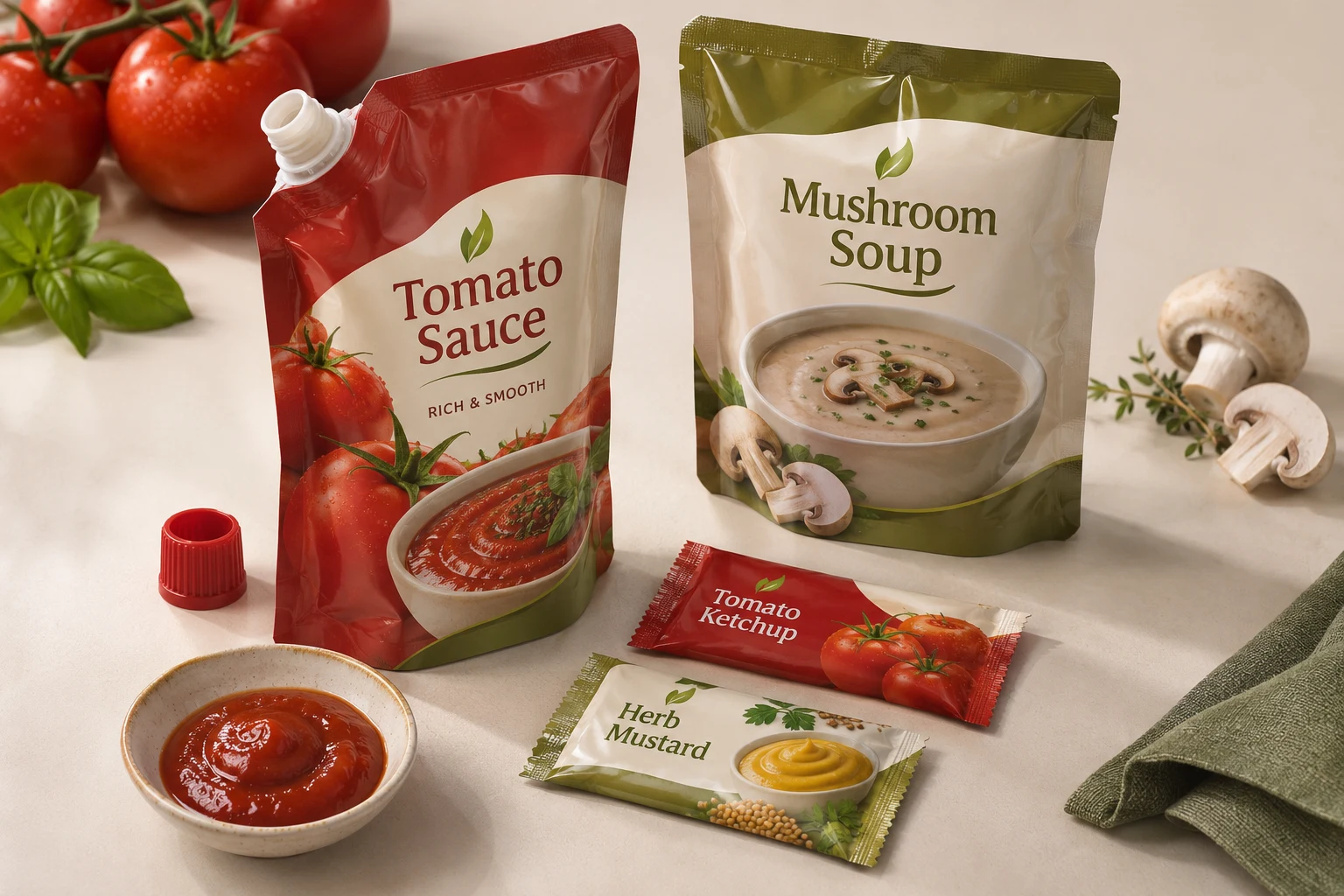
Give each sauce a distinct identity while keeping shared brand elements consistent. Build the graphics around the shoulder, spout and filled pouch shape, with clear information for the refill user.
- Keep ingredients and instructions readable across the filled panels.
- Reserve space around fitment welds and pouch seals.
- Define the lot-code zone and approve every flavor-specific artwork.
Production: gravure printing, up to 10 colors. Digital printing is used for sampling. Artwork approval does not replace material or filled-pack validation.

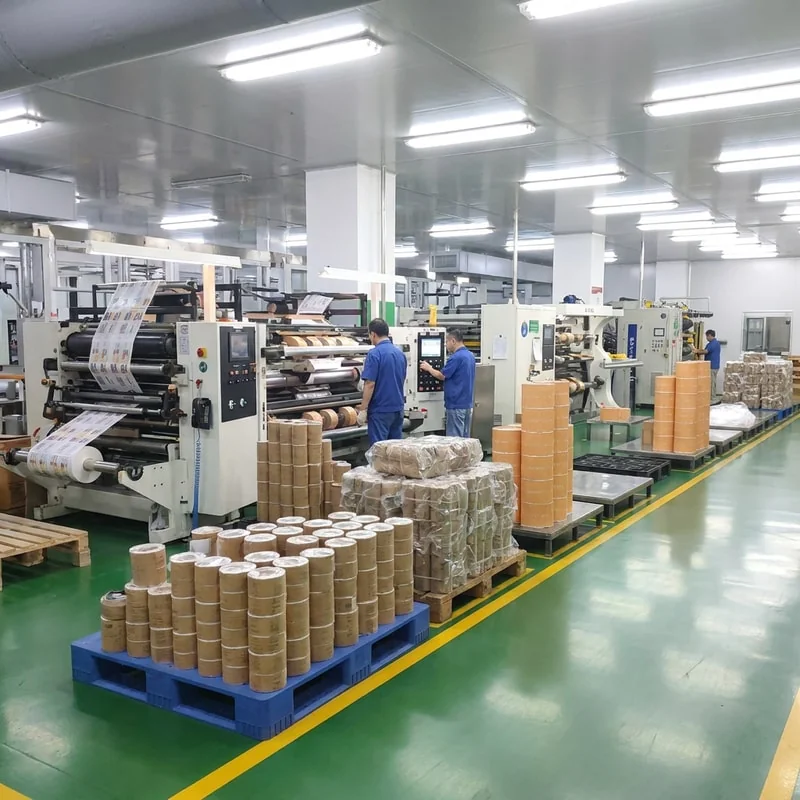
A factory conversation, from brief to batch.
Shanghai IVAPAK Packaging Products Co., Ltd. has manufactured flexible packaging since 2003. Work directly with the production team to connect the agreed specification, approved artwork and inspection requirements.
Defined specification
Agree dimensions, construction, print reference, quantities and the checks required for your pack.
Relevant documentation
Request current BRCGS and ISO 9001 certificates, plus applicable material and SGS test information for your use conditions.
Six stages. One agreed production brief.
Confirm the brief
Product, format, dimensions, quantities and intended use.
Review the structure
Material candidates, closure or machine requirements and sampling.
Approve the artwork
Dieline, print reference, version and orientation.
Print & laminate
Gravure printing, lamination and the required curing stage.
Convert & inspect
Slit rollstock or make pouches, then inspect against the agreed specification.
Pack & dispatch
Confirm the packing list, shipment arrangements and reorder reference.
How do you choose a spout for thick sauce?
Start with viscosity, particle size, use temperature and the target container opening. Review fitment options and test dispensing with the real recipe. Nominal capacity alone cannot define the bore.
Can all sauce refill pouches be hot filled or retorted?
No. The material structure, adhesive, sealant, fitment and closure must be selected for the exact thermal conditions. Share the process for review; a general sauce refill pouch is not automatically a retort pack.
Can the pouch be filled through the spout?
The filling route depends on the pouch supply condition and your equipment. Agree whether filling is through the fitment or an open pouch edge, plus how the final seal or cap will be applied.
Can I specify a recyclable refill pouch?
A mono-material route can be reviewed separately. Barrier, fitment compatibility and process performance still need validation; recycling claims depend on the full package and the destination collection systems.
Will the artwork sample be usable for a filling trial?
A digital artwork sample is primarily for visual review. A line or product trial needs the agreed structure, dimensions and fitment. Confirm the purpose of the sample before ordering it.
What should I send for a quote?
Send the sauce profile, fill volume, treatment details, preferred fitment, current container or drawing, quantity per design and destination. We can work through missing details with you.
Continue building your packaging brief.
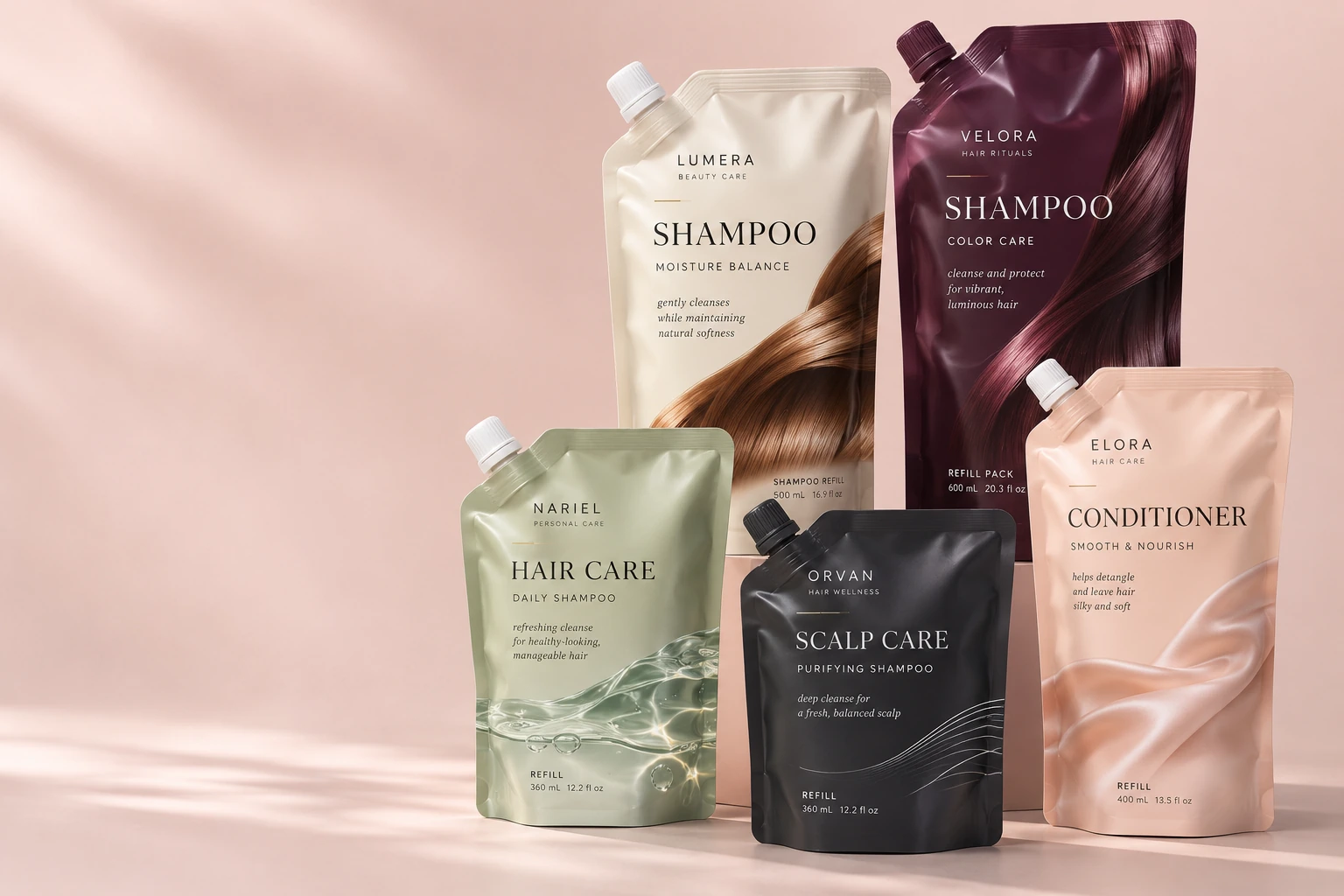 Another refill application: hair care
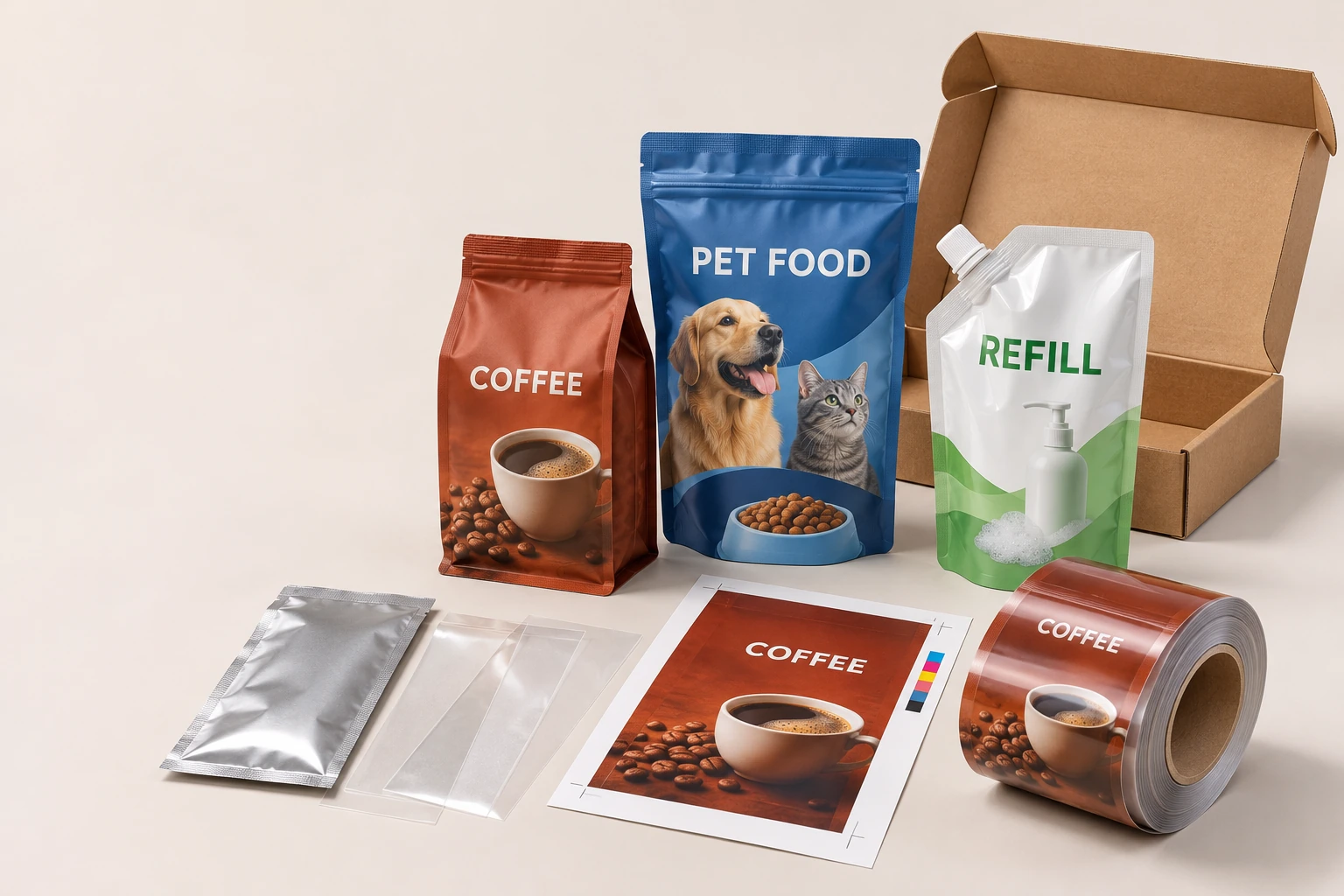 Request the right sample
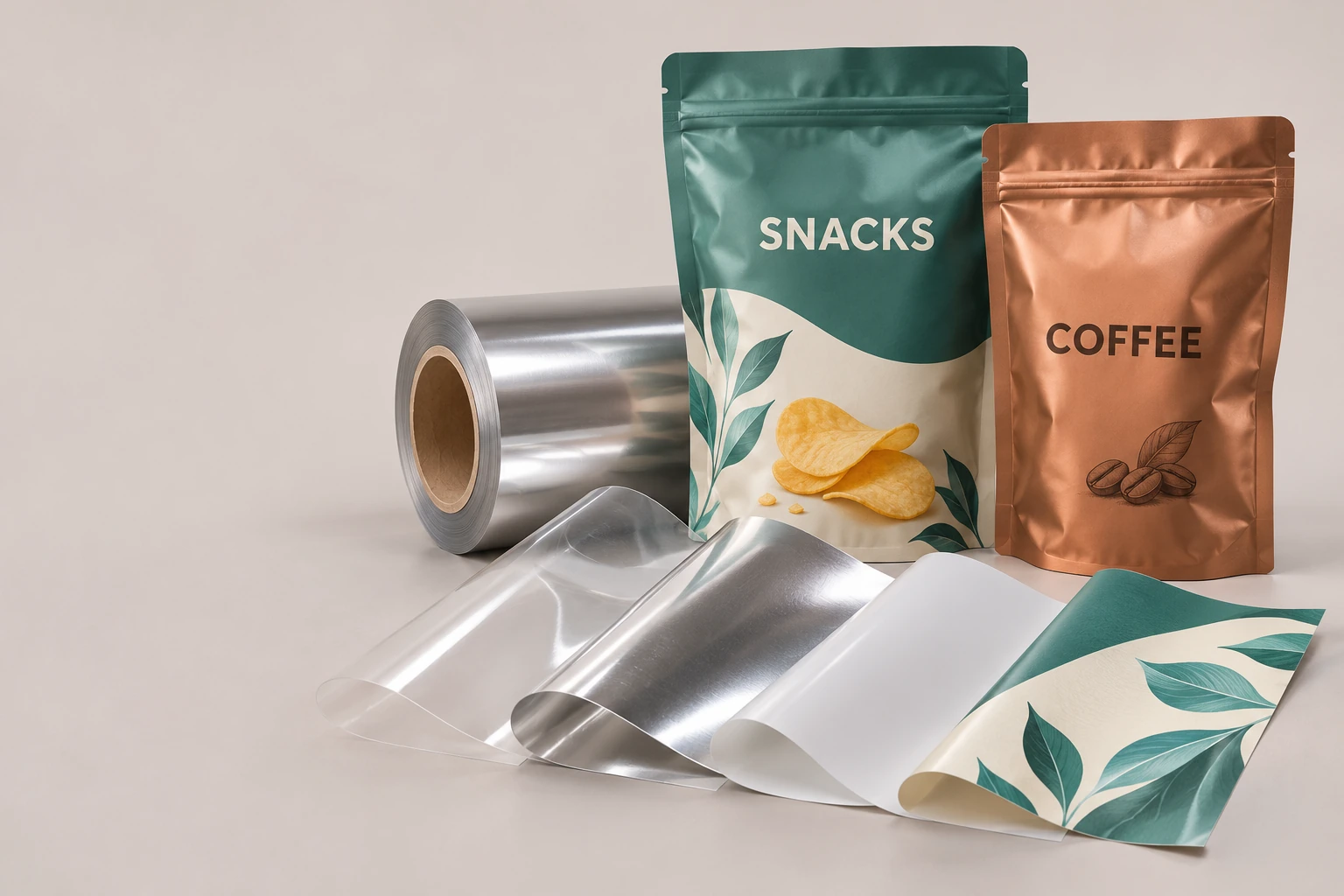 Material structure guide
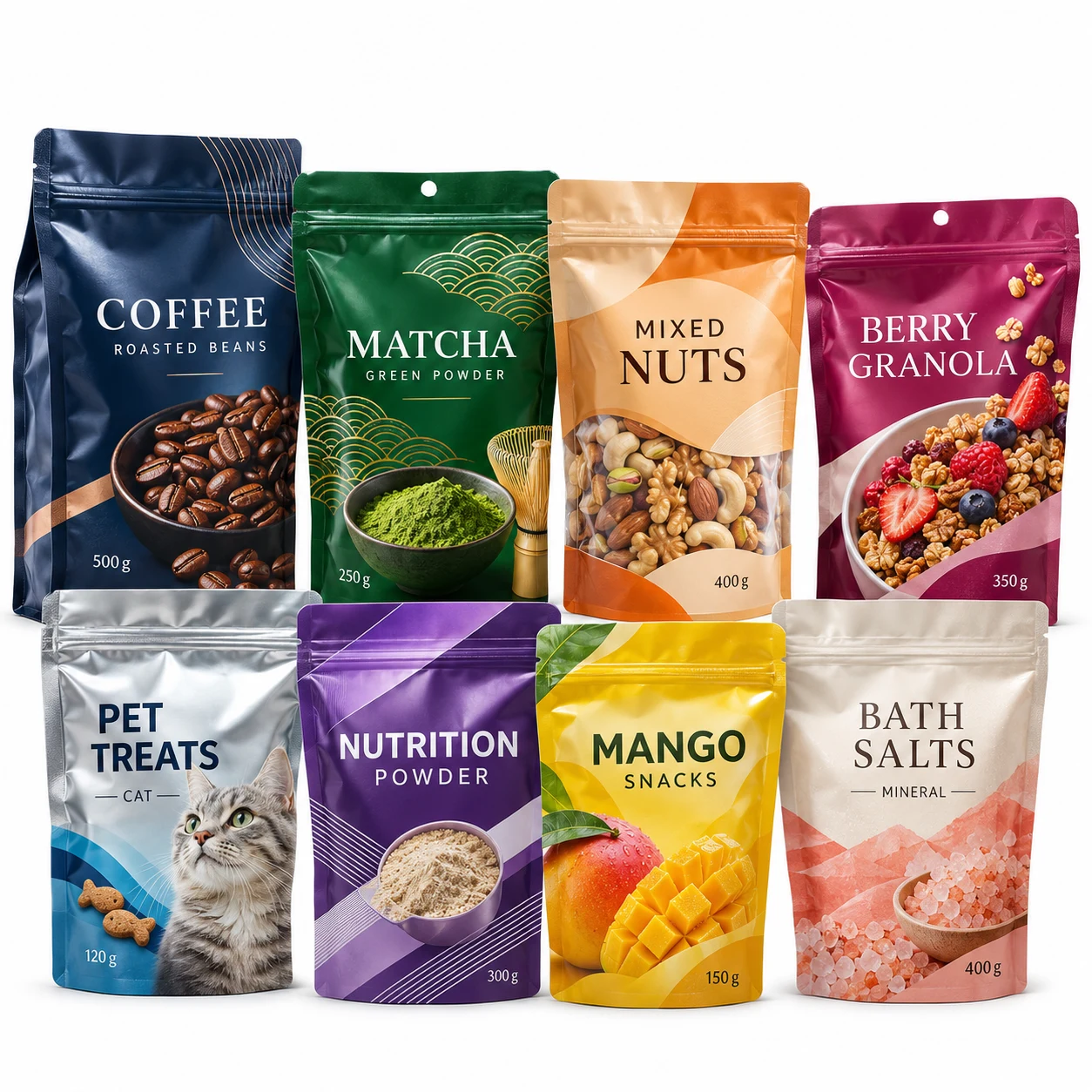 Sauces, Soups & Condiments Packaging
Start with the recipe. Finish with a refill brief.
Share the details you have. We can work through the format, specification and next steps together.
- Sauce profile: Viscosity, particles, oil content and relevant acidity information
- Capacity and headspace: Target fill volume, density and filled dimensions
- Spout and cap: Bore, position, fitment drawing and receiving bottle opening
- Order plan: quantity per design, artwork status and delivery destination.
Direct to the manufacturing team. Share drawings or additional files by email after your initial inquiry.
Request a custom packaging quote
No complete specification yet? Start with the product and the quantity you have in mind.
Confirm the production window.
Regular orders typically take around 15 days after artwork approval. Confirm the schedule for your construction, quantity and materials; transit time is additional.
Keep the approval reference.
Record the agreed artwork, structure, dimensions and inspection criteria so future orders start from the same documented brief.
Stay connected after delivery.
Share batch details, photos and samples if an issue arises. Our team can review the evidence and discuss the next steps with you.