
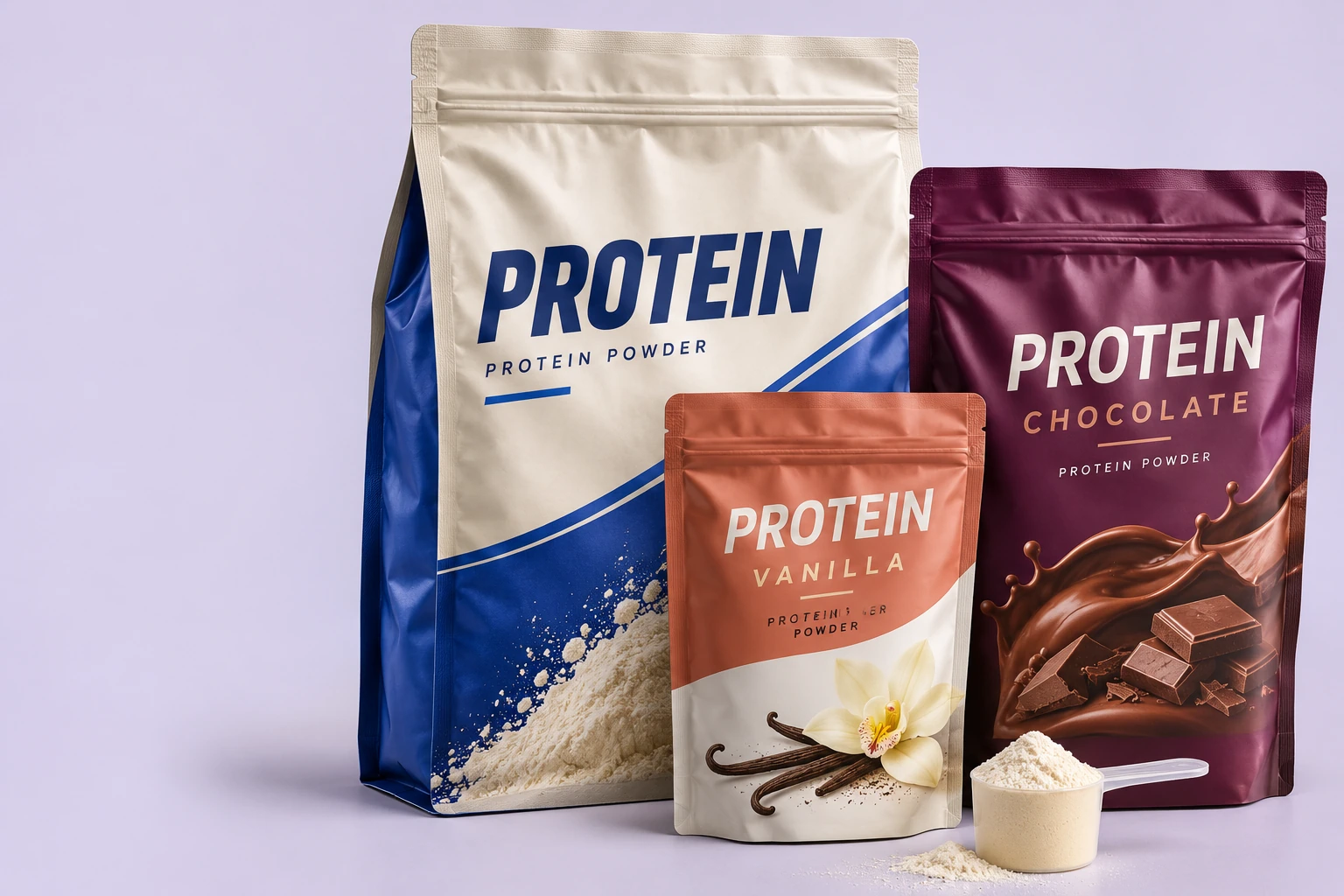
Custom Protein Powder Bags
A better brief for every scoop.
Custom printed protein powder bags for whey, plant-based blends and nutrition ranges. Connect moisture protection, filling clearance and scoop access with a format that works for your brand and packing line.
Powder changes the way you specify a pouch.
The specification starts with bulk density and moisture sensitivity. It also needs to account for the powder that settles on the bag mouth during filling and the space needed for daily scooping.
Moisture sensitivity
Define the product’s storage requirements and shelf-life target. Film selection must be assessed with the actual powder and sealed pack.
Seal contamination
Fine powder at the sealing area can compromise the pack. Review nozzle access, headspace, dust control and the heat-seal process together.
Scoop access
Allow sufficient opening width and usable depth for a hand and scoop. Trial the full bag and its daily use as the fill level drops.
Choose a powder pack by volume and routine.

Flat-bottom powder bags
A stable base and side panels suit larger powder packs. Check filled dimensions, shelf height and space for the scoop.
Explore this formatStand-up powder pouches
A flexible retail and refill format. Match the gusset, zipper and sealant to the volume and powder filling process.
Explore this formatThree-side seal samples
For single-use trials and sample bundles. Share the portion volume and filling method to confirm a practical sachet size.
Explore this formatCustom materials. Purpose in every layer.
Opaque metallized and foil-containing structures are possible starting points for sensitive powders. Required moisture performance, sealability and handling must be confirmed for the full laminate.
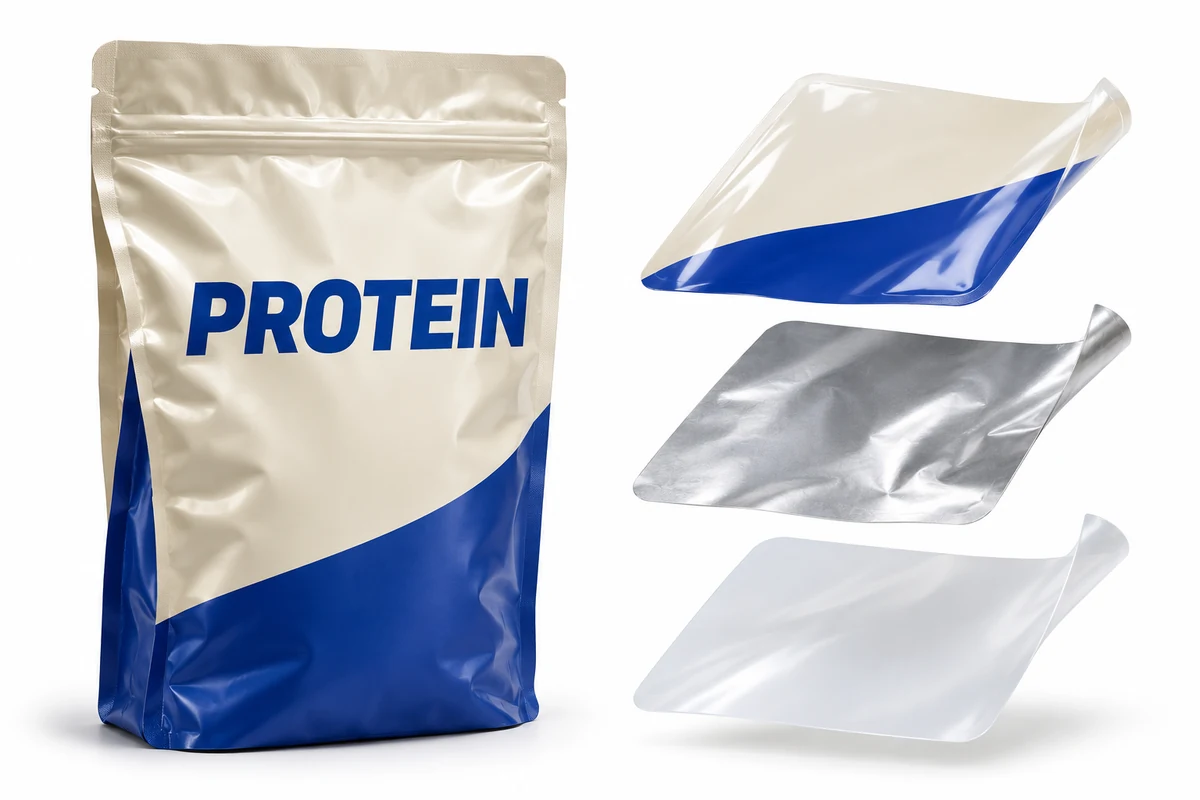
Aluminum foil laminate
Supports printing and handling, with the intended finish agreed before production.
A separate foil layer provides an opaque barrier. Gauge, flexing and pinhole risk need review.
The sealing layer is selected for product compatibility and packing conditions.
For applications requiring an opaque barrier. Validate the complete pack rather than assuming a shelf life. Adhesive and ink systems are part of the final specification; not all functional layers are shown.
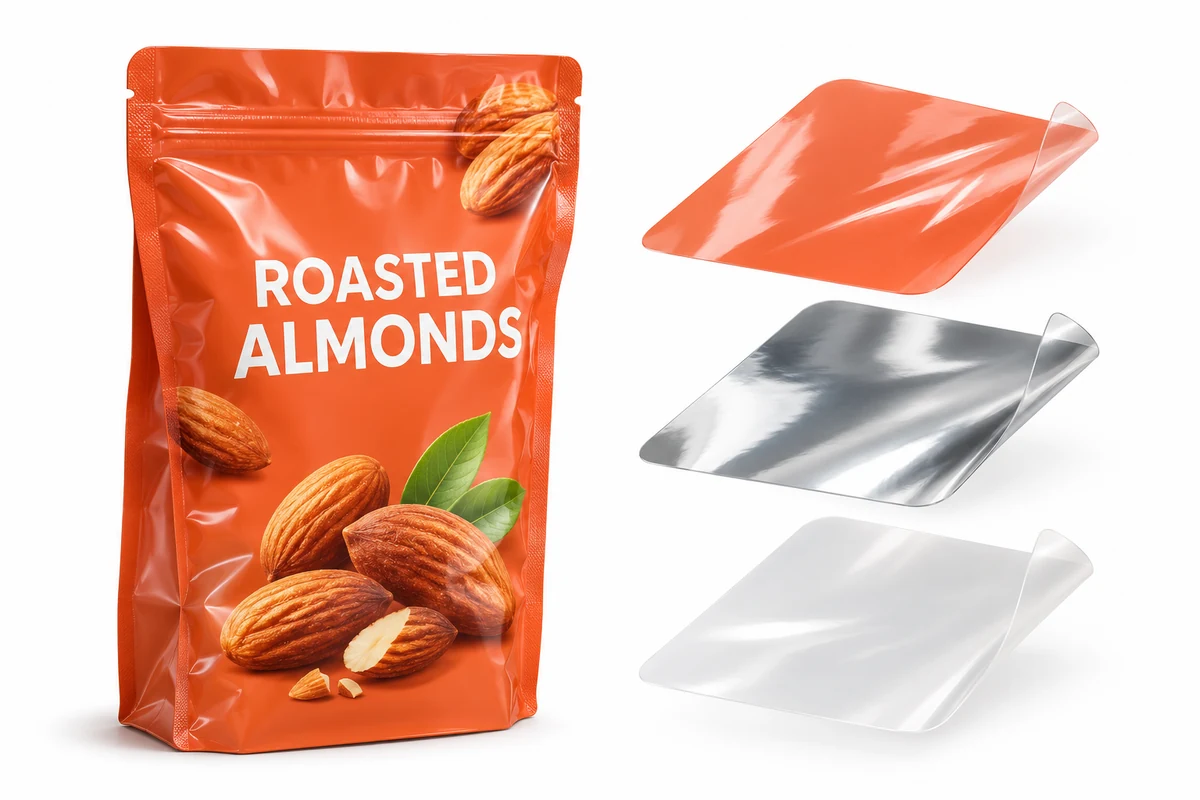
Metallized barrier laminate
Carries the graphic and supports handling. Specify print coverage and surface finish.
A thin metal coating adds barrier and light protection. Confirm the film grade and measured performance.
Forms the product-contact sealing surface. Select the grade and gauge around the sealing process.
An opaque structure family. Metallized PET is not a separate aluminum foil layer. Adhesive and ink systems are part of the final specification; not all functional layers are shown.
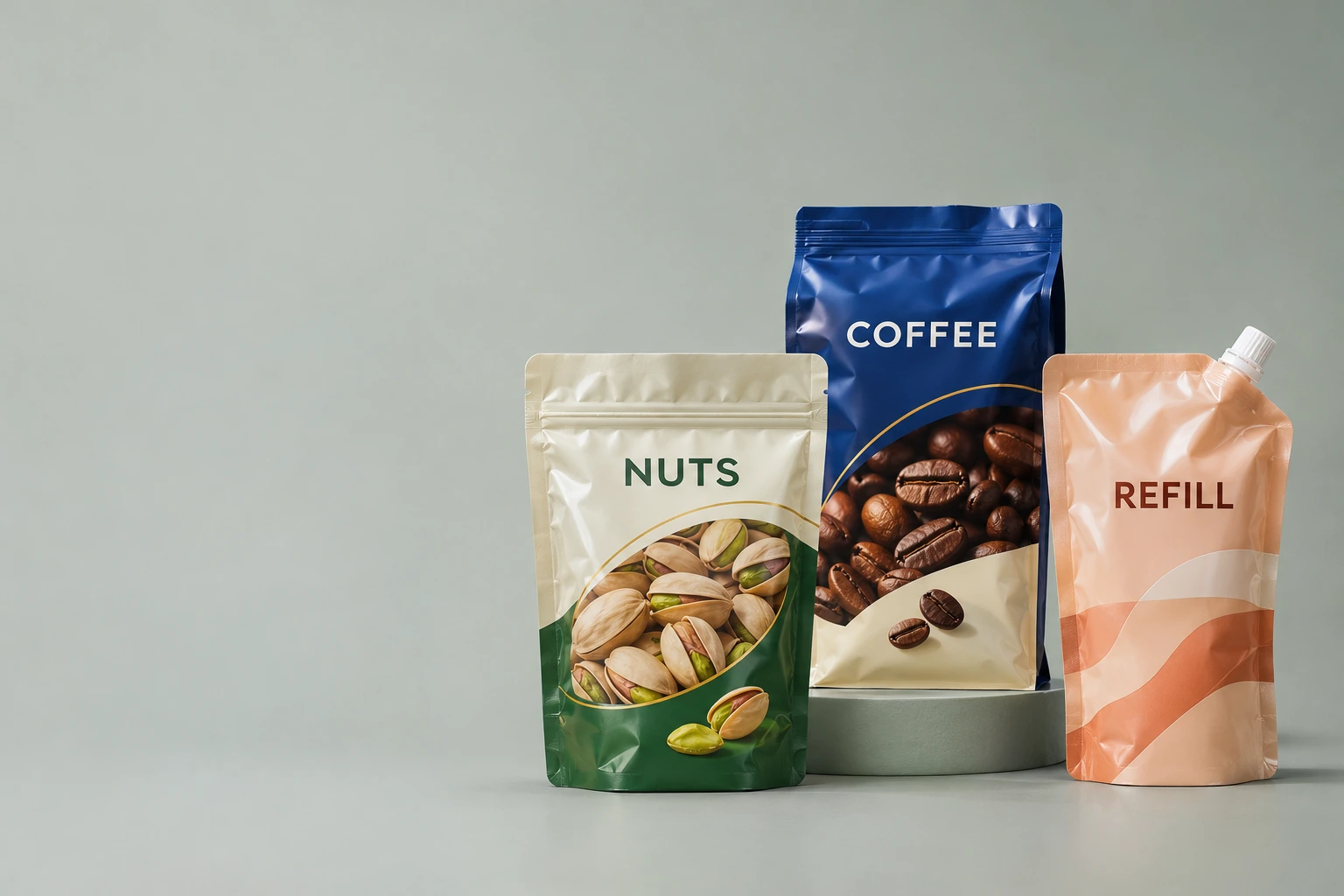
Mono-material development route
Review orientation, stiffness and print requirements for a PE-based outer web.
A same-family architecture may support a recycling route. Any barrier additions need separate compatibility review.
Match the sealant to the equipment and confirm the performance of closures and the converted pack.
Simplified functional roles, not a fixed three-layer recipe. Recyclability depends on the full pack and available local systems. Adhesive and ink systems are part of the final specification; not all functional layers are shown.
A kilogram of powder is not a fixed bag size.
Powder and density
Protein type, bulk density and flow behaviorDifferent blends can need different volumes at the same declared weight.
Target fill
Nominal weight, fill volume and headspaceAllow for filling and sealing instead of designing to brim capacity.
Opening and scoop
Scoop size, pouch depth and zipper positionTest access before approving the final pouch dimensions.
Packing conditions
Filler type, dust control and sealing settingsUse a trial to check product contamination at the bag mouth.
Barrier and variants
Moisture sensitivity, flavors and SKU quantitiesAgree the laminate and print reference for each size and design.
Build the brief around your powder range.
Choose a starting point. Add it to the inquiry, then fill in your own details.
Protein powder project: large retail bags. Please review fill volume, flat-bottom format, scoop access and zipper position.
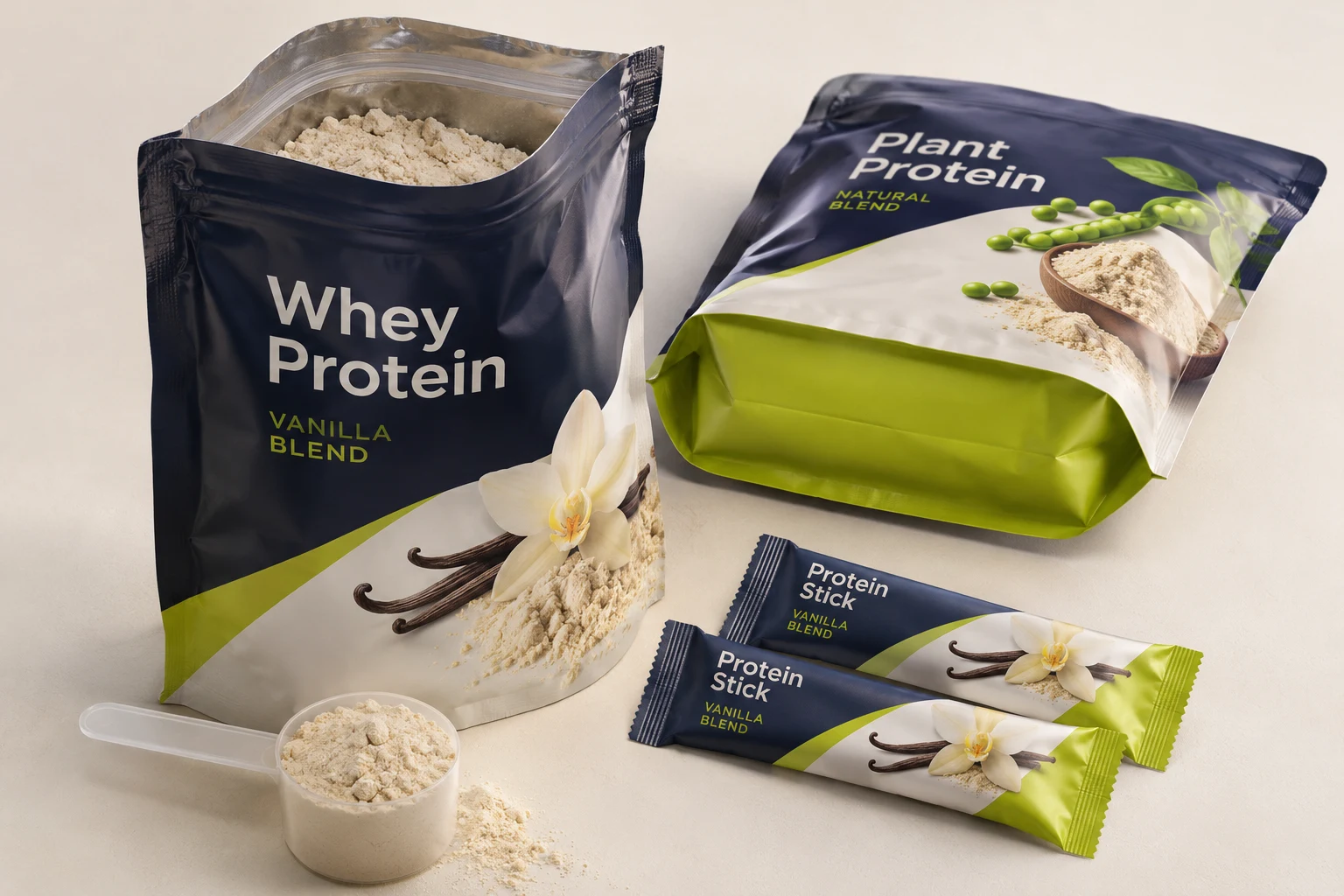
Review the pack from filling to the last scoop.
- Confirm the volume with your actual blend.
- Inspect seals after filling under realistic dust conditions.
- Test scoop access and repeated zipper use.
- Confirm the agreed storage performance with the filled pack.
Ask which sample is appropriate: an existing format sample, an artwork sample, a structure sample or a production trial. Their purposes and costs differ.
Discuss a sample plan ↗Create a flavor system that stays clear at shelf distance.
Coordinate flavor colors and ingredient imagery with a readable product name. Place the nutrition panel, ingredient list and preparation instructions on the approved dieline, leaving folds and seals clear.
- Check fine text at actual printed size, not only on screen.
- Reserve space for batch and date coding on the filling line.
- Separate design approval from material and filled-pack approval.
Production: gravure printing, up to 10 colors. Digital printing is used for sampling. Artwork approval does not replace material or filled-pack validation.

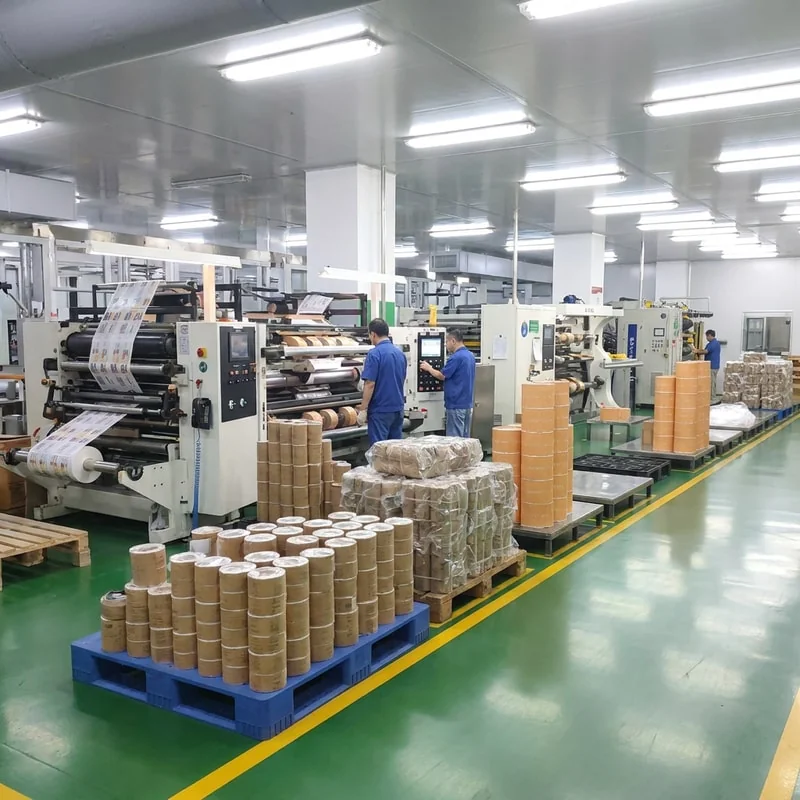
A factory conversation, from brief to batch.
Shanghai IVAPAK Packaging Products Co., Ltd. has manufactured flexible packaging since 2003. Work directly with the production team to connect the agreed specification, approved artwork and inspection requirements.
Defined specification
Agree dimensions, construction, print reference, quantities and the checks required for your pack.
Relevant documentation
Request current BRCGS and ISO 9001 certificates, plus applicable material and SGS test information for your use conditions.
Six stages. One agreed production brief.
Confirm the brief
Product, format, dimensions, quantities and intended use.
Review the structure
Material candidates, closure or machine requirements and sampling.
Approve the artwork
Dieline, print reference, version and orientation.
Print & laminate
Gravure printing, lamination and the required curing stage.
Convert & inspect
Slit rollstock or make pouches, then inspect against the agreed specification.
Pack & dispatch
Confirm the packing list, shipment arrangements and reorder reference.
Can you make bags for whey and plant protein?
Yes, we can review custom bag specifications for both. Density, particle characteristics, ingredients and storage needs can vary, so material and dimensions are selected for the actual formulation.
What size bag do I need for 1 kg of protein powder?
Share the bulk density, desired headspace and scoop size. We can propose dimensions for a sample review; there is no single reliable bag size for every 1 kg protein blend.
Does a zipper make the pouch moisture-proof?
No. Initial protection depends on the laminate and heat seals. A zipper provides reclosure after opening, but cannot reproduce an unopened pack’s barrier performance.
Can you supply individually printed flavor variants?
Yes. Send the flavor count, artwork and quantity for each size and design. We will review printing setup and production requirements for the complete range.
Do you supply protein powder or fill the bags?
IVAPAK manufactures custom packaging. This page covers the empty printed bags and their specification; product manufacture and filling are not included in the packaging offer.
Continue building your packaging brief.
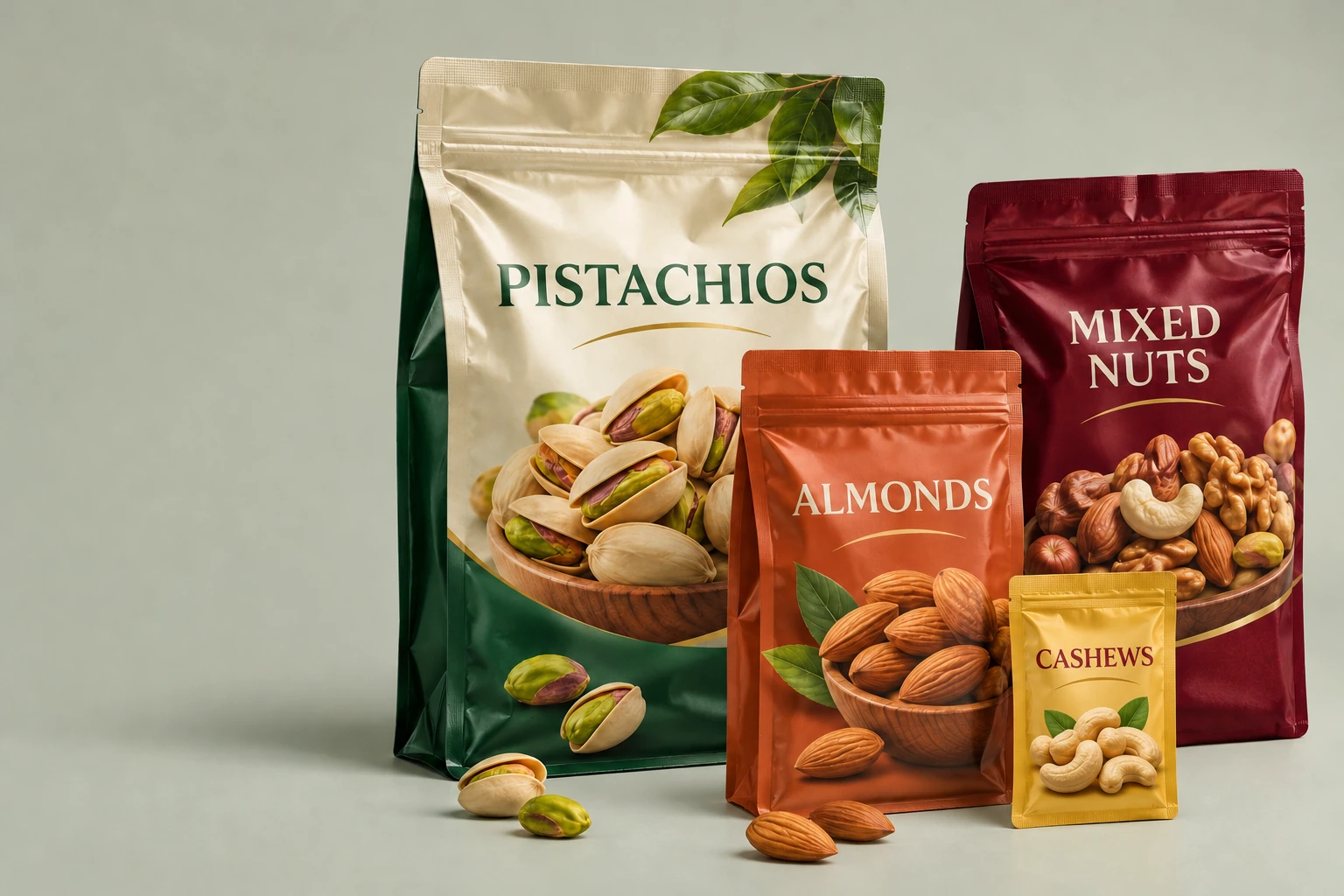 Nut packaging bags
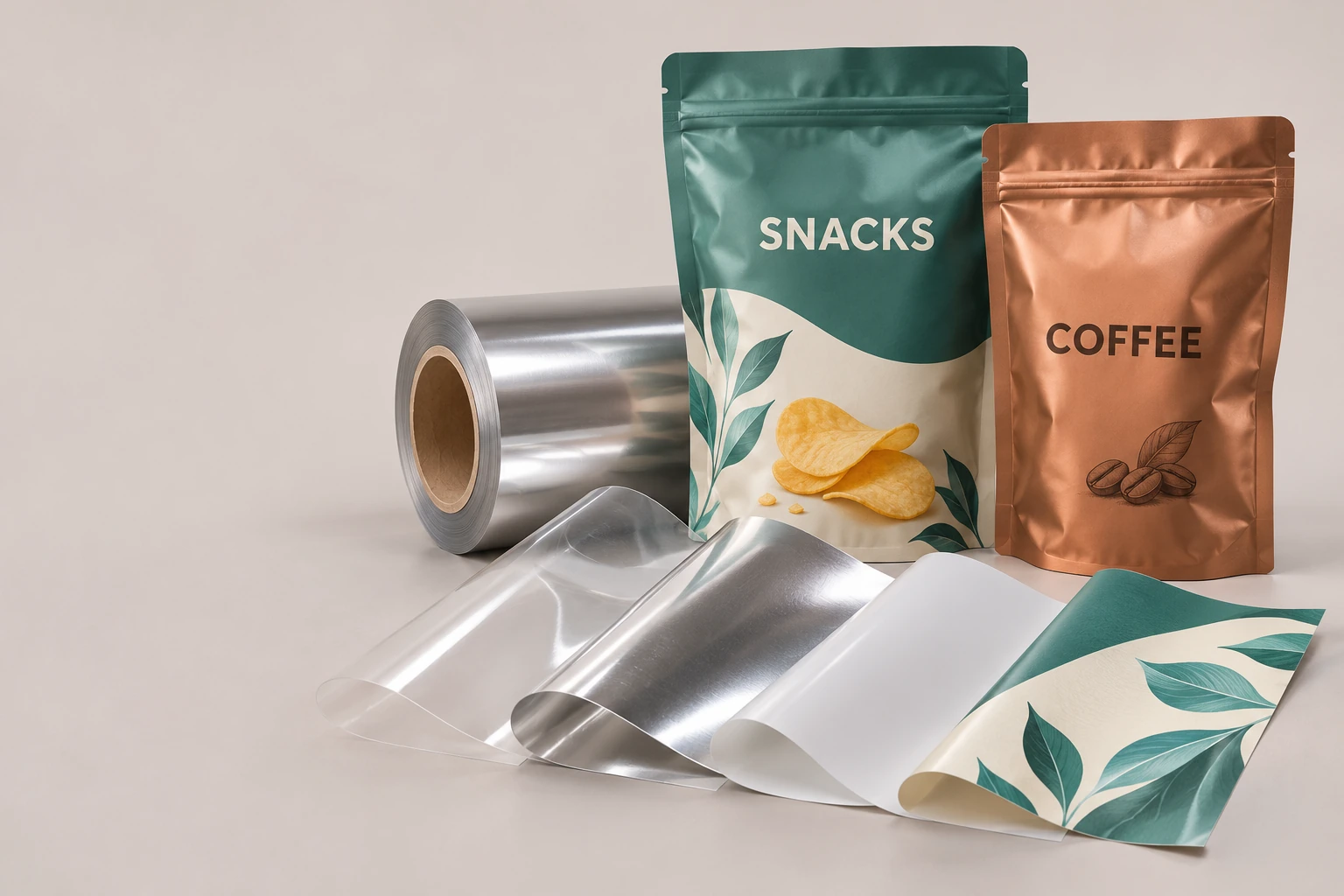 Materials & barrier structures
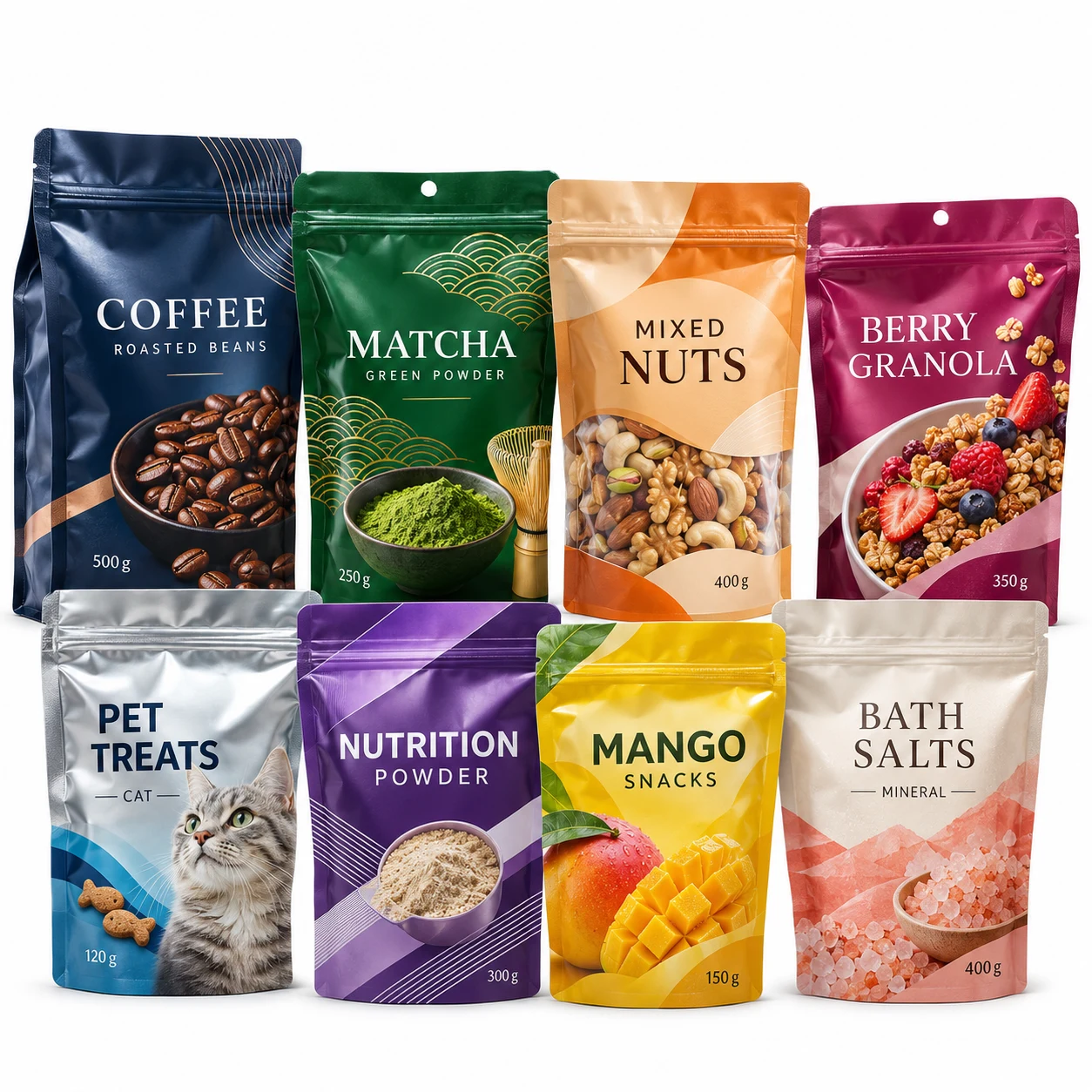 Supplements & Nutrition Packaging
Bring your powder specification. We’ll discuss the pack.
Share the details you have. We can work through the format, specification and next steps together.
- Powder and density: Protein type, bulk density and flow behavior
- Target fill: Nominal weight, fill volume and headspace
- Opening and scoop: Scoop size, pouch depth and zipper position
- Order plan: quantity per design, artwork status and delivery destination.
Direct to the manufacturing team. Share drawings or additional files by email after your initial inquiry.
Request a custom packaging quote
No complete specification yet? Start with the product and the quantity you have in mind.
Confirm the production window.
Regular orders typically take around 15 days after artwork approval. Confirm the schedule for your construction, quantity and materials; transit time is additional.
Keep the approval reference.
Record the agreed artwork, structure, dimensions and inspection criteria so future orders start from the same documented brief.
Stay connected after delivery.
Share batch details, photos and samples if an issue arises. Our team can review the evidence and discuss the next steps with you.