
Custom Printed HFFS Film
A horizontal line needs a precise film brief.
Custom printed HFFS film for reviewed horizontal form-fill-seal applications. Connect the product geometry, machine drawing and sealing system to the laminate, repeat and winding specification before production.
Start with the horizontal machine—not the acronym.
Horizontal form-fill-seal includes different equipment configurations. A flow wrapper making pillow packs and a machine forming flat or stand-up pouches do not share a universal film specification. Identify the machine and final pack first.
Product and pitch
Product length, width, height and infeed spacing affect the forming and sealing layout. Confirm these against the machine drawing rather than estimating from a finished front panel.
Sealing system
Specify the longitudinal seam and transverse sealing arrangement, plus heat-seal or other system requirements. Film surfaces and process conditions must suit the actual equipment.
Registered printing
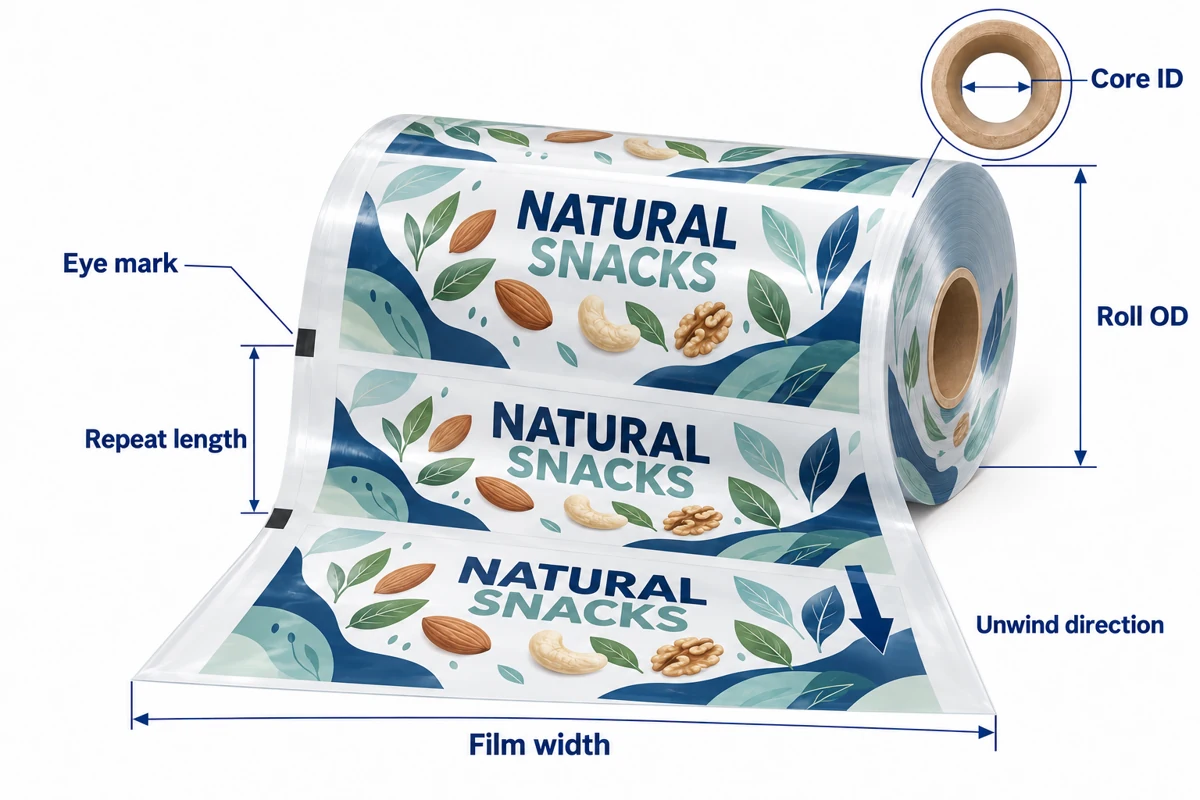
The repeat, cut position, eye mark and unwind direction connect graphics to the machine. A visually similar roll is not necessarily a usable replacement.
Define the pack the equipment is meant to make.
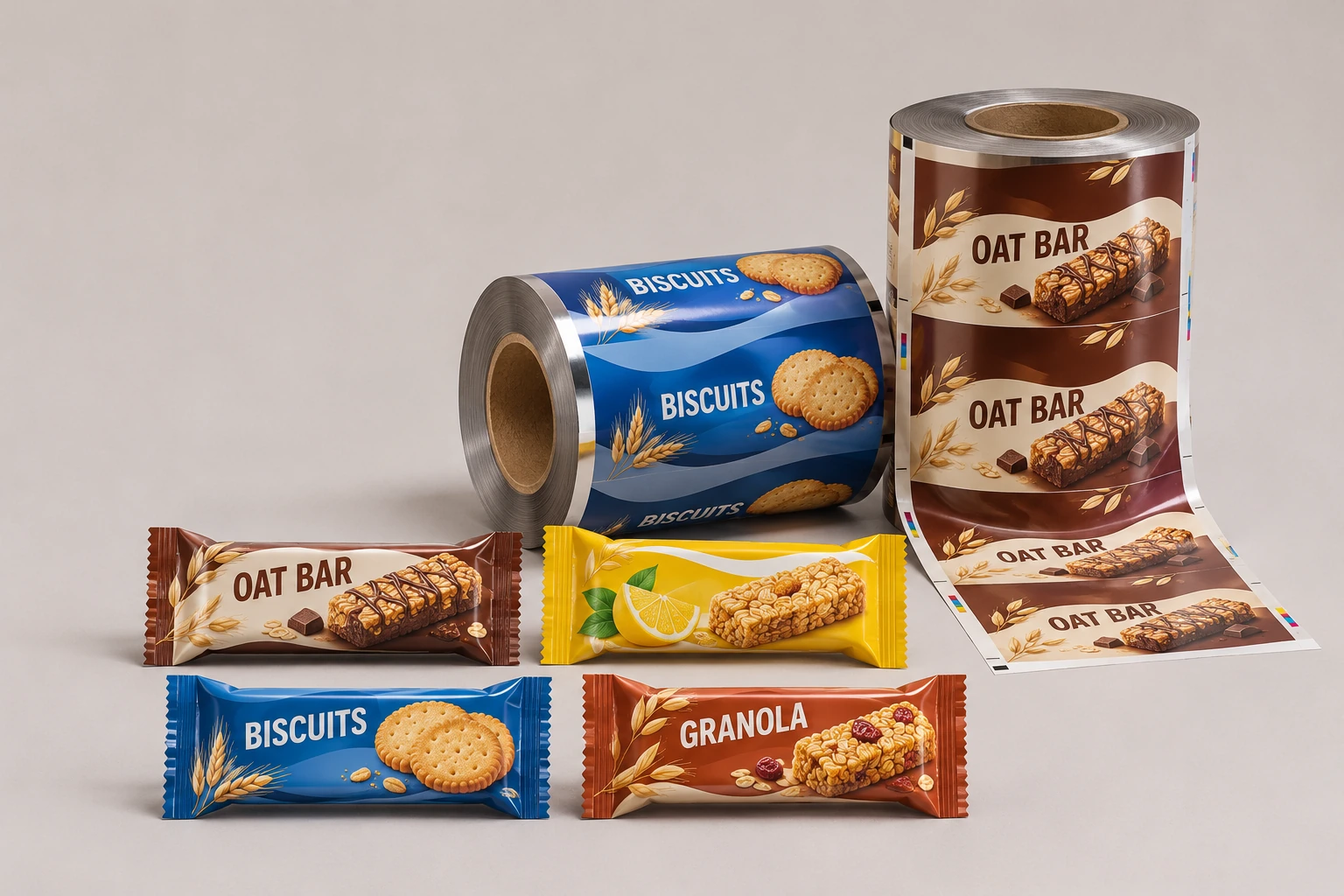
Bar and biscuit flow wraps
For suitable horizontal pillow-pack lines, coordinate product dimensions, print repeat and end-seal clearances with the machine team.
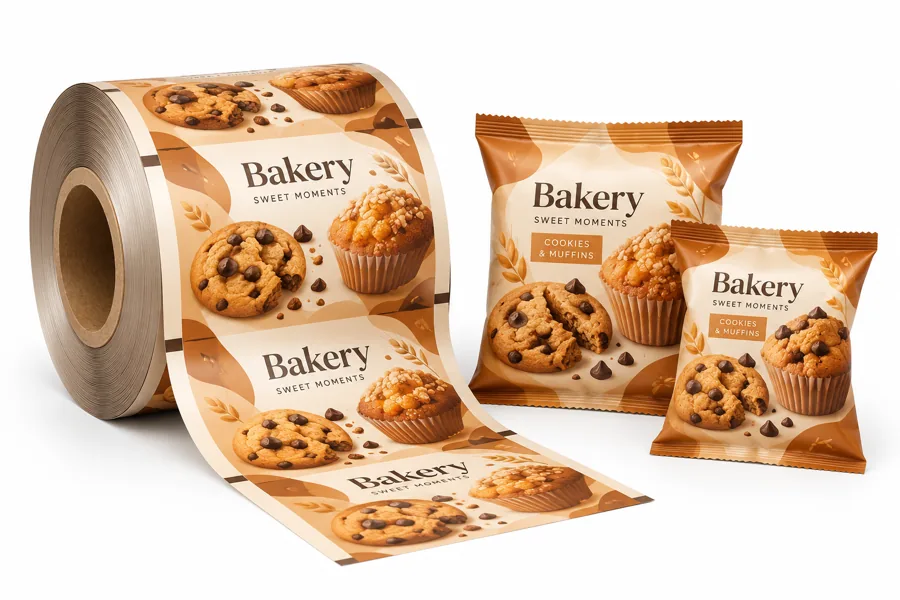
Explore this formatTray or grouped products
A tray or multipack changes forming clearance and the required film envelope. Review the widest and tallest product configuration.
Explore this formatOther horizontal pouch systems
If your HFFS equipment forms a flat or stand-up pouch, share its exact construction drawing and forming/sealing sequence for a separate review.
Explore this formatCustom materials. Purpose in every layer.
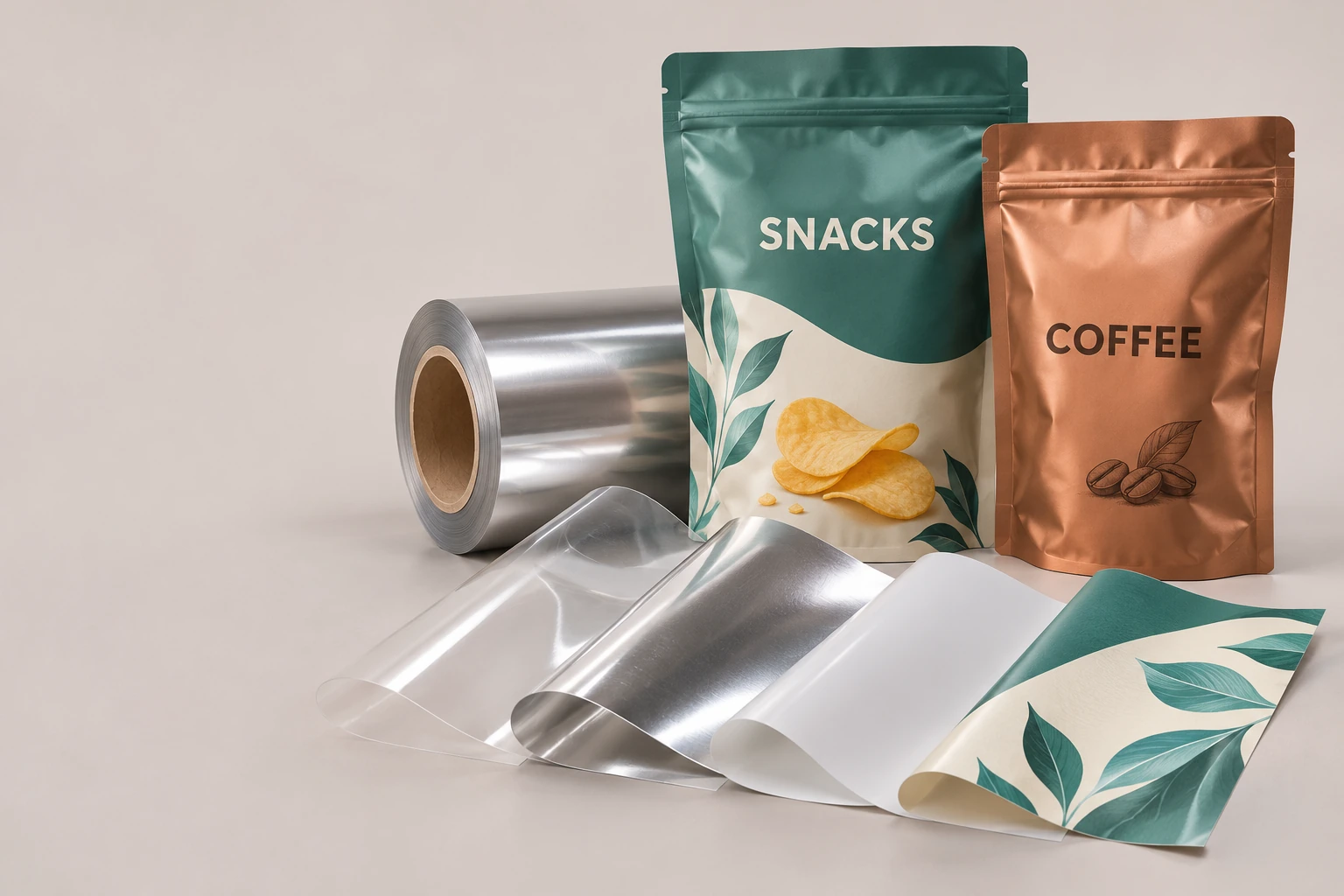
Candidate laminates must satisfy both product protection and the sealing system. The examples below are heat-seal structure families for discussion. A cold-seal or other specialist system needs a separate feasibility review and must not be inferred from these examples.
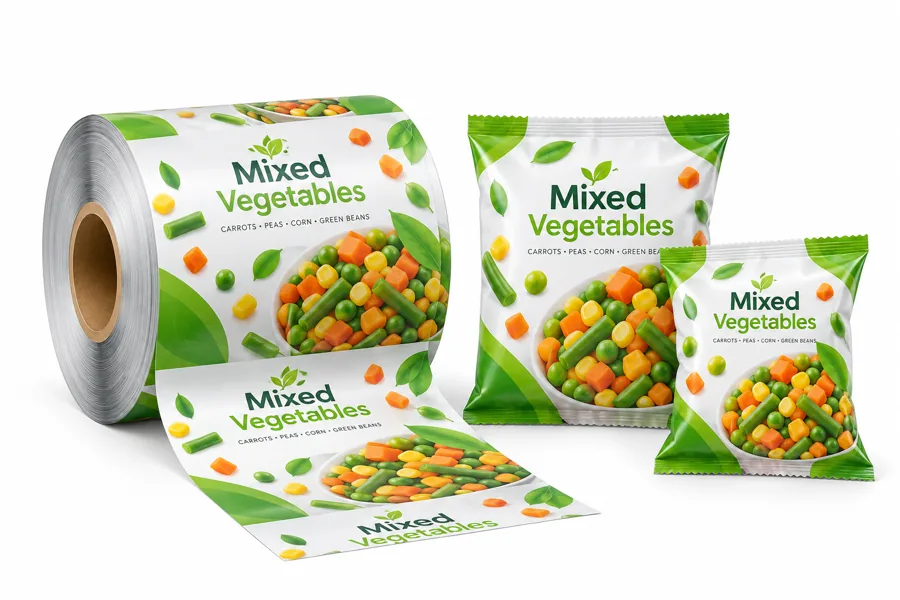
Printed outer film and sealing layer
Supports print detail and handling. Specify the grade, gauge and intended finish.
Select the PE grade and gauge around the contents and sealing conditions.
A two-film example, not a fixed recipe. Product compatibility and the complete package must be reviewed; it is not a retort specification. Adhesive and ink systems are part of the final specification; not all functional layers are shown.
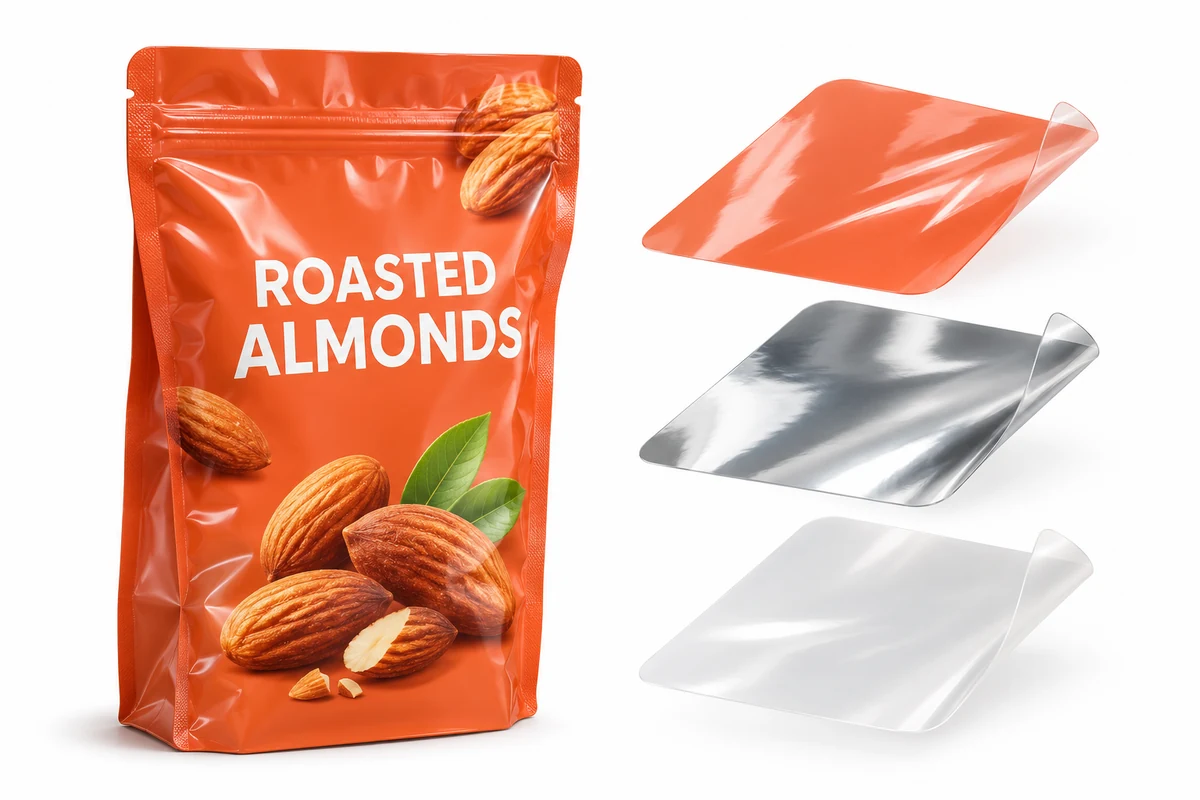
Metallized barrier laminate
Carries the graphic and supports handling. Specify print coverage and surface finish.
A thin metal coating adds barrier and light protection. Confirm the film grade and measured performance.
Forms the product-contact sealing surface. Select the grade and gauge around the sealing process.
An opaque structure family. Metallized PET is not a separate aluminum foil layer. Adhesive and ink systems are part of the final specification; not all functional layers are shown.
Mono-material development route
Review orientation, stiffness and print requirements for a PE-based outer web.
A same-family architecture may support a recycling route. Any barrier additions need separate compatibility review.
Match the sealant to the equipment and confirm the performance of closures and the converted pack.
Simplified functional roles, not a fixed three-layer recipe. Recyclability depends on the full pack and available local systems. Adhesive and ink systems are part of the final specification; not all functional layers are shown.
Six details that belong on the roll specification.
Machine and pack drawing
Equipment model, product geometry and finished pack configurationIdentify a flow wrapper versus another horizontal pouch system before proposing a film.
Web width and repeat
Nominal width, tolerance, print repeat and cut positionAllow for forming and seals using the approved machine drawing. Keep artwork out of cut and sealing clearances.
Sealing configuration
Longitudinal seam, cross-seal system and operating conditionsA fin seam and lap seam require different surface contact. Confirm the relevant sealability rather than assuming both work.
Unwind and roll size
Print orientation, inner/outer winding, core and maximum reel dimensionsUse an operator-approved unwind drawing and confirm roll weight and handling.
Registration and splices
Eye-mark lane, contrast, sensor requirement and splice rulesAgree how splices are marked and handled, with coding areas and artwork kept clear of the sensor path.
Film performance
Structure, gauge, friction behavior and product protection targetsEvaluate tracking, forming and sealing alongside barrier needs on the intended equipment.
Which reference can your machine team provide?
Choose a starting point. Add it to the inquiry, then fill in your own details.
HFFS film project: machine and pack drawing available. Please review web width, repeat, sealing configuration, unwind and reel limits.
Prove the film on the intended horizontal line.
- Record film tracking and forming at agreed trial conditions.
- Check sensor registration, cut position and print alignment over the run.
- Inspect longitudinal and end seals with the real product in place.
- Record settings and agreed acceptance criteria before approving production film.
Ask which sample is appropriate: an existing format sample, an artwork sample, a structure sample or a production trial. Their purposes and costs differ.
Discuss a sample plan ↗Let the cut, seal and sensor guide the artwork.
Approve the printed repeat as a machine component as well as a graphic layout. Use the equipment drawing to locate the cut line, seal zones, eye mark and coding area, then review the print orientation on the roll.
- Use an approved repeat drawing with the cross-seal and cut positions identified.
- Agree eye-mark position and contrast with the actual sensor setup.
- Keep SKU files, winding diagrams and color references tied to one approved version.
Production: gravure printing, up to 10 colors. Digital printing is used for sampling. Artwork approval does not replace material or filled-pack validation.

A factory conversation, from brief to batch.
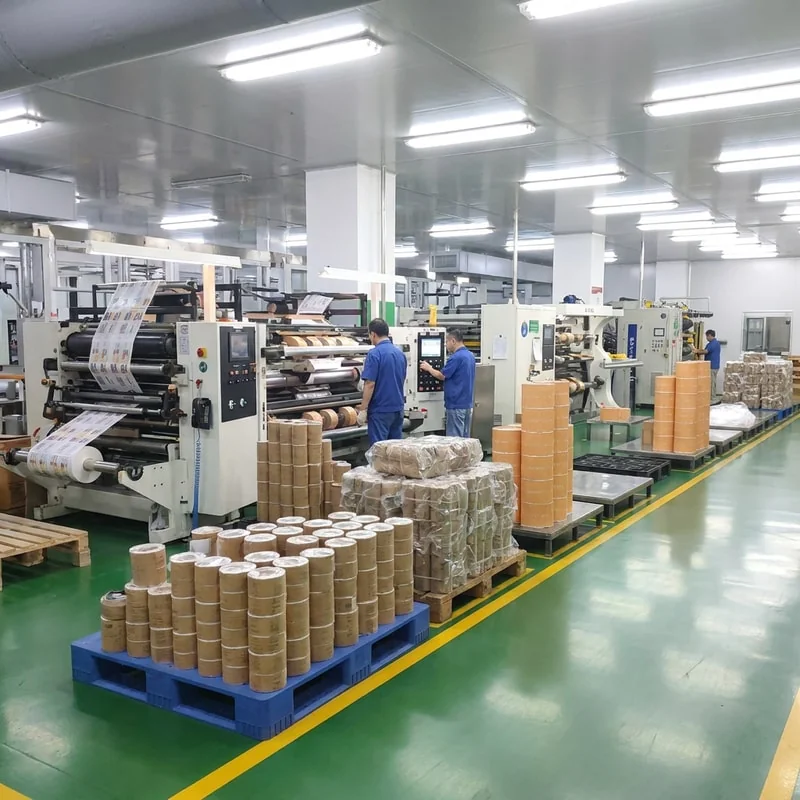
Shanghai IVAPAK Packaging Products Co., Ltd. has manufactured flexible packaging since 2003. Work directly with the production team to connect the agreed specification, approved artwork and inspection requirements.
Defined specification
Agree dimensions, construction, print reference, quantities and the checks required for your pack.
Relevant documentation
Request current BRCGS and ISO 9001 certificates, plus applicable material and SGS test information for your use conditions.
Six stages. One agreed production brief.
Confirm the brief
Product, format, dimensions, quantities and intended use.
Review the structure
Material candidates, closure or machine requirements and sampling.
Approve the artwork
Dieline, print reference, version and orientation.
Print & laminate
Gravure printing, lamination and the required curing stage.
Convert & inspect
Slit rollstock or make pouches, then inspect against the agreed specification.
Pack & dispatch
Confirm the packing list, shipment arrangements and reorder reference.
Is HFFS film interchangeable with VFFS film?
Not automatically. Machine orientation, forming method, seal system, print layout and winding requirements can differ. Review the actual equipment and specification rather than choosing by the HFFS or VFFS label alone.
What is the difference between a fin seal and a lap seal?
A fin seal brings the inner surfaces together. A lap seal joins an inner surface to an outer surface, so the relevant outer surface must also be suitable for that sealing arrangement. Confirm the seam design before choosing the film.
Do you supply cold-seal film for chocolate?
Cold-seal requirements need a separate capability and application review. This page does not confirm a cold-seal coating capability. Send the equipment and coating specification so feasibility can be checked before a quotation is issued.
Can a digital sample prove the film will run?
No. A digital artwork sample helps with visual review. A machine trial requires the proposed production structure, dimensions, seal behavior and winding arrangement.
Can you guarantee a line speed or sealing temperature?
Those values depend on the equipment, film, product and operating conditions. Establish an acceptable process window through a controlled trial rather than assigning one universal setting.
Which details do you need for a quote?
Provide the machine model, product and pack drawing, structure or protection targets, web width, repeat, unwind, reel limits, seal configuration, print colors and quantity. Include a working reference roll where available.
Continue building your packaging brief.
 Compare vertical line requirements
 Review the laminate structure
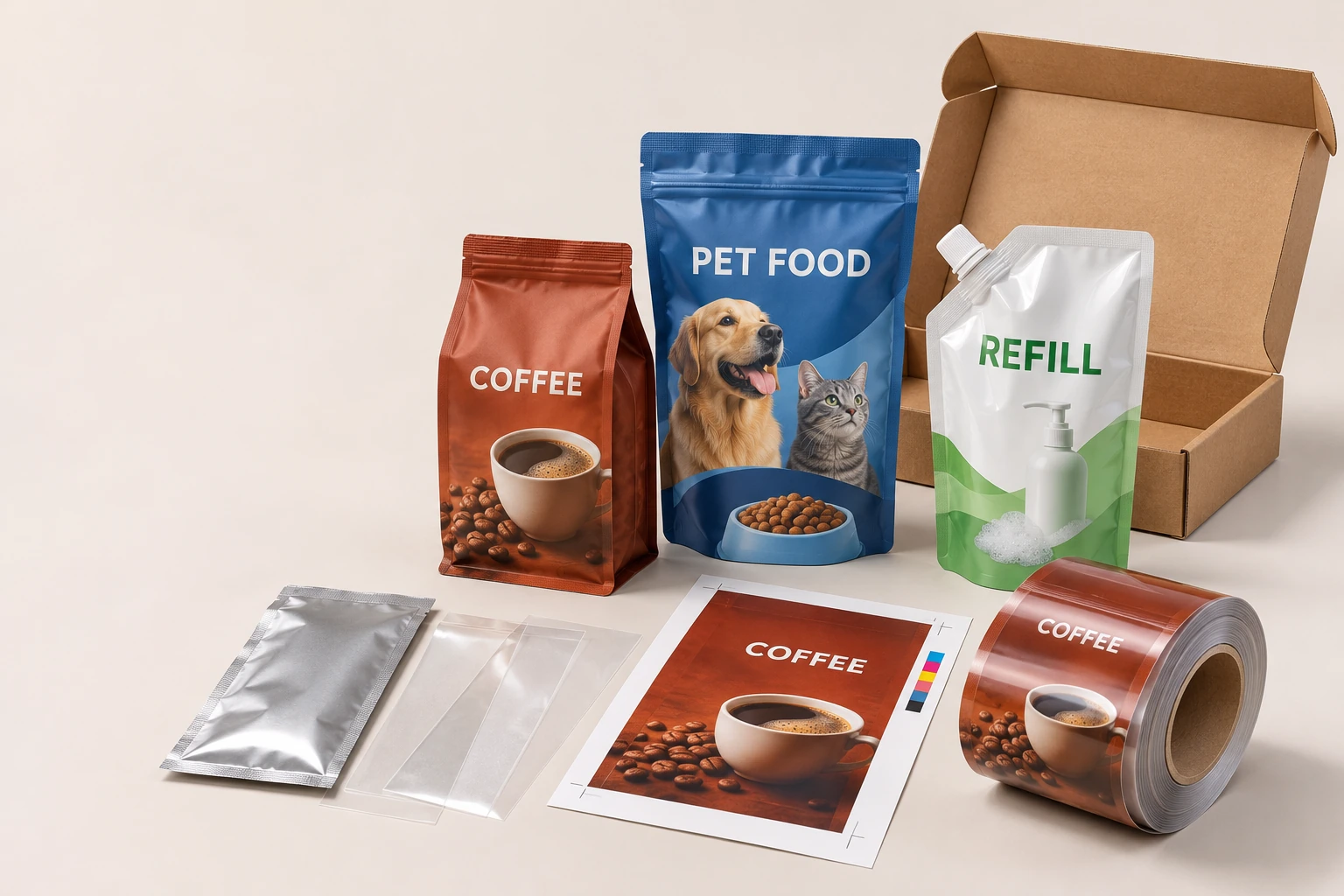 Arrange a suitable trial sample
 Custom Printed Rollstock
Send the machine brief. We’ll review the film.
Share the details you have. We can work through the format, specification and next steps together.
- Machine and pack drawing: Equipment model, product geometry and finished pack configuration
- Web width and repeat: Nominal width, tolerance, print repeat and cut position
- Sealing configuration: Longitudinal seam, cross-seal system and operating conditions
- Order plan: quantity per design, artwork status and delivery destination.
Direct to the manufacturing team. Share drawings or additional files by email after your initial inquiry.
Request a custom packaging quote
No complete specification yet? Start with the product and the quantity you have in mind.
Confirm the production window.
Regular orders typically take around 15 days after artwork approval. Confirm the schedule for your construction, quantity and materials; transit time is additional.
Keep the approval reference.
Record the agreed artwork, structure, dimensions and inspection criteria so future orders start from the same documented brief.
Stay connected after delivery.
Share batch details, photos and samples if an issue arises. Our team can review the evidence and discuss the next steps with you.