
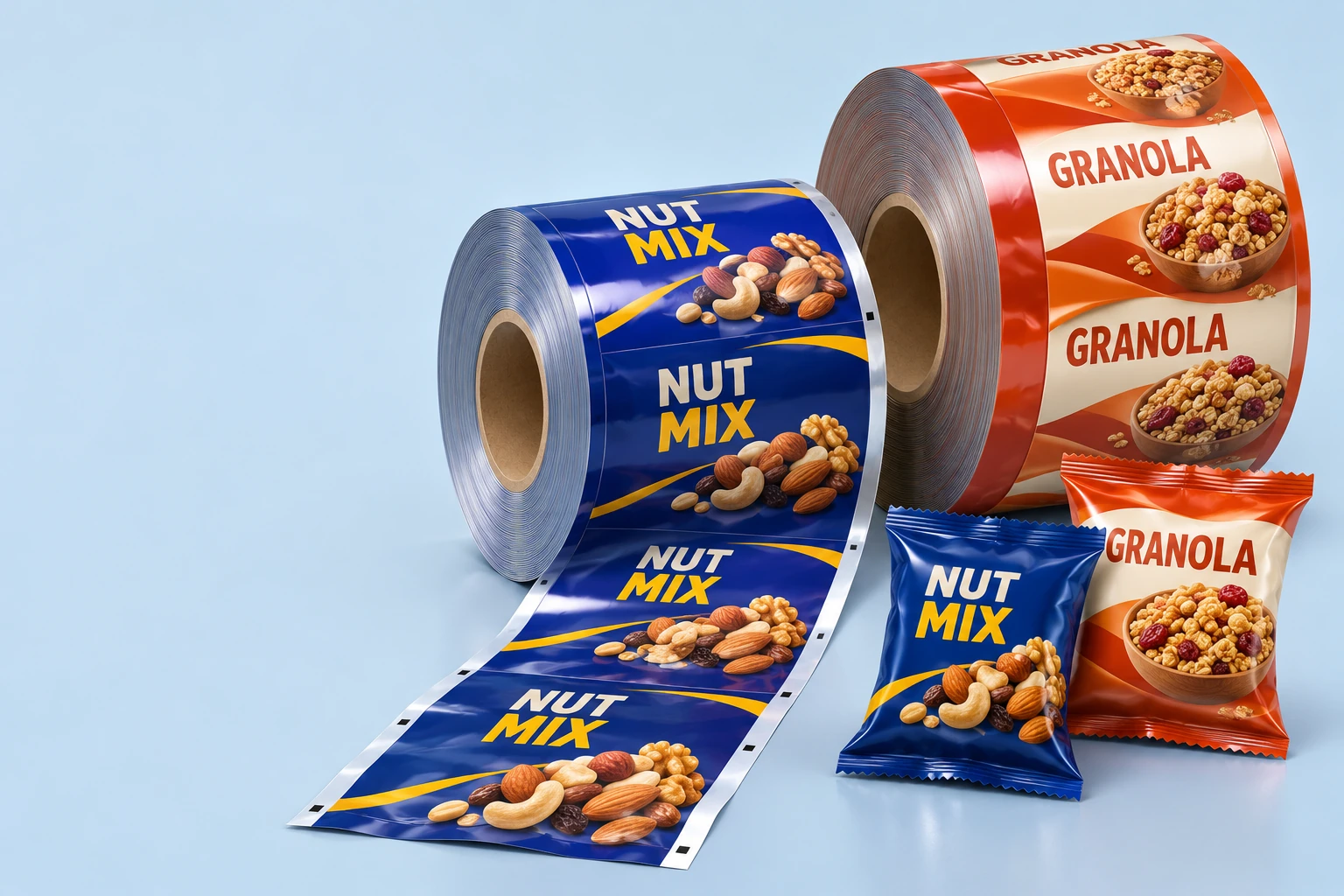
Custom Printed VFFS Film
Designed around your vertical packing line.
Custom printed rollstock for vertical form-fill-seal packaging. Start with your machine specification, product and seal configuration so print, laminate, winding and film dimensions can be reviewed as one system.
A good-looking roll still has to run.
On a VFFS line, film must unwind, form around the collar, register with the print sensor and seal in time with the fill. A successful film brief connects those steps instead of specifying thickness alone.
Forming & tracking
Film stiffness, slip and width affect how the web forms and travels. Provide your equipment specification and an approved reference roll if available.
Registration
Print repeat, eye-mark position and sensor contrast need to match the machine setup. Keep the detection zone clear of competing artwork.
Seal behavior
Jaw temperature, pressure, dwell time and cooling influence seal performance. Agree a trial window with the actual film and product.
One equipment family. Different packaging briefs.
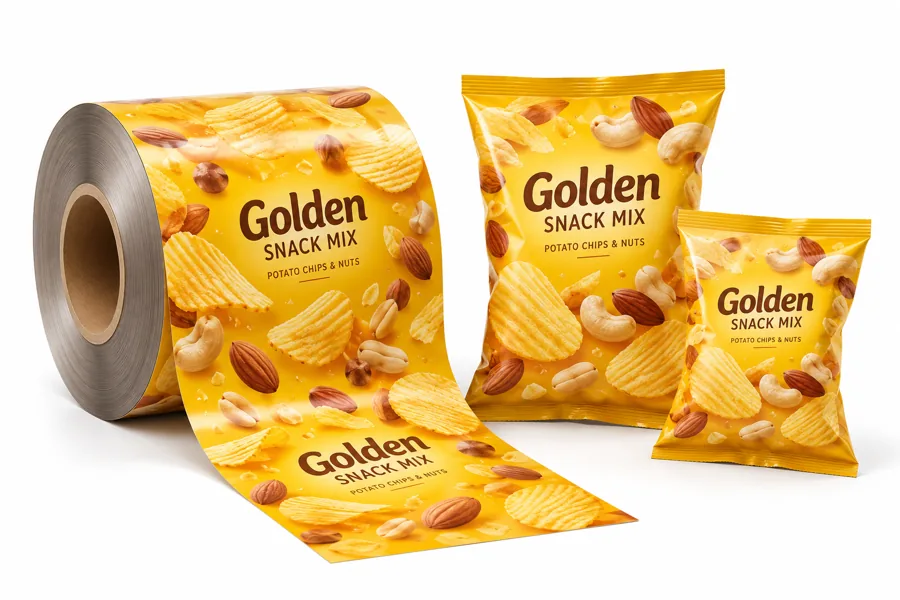
Snack & nut portions
Review product drops, crumbs, gas flushing if used and the required moisture and oxygen protection.
Explore this formatPowder portions
Allow for powder near the sealing zone, dosing behavior and the specific vertical sealing arrangement.
Explore this formatDry pet food & treats
Check product size, sharp edges, oil content and the pack weight before selecting a laminate.
Explore this formatCustom materials. Purpose in every layer.
Select the laminate around product protection and line behavior. Metallized film is not aluminum foil; structures with a similar appearance may run and seal differently.
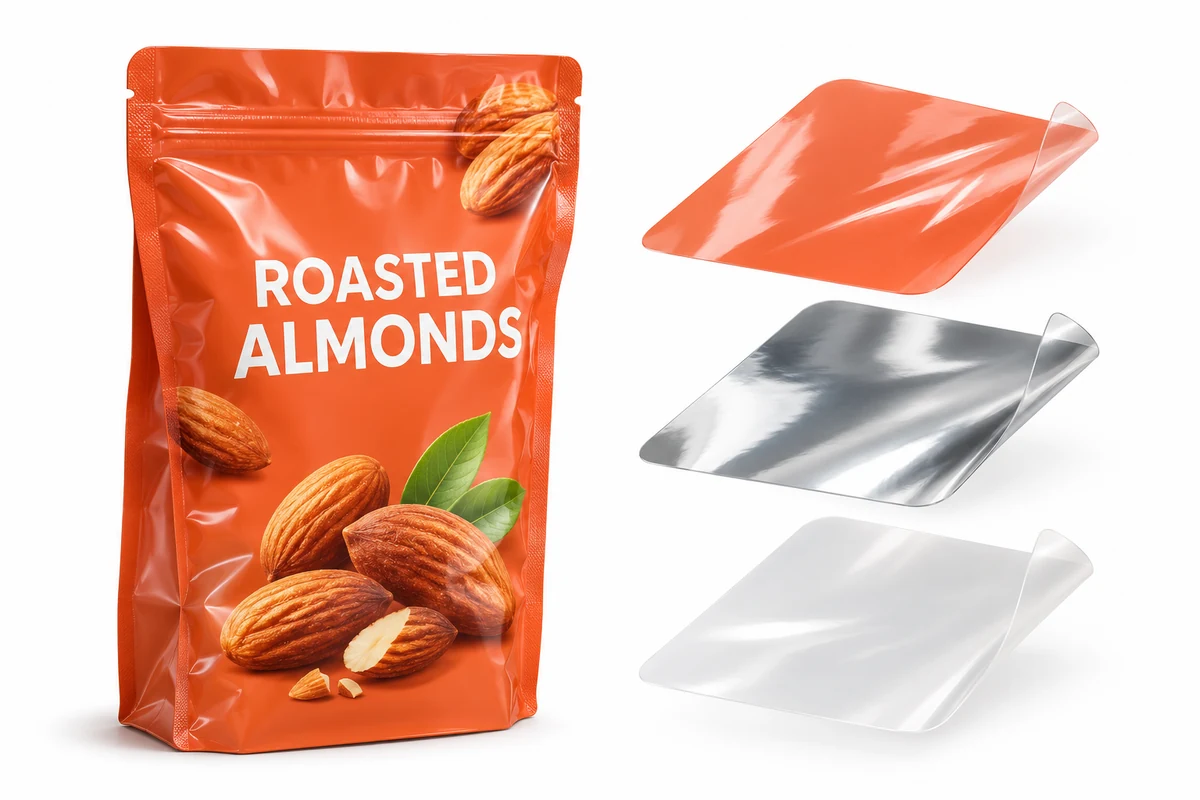
Metallized barrier laminate
Carries the graphic and supports handling. Specify print coverage and surface finish.
A thin metal coating adds barrier and light protection. Confirm the film grade and measured performance.
Forms the product-contact sealing surface. Select the grade and gauge around the sealing process.
An opaque structure family. Metallized PET is not a separate aluminum foil layer. Adhesive and ink systems are part of the final specification; not all functional layers are shown.
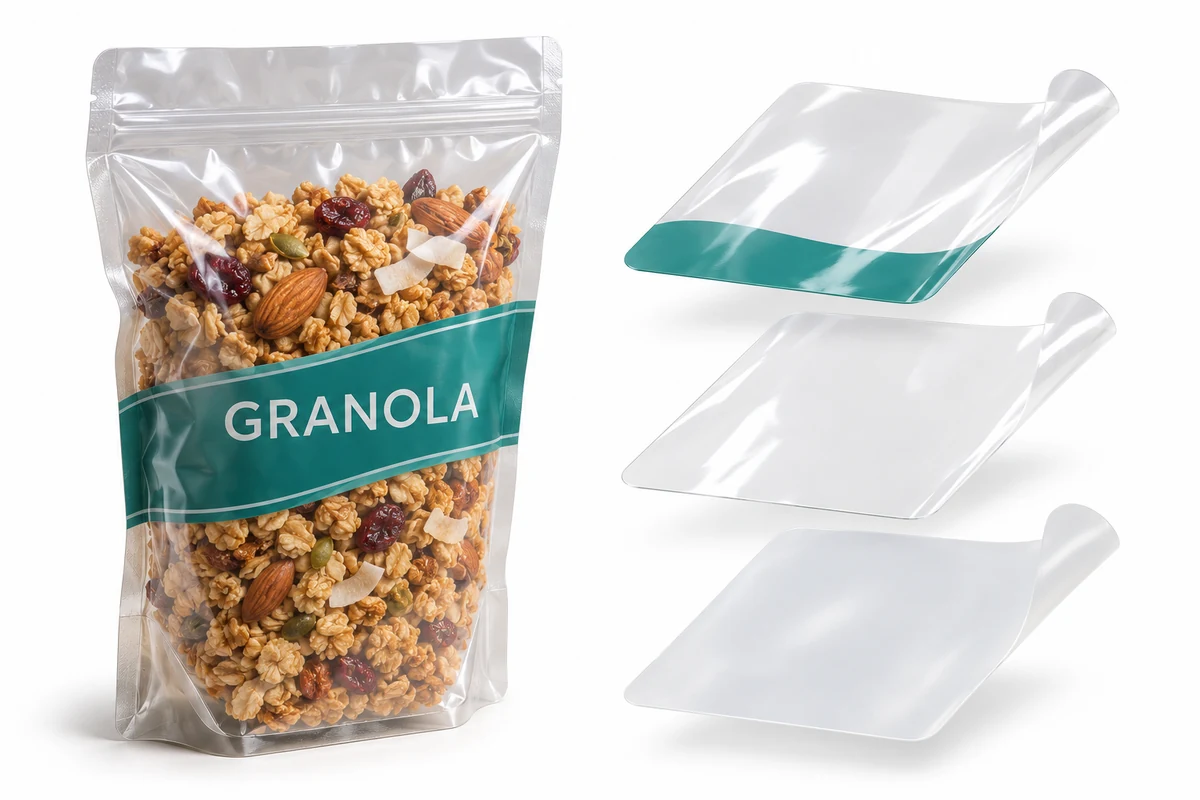
Transparent reinforced laminate
Balances printed areas and product visibility. Define the window and print coverage.
Supports toughness and puncture resistance. Grade and thickness matter for the application.
Supports sealing and product contact. Confirm seal behavior with the filling process.
Transparency is not a promise of a particular oxygen barrier. Compare the full specification against the product target. Adhesive and ink systems are part of the final specification; not all functional layers are shown.
Mono-material development route
Review orientation, stiffness and print requirements for a PE-based outer web.
A same-family architecture may support a recycling route. Any barrier additions need separate compatibility review.
Match the sealant to the equipment and confirm the performance of closures and the converted pack.
Simplified functional roles, not a fixed three-layer recipe. Recyclability depends on the full pack and available local systems. Adhesive and ink systems are part of the final specification; not all functional layers are shown.
Six roll details your machine team should confirm.
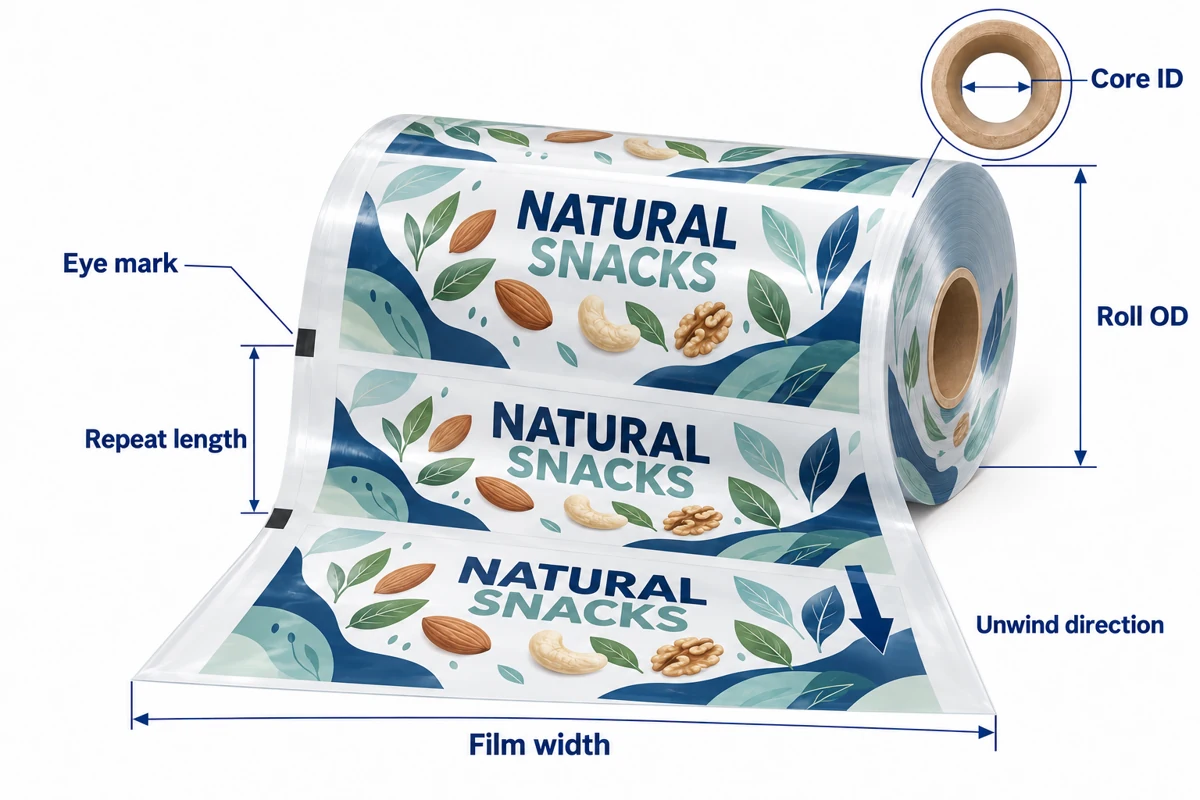
Web width
Nominal film width and agreed toleranceConfirm the forming tube/collar and seal allowance; do not calculate from visible front-panel width alone.
Print repeat
Bag length, artwork repeat and cut positionCoordinate cut location, horizontal seals and graphic placement on the machine drawing.
Unwind direction
Print orientation and inside/outside windingUse a labeled diagram or reference roll approved by the operator.
Core and reel
Core internal diameter, maximum outside diameter and roll weightCheck the spindle, reel handling and machine clearance.
Eye mark and splices
Mark position, dimensions, contrast and splice rulesMatch the actual sensor and agree splice identification and allowable quantity.
Seal and film behavior
Seal configuration, operating window, COF and structureA fin seal and a lap seal can need different surface sealability. Validate the selected structure on the line.
What do you have available for the film review?
Choose a starting point. Add it to the inquiry, then fill in your own details.
VFFS film project: machine specification available. Please review web width, repeat, unwind, core, maximum reel diameter and seal configuration.
Run a trial that answers the right questions.
- Start with the agreed settings and record stable operating conditions.
- Check tracking and eye-mark detection over the trial run.
- Inspect longitudinal and cross seals with the actual product.
- Record pack appearance, leakage checks and agreed acceptance criteria.
Ask which sample is appropriate: an existing format sample, an artwork sample, a structure sample or a production trial. Their purposes and costs differ.
Discuss a sample plan ↗Make the artwork work with the sensor and seal.
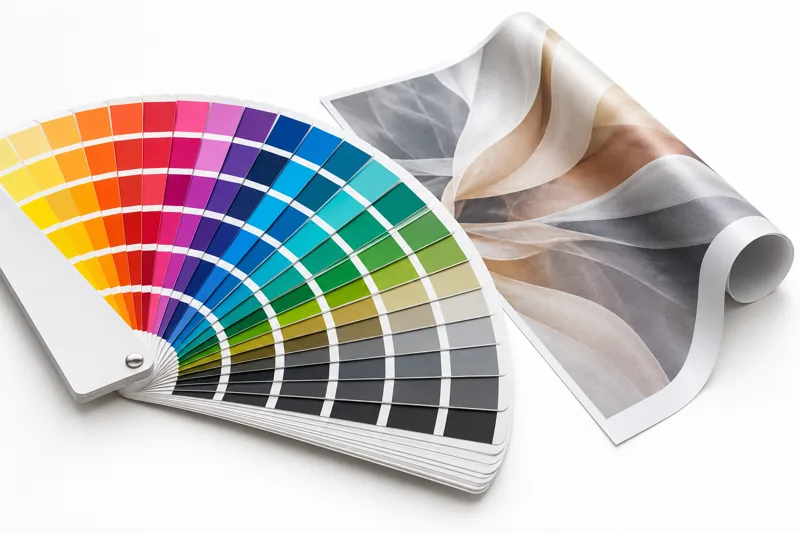
The printed repeat is a machine input. Approve the dieline, eye-mark lane, cut position, color reference and winding diagram before printing. Gravure printing is available in up to 10 colors.
- Confirm the print repeat and cut position with the machine drawing.
- Keep registration marks distinct from nearby artwork.
- Approve orientation, coding zones and color references before production.
Production: gravure printing, up to 10 colors. Digital printing is used for sampling. Artwork approval does not replace material or filled-pack validation.
A factory conversation, from brief to batch.
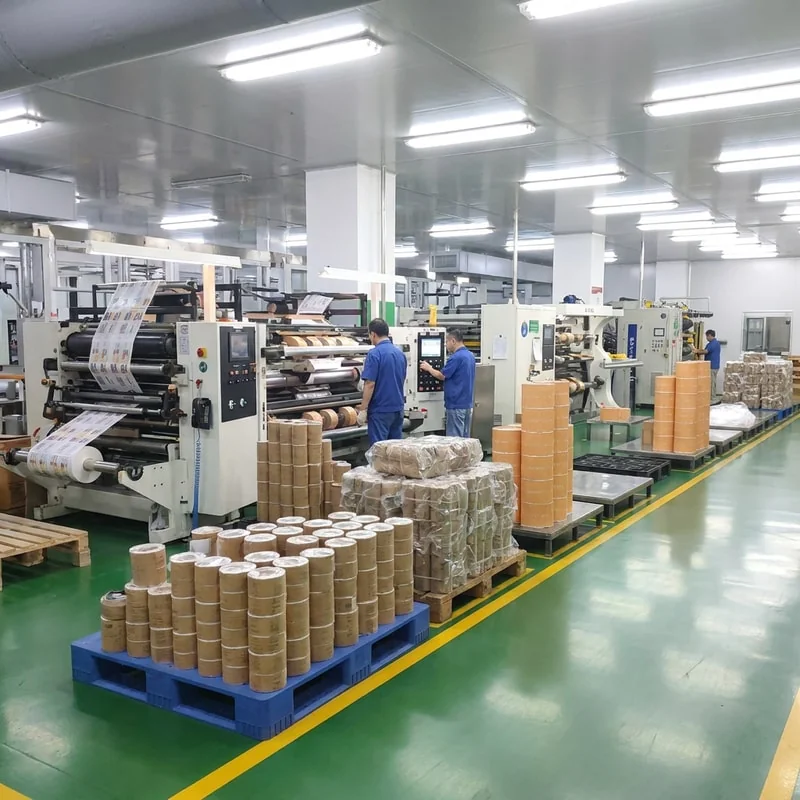
Shanghai IVAPAK Packaging Products Co., Ltd. has manufactured flexible packaging since 2003. Work directly with the production team to connect the agreed specification, approved artwork and inspection requirements.
Defined specification
Agree dimensions, construction, print reference, quantities and the checks required for your pack.
Relevant documentation
Request current BRCGS and ISO 9001 certificates, plus applicable material and SGS test information for your use conditions.
Six stages. One agreed production brief.
Confirm the brief
Product, format, dimensions, quantities and intended use.
Review the structure
Material candidates, closure or machine requirements and sampling.
Approve the artwork
Dieline, print reference, version and orientation.
Print & laminate
Gravure printing, lamination and the required curing stage.
Convert & inspect
Slit rollstock or make pouches, then inspect against the agreed specification.
Pack & dispatch
Confirm the packing list, shipment arrangements and reorder reference.
Can your film run on any VFFS machine?
Compatibility must be reviewed for the specific equipment, product and seal configuration. Send the machine specifications and a reference film where available. Trial rolls help confirm performance before the production specification is finalized.
What is the difference between fin and lap seals?
A fin seal joins inner sealing surfaces. A lap seal joins an inner surface to an outer surface, so the structure needs suitable sealability on the relevant sides. Confirm the seam design with the machine team.
Can you specify a universal sealing temperature?
No. The operating window depends on sealant grade, laminate, jaw condition, dwell time, pressure and product contamination. Settings should be established during a controlled machine trial.
Do you offer digital printing for production film?
Our stated production printing capability is gravure, with up to 10 colors. Digital printing is used for sampling. A digital artwork sample does not establish the runnability of the final gravure-printed laminate.
What information is needed to quote a roll?
Send product details, structure or barrier targets, web width, repeat, roll dimensions, unwind direction, printing colors and quantity. Include machine and seal details if the specification is still being developed.
Continue building your packaging brief.
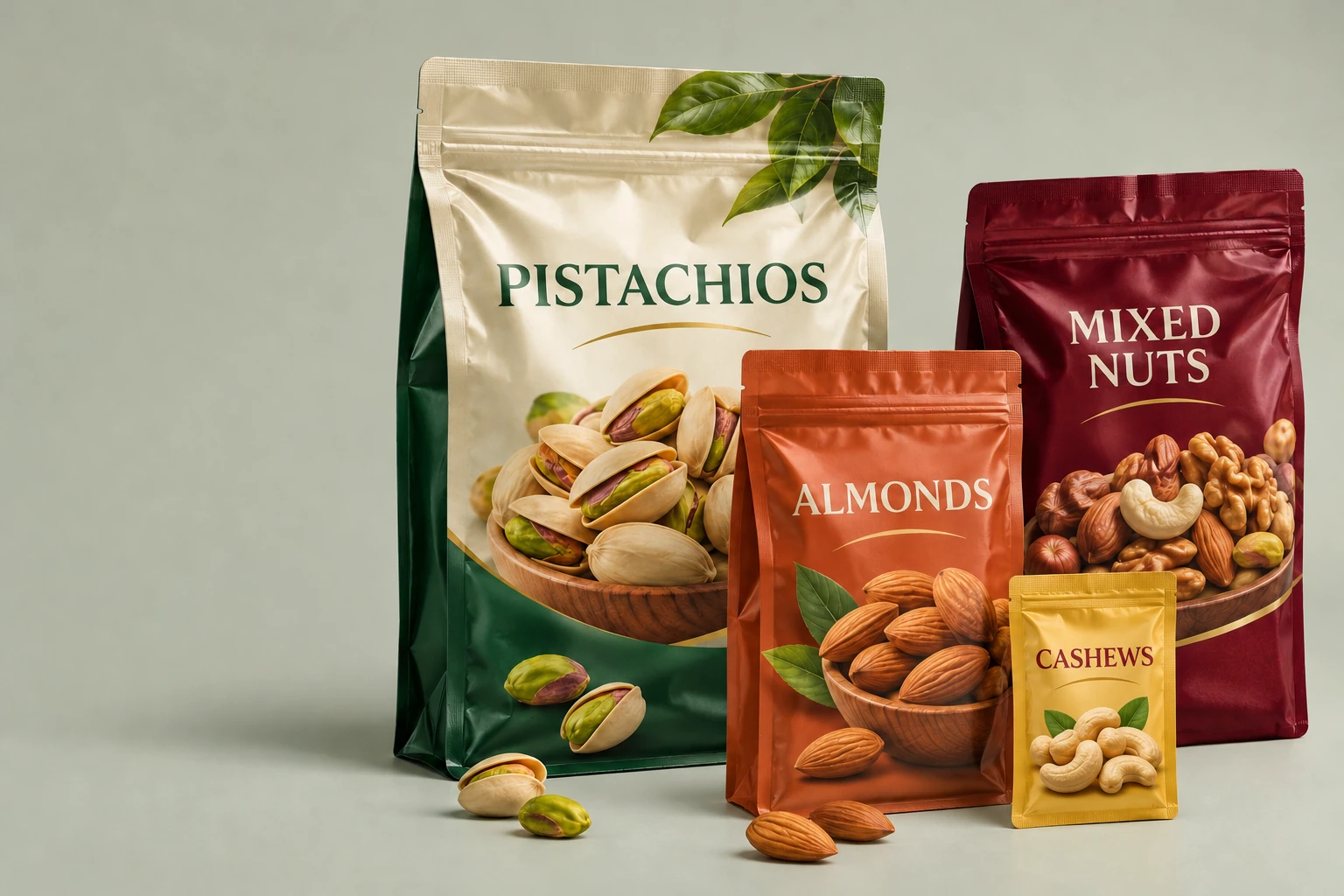 Nut packaging bags
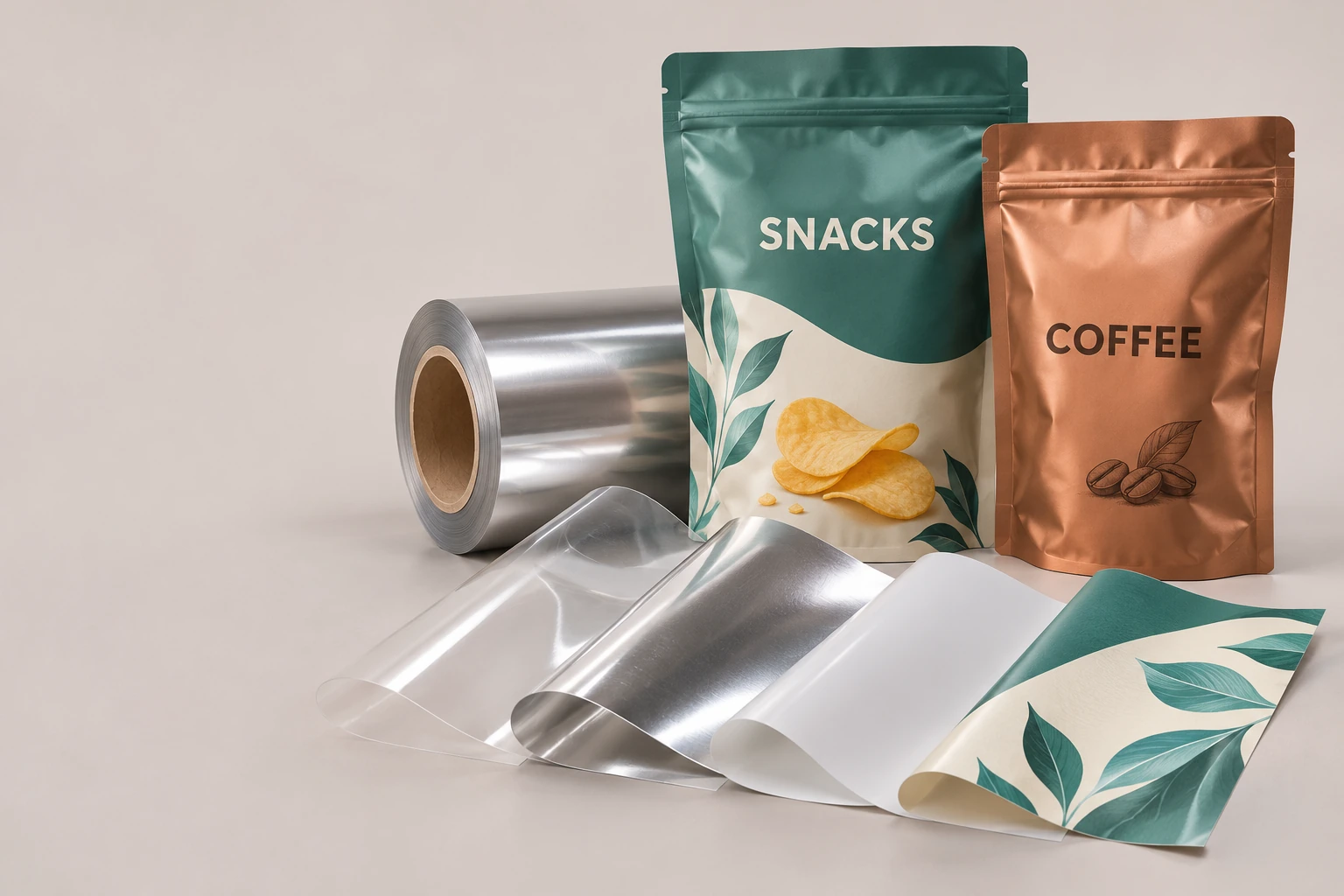 Materials & barrier structures
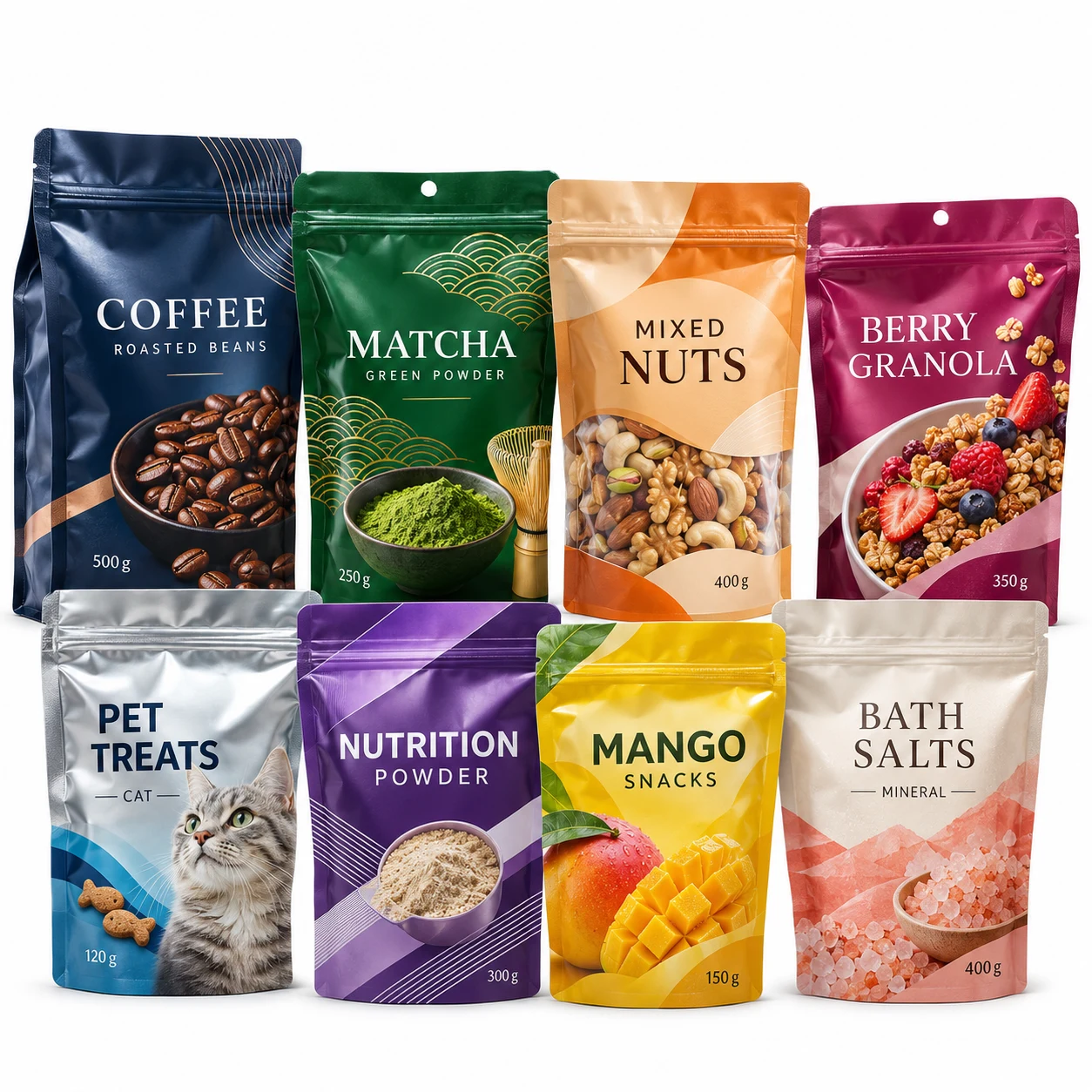 Printed Rollstock Film
Working with a horizontal line? Custom Printed HFFS Film ↗ Request the right packaging sample ↗
Bring the machine brief. We’ll review the film.
Share the details you have. We can work through the format, specification and next steps together.
- Web width: Nominal film width and agreed tolerance
- Print repeat: Bag length, artwork repeat and cut position
- Unwind direction: Print orientation and inside/outside winding
- Order plan: quantity per design, artwork status and delivery destination.
Direct to the manufacturing team. Share drawings or additional files by email after your initial inquiry.
Request a custom packaging quote
No complete specification yet? Start with the product and the quantity you have in mind.
Confirm the production window.
Regular orders typically take around 15 days after artwork approval. Confirm the schedule for your construction, quantity and materials; transit time is additional.
Keep the approval reference.
Record the agreed artwork, structure, dimensions and inspection criteria so future orders start from the same documented brief.
Stay connected after delivery.
Share batch details, photos and samples if an issue arises. Our team can review the evidence and discuss the next steps with you.